
(7% discount is applied at checkout)
Cart is empty
Your go-to destination for cutting-edge server products
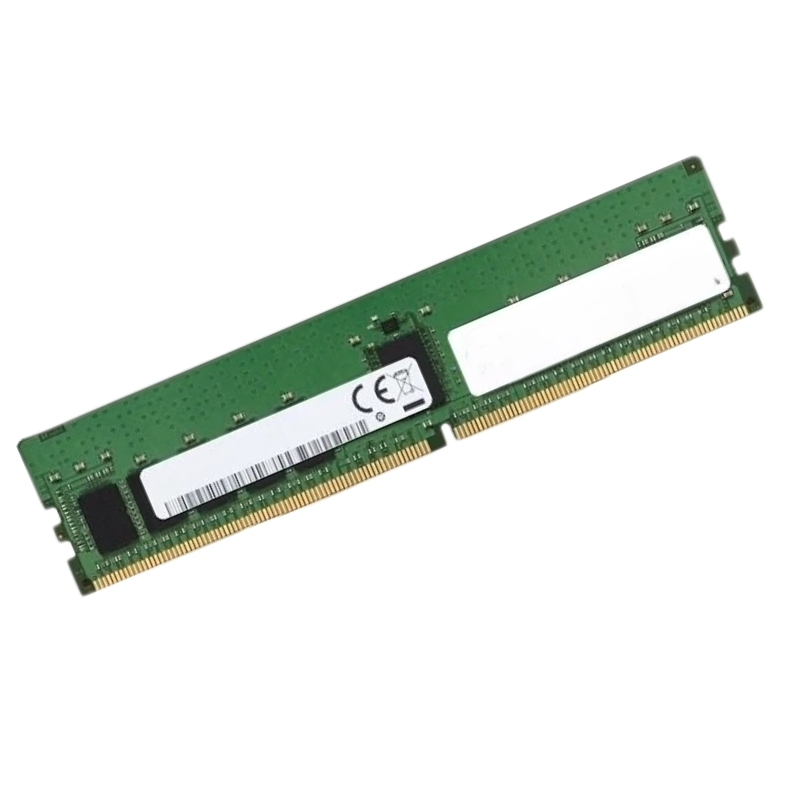
Dell 370-BCSL 64GB DDR5 5600MHz PC5-44800 2rx4 Ecc Registered 1.1v Cl46 SDRAM 288-pin RDIMM Memory Module. New Sealed in Box (NIB) - Samsung Version
| SKU/MPN | Warranty | Price | Condition | You save |
|---|---|---|---|---|
| 370-BCSL | 1 Year Warranty | $2,688.00 | New (System) Pull | You save: $940.80 (26%) |
| 370-BCSL | 1 Year Warranty | $3,446.00 | New Sealed in Box (NIB) | You save: $1,206.10 (26%) |
The Dell 370-BCSL 64GB (1x64GB) DDR5 5600MT/s PC5-44800 2Rx4 ECC Registered 1.1V CL46 SDRAM 288-Pin RDIMM Memory Module is designed to enhance your server’s performance and reliability. Engineered by Dell, this high-speed DDR5 module delivers efficient data processing and stable multitasking for enterprise workloads.
Operating at 1.1V, this Dell DDR5 memory ensures reduced power consumption while maintaining top-level performance, making it ideal for high-demand enterprise environments.
This Dell 64GB DDR5 RDIMM module is fully compatible with a wide range of Dell PowerEdge servers, ensuring seamless integration and optimal performance.
With DDR5 technology and a bus speed of 5600MT/s, this module ensures ultra-fast data handling and efficient performance across high-load applications.
The ECC (Error-Correcting Code) feature provides data accuracy and system stability, minimizing the risk of data corruption in critical environments.
Specifically designed and validated for Dell PowerEdge systems, ensuring flawless compatibility, easy installation, and enhanced performance consistency.
The transition from DDR4 to DDR5 memory represents one of the most significant advancements in server memory technology in recent years. DDR5 introduces substantial improvements in performance, power efficiency, and reliability compared to its predecessor. While DDR4 typically operated at voltages around 1.2V, DDR5 reduces this to 1.1V, resulting in meaningful power savings that compound significantly in data center environments with thousands of servers. The Dell 370-BCSL leverages these DDR5 advantages while maintaining backward compatibility with existing server architectures through careful design implementation.
DDR5 memory architecture introduces several groundbreaking changes that enhance performance and reliability. The most notable innovation is the implementation of two independent 32-bit data channels per DIMM, compared to the single 64-bit channel in DDR4. This dual-channel architecture effectively doubles the data access capabilities while maintaining the same physical footprint. Additionally, DDR5 incorporates decision feedback equalization (DFE) to improve signal integrity at higher speeds, allowing the Dell 370-BCSL to achieve stable operation at 5600MT/s while minimizing errors and signal degradation.
A revolutionary aspect of DDR5 technology is the migration of power management from the motherboard to the memory module itself. The Dell 370-BCSL includes an integrated power management IC (PMIC) that provides superior voltage regulation and power delivery. This distributed power architecture reduces noise, improves signal integrity, and enables more granular power control. The PMIC allows for better power distribution across the memory module and supports advanced power-saving states that can dynamically adjust based on workload demands.
Error Correcting Code represents a critical feature for enterprise and data center environments where data integrity is paramount. The Dell 370-BCSL incorporates advanced ECC capabilities that can detect and correct single-bit errors in real-time, while also detecting multi-bit errors. This functionality prevents data corruption and system crashes that could result from memory errors, which become increasingly likely as memory densities and speeds increase. ECC protection is particularly crucial for applications involving financial transactions, scientific computing, database management, and virtualized environments where even minor data corruption can have significant consequences.
The "Registered" designation in RDIMM indicates the presence of memory registers (or buffers) that sit between the memory controller and the DRAM chips. These registers buffer the command, address, and control signals, reducing the electrical load on the memory controller. This architecture enables support for higher memory capacities and more DIMMs per channel while maintaining signal integrity. The Dell 370-BCSL utilizes registered architecture to ensure stable operation in multi-DIMM configurations, making it ideal for memory-intensive applications and large-scale server deployments where maximum capacity and reliability are essential.
When compared to unbuffered DIMMs (UDIMMs), registered DIMMs like the Dell 370-BCSL offer several distinct advantages in server environments. RDIMMs support higher memory capacities per module and per system, enable more reliable operation in multi-DIMM configurations, and provide better signal integrity at higher speeds. While UDIMMs may have slightly lower latency due to the absence of buffering, this advantage is negligible in most server workloads where capacity, reliability, and scalability take precedence. The registered architecture makes the 370-BCSL particularly well-suited for database servers, virtualization hosts, and high-performance computing applications.
The Dell 370-BCSL operates at 5600 megatransfers per second (MT/s), representing the number of data transfer operations that can occur each second. At this speed, the module achieves a peak transfer rate of 44.8 GB/s per module (calculated as 5600 MT/s × 8 bytes × 1 channel). In practical server configurations with multiple channels populated, this translates to substantial aggregate memory bandwidth that can feed even the most demanding processors and applications. The PC5-44800 designation directly correlates with this bandwidth specification, where 44800 represents the theoretical peak transfer rate in megabytes per second.
The CL46 CAS latency specification indicates that the memory has a Column Address Strobe latency of 46 clock cycles. While this number appears high compared to DDR4 memory, it's important to consider that DDR5 operates at much higher frequencies, resulting in actual nanosecond latency that remains competitive. At 5600MT/s, each clock cycle is approximately 0.357 nanoseconds, making the absolute CAS latency around 16.4 nanoseconds. The Dell 370-BCSL is optimized for balanced performance across various server workloads, with timing parameters carefully calibrated to ensure stability while delivering excellent performance for both bandwidth-sensitive and latency-sensitive applications.
The "2Rx4" designation describes the physical and logical organization of memory chips on the module. This configuration indicates two ranks of memory with x4 organization, meaning each memory chip has a 4-bit data interface. The two-rank architecture allows for improved memory access parallelism through rank interleaving, where different ranks can be accessed simultaneously for improved performance. The x4 organization provides optimal compatibility with server memory controllers that support SDDC (Spare Device Data Copy) and other advanced reliability features. This configuration balances performance, capacity, and reliability characteristics ideal for enterprise server environments.
The performance characteristics of the Dell 370-BCSL make it particularly well-suited for specific server workloads. Memory-intensive applications such as in-memory databases (SAP HANA, Oracle Database In-Memory), virtualization (VMware vSphere, Microsoft Hyper-V), and high-performance computing benefit substantially from the combination of high bandwidth, large capacity, and ECC protection. The 64GB capacity per module enables significant memory consolidation, reducing the total number of DIMMs required to achieve large memory configurations while maintaining performance. This efficiency translates to lower power consumption, simplified management, and reduced physical space requirements in data center environments.
In virtualized environments, the Dell 370-BCSL provides the memory capacity and performance necessary to support high virtual machine densities. The 64GB module size allows for flexible memory allocation across multiple virtual machines while maintaining adequate overhead for the hypervisor. ECC protection is particularly valuable in these environments, as memory errors could potentially affect multiple virtual machines simultaneously. The registered architecture ensures signal integrity even when memory is fully utilized, which is common in consolidated virtualization scenarios. For cloud service providers and enterprise virtualization deployments, these characteristics translate to improved reliability, higher consolidation ratios, and better overall performance.
Modern data analytics platforms and machine learning frameworks often process massive datasets that benefit from large memory capacities and high bandwidth. The Dell 370-BCSL's 64GB capacity per module enables in-memory processing of substantial datasets, reducing the need for slower disk-based processing. The DDR5 5600MT/s bandwidth accelerates data movement between memory and processors, which is crucial for iterative analytical algorithms and training machine learning models. ECC protection ensures computational integrity, which is essential for both scientific computing and business analytics where accurate results are critical. These characteristics make the 370-BCSL an excellent choice for analytics appliances, AI training servers, and research computing infrastructure.
The Dell 370-BCSL incorporates multiple layers of reliability features beyond basic ECC protection. These include command/address parity detection, which verifies the integrity of memory commands, and write data cyclic redundancy check (CRC), which ensures data integrity during write operations. These complementary technologies work in conjunction with ECC to provide comprehensive protection against various types of memory errors. The implementation aligns with enterprise server requirements for continuous operation and data integrity, making the 370-BCSL suitable for applications where system downtime or data corruption would have significant business impact.
Effective thermal management is crucial for maintaining memory reliability, particularly in densely populated servers operating in demanding environments. The Dell 370-BCSL incorporates thermal sensors that monitor module temperature and can trigger throttling mechanisms if safe operating limits are approached. This proactive thermal management prevents damage to memory components and ensures long-term reliability. The integrated PMIC provides sophisticated power management capabilities, including voltage regulation, power sequencing, and support for various power states. These features work together to optimize power consumption based on workload demands while maintaining stability and reliability across diverse operating conditions.
The Dell 370-BCSL supports advanced diagnostic capabilities through integration with Dell's comprehensive server management ecosystem. The memory modules can be monitored and managed through iDRAC (Integrated Dell Remote Access Controller), providing visibility into operating parameters, error statistics, and health status. This integration enables proactive maintenance by alerting administrators to potential issues before they cause system downtime. The modules also support features like Patrol Scrubbing, which proactively searches for and corrects memory errors, and Address Range Scrubbing, which targets specific memory areas. These capabilities enhance overall system reliability and simplify maintenance in enterprise deployments.


 Contact Us
 Information
 Catalog
 Solid State Drives (SSD)
 Network Switches
 Hard Disk Drives
 HBA & Controllers
 PC & Servers
 PC & Server Memory
 CPU & Processors
 Network Routers
 Power Supplies
 Tape Drives & Libraries
 Network Devices
 Computer & Network Cables