(7% discount is applied at checkout)
Cart is empty
Your go-to destination for cutting-edge server products
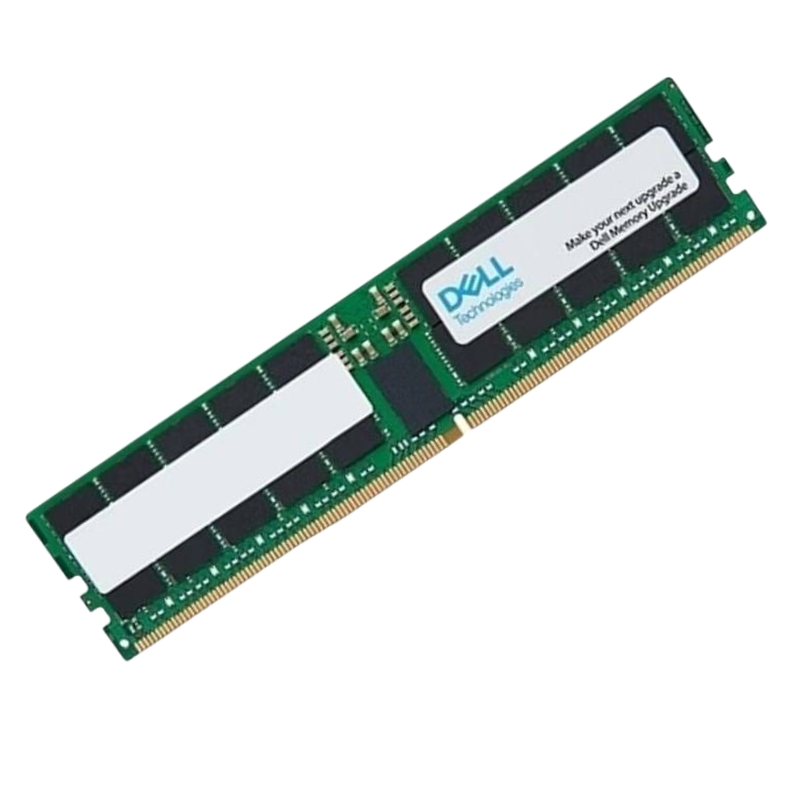


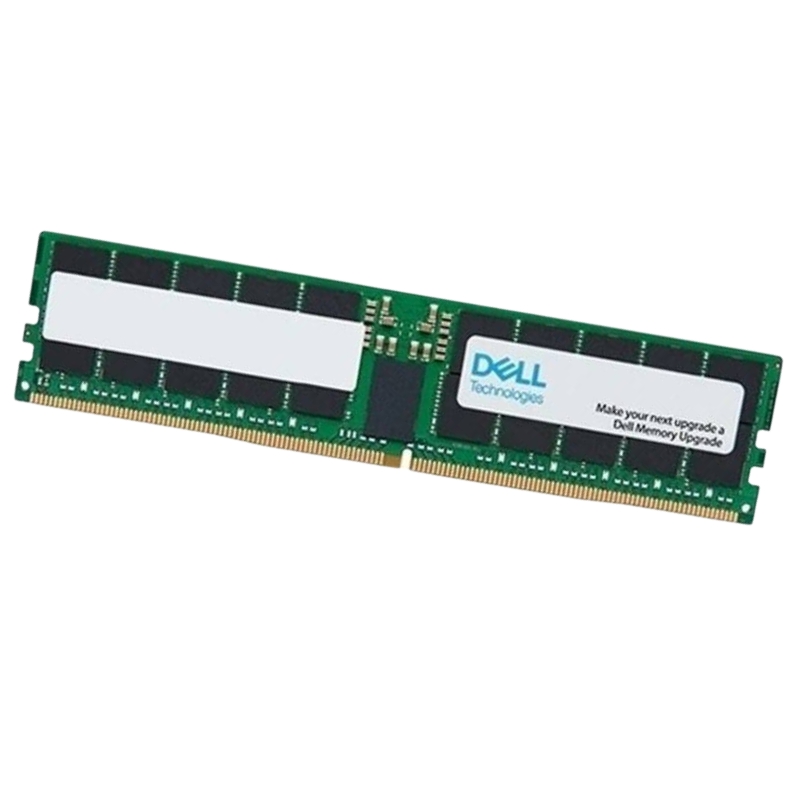
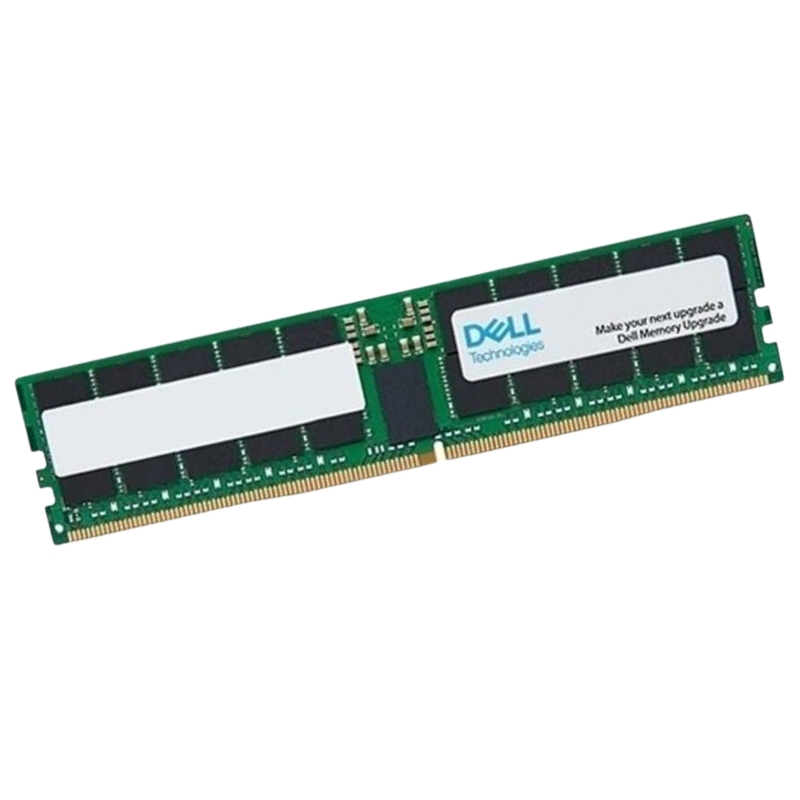
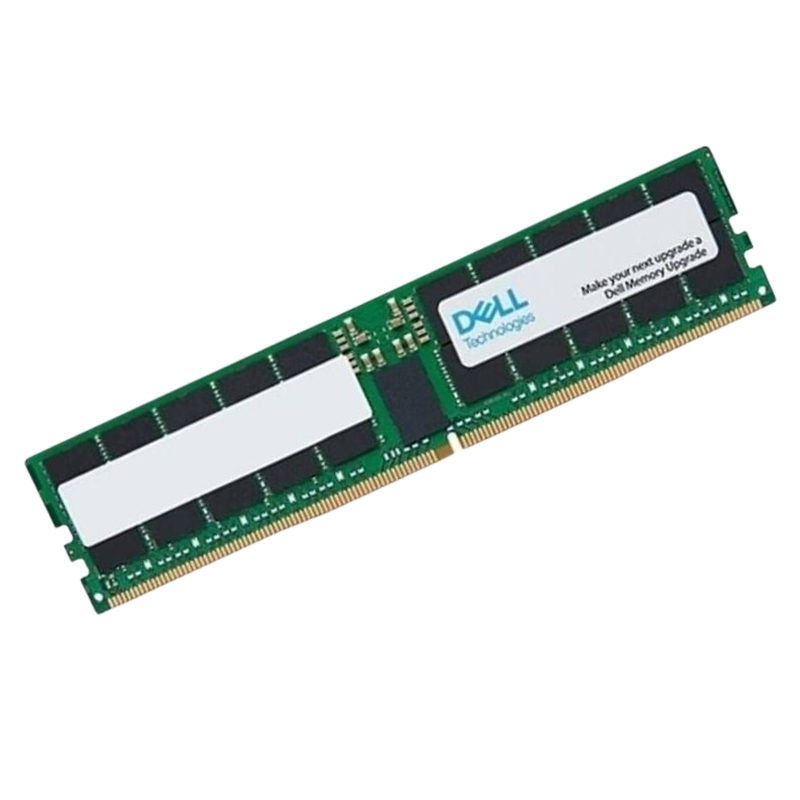
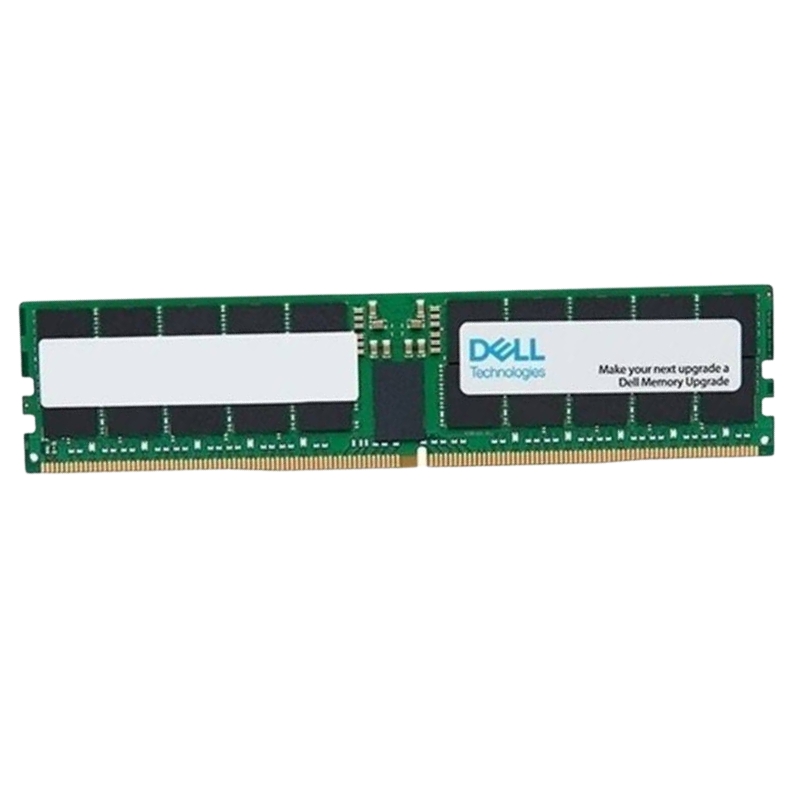
Dell 370-BDBP 32GB 6400MHz PC5-51200 Ecc Registered Dual Rank X8 Cl22 1.1v DDR5 SDRAM 288-pin RDIMM Memory Module For Server. New Sealed in Box (NIB) - Hynix Version
| SKU/MPN | Warranty | Price | Condition | You save |
|---|---|---|---|---|
| 370-BDBP | 1 Year Warranty | $2,880.00 | New Sealed in Box (NIB) | You save: $1,008.00 (26%) |
| 370-BDBP | 1 Year Warranty | $2,304.00 | New (System) Pull | You save: $806.40 (26%) |
The Dell 370-BDBP 32GB 6400MHz PC5-51200 ECC Registered Dual Rank X8 DDR5 RDIMM is engineered to enhance server reliability, speed, and multitasking capacity. Designed for advanced data centers and enterprise environments, this high-performance memory module delivers exceptional bandwidth, efficient power usage, and superior error correction for mission-critical workloads.
ECC (Error-Correcting Code) technology ensures higher reliability by automatically detecting and correcting data corruption, ideal for enterprise-level computing and server applications.
This memory module is fully compatible with the following Dell PowerEdge servers:
The transition from DDR4 to DDR5 memory represents one of the most significant advancements in server memory technology in recent years. Dell's 370-BDBP 32GB DDR5 module operates at 6400MHz, delivering substantially improved performance compared to previous-generation DDR4 modules, which typically maxed out at 3200MHz. This doubling of data rates translates to dramatically increased bandwidth for memory-intensive applications, database operations, and virtualization workloads. The fundamental architecture changes in DDR5 include the separation of the memory channel into two independent 32-bit data channels, allowing for more efficient data transfer and reduced latency in multi-threaded server applications.
Unlike DDR4, which relied solely on module-level ECC, DDR5 incorporates on-die ECC that corrects errors within the memory chips themselves before they can affect system performance. This additional layer of error correction works in conjunction with the traditional ECC functionality to provide unprecedented data integrity for critical server operations. The Dell 370-BDBP leverages this dual ECC protection to ensure maximum reliability in enterprise environments where data corruption is unacceptable.
DFE technology enables DDR5 modules to achieve higher data rates while maintaining signal integrity. This advanced signal processing technique allows the memory controller to compensate for signal degradation at high frequencies, making 6400MHz operation possible without sacrificing stability. For servers running at continuous high utilization, this translates to sustained performance without the need for reduced operating speeds to maintain reliability.
DDR5 modules feature a distributed power management architecture with PMIC on each module. This represents a fundamental shift from the motherboard-centered power delivery of previous generations. The Dell 370-BDBP utilizes its onboard PMIC to provide more stable power distribution, better power efficiency, and improved voltage regulation. This architecture allows for finer control over power consumption and enhances the module's ability to handle power spikes during intensive computational tasks.
Error Correcting Code is an essential feature for any server memory operating in mission-critical environments. The Dell 370-BDBP implements advanced ECC technology that can detect and correct single-bit errors automatically, without any performance penalty or system interruption. More importantly, it can detect multi-bit errors, allowing the system to take preventive action before data corruption occurs. This capability is particularly crucial in financial systems, healthcare databases, scientific computing, and any application where data integrity is paramount. The module's ECC functionality operates transparently in the background, continuously monitoring data transfers between the memory and processor to ensure complete accuracy.
While standard ECC protects against single-bit errors, Dell's implementation in the 370-BDBP module includes support for advanced error correction technologies like Chipkill and Single Device Data Correction (SDDC). These technologies provide protection against complete memory chip failures, allowing the system to continue operating even if an entire memory chip becomes defective. This level of resilience is what separates enterprise server memory from consumer-grade modules and is essential for maintaining system availability in 24/7 operational environments.
Registered DDR5 modules, like the Dell 370-BDBP, incorporate a register (or buffer) between the memory controller and the DRAM chips. This register buffers the command and address signals, reducing the electrical load on the memory controller. While this adds a minimal amount of latency (typically one clock cycle), the benefits for server configurations are substantial. The registering process enables servers to support much higher memory capacities by allowing the memory controller to drive more memory modules without signal degradation. For memory-intensive applications requiring large amounts of RAM, this architecture is essential for both stability and expandability.
Server memory comes in several form factors, each with distinct advantages. The Dell 370-BDBP is an RDIMM (Registered DIMM), which strikes an optimal balance between performance, capacity, and cost for most server applications. Unlike UDIMMs (Unbuffered DIMMs) that are limited in capacity and scalability, RDIMMs can support much higher memory densities while maintaining signal integrity. Compared to LRDIMMs (Load Reduced DIMMs), which use additional buffering for even higher capacity at the cost of slightly higher latency and price, RDIMMs provide the best combination of performance and capacity for the majority of enterprise workloads.
Typically used in consumer systems and entry-level servers, UDIMMs connect directly to the memory controller without buffering. While they offer slightly lower latency, they're limited in maximum capacity and don't scale well in multi-DIMM configurations.
The Dell 370-BDBP falls into this category, offering optimal balance for enterprise servers. The registering enables higher module counts, greater capacities, and improved signal integrity while adding minimal latency.
Using data buffers instead of simple registers, LRDIMMs can support the highest memory capacities but at increased cost and slightly higher latency. These are typically reserved for maximum-memory configurations exceeding what RDIMMs can provide.
The Dell 370-BDBP operates at 6400MT/s (MegaTransfers per second), with a data rate of 6400MHz. This speed represents the current sweet spot for DDR5 server memory, balancing high bandwidth with reasonable power consumption and compatibility. The module features CAS Latency (CL) of 22 cycles, which when combined with the high data rate, provides excellent real-world performance for most server applications. While lower CAS latency numbers are available, they often come with trade-offs in stability, power consumption, or compatibility. The CL22 timing of this module has been optimized for reliable operation in Dell PowerEdge servers and similar enterprise platforms.
With a data rate of 6400MT/s and a 64-bit interface (effectively two independent 32-bit channels), the Dell 370-BDBP delivers peak theoretical bandwidth of 51.2 GB/s per module. This represents a significant increase over DDR4-3200 modules, which typically provided 25.6 GB/s peak bandwidth. In practical terms, this means servers equipped with these modules can handle more simultaneous virtual machines, faster database queries, and improved performance for memory-bound applications like in-memory databases, data analytics platforms, and scientific simulations.
The Dell 370-BDBP utilizes the standard 288-pin RDIMM form factor, measuring 133.35mm in length with a height typically around 31.25mm. The physical layout includes a notched design that prevents incorrect installation in incompatible memory slots. The module features a single notch position that differs from DDR4 modules, ensuring that DDR5 modules cannot be accidentally inserted into DDR4 slots, or vice versa. This physical keying protects both the memory module and the server motherboard from potential damage due to incompatibility.
Operating at 1.1V, the Dell 370-BDBP represents a significant improvement in power efficiency compared to DDR4 modules, which typically operated at 1.2V. This reduction in operating voltage, combined with the more efficient PMIC-based power management, results in lower power consumption per gigabyte of memory capacity. For data centers operating large server fleets, this improved power efficiency translates to substantial reductions in electricity costs and cooling requirements, contributing to lower total cost of ownership and improved environmental sustainability metrics.
The dual rank design of the Dell 370-BDBP allows for better utilization of the memory bus by enabling interleaving between the two ranks. This architecture effectively allows the memory controller to access one rank while the other is preparing for the next operation, reducing overall latency and improving throughput. In practical terms, dual rank modules often provide better performance in multi-module configurations compared to single rank modules, making them ideal for servers with high memory demands. The 32GB capacity in a dual rank configuration represents an optimal balance for most server workloads.
For virtualization platforms like VMware vSphere, Microsoft Hyper-V, and Proxmox VE, the Dell 370-BDBP provides the ideal balance of capacity, speed, and reliability. The 32GB module size allows for flexible memory configuration while the 6400MHz speed ensures responsive performance across multiple virtual machines. In hyper-converged infrastructure (HCI) deployments, where compute and storage resources are combined, the high bandwidth of DDR5 memory directly translates to improved storage performance and reduced latency for virtualized applications.
Modern container orchestration platforms like Kubernetes benefit significantly from the high memory bandwidth provided by DDR5 technology. The Dell 370-BDBP enables faster container startup times, more efficient memory sharing between containers, and improved performance for memory-intensive microservices. In large-scale container deployments, the reliability features of ECC memory become particularly important, as memory errors can affect multiple services simultaneously in a shared environment.
In HPC environments running computational fluid dynamics, finite element analysis, molecular dynamics, or other scientific simulations, memory bandwidth often becomes the limiting factor in application performance. The Dell 370-BDBP's high data rate directly addresses this bottleneck, enabling researchers and engineers to solve complex problems more quickly. The ECC protection ensures computational accuracy, which is critical in scientific computing where a single bit error could invalidate days or weeks of computation.
The 32GB capacity of the Dell 370-BDBP represents an optimal balance in the current DDR5 server memory landscape. Smaller capacity modules (16GB) may offer slightly better performance in some scenarios due to fewer memory chips per rank, but require more slots to achieve the same total memory capacity. Larger capacity modules (64GB or 96GB) enable higher total memory in slot-constrained systems but may operate at slightly slower speeds or higher latencies. The 32GB capacity provides an excellent compromise, allowing substantial total memory configurations while maintaining the full 6400MHz performance profile.
Within the DDR5 ecosystem, speeds range from 4800MHz to 7200MHz and beyond for server modules. The 6400MHz operation of the Dell 370-BDBP positions it in the high-performance segment while maintaining broad compatibility and reasonable power characteristics. Higher-speed modules (6800MHz+) may offer incremental performance benefits for specific workloads but often come with compatibility limitations, higher costs, and increased power consumption. For most enterprise applications, 6400MHz represents the optimal price-to-performance ratio in the current DDR5 market.


 Contact Us
 Information
 Catalog
 Solid State Drives (SSD)
 Network Switches
 Hard Disk Drives
 HBA & Controllers
 PC & Servers
 PC & Server Memory
 CPU & Processors
 Network Routers
 Power Supplies
 Tape Drives & Libraries
 Network Devices
 Computer & Network Cables