(7% discount is applied at checkout)
Cart is empty
Your go-to destination for cutting-edge server products


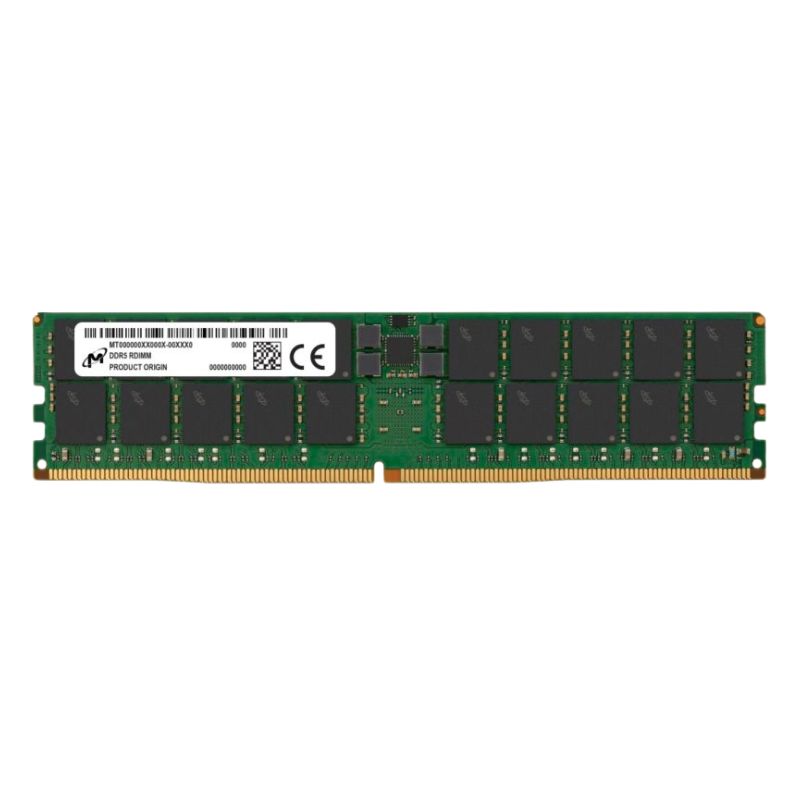
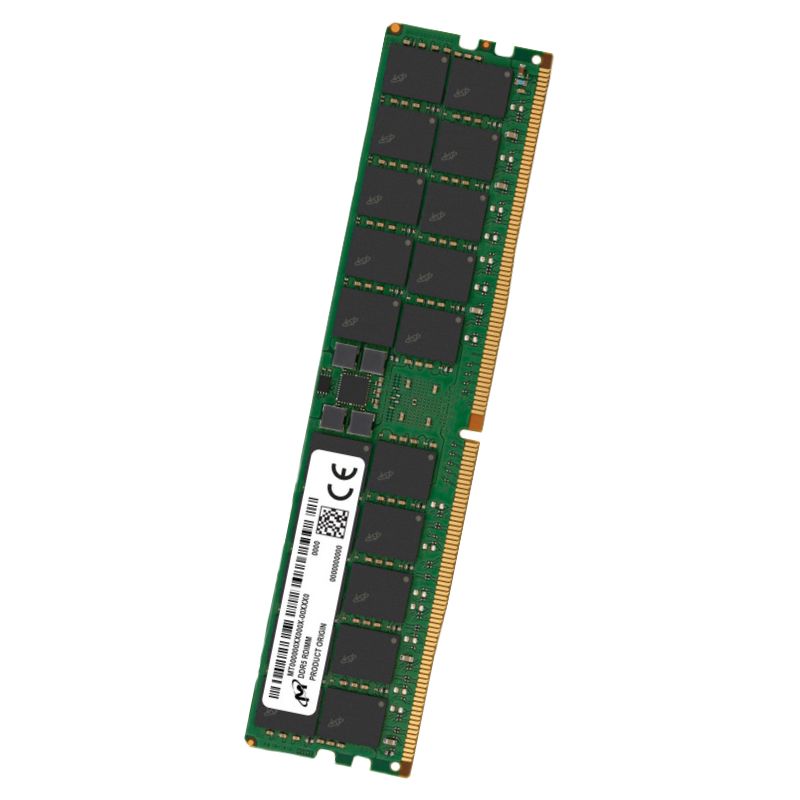
Dell 370-BDTM 64GB DDR5 6400MT/s PC5-51200 2Rx4 Registered Dual Rank X4 1.2v ECC Memory Module. New Sealed in Box (NIB) with 1-Year Replacement Warranty - Samsung Version
The Dell 370-BDTM memory module is engineered to support modern data center environments that require high bandwidth, reliability, and consistent performance. Built on next-generation DDR5 technology, this 64GB registered memory solution is designed for enterprise servers handling virtualization, databases, analytics, and mission-critical applications. Its advanced architecture enables faster data transfer rates, improved power efficiency, and enhanced stability compared to previous-generation memory standards.
Technical Specifications
Advantages of DDR5 Server Memory
In the realm of enterprise computing and high-performance servers, memory is not just a component; it's the critical backbone that determines system stability, data integrity, and overall throughput. The evolution from DDR4 to DDR5 represents a seismic shift in architecture, offering transformative gains in speed, capacity, and efficiency. Within this landscape, Registered DIMMs (RDIMMs) with Error-Correcting Code (ECC) are the gold standard for mission-critical environments where downtime is not an option. The Dell 370-BDTM 64GB PC5-51200 DDR5 6400MHz RDIMM is a paradigm of this advanced technology, engineered specifically for Dell latest generation of Think Agile servers. This module isn't merely an upgrade; it's a foundational element for building robust data centers, powerful virtualized infrastructures, and demanding computational workloads.
For many modern two-socket enterprise servers, 64GB RDIMMs represent an optimal balance. They allow for building substantial total memory (e.g., 1TB with 16 slots) without moving to the highest-cost, highest-density LRDIMMs. When planning, consider both the immediate application requirements and a growth buffer of 20-30% for future expansion. Investing in DDR5 now also prepares the infrastructure for upcoming CPU generations and software demands.
Conforming to the DDR5-6400 specification, also known as PC5-51200, this module provides a significant leap in data transfer capability. The expanded bandwidth helps servers process large datasets more efficiently, making it suitable for cloud infrastructure, virtualization clusters, and enterprise-grade applications. The registered (RDIMM) architecture buffers memory signals, allowing servers to support larger memory capacities with improved electrical stability. This design is commonly used in enterprise-grade systems where scalability and reliability are more important than consumer-level memory configurations.
The 288-pin design is the industry standard for DDR5 registered memory modules, allowing seamless installation in supported server platforms. This ensures straightforward upgrades and replacements within enterprise systems.
The Dell 370-BDTM is a 64GB dual-rank Registered DDR5 RDIMM operating at a data rate of 6400 mega transfers per second (MT/s), classified under the industry standard PC5-51200. Its primary role is to expand or optimize the memory configuration in compatible Dell servers, delivering the high bandwidth and vast capacity required by modern applications. Unlike standard unbuffered memory, this module incorporates a register (or buffer) between the memory controller and the DRAM chips. This crucial component reduces the electrical load on the controller, enabling more stable operation with higher module counts and greater capacities per channel—a non-negotiable feature for multi-socket servers populated with large amounts of RAM.
DDR5 fundamentally restructures how data is accessed. It features a burst length of 16, double that of DDR4, and splits each module into two independent, 32-bit addressable sub-channels. While the Dell 370-BDTM effective speed of 6400 MT/s offers a significant peak bandwidth boost over common DDR4-3200, it's this architectural change that enhances efficiency by allowing more concurrent memory accesses. This translates to faster data feeding for CPUs, reducing latency in memory-sensitive tasks like real-time analytics, in-memory databases, and scientific simulations.
DDR5 enables higher-density memory chips. The 64GB capacity of this module is a stepping stone to even larger future densities. A pioneering feature of DDR5 is On-Die ECC. This is a separate, additional mechanism from the standard module-level ECC. It operates internally within the DRAM chip itself, correcting minor bit errors before they are sent to the module's ECC logic. This layered approach to error management significantly improves data reliability and chip yield, contributing to overall system resilience.
ECC is a non-negotiable feature for servers and workstations handling sensitive financial data, healthcare records, or running uninterrupted services. Cosmic rays, electrical interference, and other factors can cause soft errors—spontaneous bit flips in memory. ECC memory adds extra bits to each data word to create a code. When data is read, the memory controller uses this code to detect and, crucially, correct single-bit errors on the fly without any system interruption. It can also detect (though not correct) multi-bit errors, triggering a safe system response. The Dell 370-BDTM provides this essential protection, safeguarding against silent data corruption that could lead to corrupted results, application crashes, or system instability.
While ECC protects data, the Registered (or Buffered) design protects system stability, especially when populating all memory slots. The register on the module acts as a traffic coordinator, buffering the address and command signals from the CPU's memory controller. This reduces the electrical load, allowing the server to support more memory modules per channel (commonly two RDIMMs vs. one UDIMM per channel) and achieve higher total capacities without timing issues or signal degradation. For organizations scaling their servers to 512GB, 1TB, or more of RAM, RDIMMs like the 370-BDTM are the only viable path.
UDIMM (Unbuffered): Common in desktops and entry-level servers. No buffer; lower latency for single modules but severely limits maximum capacity in multi-slot configurations.
RDIMM (Registered): The enterprise standard 370-BDTM. Uses a register for address/command lines. Optimal balance of performance, capacity, and cost for most mainstream servers.
LRDIMM (Load Reduced): Uses a memory buffer for both address and data lines. Further reduces electrical load, enabling the very highest capacity modules (e.g., 128GB, 256GB) in fully populated systems, often at a premium.
Ensuring hardware compatibility is the most critical step in any server upgrade. The Dell 370-BDTM is not a generic module; it is purpose-built and validated for specific Dell platforms. The Dell 370-BDTM memory module is built in a standard 288-pin RDIMM form factor, ensuring compatibility with a wide range of modern server motherboards that support DDR5 registered memory. Its physical dimensions are optimized for dense server configurations.


 Contact Us
 Information
 Catalog
 Solid State Drives (SSD)
 Network Switches
 Hard Disk Drives
 HBA & Controllers
 PC & Servers
 PC & Server Memory
 CPU & Processors
 Network Routers
 Power Supplies
 Tape Drives & Libraries
 Network Devices
 Computer & Network Cables