
(7% discount is applied at checkout)
Cart is empty
Your go-to destination for cutting-edge server products
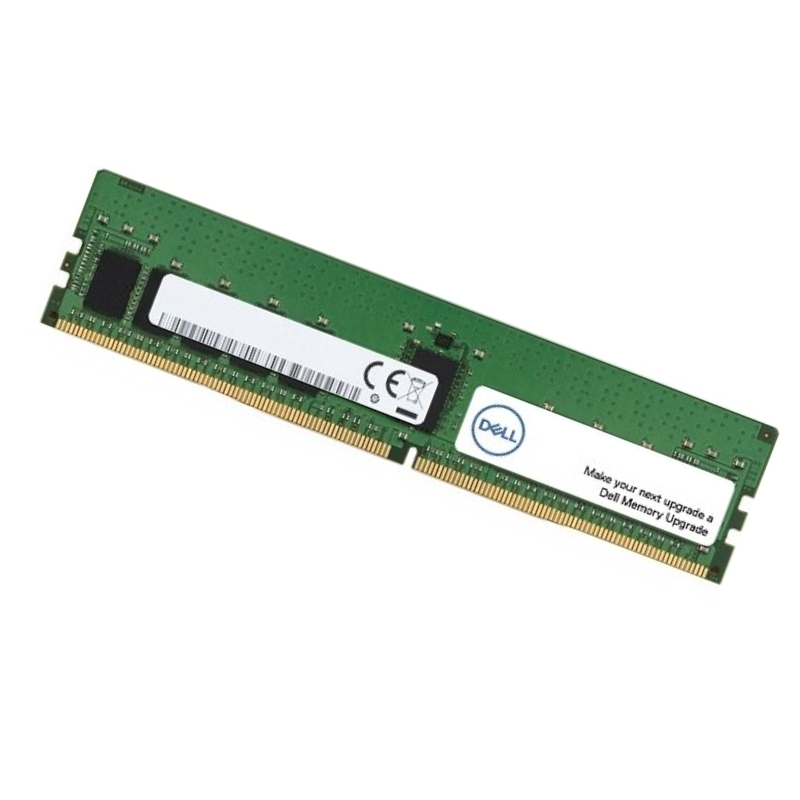
Dell 383-5945 16GB 4800mhz Pc5-38400 DDR5 SDRAM 288-pin Rdimm Memory Module For Server. New Sealed in Box (NIB) - Samsung Version
The Dell 383-5945 16GB 4800MHz PC5-38400 DDR5 SDRAM RDIMM is a high-performance server memory module engineered to deliver exceptional speed, stability, and reliability for enterprise-class workloads.
This memory module is fully compatible with a wide range of Dell enterprise servers, ensuring hassle-free installation and optimal performance.
The Dell 383-5945 represents a significant advancement in server memory technology, delivering enhanced performance, improved power efficiency, and greater reliability for modern data center environments. This 16GB DDR5 module operates at 4800MHz with a PC5-38400 designation, specifically engineered for Dell PowerEdge servers and compatible systems requiring 288-pin RDIMM configurations.
The Dell 383-5945 utilizes DDR5 (Double Data Rate 5) SDRAM technology, which represents a substantial leap forward from previous DDR4 implementations. This module features a 16GB capacity organized with advanced chip architecture that enables higher data transfer rates while maintaining signal integrity in demanding server environments.
DDR5 technology introduces several architectural improvements including dual 32-bit data channels per module (compared to a single 64-bit channel in DDR4), allowing for more efficient data access patterns. The implementation of Decision Feedback Equalization (DFE) improves signal integrity at higher speeds, while the on-die ECC (Error Correcting Code) provides additional data protection beyond the module-level ECC typically found in server memory.
With a data rate of 4800MT/s (Mega Transfers per second) and PC5-38400 classification, this module delivers a peak transfer rate of 38.4GB/s. The increased bandwidth directly translates to improved application performance, faster data processing, and reduced latency for memory-intensive workloads such as database operations, virtualization, and high-performance computing tasks.
The Dell 383-5945 operates with optimized timing parameters that balance high-speed operation with stable performance. While specific timing values (CL-tRCD-tRP) vary based on the memory technology, DDR5 generally employs a different timing structure than previous generations, with the benefit of improved overall efficiency despite potentially higher CAS latency numbers that don't directly compare to DDR4 timings due to architectural differences.
DDR5 memory technology delivers substantial performance improvements compared to DDR4, with higher data transfer rates, increased bandwidth, and improved channel efficiency. The Dell 383-5945's 4800MHz operation represents a significant speed increase over typical DDR4 modules, which commonly operate at 2400-3200MHz in server environments.
With a data rate of 4800MT/s, the Dell 383-5945 provides approximately 50% greater bandwidth than 3200MT/s DDR4 modules. This increased bandwidth directly benefits memory-intensive applications, reduces processing bottlenecks, and improves overall system responsiveness under heavy workloads.
DDR5 technology operates at a lower voltage (1.1V) compared to DDR4 (1.2V), resulting in improved power efficiency that is particularly valuable in data center environments where power consumption and heat generation are significant operational concerns. The power management integrated circuit (PMIC) on DDR5 modules further enhances power distribution and efficiency.
The inclusion of PMIC on the memory module itself represents a fundamental shift from previous memory technologies. This distributed power management system allows for more precise voltage regulation at the module level, reducing power loss and improving signal integrity while enabling more granular power control for different memory operations.
The Dell 383-5945 implements robust error correction through both on-die ECC and standard module-level ECC. This dual-layer approach to error correction provides enhanced protection against data corruption, single-bit errors, and multi-bit errors that can occur in server environments running 24/7 operations.
DDR5's on-die ECC addresses errors at the DRAM chip level before they can affect the broader memory subsystem, while the module-level ECC provides additional protection during data transfers between the memory controller and DRAM devices. This comprehensive approach to error management significantly improves data integrity and system reliability.
As a server-grade component, the Dell 383-5945 includes additional reliability features such as temperature sensors for thermal monitoring, built-in self-test capabilities, and compatibility with Dell's proprietary management systems that provide predictive failure analysis and proactive maintenance alerts.
The module includes temperature sensors that enable the system to monitor thermal conditions and adjust operation or trigger cooling responses as needed. This thermal awareness helps prevent performance throttling and ensures stable operation even under sustained heavy workloads in challenging environmental conditions.
The Dell 383-5945 is ideally suited for enterprise data center environments where reliability, performance, and compatibility are paramount. These modules are commonly deployed in database servers, application servers, virtualization hosts, and other business-critical infrastructure requiring consistent, high-performance memory operations.
In virtualized environments, memory resources are shared across multiple virtual machines, making memory performance and capacity critical factors in overall system capability. The 383-5945's high bandwidth and reliability characteristics make it particularly well-suited for hypervisor hosts and cloud infrastructure supporting numerous simultaneous workloads.
For technical computing, scientific research, and engineering applications that process large datasets or perform complex calculations, the increased bandwidth of DDR5 memory provides tangible performance benefits. The Dell 383-5945 enables faster data access for computational workloads, reducing processing time and improving research productivity.
Database management systems and online transaction processing (OLTP) applications are typically memory-intensive, with performance often limited by memory bandwidth and latency. The 383-5945's high data transfer rates and efficient architecture help minimize query response times and improve transaction throughput in these critical business applications.


 Contact Us
 Information
 Catalog
 Solid State Drives (SSD)
 Network Switches
 Hard Disk Drives
 HBA & Controllers
 PC & Servers
 PC & Server Memory
 CPU & Processors
 Network Routers
 Power Supplies
 Tape Drives & Libraries
 Network Devices
 Computer & Network Cables