
(7% discount is applied at checkout)
Cart is empty
Your go-to destination for cutting-edge server products
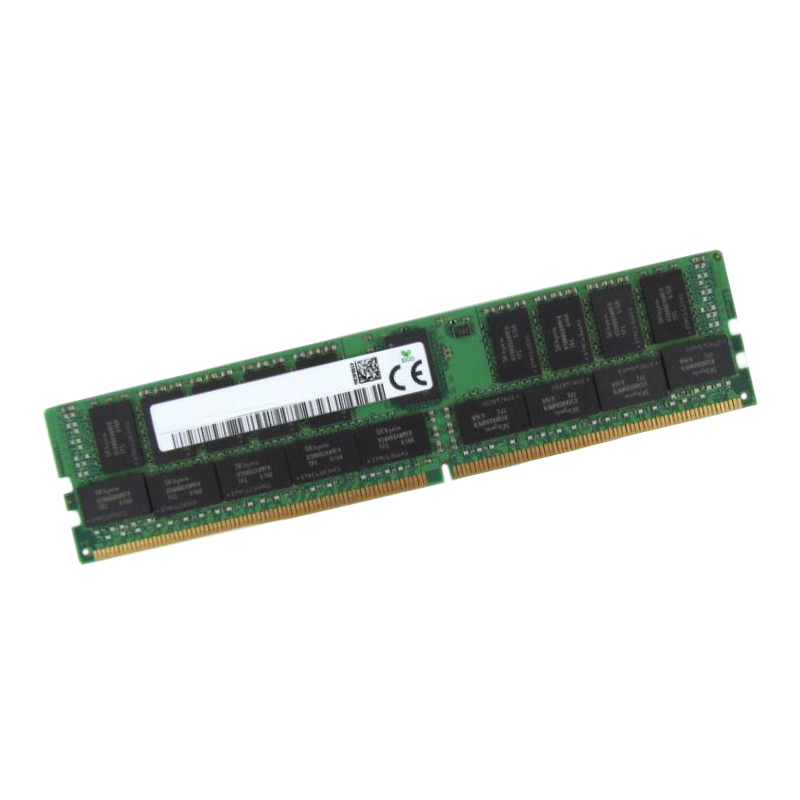
Dell 3C90W 32GB DDR4 2133MHz PC4-17000 ECC Registered 2RX4 CL15 288-Pin RDIMM 1.2V Module Memory. New (System) Pull with 1 Year Replacement Warranty - Samsung Version
| SKU/MPN | Warranty | Price | Condition | You save |
|---|---|---|---|---|
| 3C90W | 1 Year Warranty | $383.00 | New (System) Pull | You save: $134.05 (26%) |
| 3C90W | 1 Year Warranty | $499.00 | New Sealed in Box (NIB) | You save: $174.65 (26%) |
High-performance server memory module designed for enterprise workloads. The Dell 3C90W is a 32GB DDR4 SDRAM RDIMM with ECC error correction, Registered buffering and a 288-pin form factor — ideal for PowerEdge servers and professional systems that require stability and data integrity.
Each module is packaged to protect pins and PCB during transit — ideal for bulk procurement and single-module replacements.
The Dell 3C90W represents a specific category of server-grade memory designed for optimal performance in Dell PowerEdge server environments. This 32GB DDR4 module operates at 2133MHz with the technical designation PC4-17000, indicating its peak transfer rate of 17000 MB/s. As an ECC Registered RDIMM, this memory incorporates advanced error correction and signal stabilization technologies crucial for enterprise-level computing where data integrity and system stability are paramount.
The physical architecture of the Dell 3C90W follows the standardized 288-pin RDIMM (Registered Dual In-line Memory Module) design. This configuration is specifically engineered for server motherboards that require registered memory to handle higher memory capacities and maintain signal integrity across multiple modules. The 288-pin interface ensures proper alignment and connection with server memory slots, while the registered design incorporates a register chip that buffers the memory addresses between the memory controller and DRAM chips, reducing electrical load on the memory controller.
The 2RX4 designation indicates this module utilizes two ranks of memory with x4 DRAM organization. This configuration means the memory is divided into two independent logical sections (ranks) that can be accessed separately, improving memory access efficiency through interleaving. The x4 organization refers to the internal architecture of the individual memory chips, where each chip has a 4-bit data width. This specific organization is particularly beneficial for servers as it enhances reliability and enables more advanced error correction capabilities compared to x8 organization.
The Dell 3C90W operates at a standard DDR4 voltage of 1.2V, representing a significant power efficiency improvement over previous DDR3 generations that typically required 1.5V. This reduced voltage translates to lower power consumption and reduced heat generation, critical factors in dense server environments where thermal management and energy efficiency directly impact operational costs.
With an operating frequency of 2133MHz, this memory module performs data transfers on both the rising and falling edges of the clock cycle, effectively achieving a data rate of 4266 million transfers per second. The PC4-17000 designation derives from this effective transfer rate, calculated as 2133MHz × 8 bytes (64-bit data bus) = 17064 MB/s, rounded to 17000 MB/s for the naming convention.
The CAS Latency of 15 clock cycles represents the delay between when a memory controller requests data and when that data becomes available. While higher frequency modules often have higher CAS latencies, the CL15 timing at 2133MHz provides a balanced performance profile suitable for server workloads where consistent performance is more critical than peak bandwidth.
The 32GB capacity per module represents an optimal balance for server memory configuration. This density allows for substantial total memory capacity in modern servers while maintaining compatibility with a wide range of Dell PowerEdge systems. When deployed in multi-channel configurations across multiple memory slots, these modules can enable terabyte-scale memory configurations essential for memory-intensive applications.
Error Correcting Code represents a critical feature for enterprise and server environments where data integrity is non-negotiable. The ECC technology in the Dell 3C90W memory module can detect and correct single-bit memory errors automatically, while also detecting (though not correcting) multi-bit errors. This capability significantly reduces system crashes, data corruption, and silent data errors that could otherwise go unnoticed in non-ECC memory.
ECC memory incorporates additional bits (typically 8 bits for every 64 bits of data) that store encrypted information about the stored data. When data is read from memory, the ECC bits are recalculated and compared against the stored ECC bits. If a single-bit error is detected, the memory controller can automatically correct the error without any performance penalty or system interruption.
While ECC memory primarily focuses on single-bit error correction, it also provides detection capabilities for multi-bit errors. When multiple bit errors occur within the same memory word, the ECC system can identify the corruption and alert the system, which can then take appropriate action such as halting operations to prevent data corruption from propagating through the system.
Registered memory, often designated as RDIMM (Registered Dual In-line Memory Module), incorporates a register between the memory controller and the DRAM chips. This register buffers the command and address signals, reducing the electrical load on the memory controller and enabling support for higher memory capacities and more memory modules per channel.
The registering of command and address signals significantly improves signal integrity, especially in systems with large memory configurations. By reducing electrical load and signal degradation, registered memory enables more stable operation at higher frequencies and with more modules installed, which is essential for servers requiring large memory capacities.
Registered memory allows servers to support significantly higher memory capacities compared to unbuffered memory. This scalability is crucial for memory-intensive applications such as database servers, virtualization hosts, and high-performance computing clusters where maximum memory configuration directly impacts performance and capability.
In virtualized environments, memory capacity often becomes the primary limiting factor for virtual machine density. The 32GB capacity per module allows for substantial memory allocation across multiple virtual machines, while the ECC protection ensures the stability required for consolidated workloads. The 2133MHz speed provides sufficient bandwidth for most virtualized applications.
For database servers, particularly those leveraging in-memory processing, the Dell 3C90W offers an optimal balance of capacity and performance. The ECC functionality is particularly critical for database applications where data integrity is paramount, and the registered architecture ensures stable operation even in fully populated memory configurations.
Beyond raw performance, the Dell 3C90W incorporates features specifically designed for enterprise environments where uptime and serviceability are critical considerations.
The module includes thermal sensors that monitor operating temperature and can trigger throttling or alerts if temperatures exceed safe operating limits. This feature is particularly important in densely populated servers where airflow might be restricted, ensuring long-term reliability and preventing thermal-related failures.
When used in compatible Dell PowerEdge systems, the 3C90W memory module supports advanced diagnostic features through Dell's OpenManage suite. These capabilities include predictive failure analysis, which can alert administrators to potential memory issues before they cause system failures, enabling proactive maintenance and replacement.
Understanding the advancements of DDR4 technology over previous generations helps contextualize the performance and efficiency characteristics of the Dell 3C90W module.
DDR4 operates at 1.2V compared to DDR3's typical 1.5V or 1.35V for DDR3L, representing a 20-30% reduction in power consumption. This efficiency improvement directly translates to reduced operating costs and thermal output in data center environments.
While the Dell 3C90W operates at 2133MHz, which is towards the lower end of DDR4 speeds, it still represents a significant improvement over typical DDR3 speeds of 1333MHz or 1600MHz. The architectural improvements in DDR4 also provide better overall efficiency at comparable clock speeds.
The choice between registered, unbuffered, and load-reduced memory depends on specific server requirements and intended applications.
Compared to Unbuffered DIMMs (UDIMMs), Registered DIMMs (RDIMMs) support higher memory capacities per module and per system. While UDIMMs might offer slightly lower latency in some scenarios, RDIMMs provide better scalability for memory-intensive applications.
UDIMMs are typically found in desktop and entry-level server systems where maximum memory capacity is not a primary concern. RDIMMs, like the Dell 3C90W, are designed for mainstream servers requiring large memory configurations with enhanced reliability features.


 Contact Us
 Information
 Catalog
 Solid State Drives (SSD)
 Network Switches
 Hard Disk Drives
 HBA & Controllers
 PC & Servers
 PC & Server Memory
 CPU & Processors
 Network Routers
 Power Supplies
 Tape Drives & Libraries
 Network Devices
 Computer & Network Cables