(7% discount is applied at checkout)
Cart is empty
Your go-to destination for cutting-edge server products
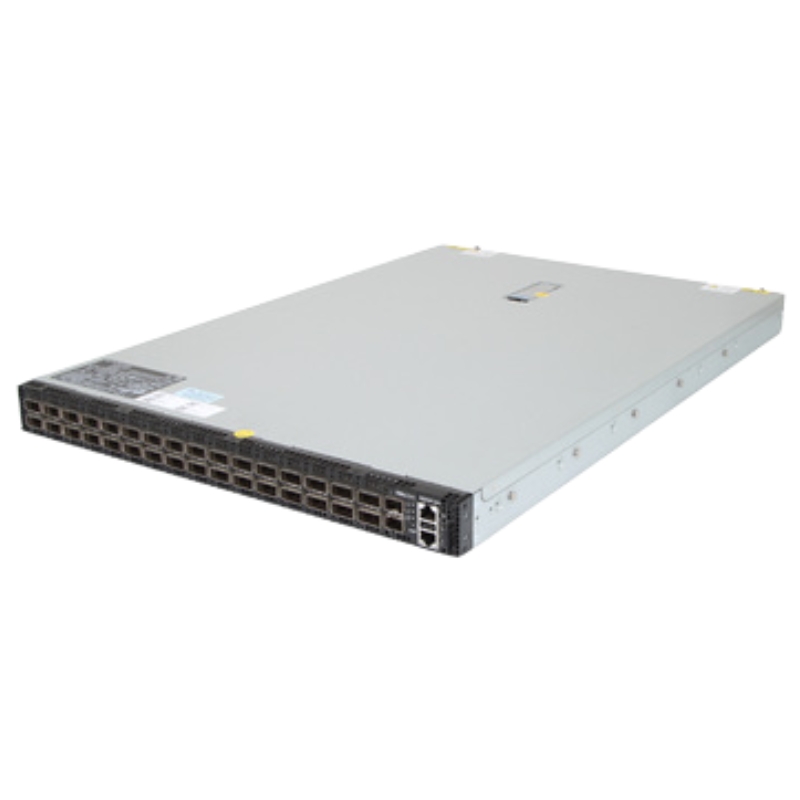


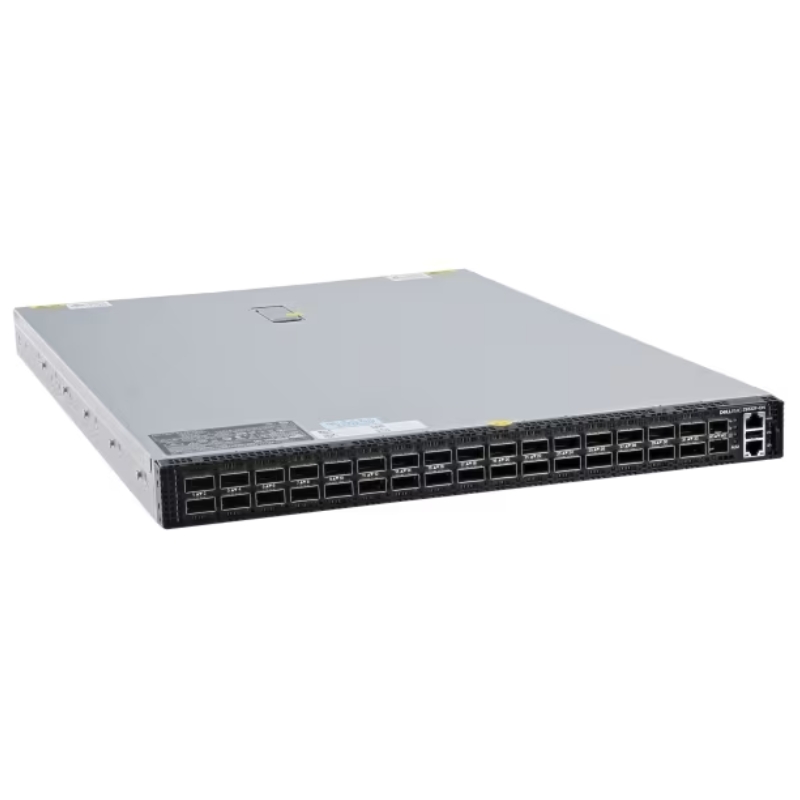
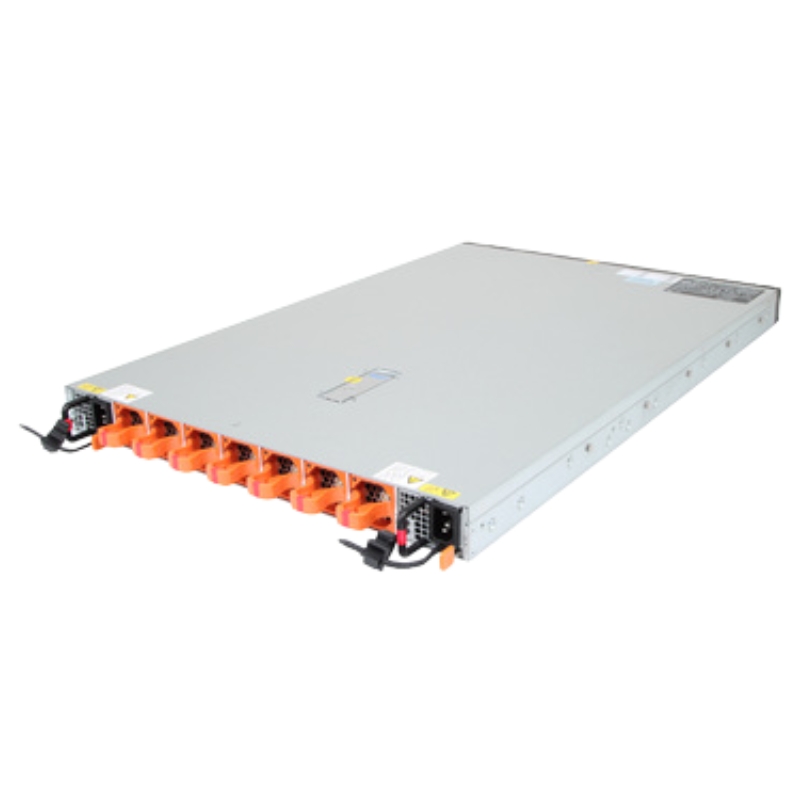
Dell 3J5P1 EMC Z9332F-ON 32-Port 400GBE QSFP56-DD with Dual Power Supply Sonic OS & Standard Airflow Hot-swappable Power Switch. Excellent Refurbished with 1-Year Replacement Warranty
The Dell Z9332F-ON switch delivers exceptional connectivity with advanced port density, designed for modern data centers requiring high-speed networking.
The Dell 3J5P1 EMC Z9332F-ON 32-Port 400GBE QSFP56-DD with Dual Power Supply Sonic OS & Standard Airflow Hot-swappable Power Switch represents a new generation of high-density, high-performance networking infrastructure designed specifically for hyperscale, enterprise, cloud, and service provider environments. This category focuses on ultra-fast Ethernet switching platforms that enable organizations to meet the growing demands of data-intensive workloads, AI-driven applications, large-scale virtualization, and multi-cloud connectivity. At the core of this category is the requirement for extreme throughput, low latency, and exceptional scalability. With 32 ports of 400GbE using QSFP56-DD interfaces, this class of switches delivers unprecedented bandwidth in a compact form factor. This allows data centers to consolidate network layers, reduce cabling complexity, and optimize space utilization while achieving multi-terabit switching capacity. The Dell EMC Z9332F-ON platform embodies the principles of open networking, modular power architecture, and operational flexibility. This category is especially relevant for organizations seeking future-proof networking solutions that support evolving standards, open operating systems like Sonic, and flexible deployment models across spine-leaf architectures, edge aggregation layers, and high-performance compute clusters.
The emergence of 400GbE Ethernet has redefined data center connectivity by delivering quadruple the bandwidth of 100GbE links while maintaining similar power efficiency and footprint. This category encompasses switches engineered to harness the full potential of 400GbE interfaces, ensuring that organizations can scale their network backbones without compromising performance or reliability. As workloads such as machine learning, big data analytics, and real-time streaming become increasingly bandwidth-intensive, traditional 10GbE, 25GbE, and even 100GbE infrastructures face limitations. The Dell 3J5P1 EMC Z9332F-ON class of switches addresses these challenges by offering a high port count of 400GbE connections, enabling seamless east-west traffic flows within data centers and high-speed north-south connectivity to external networks. This category also reflects the broader transition from proprietary networking platforms to open, standards-based solutions that provide greater flexibility, interoperability, and cost efficiency. With support for QSFP56-DD transceivers, breakout configurations, and high-density cabling, these switches empower network architects to design scalable topologies that adapt to both current and future requirements.
QSFP56-DD ports represent a significant advancement in Ethernet transceiver technology by doubling the density of traditional QSFP ports. Each QSFP56-DD interface supports eight lanes of 50Gbps signaling, resulting in a total throughput of 400Gbps per port. This category of switches leverages this technology to achieve ultra-high port density without increasing chassis size or power consumption disproportionately. For network designers, this translates into greater flexibility in building spine-leaf topologies, as fewer switches are required to achieve the same or higher levels of connectivity. The Dell EMC Z9332F-ON category allows for multiple breakout configurations, such as 1x400GbE to 2x200GbE or 4x100GbE, providing versatility in connecting to legacy equipment while still enabling a smooth transition to next-generation speeds. The use of QSFP56-DD ports also simplifies cable management and reduces the overall number of optical modules and cables needed in a data center, leading to lower capital expenditures and improved operational efficiency. This category caters to environments where space, power, and cooling constraints are critical considerations.
A defining characteristic of the Dell 3J5P1 EMC Z9332F-ON category is its alignment with open networking principles. These switches are designed to run Sonic OS, an open-source network operating system originally developed by Microsoft and now supported by a broad ecosystem of hardware vendors, software developers, and cloud service providers. Sonic OS provides a modular, containerized architecture that enables rapid deployment, simplified updates, and greater control over network services. By decoupling hardware from software, this category empowers organizations to avoid vendor lock-in and tailor their network environments to specific operational and business needs. The integration of Sonic OS also enables advanced automation, telemetry, and orchestration capabilities, which are essential for managing large-scale, dynamic networks. This category is particularly well-suited for DevOps-driven environments where infrastructure is treated as code and network configurations are continuously optimized through automation pipelines.
Open networking platforms like the Dell EMC Z9332F-ON category offer several advantages over traditional, closed networking systems. These benefits include greater transparency, faster innovation cycles, and the ability to integrate best-of-breed software solutions from multiple vendors. By leveraging Sonic OS, organizations gain access to a rich ecosystem of community-driven enhancements, security updates, and feature developments. This category supports open APIs, standardized management interfaces, and compatibility with popular orchestration frameworks, making it easier to integrate networking operations into broader IT workflows. In enterprise environments, this translates into reduced operational complexity, improved network resilience, and the ability to scale infrastructure in alignment with business growth. In cloud and hyperscale settings, open networking enables rapid deployment of new services, efficient resource utilization, and consistent network behavior across geographically distributed data centers.
The modular design of Sonic OS aligns perfectly with the hardware capabilities of the Dell EMC Z9332F-ON category. Network services such as routing, switching, telemetry, and security are deployed as independent containers, allowing for isolated updates, faster troubleshooting, and minimal service disruption. This architecture also supports the integration of third-party network functions, enabling organizations to customize their network stacks according to specific use cases. Whether deploying advanced routing protocols, implementing custom monitoring solutions, or integrating security appliances, this category provides the flexibility required to build highly adaptable network environments. Containerized services also enhance network reliability by enabling rapid failover, redundancy, and service restarts without impacting the entire system. This is particularly valuable in mission-critical environments where downtime is unacceptable and continuous availability is a core requirement.
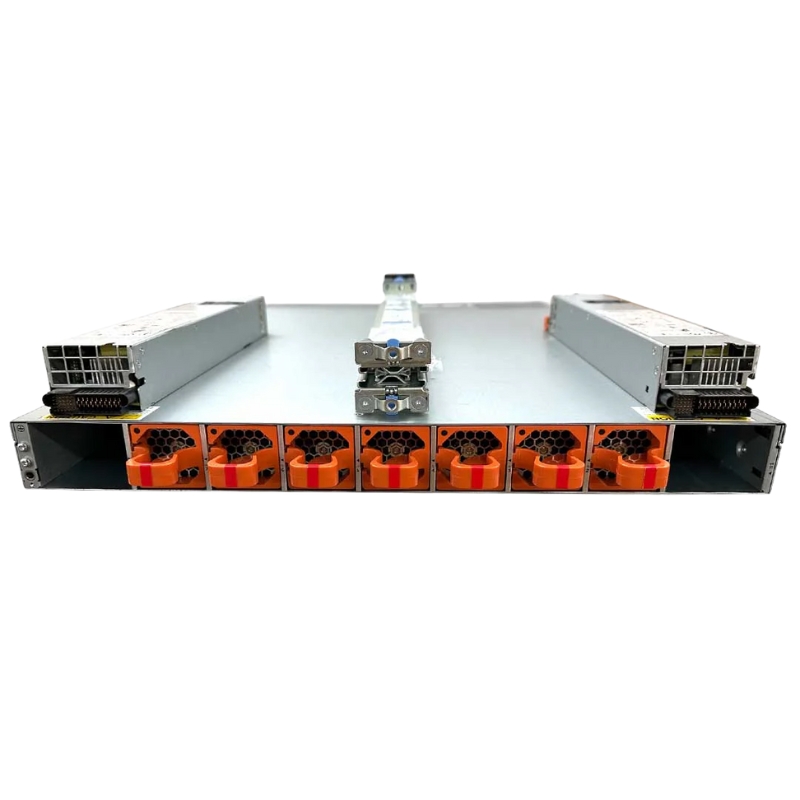
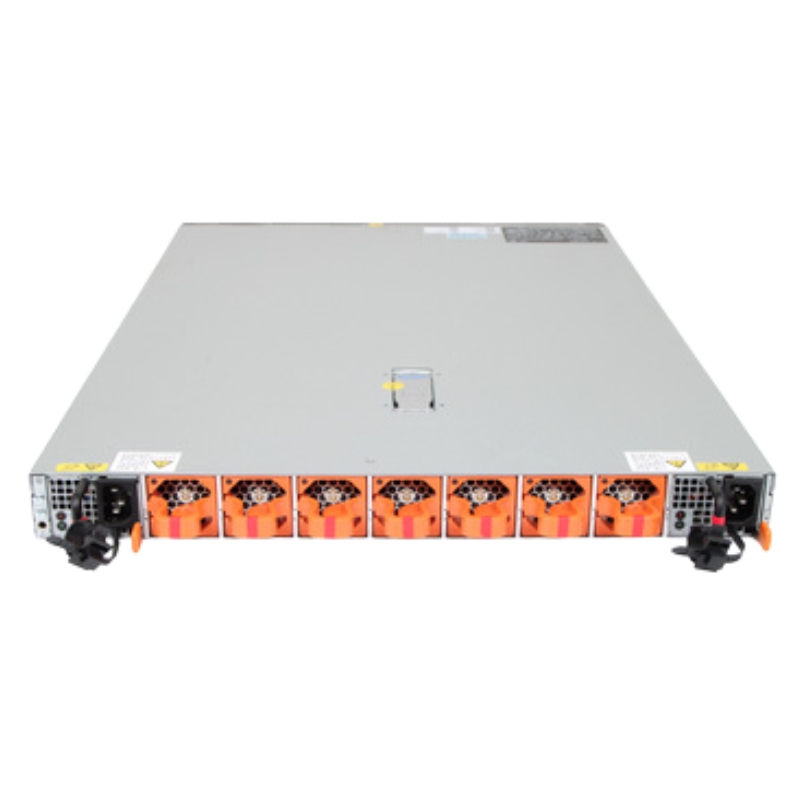
Reliability and uptime are central to the Dell 3J5P1 EMC Z9332F-ON category, which is why these switches are equipped with dual power supplies and hot-swappable components. This design ensures continuous operation even in the event of a power module failure, allowing organizations to perform maintenance and replacements without disrupting network services. Dual power supply units provide redundancy and load balancing, enhancing overall system resilience and energy efficiency. Hot-swappable power supplies, fans, and other critical components enable in-service maintenance, reducing downtime and supporting high-availability network architectures. This category is especially relevant for data centers that require 24/7 operation, including financial institutions, healthcare providers, e-commerce platforms, and telecommunications networks. The ability to maintain network infrastructure without service interruption is a key differentiator for high-performance switching solutions.
Hot-swappable power supplies and cooling modules are integral to the operational resilience of the Dell EMC Z9332F-ON category. These components can be replaced or upgraded without shutting down the switch, ensuring continuous network availability. This feature is particularly valuable in environments where scheduled downtime is difficult or impossible to accommodate. By enabling in-service maintenance, organizations can proactively address potential hardware issues, extend equipment lifespan, and maintain consistent performance levels. Hot-swappability also supports scalability, as additional power or cooling capacity can be added as network demands increase. This aligns with the modular, future-proof design philosophy that defines this category of high-performance network switches.
The Dell 3J5P1 EMC Z9332F-ON category is engineered around a high-performance switching fabric capable of delivering multi-terabit throughput with ultra-low latency. This is critical for applications that require real-time data processing, such as financial trading systems, AI training clusters, and high-frequency analytics platforms. Low-latency architecture ensures that packets are processed and forwarded with minimal delay, preserving application performance and reducing jitter across the network. This category supports advanced forwarding engines, deep packet buffers, and optimized traffic scheduling to handle large volumes of data with consistent performance. The combination of high throughput and low latency enables organizations to consolidate network tiers, reduce the number of hops between endpoints, and improve overall application responsiveness. This is particularly valuable in spine-leaf architectures, where efficient east-west traffic flow is essential for distributed workloads.
The non-blocking switching architecture of the Dell EMC Z9332F-ON category ensures that all ports can operate at full line rate simultaneously without performance degradation. This is essential for environments where multiple high-bandwidth applications compete for network resources. Scalability is achieved through a combination of high-capacity switching silicon, optimized internal interconnects, and efficient traffic management algorithms. This category supports seamless expansion as network demands grow, enabling organizations to add new devices, applications, and services without compromising performance. Non-blocking performance also simplifies network design by reducing the need for oversubscription and complex traffic engineering, allowing network architects to build simpler, more predictable topologies.
The Dell 3J5P1 EMC Z9332F-ON category is designed to support a wide range of deployment scenarios, from large-scale data centers and cloud environments to enterprise campuses and edge computing locations. Its combination of high port density, open networking support, and resilient hardware design makes it suitable for diverse use cases. In hyperscale data centers, this category serves as a core component of spine-leaf architectures, enabling high-speed interconnects between compute, storage, and networking resources. Its 400GbE ports provide the bandwidth required to support massive east-west traffic flows generated by distributed applications and microservices. In enterprise environments, these switches support data center modernization initiatives, enabling organizations to migrate to higher-speed networks, consolidate infrastructure, and adopt cloud-native architectures. The flexibility of Sonic OS and open networking standards allows enterprises to integrate these switches into existing management frameworks and automation pipelines.


 Contact Us
 Information
 Catalog
 Solid State Drives (SSD)
 Network Switches
 Hard Disk Drives
 HBA & Controllers
 PC & Servers
 PC & Server Memory
 CPU & Processors
 Network Routers
 Power Supplies
 Tape Drives & Libraries
 Network Devices
 Computer & Network Cables