(7% discount is applied at checkout)
Cart is empty
Your go-to destination for cutting-edge server products
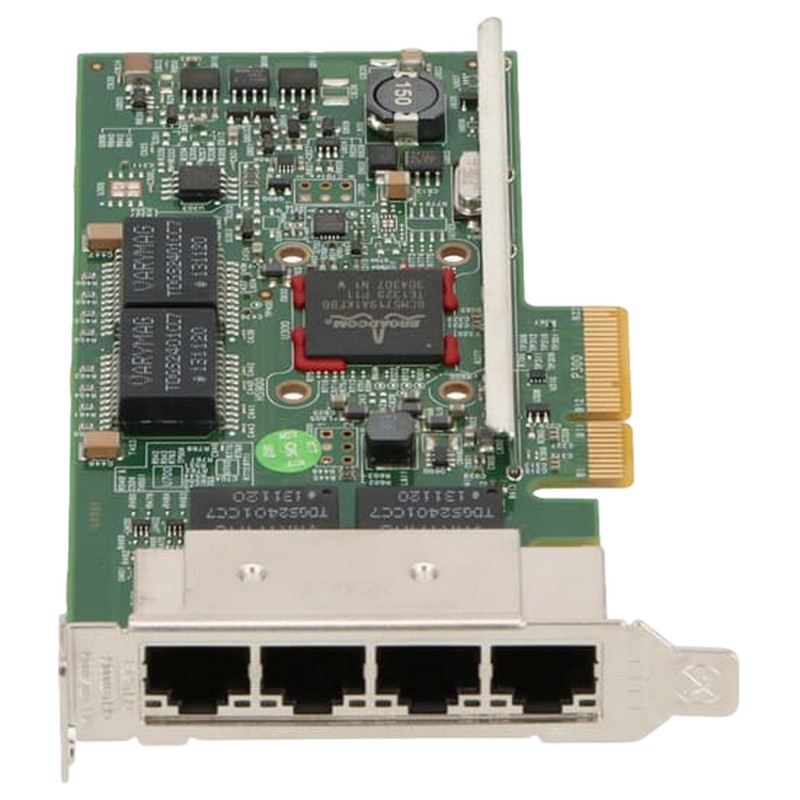


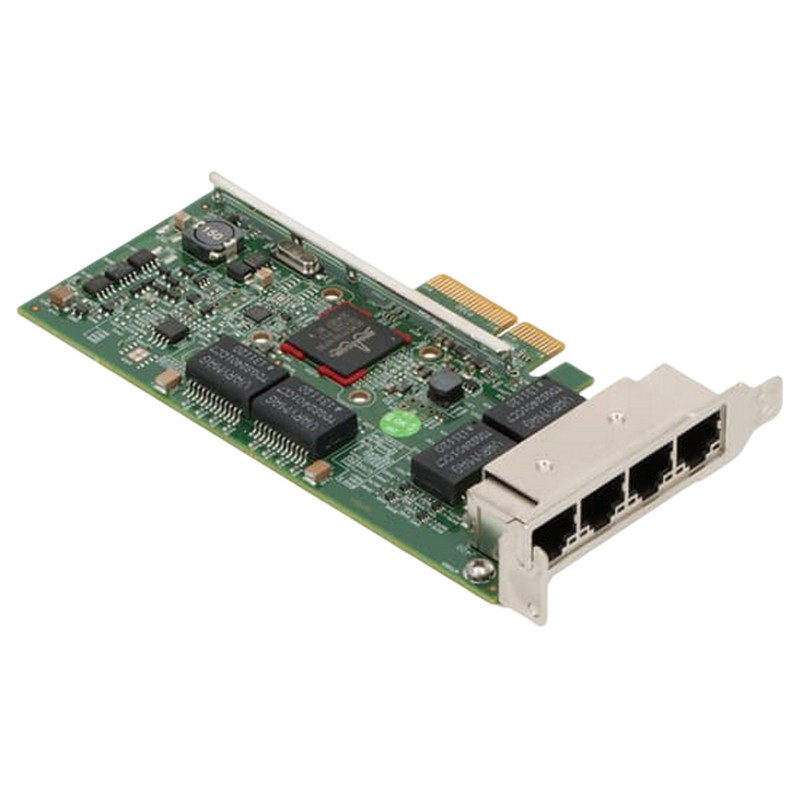
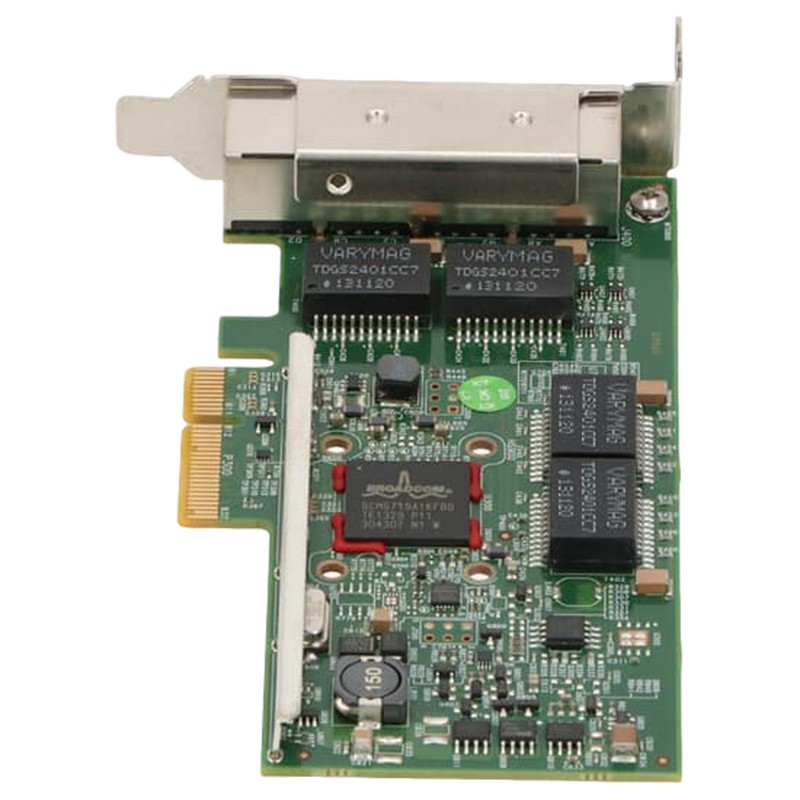
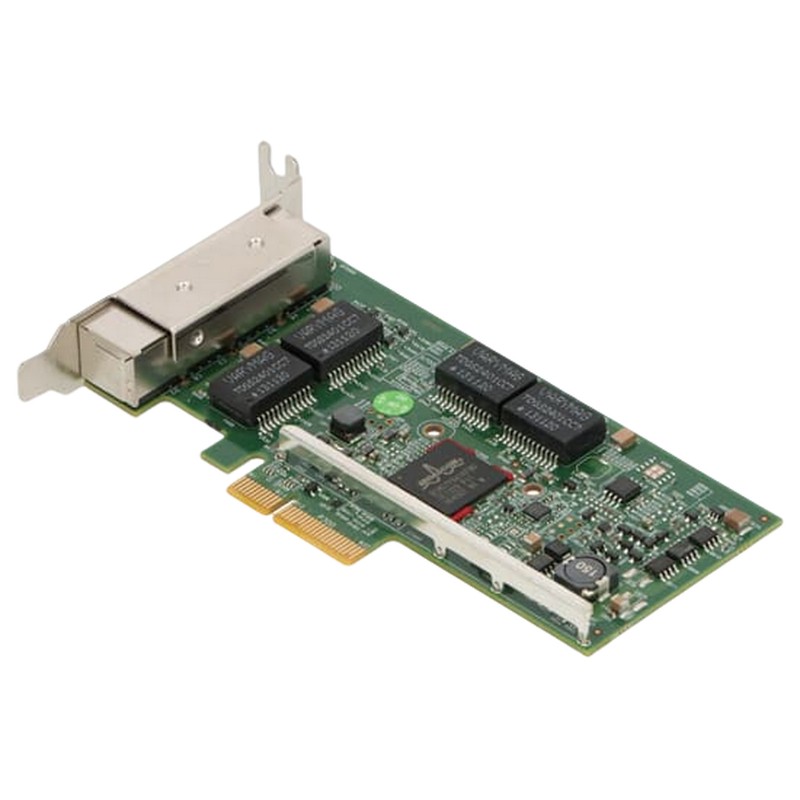
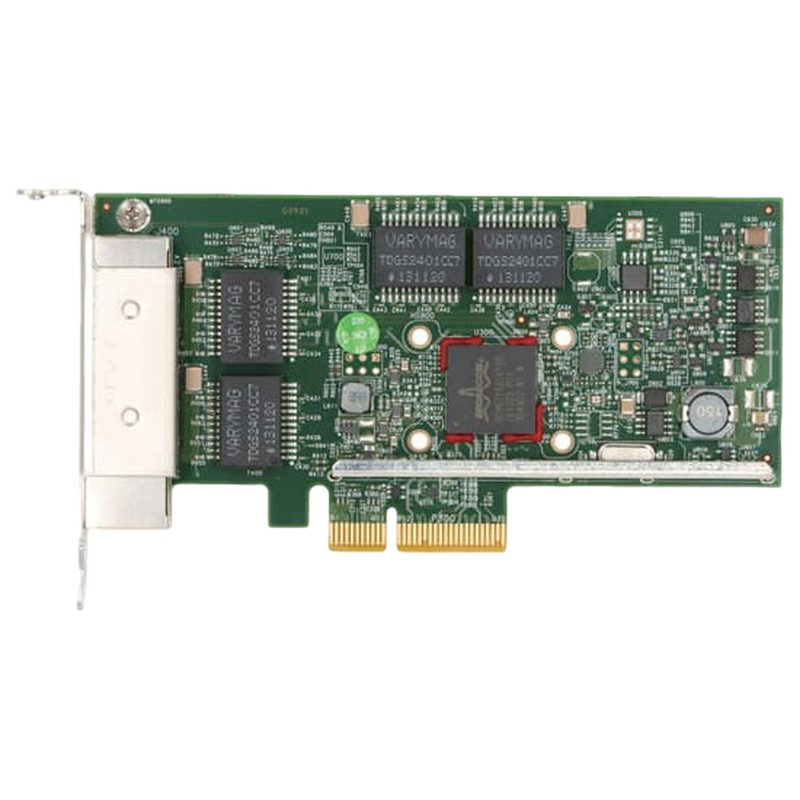
Dell 430-4426 PCI-Express Interface Card with 4 Ethernet Ports. Excellent Refurbished with 1 year replacement warranty
```html
The Dell 430-4426 PCI-Express Interface Card is a high-performance quad-port Gigabit Ethernet networking solution designed for enterprise servers, virtualization environments, and business-critical network infrastructures. Built with the reliable Broadcom BCM5719 controller, this expansion card delivers dependable connectivity, enhanced bandwidth capacity, and advanced network acceleration technologies for modern data centers and server deployments.
Hardware Specifications
The Dell 430-4426 PCI-Express Interface Card with 4 Ethernet Ports is engineered to provide reliable wired network connectivity for servers, workstations, virtualization hosts, storage systems, and enterprise computing platforms. Designed to expand networking capabilities through a PCI-Express interface, this adapter delivers multiple Ethernet connections within a single expansion slot, allowing organizations to simplify infrastructure deployment while maximizing available bandwidth and connectivity options.
Modern business environments demand dependable network communication between servers, storage devices, applications, and end users. Multi-port network adapters have become essential components for organizations that require high availability, workload separation, network redundancy, and efficient traffic management. The Dell 430-4426 interface card addresses these requirements by integrating four Ethernet ports into a compact PCIe adapter that can be deployed across a wide range of enterprise systems.
As data centers continue to evolve and network traffic volumes increase, administrators require scalable connectivity solutions capable of supporting virtualization platforms, cloud computing infrastructures, backup operations, database communication, and business-critical applications. The four-port design helps organizations achieve these objectives while maintaining operational efficiency and infrastructure flexibility.
The PCI-Express architecture utilized by the Dell 430-4426 provides a dedicated communication pathway between the network adapter and the host system. Unlike older bus technologies that share bandwidth among multiple devices, PCIe technology offers enhanced throughput, reduced latency, and improved efficiency. This architecture is particularly important in environments where continuous network communication and rapid data exchange are critical to business operations.
PCI-Express technology enables the network adapter to process large volumes of network traffic while maintaining stable performance levels. Organizations deploying database servers, virtualization hosts, application servers, and file-sharing systems benefit from the efficient communication capabilities delivered through the PCIe interface.
The implementation of PCI-Express technology provides numerous benefits for enterprise users. High-speed communication between the network controller and host system improves overall responsiveness and allows organizations to maximize the value of their networking infrastructure. The PCIe design supports demanding workloads while ensuring compatibility with contemporary server and workstation platforms.
Enhanced bandwidth allocation, reduced bottlenecks, and efficient packet processing contribute to improved network performance. These characteristics make PCIe interface cards particularly suitable for environments where uninterrupted connectivity and consistent throughput are essential.
Organizations increasingly rely on resource-intensive applications that generate significant network traffic. Virtual machines, cloud platforms, collaboration tools, analytics solutions, and storage networks all require dependable connectivity. The Dell 430-4426 adapter is designed to support these evolving workload requirements while helping businesses maintain operational continuity and performance consistency.
One of the defining characteristics of the Dell 430-4426 PCI-Express Interface Card is its four-port Ethernet configuration. Multiple network interfaces allow administrators to design flexible networking architectures that support redundancy, segmentation, load balancing, and dedicated traffic channels.
Rather than consuming multiple expansion slots for separate network adapters, organizations can consolidate connectivity requirements into a single card. This approach improves hardware utilization and simplifies server configuration while preserving valuable expansion capacity for additional devices.
Network segmentation is an important strategy for enhancing performance, security, and manageability. The four-port configuration enables administrators to separate different categories of network traffic across individual interfaces. Production traffic, management communications, backup operations, and storage networking can each utilize dedicated Ethernet connections.
By isolating workloads, organizations can reduce network congestion and improve application responsiveness. Dedicated interfaces also simplify troubleshooting and monitoring activities by providing clear separation between different traffic types.
Business continuity depends heavily on network availability. The availability of multiple Ethernet ports enables organizations to implement redundant connectivity configurations that help minimize downtime. If a network path experiences a failure, alternate interfaces can continue supporting critical communications.
Redundant network designs are especially valuable in environments that host customer-facing applications, financial systems, healthcare workloads, manufacturing operations, and other mission-critical services.
The Dell 430-4426 interface card is suitable for deployment in a variety of enterprise server environments. Its flexible networking capabilities make it a practical choice for organizations seeking to expand connectivity while maintaining efficient infrastructure management practices.
Database servers often process substantial volumes of transactional information. Reliable network connectivity is essential for ensuring fast data access and maintaining application responsiveness. The four-port design allows administrators to dedicate specific interfaces to database communications while reserving others for backup operations, replication activities, or management tasks.
Virtualization technologies have transformed modern data centers by enabling organizations to consolidate workloads and maximize hardware utilization. Multi-port network adapters play a crucial role in virtualization environments by providing dedicated connectivity channels for various virtualized functions.
Virtualized servers frequently host numerous virtual machines that generate diverse traffic patterns. The availability of four Ethernet interfaces enables administrators to allocate specific network resources to virtual machine traffic, management communications, migration operations, and storage access.
Traffic separation contributes to improved performance consistency while reducing the likelihood of resource contention between competing workloads.
Hypervisor platforms require reliable network connectivity for management activities, virtual machine communication, and infrastructure services. The Dell 430-4426 interface card provides the networking foundation necessary to support these operations while maintaining operational flexibility and scalability.
Cloud infrastructures depend on robust networking capabilities to facilitate communication between compute, storage, and management resources. The multi-port design supports the network segmentation strategies commonly used in private and hybrid cloud environments.
Organizations implementing cloud initiatives can leverage the adapter's multiple Ethernet interfaces to create scalable and resilient network architectures that support evolving business requirements.
Network downtime can have significant consequences for business operations. Reliable connectivity solutions help organizations reduce risk and maintain access to critical applications and services. The Dell 430-4426 adapter contributes to network resilience through its multiple-port architecture and enterprise-oriented design.
Organizations depend on uninterrupted communication between systems, users, and applications. The presence of four Ethernet interfaces provides additional options for maintaining connectivity in the event of network component failures or maintenance activities.
By incorporating multiple network paths into infrastructure designs, businesses can improve service availability and reduce the impact of unexpected disruptions.
High-availability environments often require multiple network connections to ensure consistent service delivery. The Dell 430-4426 adapter supports networking strategies that prioritize redundancy and fault tolerance, helping organizations meet operational and service-level objectives.
Failover configurations allow network traffic to transition to alternate interfaces when primary connections become unavailable. This capability enhances resilience and helps organizations maintain business continuity during network disruptions.
Network security remains a priority for organizations across every industry. Multi-port adapters can play an important role in supporting security-focused infrastructure designs by enabling traffic isolation and dedicated communication pathways.
Different categories of network communication often have unique performance and security requirements. The four-port design enables organizations to isolate sensitive workloads, internal services, backup operations, and user-facing applications onto separate interfaces.
Traffic isolation contributes to improved operational control and supports compliance initiatives that require network segmentation.
Business growth often leads to increased network traffic, expanding application portfolios, and evolving infrastructure requirements. The Dell 430-4426 PCI-Express Interface Card helps organizations prepare for future growth by providing multiple Ethernet connections within a single hardware component.
Organizations can leverage available Ethernet interfaces to support new applications, services, and network segments as operational requirements evolve. The multi-port architecture provides flexibility that supports long-term infrastructure planning initiatives.
Rather than immediately requiring additional network adapters, businesses may utilize existing ports to accommodate incremental growth and changing workload demands.
The Dell 430-4426 interface card is designed for integration into enterprise computing environments that require dependable network connectivity. Organizations operating Dell servers and compatible workstation platforms can benefit from hardware solutions engineered to support professional IT infrastructures.
Organizations across industries rely on business-critical systems to support daily operations. Reliable network communication is essential for ensuring application availability, user productivity, and service delivery. Multi-port Ethernet connectivity helps organizations maintain efficient communication pathways across diverse infrastructure components.
As networking technologies continue to evolve, organizations require adaptable connectivity solutions capable of supporting changing infrastructure demands. The Dell 430-4426 PCI-Express Interface Card with 4 Ethernet Ports delivers a versatile networking platform that supports virtualization, cloud computing, storage networking, application hosting, security segmentation, and high-availability initiatives. Its four-port design, PCIe architecture, and enterprise-oriented capabilities make it a valuable component for organizations seeking dependable and scalable network expansion within professional IT environments.


 Contact Us
 Information
 Catalog
 Solid State Drives (SSD)
 Network Switches
 Hard Disk Drives
 HBA & Controllers
 PC & Servers
 PC & Server Memory
 CPU & Processors
 Network Routers
 Power Supplies
 Tape Drives & Libraries
 Network Devices
 Computer & Network Cables