(7% discount is applied at checkout)
Cart is empty
Your go-to destination for cutting-edge server products
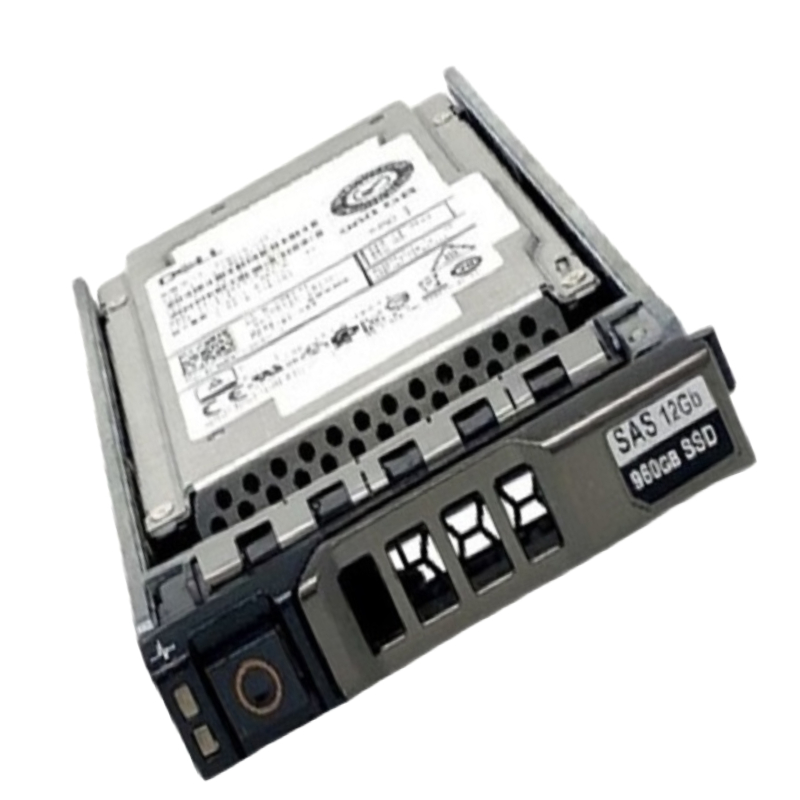


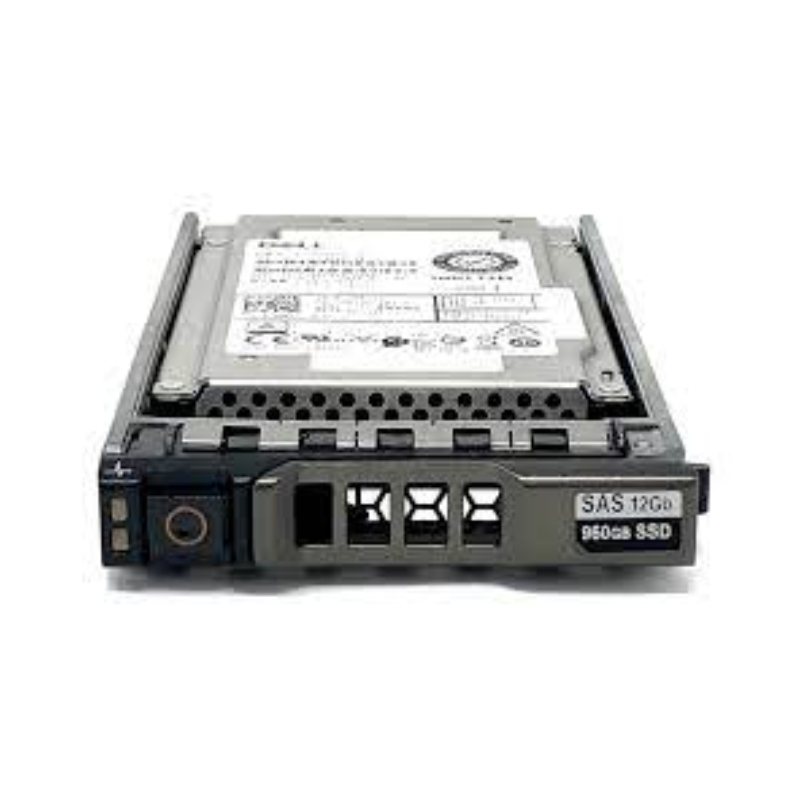
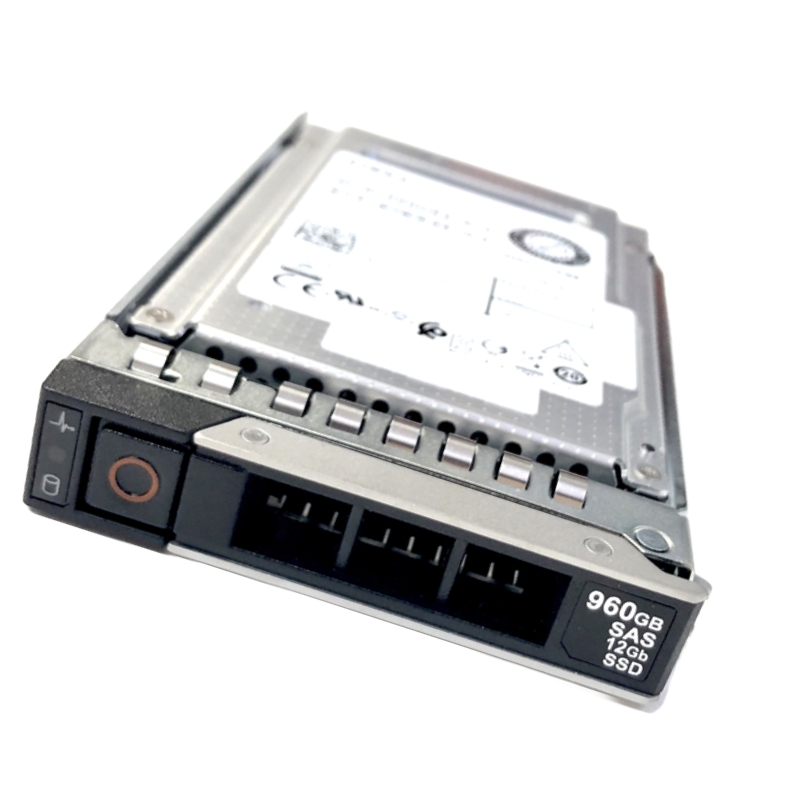
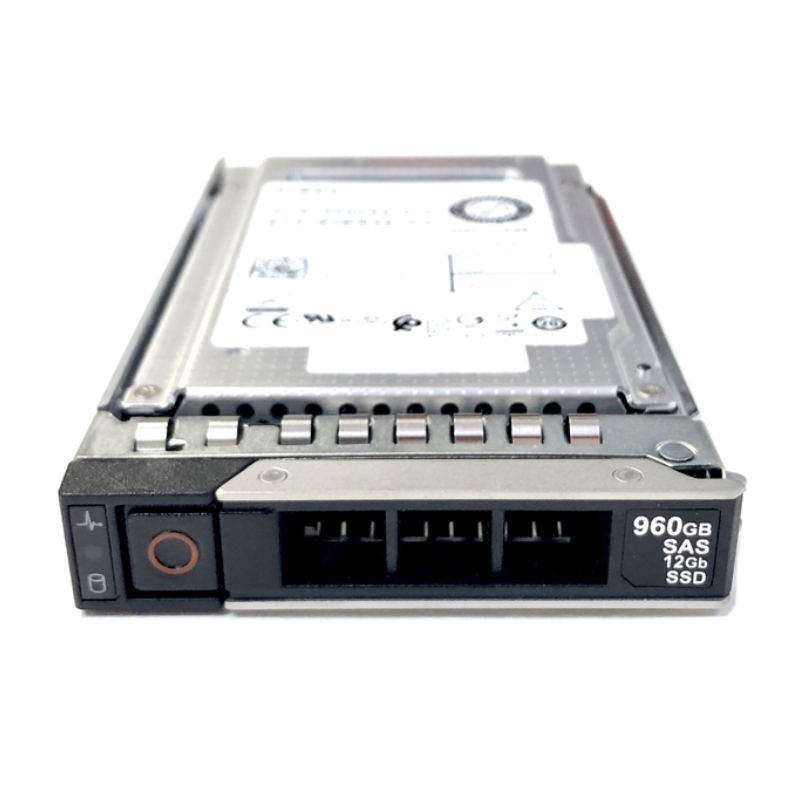
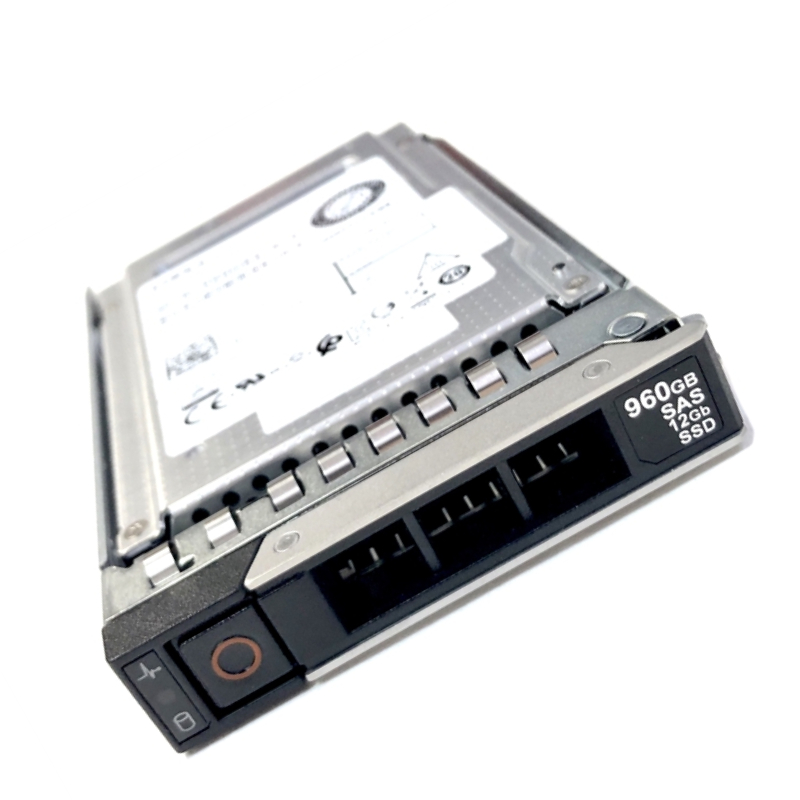
Dell 400-ANMQ 960GB Mixed Use MLC SAS-12GBPS 2.5inch Hot Plug Solid State Drive. Excellent Refurbished with 1 Year Replacement Warranty
The Dell 400-ANMQ 960GB Mixed-Use MLC SAS-12GBPS SFF Hot-Plug Solid State Drive represents a focused enterprise category of 2.5-inch SAS SSDs tailored for PowerEdge servers and datacenter deployments that demand sustained mixed-read/mixed-write performance, predictable latency, and the enterprise management features of OEM-certified Dell components. This category sits at the intersection of small form factor (SFF) engineering, multi-level cell (MLC) flash technology tuned for mixed-use workloads, and the 12Gb/s SAS interface standard that delivers consistent throughput to modern RAID controllers and HBA cards found in server-class systems. The drives in this category are typically sold as genuine Dell part-numbered units, often shipped with drive trays or sleds for direct insertion into PowerEdge drive bays, and are targeted at customers who prefer factory-validated firmware, compatibility guarantees, and Dell support traces throughout the lifecycle.
Physically the category is dominated by the 2.5-inch SFF (small form factor) chassis with the standard 1/3 height profile for hot-swap drive bays commonly used in rack and tower PowerEdge models. The SFF format balances density and thermal headroom, permitting higher rack density while maintaining airflow and thermal control in modern server chassis. Most product kits include or list compatibility with Dell sleds such as the G176J or 8FKXC drive carrier, which allow the SSD to be treated as a direct replacement for factory-installed drives and to benefit from the enclosure's backplane hot-plug capability. The hot-plug design means that the drive can be inserted or removed while the system is running—critical for serviceability in enterprise environments—without the need to power down a production server.
The category standardizes on the Serial Attached SCSI (SAS) 12Gb/s interface, a robust enterprise-grade link that emphasizes reliability, dual-port optioning (on many enterprise SAS implementations), and predictable behaviour under heavy I/O. SAS 12Gb/s provides a clear upgrade path from 6Gb/s SAS, doubling bandwidth headroom per lane and enabling multi-drive arrays to sustain higher concurrent throughput when paired with 12Gb/s RAID controllers or HBAs. For system architects, choosing a SAS-12Gbps SSD within this category eliminates common bottlenecks in mixed workload server tiers and ensures compatibility with existing SAS backplanes used in PowerEdge R- and T-series servers. Vendors commonly list the external transfer rate as matching the 12Gb/s signaling capability, and OEM documentation frequently maps the product part numbers to the drive-specific firmware revision that has been validated for Dell server generations.
At the heart of the 400-ANMQ category is MLC (multi-level cell) flash configured and tuned for mixed-use workloads. Mixed-use MLC strikes a compromise between the endurance and write amplification characteristics of SLC/TLC/QLC alternatives and the cost-per-gigabyte profile that enterprises require for capacity tiers. Mixed-use drives are engineered to deliver a balance of sustained write throughput and endurance sufficient for database caching layers, virtual machine host storage, and transaction-heavy application servers where both reads and writes are frequent. The SSD controller firmware in this category emphasizes wear-leveling, garbage collection, and background maintenance routines that preserve write performance over longer intervals compared with consumer-grade SSD firmware. OEM-certified firmware means drives are shipped with Dell-specific testing and compatibility checks to avoid unexpected behaviour with OpenManage and PERC controllers.
A nominal capacity of 960GB positions the 400-ANMQ family in the high-capacity 2.5-inch enterprise SSD bracket, enabling consolidation of working sets and reducing the number of devices required for a given usable capacity. The drives are typically presented with industry-standard logical sector formatting and may appear in vendor listings as 960 GB (decimal) or as the formatted binary capacity used by the operating system after provisioning. When designing arrays, architects must account for over-provisioning, RAID parity overhead, and the workload profile to estimate usable capacity accurately. Several OEM listings and reseller datasheets indicate the 960GB capacity as the primary SKU for the 400-ANMQ line.
The category commonly advertises sustained external transfer capability aligned with 12Gb/s SAS signaling—often reflected as a quoted external transfer rate consistent with 12Gb/s lanes. In real-world deployments, the sustained throughput depends on queue depths, I/O mix, RAID overhead, and controller optimization. Mixed-use MLC SSDs in this family are engineered to maintain steady-state performance in environments with a mixture of random and sequential I/O patterns. For administrators, this means more predictable latency under load compared with consumer SSDs, and the ability to sustain higher IOPS across longer time windows while keeping latency within SLA boundaries for application servers.
Endurance metrics for mixed-use MLC drive categories are usually expressed as drive writes per day (DWPD), mean time between failures (MTBF), or total bytes written (TBW) over warranty period. Drives marketed for enterprise mixed-use commonly carry endurance ratings that support variable but sustained write workloads typical of virtualization hosts, caching layers, and transactional databases. Reliability enhancements such as power-loss protection, persistent write caches, and firmware-level data-path protection are hallmarks of drives intended for datacenter consumption; OEM Dell-branded SKUs are also often subject to Dell’s internal validation suites and QA checks which increase transparency around firmware behaviour and failure modes. When planning deployments, datacenter operators should weigh these endurance and reliability guarantees against application patterns and factor in hot spares and RAID levels for resiliency.
High-density rack deployments require careful thermal planning when integrating multiple 2.5-inch SSDs in front bays. The SFF form and enterprise-grade controller logic help manage power draw, but administrators must still verify that server cooling and fan curves are tuned to maintain recommended operating temperatures for sustained workloads. Power-loss protection mechanisms and capacitive buffering in enterprise SSDs reduce the risk of data corruption during unexpected power events, but they do not eliminate the need for redundant power supplies and appropriate UPS sizing. OEM documentation for the category highlights the importance of matching firmware to platform power-management settings to avoid spurious drive resets or aggressive thermal throttling at high ambient temperatures.
One of the most important attributes of this category is the factory-validated compatibility with a broad set of Dell PowerEdge servers. The 400-ANMQ SKU and its related part numbers are most frequently listed as compatible with Generation 13 and later PowerEdge models, including popular rack and tower platforms designed for virtualization and scale-out storage. Compatibility notes in reseller pages mention explicit fitment with servers such as the PowerEdge R330, R430, R530, R630, R730, R730xd, R930 and several T- and tower-class systems. Matching the drive to the correct sled or tray—often the G176J or 8FKXC part numbers—ensures correct identification in the iDRAC and OpenManage reporting and supports hot-swap operations natively through the server backplane. For procurement and lifecycle management, using OEM-certified drives reduces the unknowns associated with third-party firmware and simplifies warranty claims if hardware faults occur.
The mixed-use MLC SAS SSD category is optimized for workloads that require a blend of reads and writes with a need for sustained I/O and low latency. Typical deployment patterns include virtual machine datastore volumes, database log volumes or mixed OLTP/OLAP workloads, hyperconverged infrastructure (HCI) nodes that combine compute and storage on the same host, and as a high-performance tier in hybrid storage architectures. Because these drives balance endurance and capacity, they are well-suited to environments that require higher capacity per drive than pure SLC or enterprise-grade TLC while still benefiting from enterprise-class reliability. For read-heavy caches or write-heavy logging, administrators may evaluate other drive classes or consider mixed arrays where MU SSDs act as a middle tier between ultra-high-end NVMe cache and high-capacity HDDs.
Applications that see a consistent mixture of random reads and writes, such as transactional databases, multi-tenant virtualization hosts, web application backends with mixed caching and persistence workloads, and mid-tier HCI nodes, will see the greatest benefit from these mixed-use MLC SAS drives. They are also a compelling upgrade path for organizations that currently use 2.5-inch HDDs or older 6Gb/s SAS SSDs and want improved density and lower latency without moving to NVMe architectures that require different interconnects and platform support. By consolidating cache and working set data on a smaller number of high-capacity SSDs, teams can reduce rack space, simplify cabling and minimize latency variability across the cluster.
When comparing this category to NVMe SSD alternatives, the primary tradeoffs are interface maturity and ecosystem compatibility versus maximum raw performance. SAS MU MLC SSDs offer predictable performance on widely deployed RAID controllers, dual-path options and easier integration into existing server fleets without introducing new NVMe driver or slot requirements. Compared to SATA-based enterprise SSDs, SAS devices typically provide better multi-lane throughput, higher reliability under mixed workloads, and superior management features for enterprise controllers. For workloads that absolutely require ultra-low latency and maximum parallelism, NVMe remains an option; however, for many mixed-use tiers in PowerEdge servers the SAS MU MLC class represents an ideal middle ground of capacity, endurance and enterprise manageability.


 Contact Us
 Information
 Catalog
 Solid State Drives (SSD)
 Network Switches
 Hard Disk Drives
 HBA & Controllers
 PC & Servers
 PC & Server Memory
 CPU & Processors
 Network Routers
 Power Supplies
 Tape Drives & Libraries
 Network Devices
 Computer & Network Cables