(7% discount is applied at checkout)
Cart is empty
Your go-to destination for cutting-edge server products
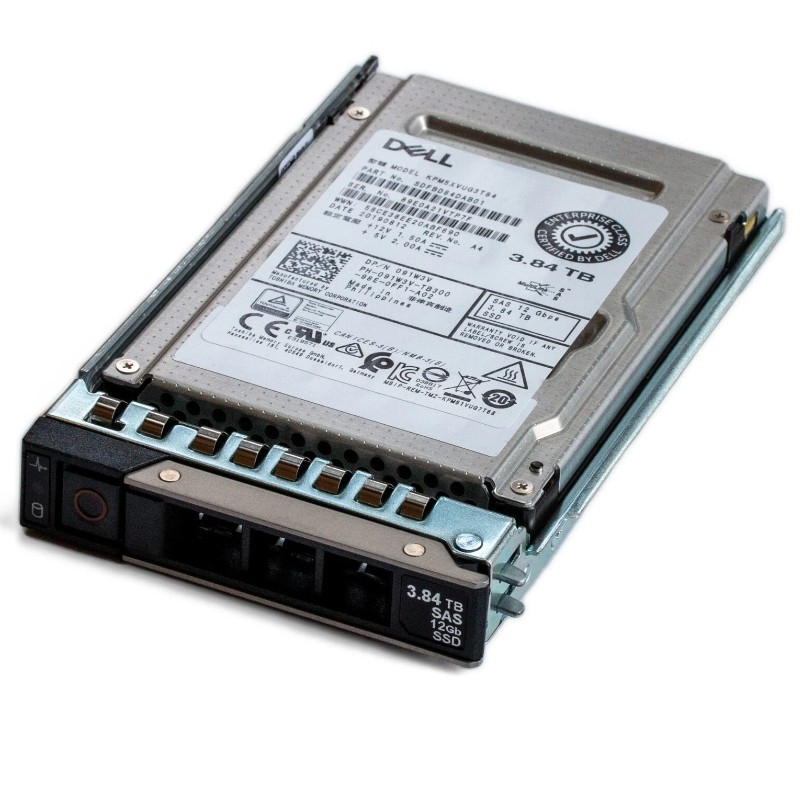


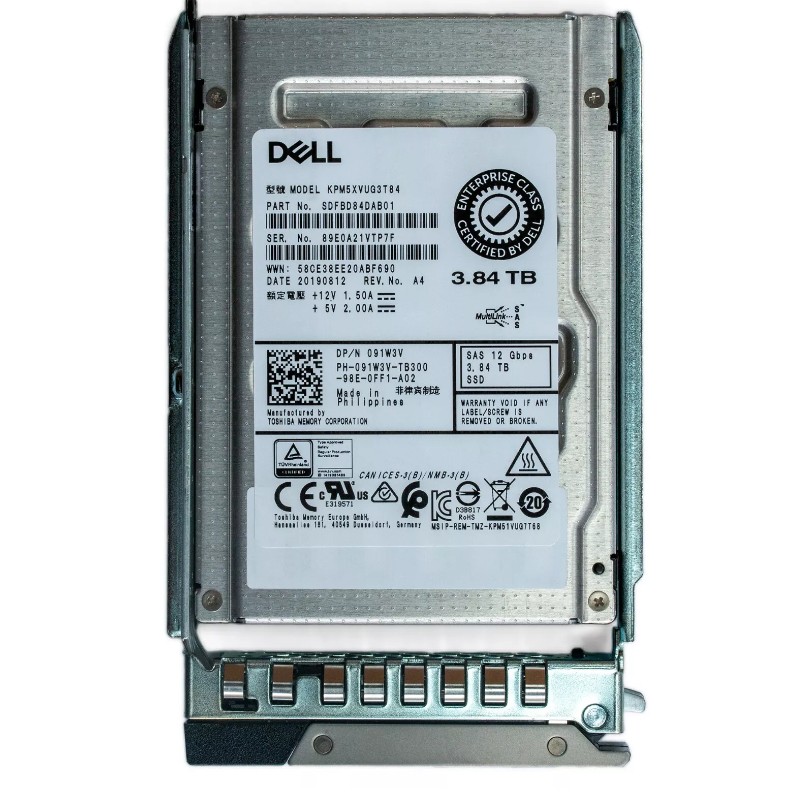
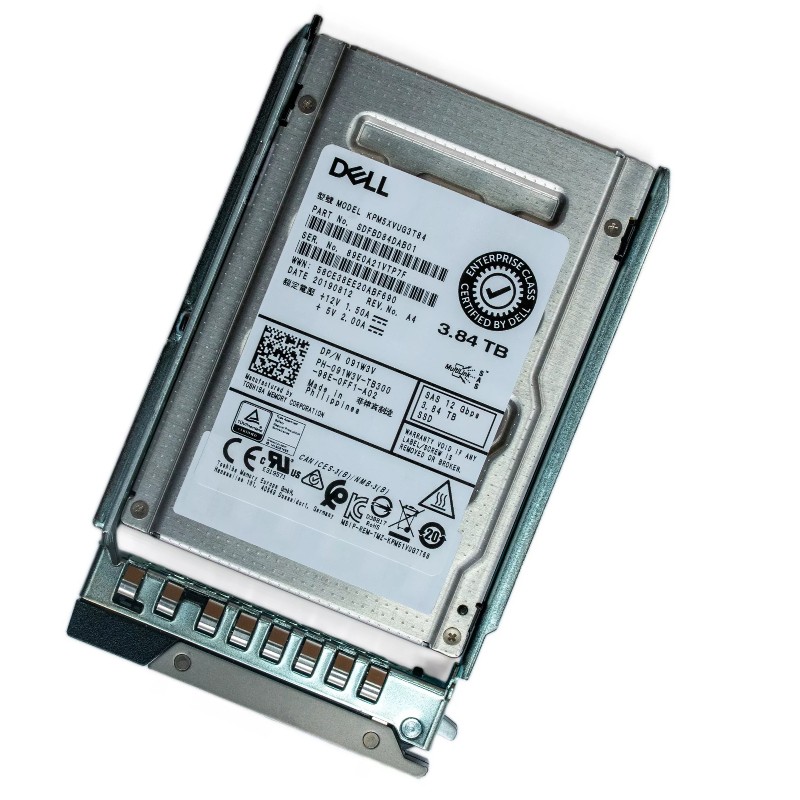
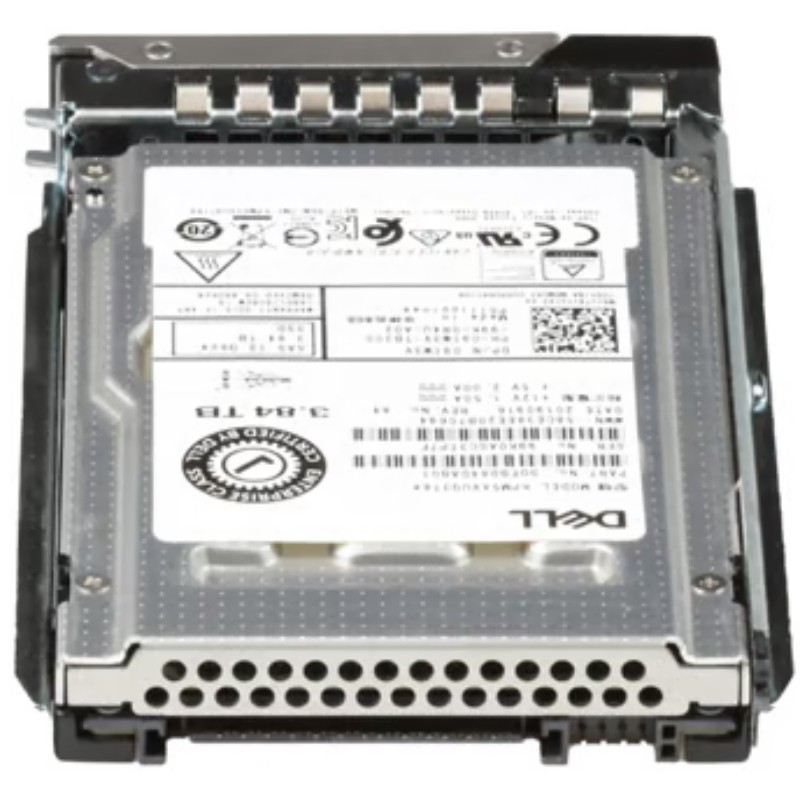
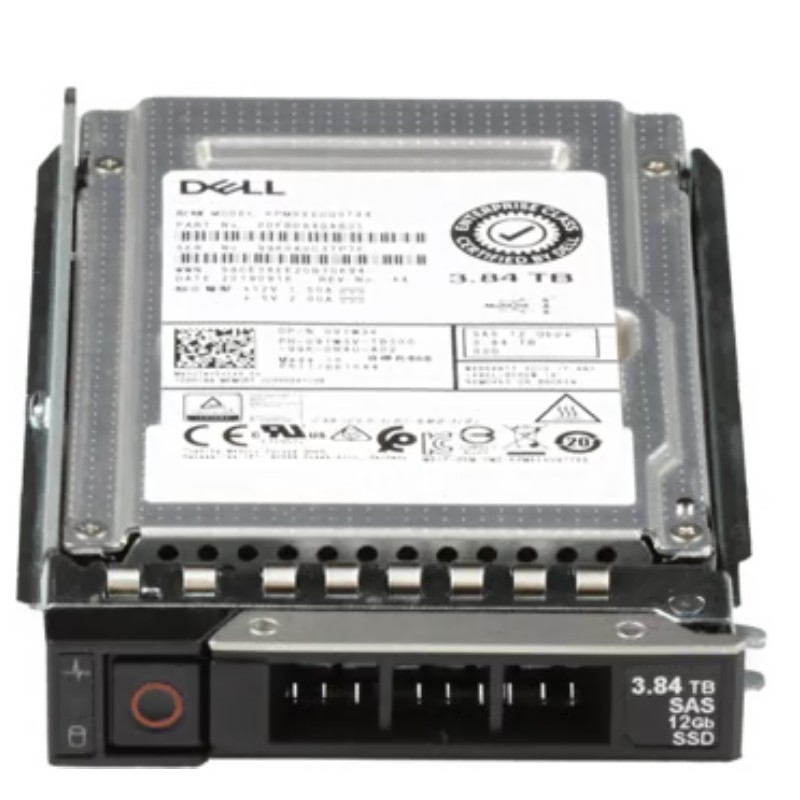
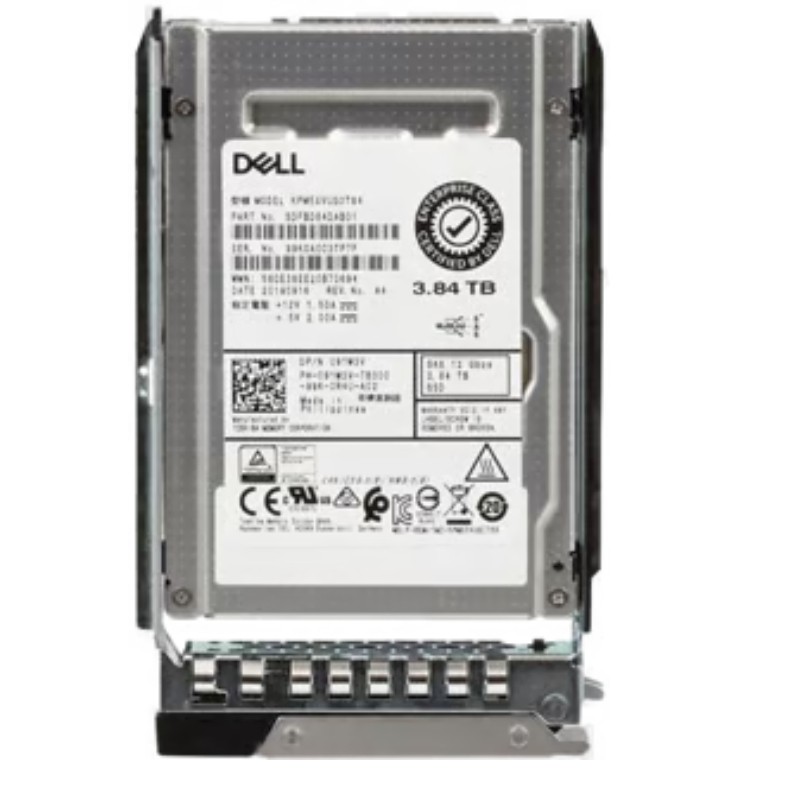
Dell 400-ANNL 3.84TB Mixed Use MLC SAS 12GBPS 2.5inch Hot Plug SSD. Excellent Refurbished with 1 Year Replacement Warranty
The Dell 400-ANNL solid-state drive delivers robust storage performance tailored for mixed-use environments. Designed for seamless integration into Dell PowerEdge servers, this hot-swappable SSD ensures reliability and speed for demanding workloads.
This SSD is validated for use with a wide range of Dell PowerEdge servers, ensuring optimal performance and compatibility:
The Dell 400-ANNL 3.84TB Mixed-Use MLC SAS-12GBPS 2.5inch Hot Plug Solid State Drive for PowerEdge Server sits squarely in the enterprise-class SSD category designed for mixed-use workloads, balancing high performance with durable endurance characteristics suitable for data center environments. This subcategory of drives emphasizes a combination of throughput, low latency, and sustained write capability to serve a variety of mission-critical applications including virtualization, databases, application servers, and storage tiering. The core attributes—3.84TB capacity, multi-level cell (MLC) architecture optimized for mixed use, SAS 12Gbps interface, and 2.5-inch hot-plug form factor—make it a practical choice for organizations upgrading server storage in PowerEdge platforms where reliability, compatibility, and manageable total cost of ownership are key procurement considerations.
At the heart of this category is the MLC NAND topology targeted at middle-ground workloads that require higher endurance than consumer TLC parts but do not necessarily need the extreme write endurance of enterprise SLC variants. The 3.84TB capacity point is commonly used to consolidate storage density while preserving performance headroom for random I/O and mixed read/write patterns. The SAS-12Gbps interface delivers enterprise-focused features such as full-duplex communication, advanced queuing for high parallelism, and robust compatibility with PowerEdge server backplanes and RAID controllers. The 2.5-inch form factor is optimized for dense server chassis, offering hot-plug capability to enable non-disruptive replacement and scaling within blade, rack-mount, and tower configurations.
Performance in the Dell 400-ANNL category varies by random IOPS, sequential throughput, and latency under sustained load. The SAS-12Gbps interface removes a common bottleneck for enterprise workloads, allowing drives to deliver high queue-depth performance necessary for transactional systems, virtualized environments, and high-concurrency databases. Random read latency typically remains low across mixed-use drive families, while random write performance benefits from optimized flash management and over-provisioning strategies. Sequential throughput is competitive for bulk operations such as backup, snapshot creation, and large file transfers. Real-world behavior shows that mixed-use MLC SSDs are particularly effective when applications present balanced read/write ratios and intermittent bursts of high IOPS rather than constant, heavy sequential writes that would be better served by specialized write-optimized media.
Compatibility is a central selling point for this category. Drives marketed specifically as "for PowerEdge Server" undergo vendor validation to ensure that backplane pinouts, firmware compatibility, and hot-swap behavior meet Dell serviceability standards. This integration reduces surprises during firmware updates, decreases the chance of compatibility-induced I/O errors, and streamlines support engagements. The SAS interface enables straightforward integration with Dell's RAID controllers and HBA cards, and when combined with Dell OpenManage and lifecycle controller tools, administrators gain the ability to monitor drive health, perform predictive failure analysis, and automate firmware updates in a controlled manner.
The 2.5-inch hot-plug design is significant for operational readiness. Hot-plugging facilitates non-disruptive replacement of drives in RAID arrays or individual standalone volumes, and it simplifies scale-out procedures in dense server configurations. Serviceability extends past the physical act of replacement: these drives often include LED indicators and SMART telemetry that supports proactive maintenance workflows, allowing administrators to schedule replacements during maintenance windows rather than reacting to unplanned failures.
From a deployment perspective, choosing a 3.84TB mixed-use 2.5-inch SAS SSD enables higher data density per U-sized blade or 1U server than larger 3.5-inch options, while preserving enterprise feature sets. Rack-scale thinking emphasizes not just capacity per drive but aggregate IOPS per rack, power draw, and cooling requirements. The smaller form factor helps maximize drives per chassis while enabling lower latency through higher parallelism across multiple SSDs. When designing storage tiers within the rack, these SSDs can function as primary performance tiers or as part of a hybrid array where they handle hot data sets and front-end transactions while colder data migrates to higher-capacity spinning disks.
Power efficiency and thermal profiles are practical concerns when deploying dozens or hundreds of drives in a data center. Mixed-use MLC drives generally offer favorable performance-per-watt compared to older enterprise HDDs, but thermal management becomes critical in high-density enclosures. Proper airflow design, correctly configured fan profiles via server management, and adherence to recommended ambient temperature ranges extend drive longevity and preserve performance stability. Administrators should account for heat dissipation and avoid combining too many high-power components in a single chassis without appropriate cooling adjustments.
Lifecycle planning for the Dell 400-ANNL class involves provisioning with realistic over-provisioning percentages, monitoring endurance metrics such as Drive Writes Per Day (DWPD), and planning for capacity growth. Migration strategies vary by environment but commonly include block-level replication, host-based migration tools, or storage-array-level cloning. Because these drives are intended for mixed workloads, planning should include headroom for peak write volumes and a schedule for proactive replacements based on telemetry rather than fixed time intervals, improving both uptime and cost predictability.
Choosing the appropriate RAID level is fundamental when deploying these SSDs: RAID configurations that can leverage multiple drives for parallelism while providing redundancy can significantly impact both throughput and data availability. RAID controllers optimized for SAS devices often allow for features such as intelligent rebuild prioritization and background patrol reads to ensure degraded arrays maintain acceptable performance until full restoration. For business-critical workloads, combining drive-level redundancy with application-level replication yields the best balance between availability and recovery time objectives.
Within the broader SSD market, the Dell 400-ANNL mixed-use MLC SAS 12Gbps 2.5-inch drives should be contrasted with higher-endurance SLC or eMLC alternatives and cost-optimized TLC or QLC options. Buyers should evaluate whether their workload requires additional endurance or whether the mixed-use balance offers the best ROI. Comparisons should also include interface considerations; NVMe solutions provide higher raw throughput and lower latency for certain workloads, but SAS SSDs retain advantages in established SAS infrastructure, controller maturity, and broad PowerEdge compatibility, making them attractive for many enterprise environments that prioritize proven interoperability and predictable behavior with existing server ecosystems.
Industries that benefit from this class of drives include financial services running transactional databases and trading platforms that require consistent low-latency storage, healthcare systems hosting electronic medical records and image repositories where reliability and secure erasure are critical, and cloud or hosting providers offering virtual machine density with predictable performance SLAs. These drives are also useful in high-availability application clusters where quick rebuilds and minimal latency variability are important for maintaining application responsiveness.
When integrated into virtualization platforms, these SSDs improve VM boot storms, reduce I/O contention, and enable higher consolidation ratios. Containerized workloads benefit from low-latency storage for stateful services and persistent volumes, where consistent IOPS can translate directly into application throughput improvements. Administrators should align datastore configuration and hypervisor caching policies to take full advantage of the mixed-use performance profile while monitoring write amplification at the hypervisor layer to avoid unnecessary wear.


 Contact Us
 Information
 Catalog
 Solid State Drives (SSD)
 Network Switches
 Hard Disk Drives
 HBA & Controllers
 PC & Servers
 PC & Server Memory
 CPU & Processors
 Network Routers
 Power Supplies
 Tape Drives & Libraries
 Network Devices
 Computer & Network Cables