(7% discount is applied at checkout)
Cart is empty
Your go-to destination for cutting-edge server products


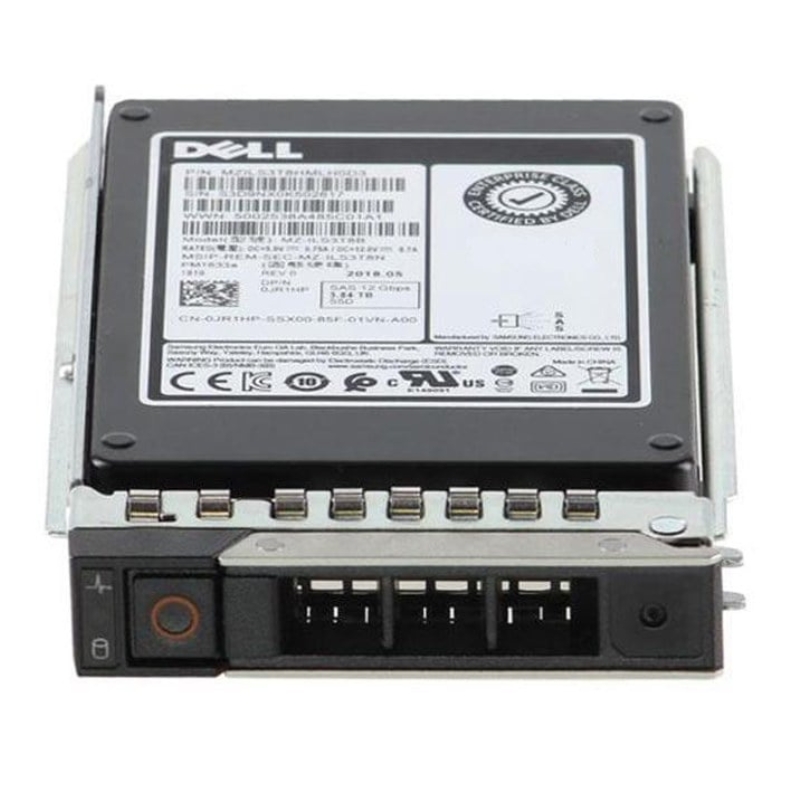
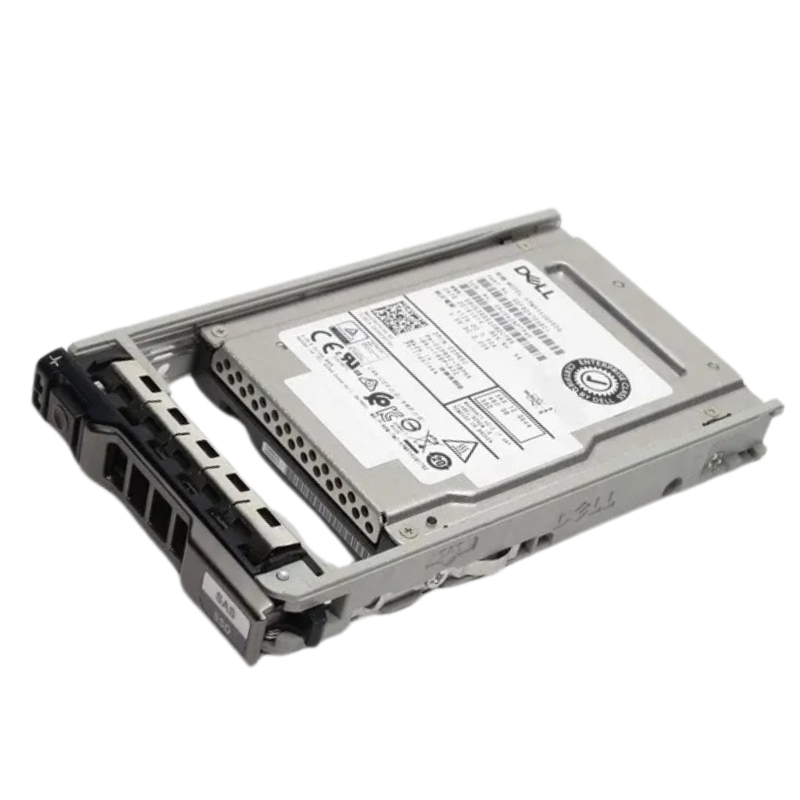
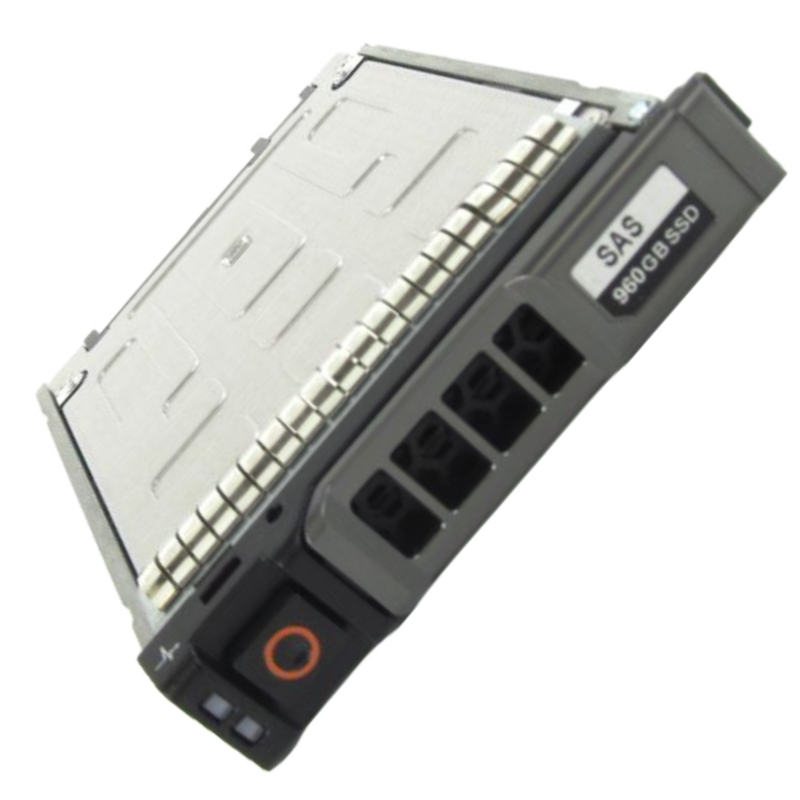
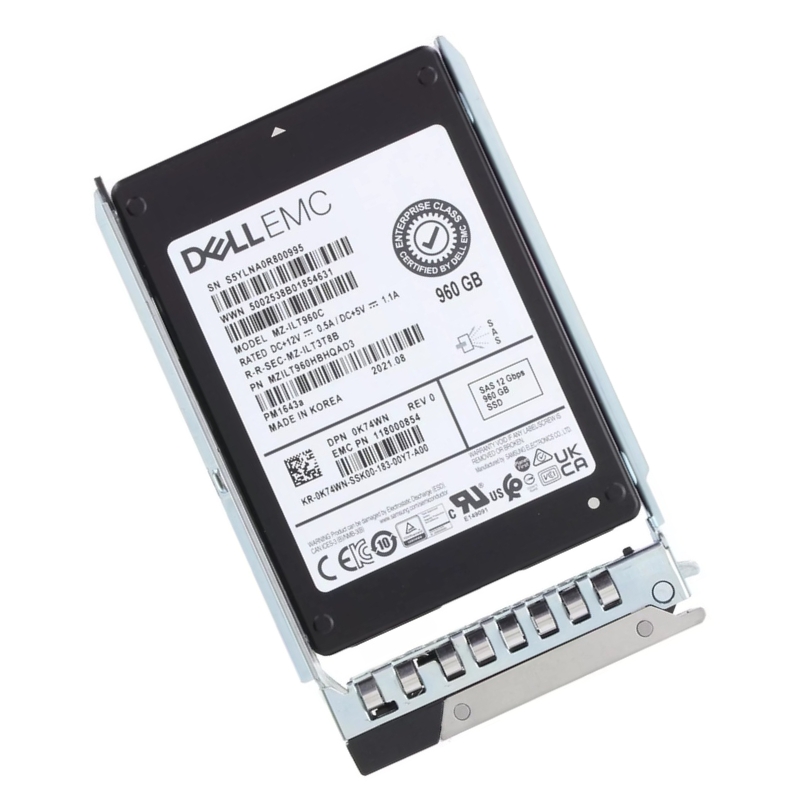
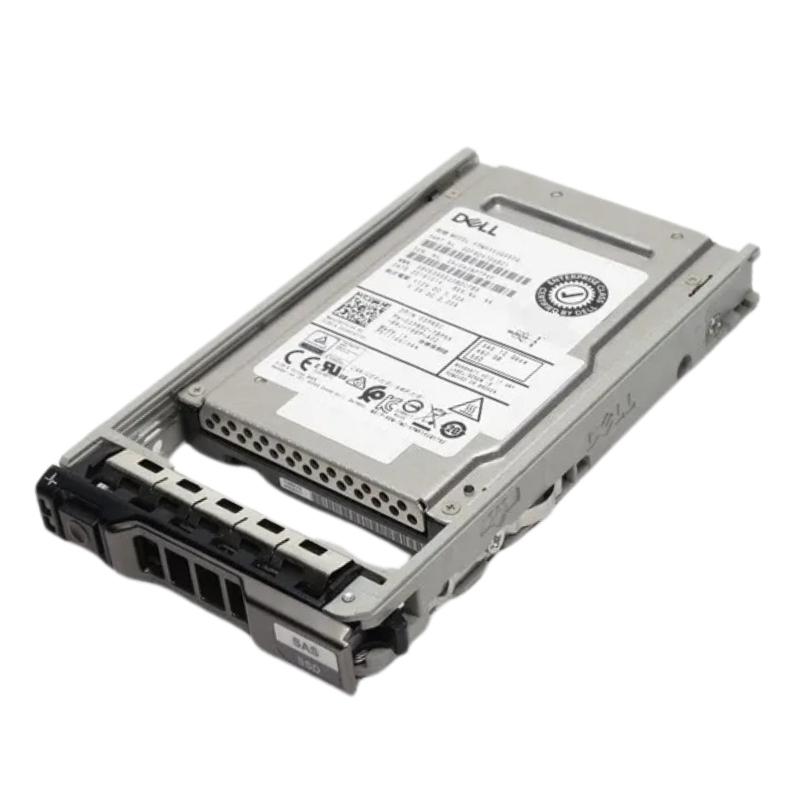
Dell 400-AQOR 960GB Read Intensive Tlc SAS 12GBPS 512E 2.5Inch Hot Swap SSD. Excellent Refurbished with 1 Year Replacement Warranty
The Dell 400-AQOR 960GB Read Intensive MLC SAS-12GBPS 512e 2.5inch Hot Swap Solid State Drive sits squarely in the enterprise storage category that prioritizes consistent read performance, high reliability, and rack-level serviceability for PowerEdge servers and compatible storage arrays. This category description focuses on the technical identity, deployment scenarios, performance characteristics, form factor and compatibility nuances, endurance and workload suitability, firmware and manageability expectations, and procurement considerations for IT teams specifying or comparing “Dell 400-AQOR” class 960GB SAS read-intensive SSDs. Enterprise buyers, system integrators, and searchers who land on a category page for this SKU are typically seeking hardware that balances capacity, SAS connectivity, 12Gbps throughput, and hot-swap convenience for read-dominant workloads in virtualization hosts, database caches, web-serving layers, or tiered storage pools within Dell PowerEdge ecosystems.
The headline attribute for this category is the 960GB usable capacity paired with read-intensive multi-level cell (MLC) NAND (in some market listings identified as TLC variants in refurbished or mixed-source inventories). A 960GB device in a 2.5-inch enterprise drive class provides a middle-ground capacity choice that is large enough to host hot datasets and read-heavy caches while remaining cost-effective compared with higher-capacity enterprise SSDs. For deployments that require a consistent read profile — for example, front-end web servers, content delivery caches, and metadata stores — a read-intensive endurance tier provides more favorable cost per gigabyte than mixed-use or write-intensive tiers while still offering enterprise-grade performance characteristics. When assessing capacity planning, treat the 960GB label as the raw, advertised capacity; reserved space for over-provisioning, firmware, and system metadata will reduce the addressable capacity at the OS level slightly, and enterprise administrators should account for that when designing storage pools or LUN sizes.
The interface for this class of SSD is SAS operating at 12Gbps (SAS-3), a high-availability, full-duplex enterprise interconnect designed for server and SAN environments. Compared with SATA, SAS 12Gbps brings improved command queuing, higher sustained throughput, dual-port redundancy in many implementations, and more robust error-handling features that matter in multi-drive, high-IOPS environments. For system architects specifying drives for PowerEdge servers, choosing a SAS-12Gbps drive like the 400-AQOR means the drive can be integrated into existing SAS backplanes and leverages enterprise HBAs or RAID controllers that support 12Gbps signaling for maximum performance and resiliency. This interface decision also affects cabling, backplane compatibility, and controller selection: always cross-check the server chassis and RAID/HBA firmware compatibility matrix to ensure the SAS-3 link negotiates at 12Gbps and not at a reduced legacy speed.
The Advanced Format 512e characteristic (512-byte emulation of 4KiB physical sectors) is commonly reported for enterprise SSDs in this category and impacts how operating systems and file systems should be aligned for optimal throughput. Drives that advertise 512e expect host software to be aware of underlying 4K physical boundaries — misalignment can cause read-modify-write penalties and reduce effective I/O efficiency. When provisioning volumes or creating filesystems for a fleet of Dell 400-AQOR drives, administrators should use modern partitioning tools and allocate storage with 4K-aware alignment to avoid hidden performance regressions. This detail is particularly important for virtual machine images and databases where small random I/O dominates.
The canonical form factor for the 400-AQOR is a 2.5-inch (SFF) enterprise SSD designed for hot-swap carrier trays in modern server bays. Some vendor bundles and hybrid kits present the drive in a 3.5-inch carrier or as part of a 3.5" hybrid kit, which allows the same 2.5-inch SSD to be deployed in legacy LFF trays or mixed chassis environments using an adapter. The availability of hybrid kits extends compatibility across diverse chassis types and reduces logistics friction during refresh projects where older racks contain both 2.5" and 3.5" form factor slots. For procurement and racking planning, verify whether a listing is the bare 2.5" drive, a caddy-ready hot-swap module, or a hybrid kit paired with the appropriate carrier. The physical mounting, drive carrier latches, and backplane pin engagement remain critical for hot-swap reliability and vendor-supported hot replacement procedures.
Hot-swap capability is a non-negotiable trait for enterprise server environments that demand minimal downtime. The Dell 400-AQOR class drives are typically supplied with hot-swap compatible bezels or sleds and integrate into Dell PowerEdge hot-swap workflows, allowing technicians to remove and replace drives without powering down the system. This enables online replacements, hardware swaps during maintenance windows, and in-field upgrades while preserving RAID rebuilds or controller-level resiliency features. For operations teams, documenting drive bay mapping, maintaining spare inventories with matching firmware revisions, and following Dell’s replacement procedures reduces risk during a service event.
A “read-intensive” classification describes an endurance and firmware profile optimized for workloads where read operations significantly outnumber writes. In practice, read-intensive SSDs trade some write endurance in exchange for higher capacity per dollar and firmware tuning that favors small random read latencies and predictable throughput. Typical use cases include web application file caches, VM boot volumes, content-serving layers, and analytics queries that are read-heavy. These devices are less suitable as primary write logs, heavy database write volumes, or high-frequency swap spaces; for those workloads, mixed-use or write-intensive enterprise SSDs are a better match. When designing storage tiers, place Dell 400-AQOR class drives in read cache tiers, read-centric VM host pools, or capacity-optimized read layers to extract maximum value.
Measured IOPS and latency are affected not only by the NAND and controller inside the SSD but also by the server’s HBA or RAID controller, firmware stack, and the presence of features such as queuing depth management and NCQ. SAS-12Gbps connectivity enables higher command rates and lower serialized latency compared with older generations, but real-world performance will depend on controller firmware and multipath configuration. For predictable random-read latency, pair these devices with controllers known to support enterprise QoS and align drive firmware versions across arrays to avoid uneven performance characteristics. Capacity pooling and IOPS balancing across many lower-capacity drives can produce more consistent performance at scale than relying on a few very large drives in heterogeneous fleets.
Dell PowerEdge servers commonly listed in compatibility notes are a primary target for this SSD family; manufacturers and distributors frequently package these drives specifically for PowerEdge hot-swap bays. Compatibility hinges on matching the server backplane (SAS vs SATA), firmware compatibility between the drive and RAID/HBA controllers, and BIOS/UEFI microcode that enumerates SAS devices correctly. Before large-scale rollouts, validate a sample drive in the intended chassis and controller combination, confirm SMART reporting, and run vendor-provided diagnostics to ensure the drive behaves as expected in RAID and HBA modes. Cross-referencing the server’s HCL (hardware compatibility list) and updating controller firmware to the recommended versions will minimize surprises during scale deployments.


 Contact Us
 Information
 Catalog
 Solid State Drives (SSD)
 Network Switches
 Hard Disk Drives
 HBA & Controllers
 PC & Servers
 PC & Server Memory
 CPU & Processors
 Network Routers
 Power Supplies
 Tape Drives & Libraries
 Network Devices
 Computer & Network Cables