(7% discount is applied at checkout)
Cart is empty
Your go-to destination for cutting-edge server products
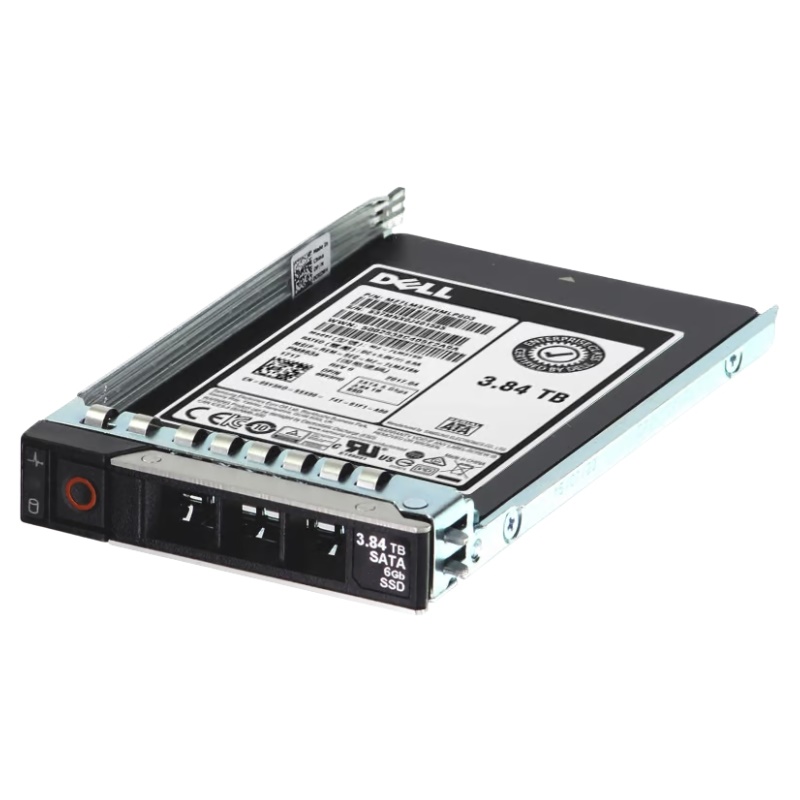


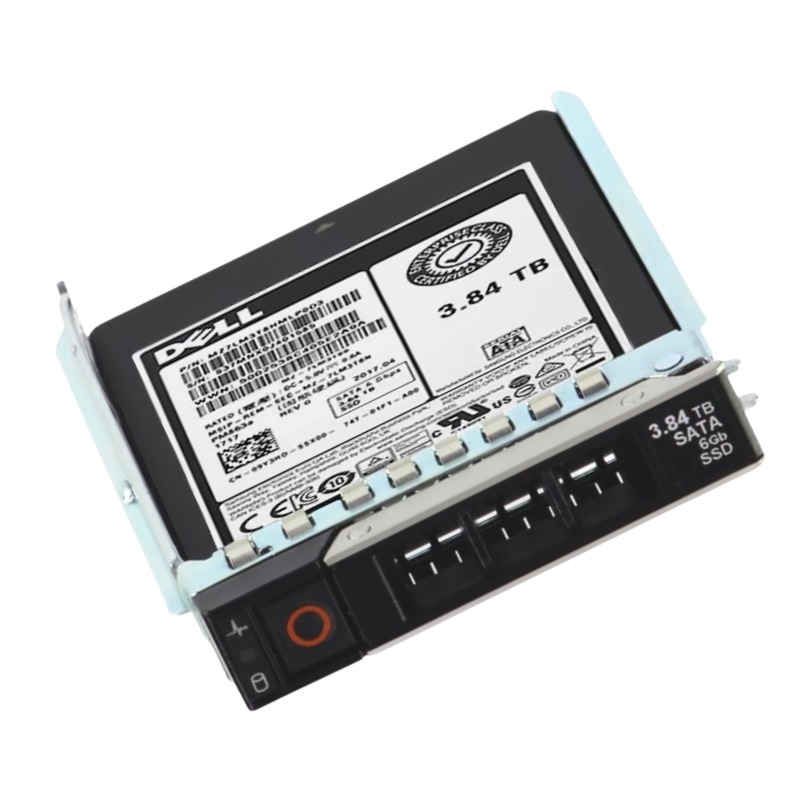
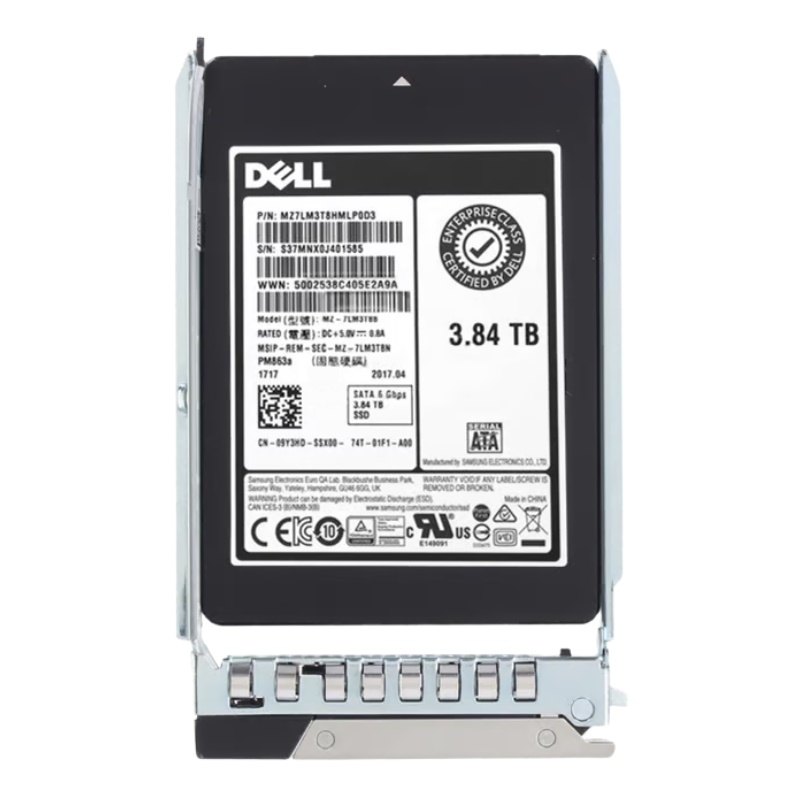
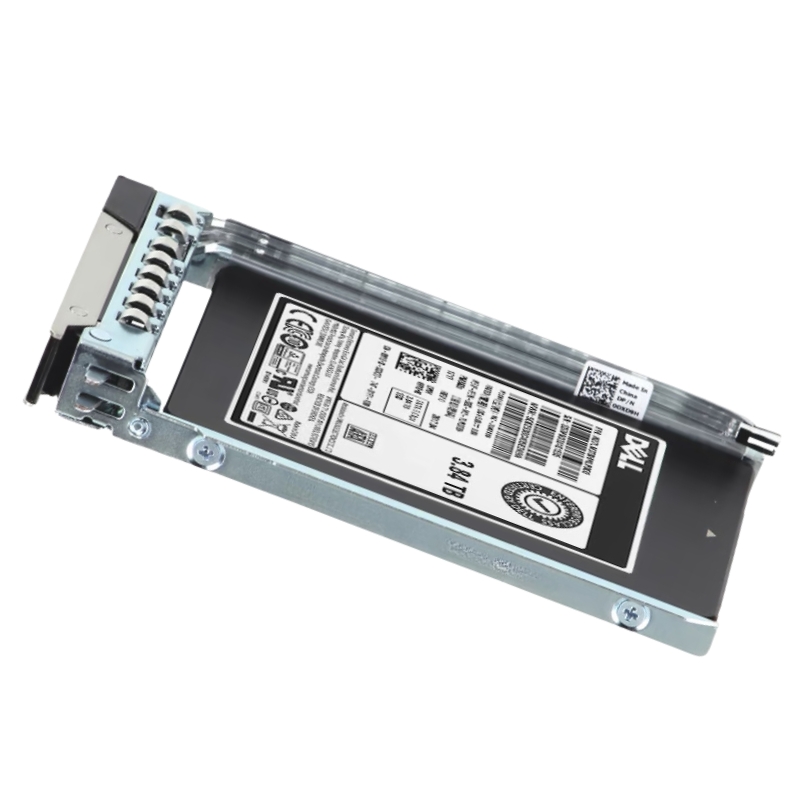
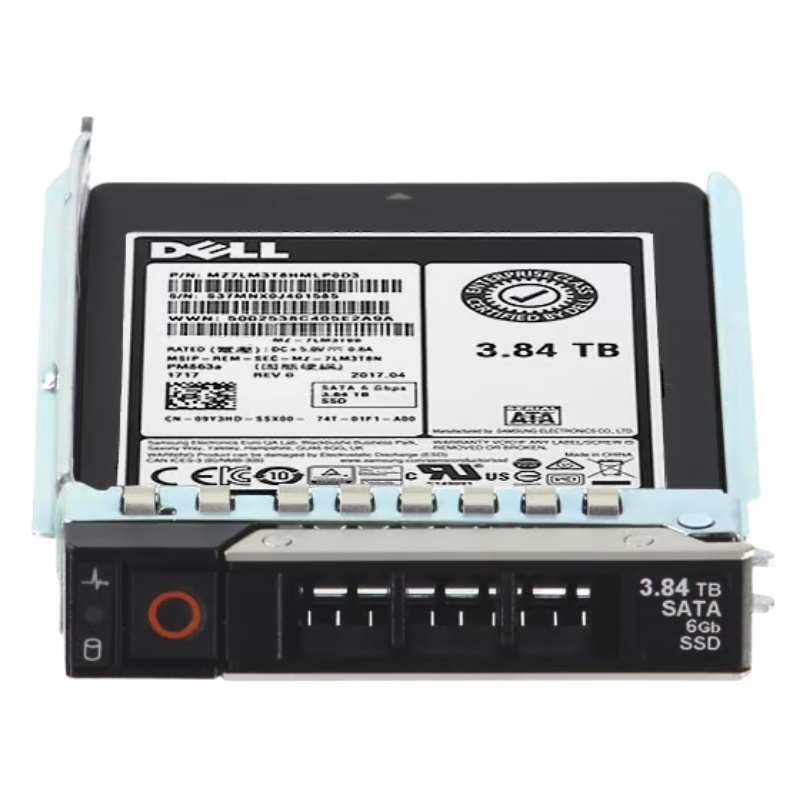
Dell 400-ASZW 3.84TB Read-intensive TLC SATA 6GBPS SSD Hot Swap. New Sealed in Box (NIB) with 1-Year Replacement Warranty
The Dell 400-ASZW is a high-density, enterprise-grade solid state drive engineered for read-heavy server workloads. With a 3.84TB storage size, SATA 6Gb/s interface and 3D NAND TLC lithography, this hot-swappable 2.5-inch drive mounted in a 3.5-inch hybrid carrier delivers consistent, low-latency access for databases, caching layers and large-scale virtualized environments.
The Dell 400-ASZW is optimized for environments where read throughput and predictable latency are critical. Ideal for:
Although this SSD uses TLC (Triple-Level Cell) NAND for cost-efficient density, it is tuned for read-intensive endurance to deliver consistent performance over long lifecycles:
The drive ships as a 2.5-inch SSD within a 3.5-inch hybrid carrier — a practical solution for servers that require:
SATA 6Gb/s interface ensures broad interoperability with legacy and current server controllers and backplanes. This makes the 400-ASZW a drop-in option for many midline and modern PowerEdge systems.
Validated for use in a range of Dell PowerEdge servers — suitable for mixed storage tiers and scale-out configurations:
Common deployment patterns for this read-optimized SSD include:
Enterprise storage workloads typically fall into three categories: read-intensive, write-intensive, and mixed-use. The Dell 400-ASZW is specifically engineered for read-intensive applications where data retrieval operations significantly outnumber write operations. This specialized focus allows for optimized performance, enhanced endurance, and cost-effectiveness for specific server environments.
The Dell 400-ASZW offers a substantial 3.84TB capacity, providing ample storage for enterprise applications while maintaining optimal performance characteristics. The drive utilizes a 2.5-inch internal design housed within a 3.5-inch hybrid carrier, ensuring broad compatibility with enterprise server chassis and storage arrays.
This drive measures 2.5 inches in width but includes a 3.5-inch hybrid carrier, making it compatible with both 2.5-inch and 3.5-inch server bays. The hot-swap capability allows for maintenance and replacement without system shutdown, crucial for 24/7 enterprise environments.
Utilizing the SATA 6Gbps interface, this SSD delivers maximum theoretical transfer speeds of 600MB/s. While not matching NVMe speeds, SATA remains highly relevant for many enterprise applications due to its reliability, compatibility, and cost-effectiveness.
The drive delivers consistent sequential read speeds up to 560MB/s and write speeds appropriate for read-intensive workloads. Random read performance typically reaches up to 98,000 IOPS, ensuring responsive performance under heavy query loads.
The implementation of 3D TLC NAND flash represents a balance between cost, capacity, and endurance. Unlike consumer TLC implementations, enterprise TLC incorporates advanced error correction, wear leveling, and over-provisioning to ensure reliability in demanding environments.
While TLC stores three bits per cell, potentially reducing write endurance compared to SLC or MLC, the Dell 400-ASZW incorporates sophisticated wear-leveling algorithms and substantial over-provisioning to achieve enterprise-grade endurance ratings suitable for read-intensive applications.
The hot-swap feature enables drive replacement while the server remains operational, a critical requirement for high-availability systems. Proper implementation requires compatible backplanes, appropriate RAID configuration, and support from the operating system or hypervisor.
Successful hot-swap operations require adherence to specific protocols: proper electrostatic discharge (ESD) protection, correct sequencing of drive insertion/removal, and verification of system recognition. The hybrid carrier design ensures secure connection and proper alignment during hot-swap procedures.
Enterprise SSDs must protect against data corruption during unexpected power loss. The Dell 400-ASZW incorporates power loss protection circuits that provide sufficient energy to complete in-progress writes and maintain data consistency across the NAND array.
This drive utilizes sophisticated error correction codes (ECC) including LDPC (Low-Density Parity Check) to maintain data integrity. Comprehensive SMART (Self-Monitoring, Analysis, and Reporting Technology) monitoring provides early warning of potential failures.
The 400-ASZW is certified for use across Dell's enterprise server portfolio, including PowerEdge series servers. Specific compatibility should be verified against Dell's compatibility matrices, as firmware and configuration requirements may vary by server generation and model.
This drive typically supports multiple PowerEdge generations, including 13th generation and newer. Compatibility with specific RAID controllers and HBA configurations should be confirmed through Dell's official documentation.
Beyond standalone servers, the 400-ASZW integrates effectively with Dell storage arrays and JBOD (Just a Bunch Of Disks) configurations. The consistent performance profile makes it suitable for creating homogeneous storage pools in scale-out architectures.
Comprehensive support exists for all major enterprise operating systems and hypervisors, including VMware vSphere, Microsoft Hyper-V, Linux distributions, and Windows Server. Driver requirements are typically handled through native OS drivers or Dell-provided management tools.
Optimal performance requires alignment between workload characteristics and SSD configuration. For read-intensive applications, considerations include read-ahead settings, queue depth optimization, and appropriate RAID configuration selection.
RAID configurations should balance performance, capacity, and redundancy requirements. RAID 10 provides excellent read performance and redundancy, while RAID 5 or RAID 6 may be more capacity-efficient for large arrays. Careful consideration of write penalty is essential.
Firmware updates should be performed during maintenance windows following Dell's recommended procedures. Proper sequencing and verification steps ensure successful updates without data loss or corruption.
Read-intensive SSDs differ from write-intensive counterparts in several key aspects: endurance ratings, write performance characteristics, and cost structure. Understanding these differences ensures appropriate drive selection for specific workload requirements.
The 400-ASZW typically features a lower TBW rating compared to write-intensive models but at a more attractive price point. For read-dominant workloads, this represents optimal value without compromising reliability.
In the 3.84TB enterprise SATA SSD segment, the Dell 400-ASZW competes with offerings from other major vendors. Differentiation factors include Dell's integration with their server ecosystem, support services, and reliability track record.
Read-intensive SSDs excel in database environments where query performance is paramount. The 400-ASZW provides consistent low-latency reads for OLTP (Online Transaction Processing) and reporting workloads.
For specific database platforms, configuration optimizations include appropriate block size alignment, tempdb placement considerations, and log file management. The consistent read performance benefits query response times and user experience.
VDI deployments, particularly in non-persistent implementations, generate predominantly read workloads during user session initialization and application launches. The 400-ASWR efficiently handles boot storms and application access patterns.
Web servers, caching proxies, and content delivery systems benefit from the fast random read performance of read-intensive SSDs. The 3.84TB capacity provides substantial storage for frequently accessed content.
Analytics workloads involving large dataset scans and aggregations benefit from the sustained read performance and capacity of the 400-ASZW. The drive supports concurrent read operations essential for parallel processing frameworks.
The drive utilizes an enterprise-grade controller with multiple processing cores and dedicated hardware accelerators for encryption, compression, and error correction. Advanced flash management techniques include garbage collection, wear leveling, and bad block management.
Sophisticated algorithms minimize write amplification, extending drive lifespan and maintaining consistent performance. The substantial over-provisioning area provides workspace for background maintenance operations.
A substantial DRAM cache serves multiple purposes: mapping table storage, write buffering, and read caching. The battery-backed or capacitor-protected cache ensures data persistence during power loss events.
Comprehensive data protection mechanisms include CRC (Cyclic Redundancy Check) for data transfers, ECC for NAND integrity, and T10 DIF (Data Integrity Field) support for enhanced protection in SAN environments.
The 400-ASZW operates within typical enterprise power envelopes, with specified active, idle, and sleep state power consumption. Power management features help optimize energy usage in large-scale deployments.
Proper airflow and thermal management are essential for maintaining performance and reliability. Enterprise servers typically provide adequate cooling, but monitoring drive temperatures ensures optimal operating conditions.
Specified operating temperature, humidity, and altitude ranges ensure reliable operation in datacenter environments. Non-operating specifications cover shipping and storage conditions.


 Contact Us
 Information
 Catalog
 Solid State Drives (SSD)
 Network Switches
 Hard Disk Drives
 HBA & Controllers
 PC & Servers
 PC & Server Memory
 CPU & Processors
 Network Routers
 Power Supplies
 Tape Drives & Libraries
 Network Devices
 Computer & Network Cables