(7% discount is applied at checkout)
Cart is empty
Your go-to destination for cutting-edge server products
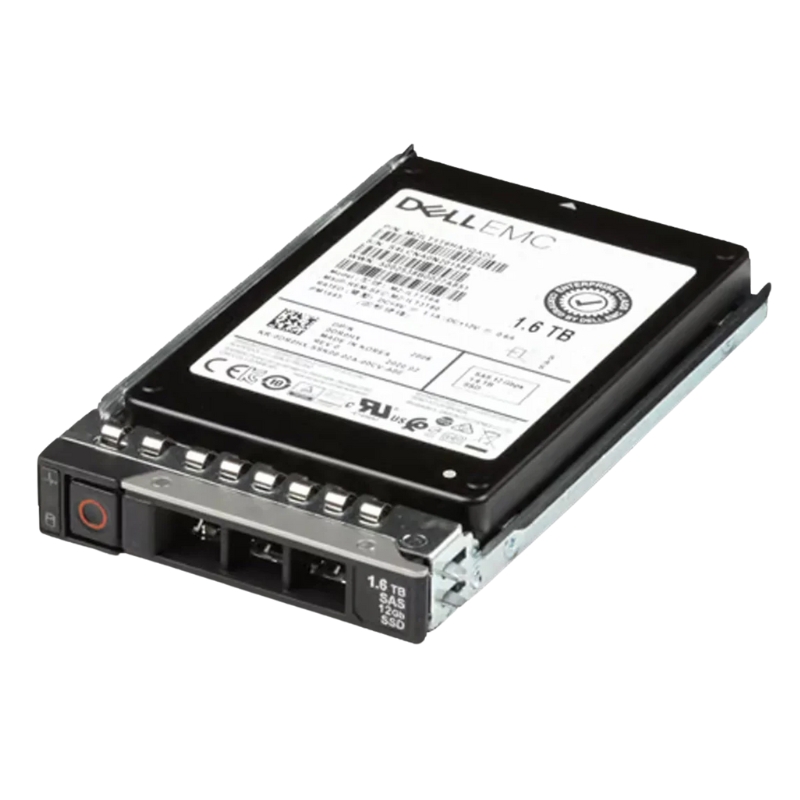


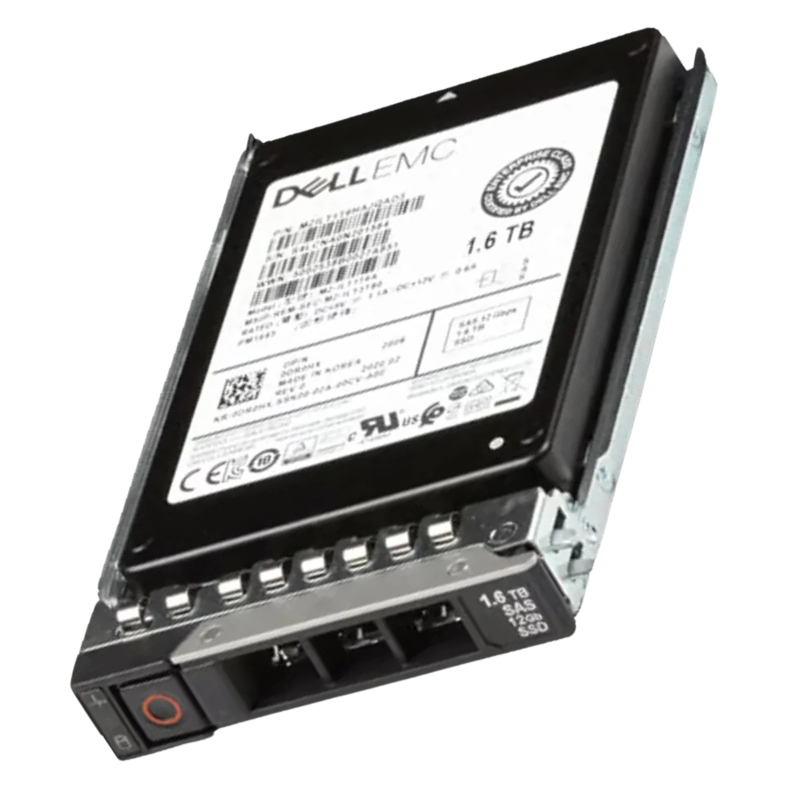
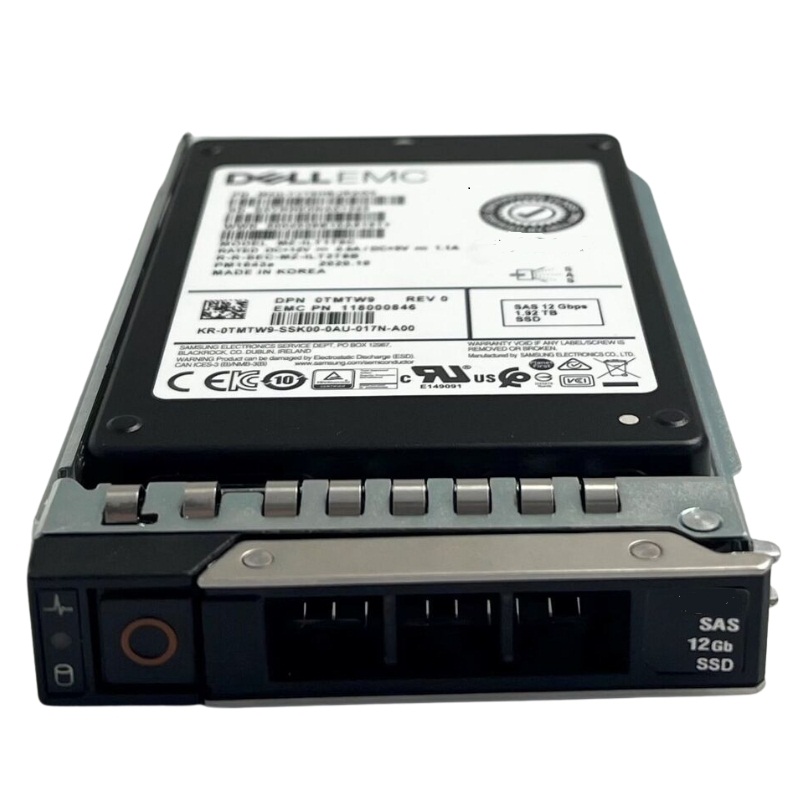
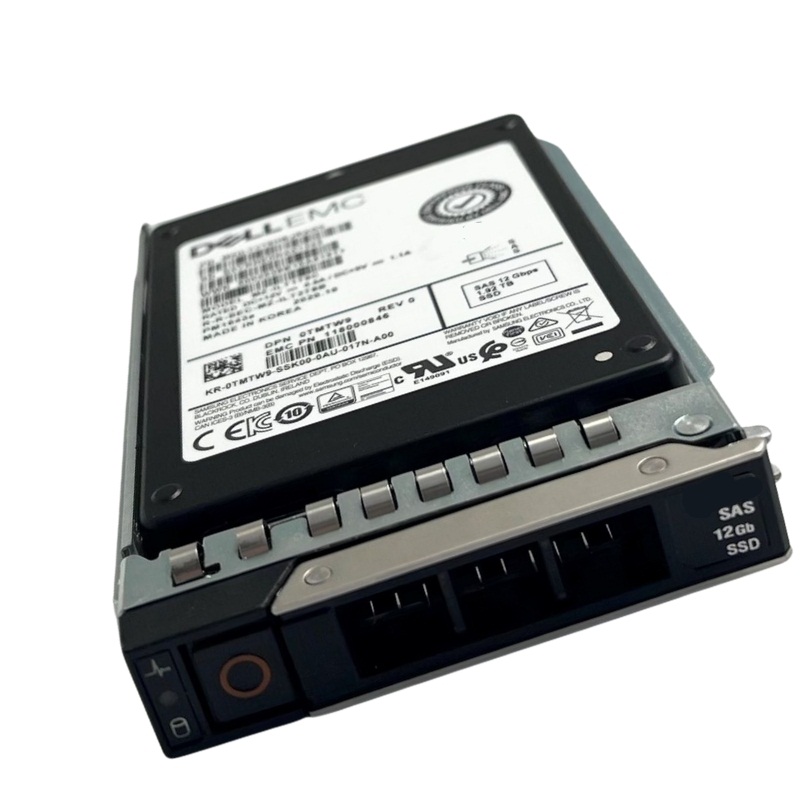
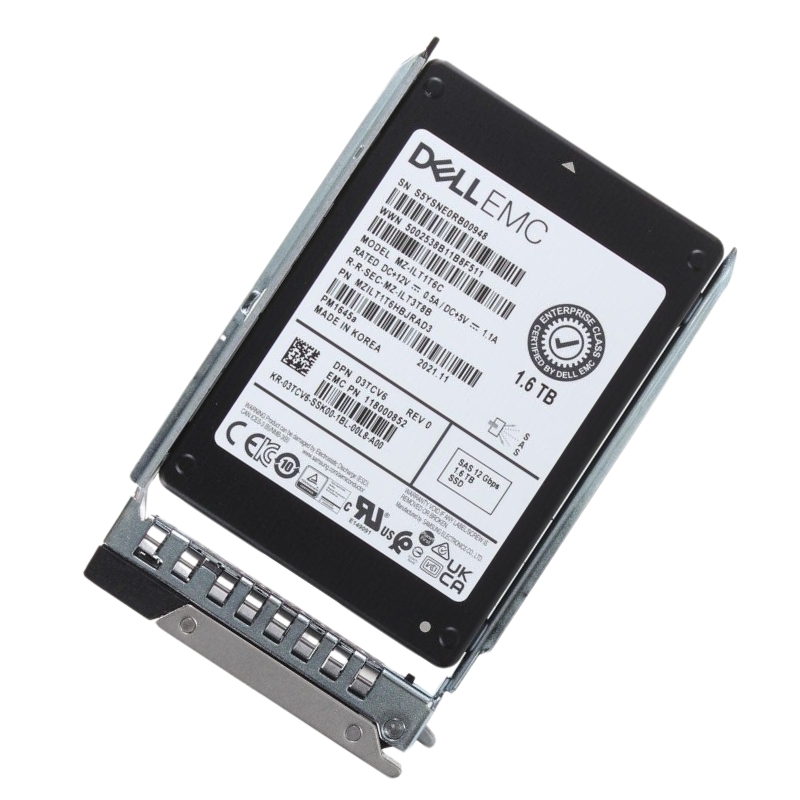
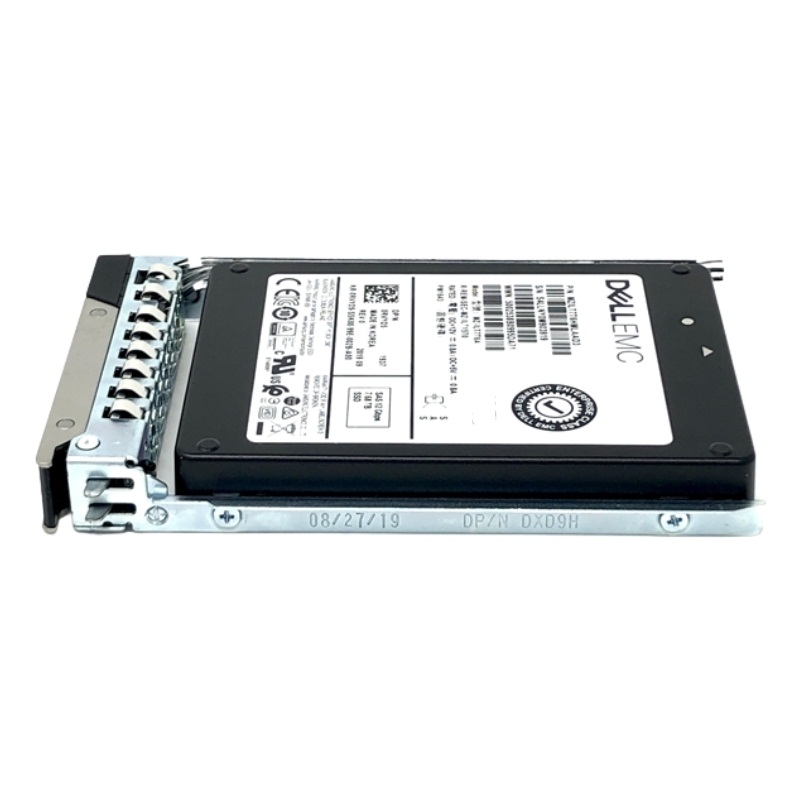
Dell 400-ATMM 1.6TB SAS 12GBPS SFF Solid State Drive Advanced Format 512E Mixed Use for Server. New Sealed in Box (NIB) with 1-Year Replacement Warranty
The Dell 400-ATMM is a high-performance 2.5-inch enterprise solid state drive (SSD) engineered for mixed-use workloads. With a 1.6TB capacity and a SAS 12Gbps interface, this drive delivers dependable throughput, low latency and strong endurance for virtualization, database, cloud and general-purpose server applications.
Designed for enterprise servers and storage arrays, this SSD combines modern NAND with robust controller technology to provide consistent performance and predictable latency under mixed I/O patterns.
The Dell 400-ATMM is tuned to offer steady performance for real-world enterprise tasks. Its mixed-use design makes it well suited for tier-1 applications where both read and write operations are important.
This SSD is widely compatible with Dell PowerEdge platforms and select Dell storage arrays. Confirm firmware and compatibility with your system before deployment.
The Dell 400-ATMM 14G represents the pinnacle of enterprise storage technology, specifically engineered for Dell PowerEdge 14th generation servers. This 1.6TB Mixed Use TLC SAS SSD combines high performance with exceptional endurance, making it ideal for mixed workload environments that demand both read-intensive and write-intensive operations. With its 12Gbps SAS interface and 2.5-inch hot-pluggable form factor, this drive delivers the reliability and performance required in modern data center environments.
This enterprise SSD features a 1.6TB capacity utilizing Triple-Level Cell (TLC) NAND flash technology optimized for mixed use workloads. The drive operates on the SAS 12Gbps interface, ensuring maximum bandwidth utilization and backward compatibility with 6Gbps SAS systems. With 512e (512 byte emulation) sector formatting and hot-plug capability, the 400-ATMM provides seamless integration into existing storage infrastructures while maintaining data integrity and accessibility.
The Dell 400-ATMM is engineered to deliver consistent performance under demanding conditions. With its mixed-use TLC design, the drive balances read and write performance, offering superior IOPS (Input/Output Operations Per Second) compared to read-intensive or write-intensive drives in mixed workload scenarios. The advanced controller technology ensures sustained performance even during extended periods of heavy utilization.
The Serial Attached SCSI (SAS) 12Gbps interface represents the current generation of enterprise storage connectivity, offering significant advantages over previous iterations. This dual-ported interface provides full-duplex communication, allowing simultaneous data transmission and reception at 12 gigabits per second in each direction. The point-to-point architecture eliminates bus contention issues common in parallel SCSI systems, while maintaining compatibility with SATA drives through the same backplane connectors.
One of the critical enterprise features of the SAS interface is its dual-port capability. This architecture provides redundant pathways to the storage device, enabling high-availability configurations and multipath I/O. In practical terms, this means that if one host bus adapter (HBA) or connection path fails, the system can automatically failover to the secondary path without service interruption. This redundancy is essential for mission-critical applications where downtime is not an option.
The SAS 12Gbps interface maintains backward compatibility with 6Gbps and 3Gbps SAS devices, as well as SATA drives. This flexibility allows organizations to integrate the Dell 400-ATMM into existing infrastructure without requiring complete system overhauls. The interface automatically negotiates the highest common speed between connected devices, ensuring optimal performance while maintaining interoperability with legacy equipment.
Triple-Level Cell (TLC) NAND flash represents the evolution of flash memory technology, storing three bits of data per memory cell. While traditionally associated with consumer-grade storage due to higher density and lower cost per gigabyte, enterprise TLC (eTLC) implementations like that in the Dell 400-ATMM incorporate advanced error correction, wear leveling, and over-provisioning to meet the rigorous demands of data center environments.
The "Mixed Use" designation indicates that this SSD is engineered to handle balanced read and write workloads, typically characterized by a write ratio between 30% and 70%. This differs from read-intensive drives, which prioritize cost-effectiveness for predominantly read operations, and write-intensive drives, which incorporate additional over-provisioning and endurance enhancement for heavy write environments. The mixed-use design makes the 400-ATMM suitable for applications with varying I/O patterns.
Enterprise TLC NAND in mixed-use configurations typically offers endurance ratings measured in Drive Writes Per Day (DWPD). The Dell 400-ATMM is designed to withstand significant write workloads over its operational lifetime, with advanced wear-leveling algorithms that distribute write operations evenly across all available memory cells. This extends the drive's usable life and maintains consistent performance throughout its deployment.
The Dell 400-ATMM delivers exceptional performance characteristics that meet the demands of enterprise workloads. With sequential read speeds typically exceeding 1,000 MB/s and sequential write speeds approaching the same threshold, this drive significantly outperforms traditional hard disk drives and many consumer-grade SSDs. The random I/O performance, measured in IOPS, ensures responsive operation even under heavy multi-threaded access patterns common in virtualized environments and database applications.
One of the most significant advantages of SSDs over traditional storage is reduced latency. The Dell 400-ATMM offers consistent low-latency performance, with typical read latency under 100 microseconds and write latency under 20 microseconds. This dramatic improvement over mechanical hard drives (which typically exhibit latency measured in milliseconds) translates to faster application response times and improved overall system performance.
Enterprise storage demands predictable performance under varying load conditions. The Dell 400-ATMM incorporates advanced QoS features that maintain consistent latency and throughput even during peak utilization periods. This predictable performance is crucial for applications requiring service level agreements (SLAs) and ensures that critical workloads receive the necessary resources to maintain operational continuity.
The 1.6TB capacity point represents an optimal balance between storage density and performance for many enterprise applications. This capacity provides substantial storage for operating systems, applications, and active datasets while maintaining the performance characteristics essential for demanding workloads. The 2.5-inch form factor ensures compatibility with modern server platforms and storage arrays, offering higher density than 3.5-inch drives in the same physical space.
The hot-plug feature allows for drive installation and removal without powering down the entire system. This capability is essential for maintaining service availability during drive replacement, capacity expansion, or maintenance operations. The Dell 400-ATMM supports both physical hot-plug capability and the necessary protocol-level features to ensure safe removal and recognition of newly installed drives.
Compared to traditional hard drives, SSDs consume significantly less power while delivering superior performance. The Dell 400-ATMM operates with typical power consumption well below 10 watts during active operation and even lower during idle states. This power efficiency translates to reduced operating costs, lower cooling requirements, and improved environmental sustainability in large-scale deployments.
The Dell 400-ATMM incorporates multiple layers of data protection to ensure information integrity. These include end-to-end data path protection, advanced error correction codes (ECC), and power-loss protection mechanisms. The T10 Protection Information (T10 PI) standard implementation provides an additional layer of data integrity by including metadata with each sector to detect and correct errors that might occur during data transmission.
Enterprise environments require protection against data corruption during unexpected power loss. The Dell 400-ATMM includes robust power-loss protection circuitry that provides sufficient hold-up time to complete in-progress write operations and commit data from volatile buffers to non-volatile storage. This feature prevents data loss and file system corruption that could otherwise occur during unplanned power interruptions.
As NAND flash memory densities increase, the potential for bit errors grows accordingly. The Dell 400-ATMM employs sophisticated error correction algorithms, typically Low-Density Parity Check (LDPC) codes, that can detect and correct a significantly higher number of errors than traditional ECC methods. This advanced error correction extends the usable life of the drive and maintains data integrity even as the NAND cells approach their endurance limits.
Enterprise SSDs must maintain consistent performance and reliability throughout their specified lifespan. The Dell 400-ATMM incorporates several technologies to maximize endurance, including dynamic and static wear leveling, bad block management, and garbage collection algorithms. These features work together to distribute write operations evenly across all available memory cells, identify and retire failing cells, and efficiently manage the flash translation layer that maps logical addresses to physical locations.
Over-provisioning refers to the practice of including additional NAND flash capacity beyond the advertised user capacity. This extra space serves multiple purposes: it provides replacement blocks for worn-out cells, improves write performance by reducing write amplification, and enhances the efficiency of garbage collection operations. The Dell 400-ATMM includes appropriate over-provisioning for its mixed-use workload classification, balancing capacity and endurance requirements.
Write amplification occurs when the actual amount of data written to the NAND flash exceeds the amount written by the host system. The Dell 400-ATMM employs advanced algorithms to minimize write amplification, extending the drive's lifespan and maintaining consistent performance. Techniques such as sequential writing, intelligent garbage collection, and TRIM command support all contribute to reducing write amplification in typical enterprise workloads.
The Dell 400-ATMM is specifically validated for use in Dell PowerEdge 14th generation servers, including the R740, R740xd, R740xd2, R740xd3, R840, R940, R940xa, and related platforms. These servers leverage the drive's capabilities through optimized firmware, management integration with iDRAC, and performance tuning specific to Dell's storage architecture. This tight integration ensures optimal performance, monitoring, and management when deployed in supported Dell systems.
Beyond direct server attachment, the Dell 400-ATMM is compatible with Dell storage arrays including PowerVault ME4 Series, SC Series (Compellent), and Dell EMC Unity platforms. When used in these systems, the drive benefits from array-specific optimizations, advanced data services, and comprehensive management capabilities. The SAS interface ensures seamless integration with the dual-controller architectures common in enterprise storage arrays.
The drive maintains broad compatibility with enterprise operating systems including Windows Server, Linux distributions (Red Hat Enterprise Linux, SUSE Linux Enterprise Server, Ubuntu Server), VMware ESXi, and other hypervisor platforms. Standard device drivers included with these operating systems provide full functionality, though Dell may offer optimized drivers for specific use cases or performance requirements.
When deployed in Dell PowerEdge servers, the 400-ATMM integrates seamlessly with Dell OpenManage systems management suite. This integration provides centralized monitoring, alerting, and management capabilities through tools such as OpenManage Enterprise, iDRAC (Integrated Dell Remote Access Controller), and OpenManage Storage Services. Administrators can monitor drive health, performance metrics, and receive proactive alerts regarding potential issues.
For integration with enterprise management systems, the Dell 400-ATMM supports standard protocols including SNMP (Simple Network Management Protocol) for monitoring and alerting. Additionally, Dell provides comprehensive APIs for integration with custom management applications, automation frameworks, and third-party management platforms. This programmability enables organizations to incorporate drive monitoring into their existing operational workflows and automation systems.
The Dell 400-ATMM excels in virtualized environments where mixed I/O patterns are common. In VMware vSphere, Microsoft Hyper-V, or other hypervisor deployments, the drive provides the consistent low-latency performance necessary for hosting multiple virtual machines with varying workload characteristics. The mixed-use design is particularly well-suited for virtualization, where reads and writes occur in relatively balanced proportions across the virtual machine population.
Database management systems such as Microsoft SQL Server, Oracle Database, MySQL, and PostgreSQL benefit significantly from the performance characteristics of the Dell 400-ATMM. The low latency improves transaction processing times, while the balanced read/write performance accommodates both transaction processing (OLTP) and analytical processing (OLAP) workloads. The drive's endurance ensures consistent performance throughout the database lifecycle.
For content delivery networks, web servers, and application servers, the Dell 400-ATMM provides the high random read performance necessary for serving static and dynamic content to numerous concurrent users. The mixed-use capability accommodates write operations associated with content updates, user sessions, and logging activities while maintaining responsive read performance for content delivery.
In software-defined storage (SDS) implementations such as VMware vSAN, Microsoft Storage Spaces Direct, or Linux-based solutions, the Dell 400-ATMM serves as an excellent capacity tier or caching layer depending on the specific architecture. The drive's performance characteristics support the distributed nature of SDS platforms, while the enterprise features ensure data integrity and availability across the storage cluster.
High-performance computing (HPC) environments often involve mixed workloads with demanding I/O requirements. The Dell 400-ATMM provides the necessary performance for checkpointing, scratch space, and temporary storage in computational workflows. The consistent low latency reduces I/O wait times, improving overall application performance in parallel computing scenarios.
Modern containerized applications deployed through platforms like Docker and Kubernetes benefit from the high IOPS and low latency of the Dell 400-ATMM. The drive's performance characteristics support the rapid startup times, logging activities, and temporary storage requirements common in microservices architectures. The mixed-use design accommodates the varied I/O patterns generated by containerized workloads.
Compared to SATA SSDs, SAS drives like the Dell 400-ATMM offer several advantages in enterprise environments. The SAS interface provides full-duplex operation versus SATA's half-duplex, higher queue depths (typically 256 for SAS vs. 32 for SATA), and dual-port capability for high availability. Additionally, SAS drives generally incorporate more robust components, enhanced power-loss protection, and higher endurance ratings suitable for 24/7 operation in data center environments.
While NVMe drives offer superior performance through the PCIe interface, SAS SSDs maintain several advantages in certain scenarios. SAS provides a mature ecosystem with extensive compatibility, dual-port reliability, and longer track record in enterprise environments. The Dell 400-ATMM offers compelling value for applications that require enterprise reliability and performance without necessitating the absolute highest performance offered by NVMe technology.
The mixed-use classification of the Dell 400-ATMM positions it between read-intensive and write-intensive drives in terms of performance characteristics and endurance. Read-intensive drives prioritize cost-effectiveness for predominantly read workloads, while write-intensive drives incorporate additional over-provisioning and endurance features for heavy write environments. The mixed-use design offers balanced performance for applications with varied I/O patterns without the cost premium of write-intensive drives.
When evaluating storage solutions, total cost of ownership (TCO) extends beyond the initial purchase price. The Dell 400-ATMM offers favorable TCO through reduced power consumption, lower cooling requirements, higher performance (reducing the number of drives required for a given workload), and superior endurance (reducing replacement frequency). These factors combine to make the drive an economically attractive option for enterprise storage deployments.
In large-scale deployments, power efficiency becomes a significant operational consideration. The Dell 400-ATMM delivers exceptional performance per watt compared to traditional hard drives and many alternative solid-state solutions. This efficiency translates to reduced operating costs and environmental impact, particularly important in cloud-scale deployments where power and cooling represent substantial ongoing expenses.
The Dell 400-ATMM conforms to the 2.5-inch form factor with a height of 15mm, compatible with most enterprise server and storage system drive bays. The drive utilizes a SAS dual-port SFF-8639 (U.3) connector, supporting both SAS and SATA protocols. The weight typically falls between 150-200 grams, varying slightly based on specific component configurations and manufacturing revisions.
Designed for data center environments, the Dell 400-ATMM operates within a temperature range of 0°C to 70°C during operation and -40°C to 85°C during non-operation. The drive can withstand humidity levels from 5% to 95% non-condensing and operational vibration up to 2.17 G RMS (5-700 Hz). These specifications ensure reliable operation in typical data center conditions while maintaining data integrity.
The drive operates at 5V or 12V as required by the host system, with typical active power consumption between 5-8 watts depending on workload intensity. During idle periods, power consumption drops significantly to approximately 1-2 watts, contributing to overall energy efficiency. The drive supports advanced power management features including multiple power states to optimize energy usage based on activity levels.
The Dell 400-ATMM delivers sequential read performance up to 1,200 MB/s and sequential write performance up to 1,000 MB/s under optimal conditions. Random read performance reaches up to 180,000 IOPS, while random write performance achieves up to 70,000 IOPS at a queue depth of 128. These performance characteristics make the drive suitable for a wide range of enterprise applications with demanding I/O requirements.
As a mixed-use drive, the Dell 400-ATMM offers endurance appropriate for balanced read/write workloads. The exact endurance rating, typically expressed in Drive Writes Per Day (DWPD) or Total Bytes Written (TBW), varies based on capacity and specific product implementation. For the 1.6TB model, typical endurance ratings would support several drive writes per day over the warranty period, ensuring longevity in enterprise environments.
The drive features a Mean Time Between Failures (MTBF) rating typically exceeding 2 million hours, significantly higher than consumer-grade SSDs or traditional hard drives. The Unrecoverable Bit Error Rate (UBER) is typically less than 1 sector per 10^17 bits read, ensuring data integrity even under heavy usage. These reliability metrics demonstrate the enterprise-grade design and validation of the Dell 400-ATMM SSD.


 Contact Us
 Information
 Catalog
 Solid State Drives (SSD)
 Network Switches
 Hard Disk Drives
 HBA & Controllers
 PC & Servers
 PC & Server Memory
 CPU & Processors
 Network Routers
 Power Supplies
 Tape Drives & Libraries
 Network Devices
 Computer & Network Cables