(7% discount is applied at checkout)
Cart is empty
Your go-to destination for cutting-edge server products


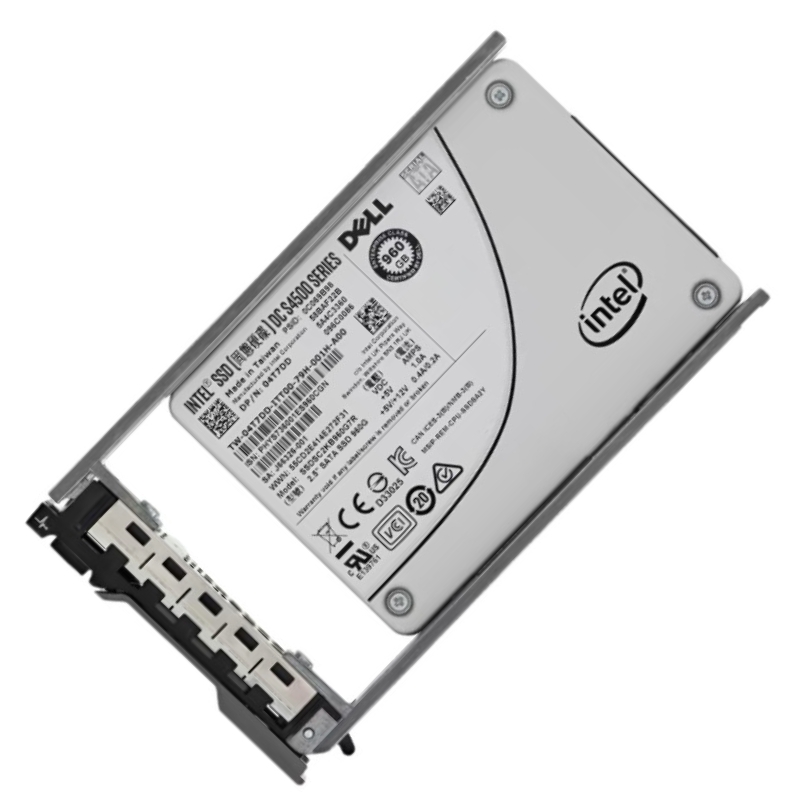
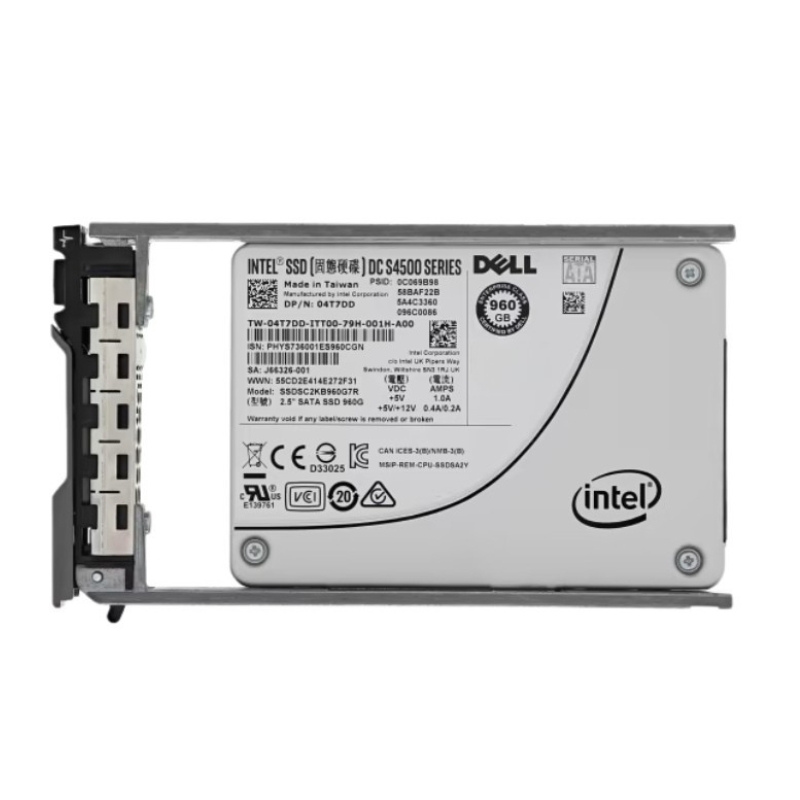
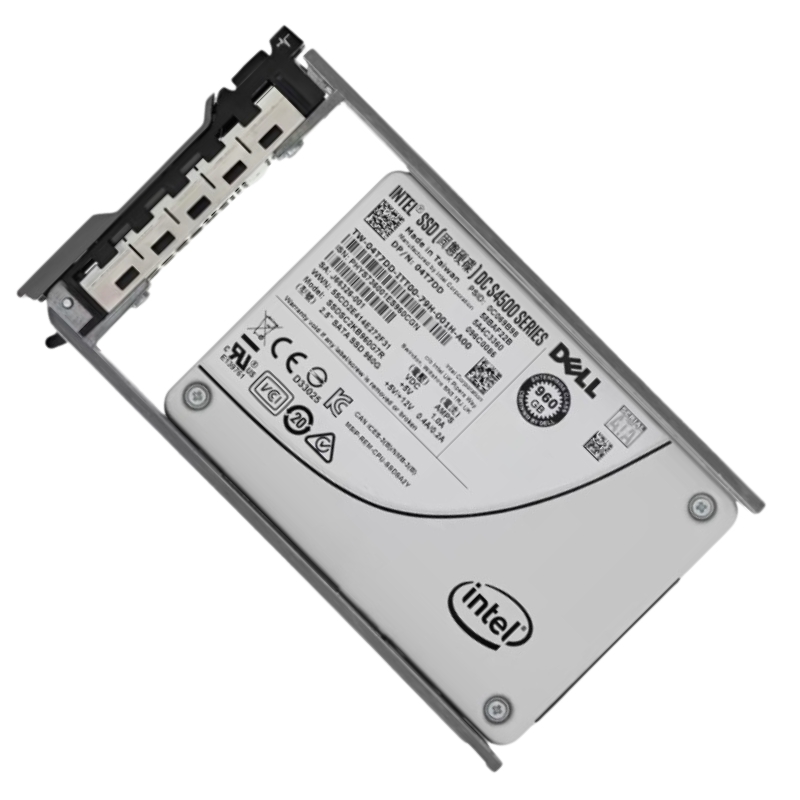
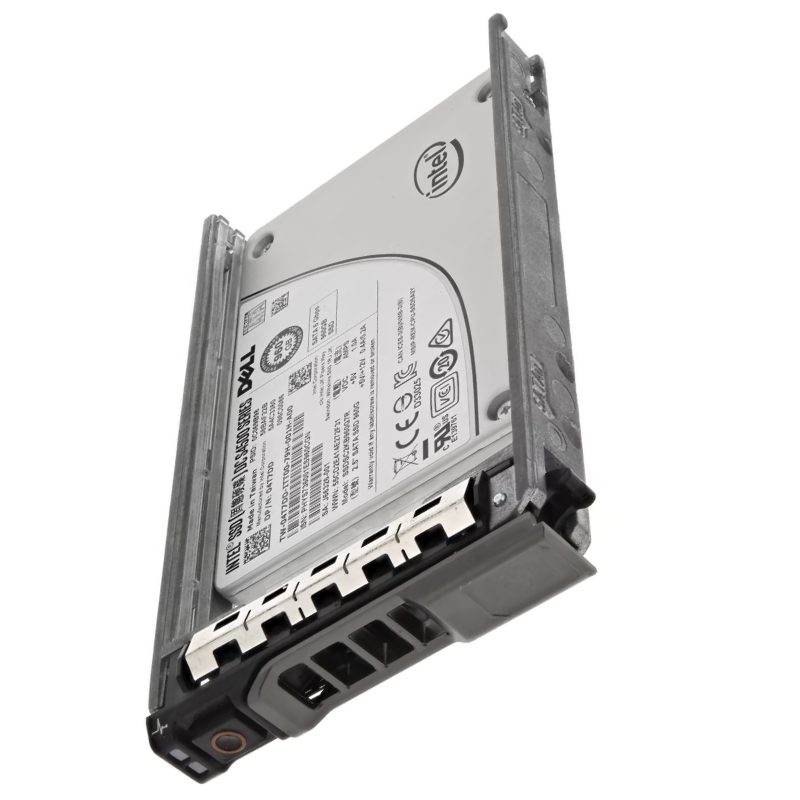
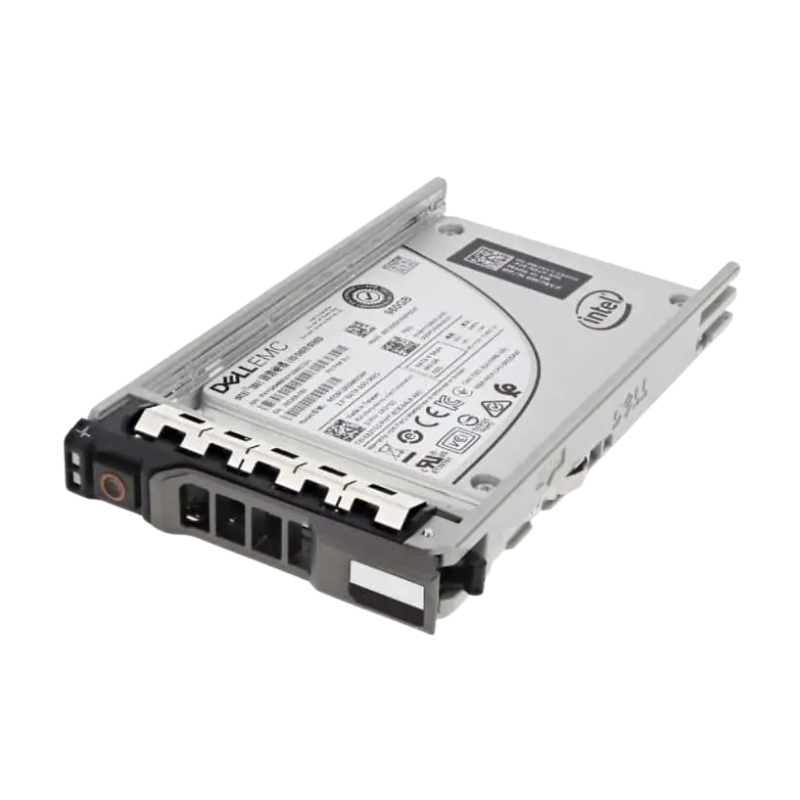
Dell 400-AUYL 960GB SAS 12GBPS Solid State Drive Hot Swap Read Intensive MLC. New Sealed in Box (NIB) with 1 year Warranty
The Dell 400-AUYL 960GB Read Intensive MLC SAS Solid State Drive is designed to deliver reliable storage performance for enterprise environments. With its hot-plug capability, 2.5-inch small form factor, and SAS 12Gbps interface, this SSD provides high-speed data transfer, improved efficiency, and consistent performance for business-critical applications.
The Dell 400-AUYL SSD integrates seamlessly with a wide selection of Dell PowerEdge servers to enhance storage scalability and performance:
This SSD ensures dependable uptime and minimizes risk of data loss in critical applications.
The SAS interface provides rapid data transfers, making it suitable for demanding workloads.
The hot-plug capability allows seamless replacement without disrupting operations.
In the demanding landscape of enterprise storage, the choice of solid-state drive (SSD) is a critical determinant of system performance, reliability, and total cost of ownership. The Dell 400-AUYL 960GB Read Intensive MLC SAS SSD stands as a purpose-built solution engineered for workloads where read operations dominate. This drive represents a specific category within Dell's enterprise storage portfolio, designed to deliver an optimal balance of high throughput, exceptional endurance, and unwavering data integrity for targeted business applications.
The Serial Attached SCSI (SAS) interface is the gold standard for performance and reliability in enterprise server and storage environments. The "12Gbps" specification of this Dell drive signifies the latest generation of this technology, doubling the bandwidth of the previous 6Gbps standard.
The transition to a 12-gigabit per second interface is not merely about raw speed; it encompasses a suite of enhancements that benefit enterprise infrastructure.
With a full-duplex data rate of 12 gigabits per second per port, this interface effectively eliminates storage bottlenecks. For applications like database queries, virtual desktop infrastructure (VDI) boot storms, and web hosting, the increased bandwidth ensures that data flows seamlessly between the storage controller and the drive, resulting in lower latency and faster response times for end-users.
SAS 12Gbps maintains robust support for expansive daisy-chaining configurations. This allows IT administrators to connect a large number of drives to a single host bus adapter (HBA) or RAID controller without compromising performance. The improved signal integrity at higher speeds ensures stable operation even in densely populated storage enclosures.
A hallmark of SAS technology is its robust compatibility. The Dell 400-AUYL drive is backward compatible with 6Gbps and 3Gbps SAS infrastructures. When installed in a 6Gbps backplane, it will automatically negotiate down to the available speed, protecting existing investments. Conversely, it is also forward-compatible, ready to perform at its peak in new server platforms equipped with native 12Gbps controllers.
Beyond speed, SAS includes enterprise-centric features not found in consumer-grade SATA interfaces. These include dual-port capability for high-availability and failover configurations, as well as more advanced error recovery and reporting mechanisms, which are critical for maintaining uptime in mission-critical environments.
The heart of any SSD is its NAND flash memory, and the type of NAND used dictates the drive's performance, endurance, and cost profile. The Dell 400-AUYL utilizes Read-Intensive Multi-Level Cell (MLC) NAND, a specific grade of memory optimized for a particular class of workloads.
The "Read-Intensive" designation is crucial. It means the drive is engineered and warranted for environments where the vast majority of storage operations are data reads, with a smaller percentage being data writes.
Endurance is typically measured in Drive Writes Per Day (DWPD). This metric indicates how many times the entire capacity of the drive can be overwritten every day of its warranty period. A read-intensive drive like the 400-AUYL typically has a lower DWPD (e.g., 0.5 to 1 DWPD) compared to a write-intensive drive (3+ DWPD). This optimized endurance profile allows for a significantly lower cost per gigabyte while still providing ample durability for its intended use cases.
For read-heavy applications, MLC NAND provides excellent performance. Its access latencies and read throughput are highly competitive, often matching that of more expensive, write-optimized drives. By not over-provisioning for extreme write endurance, Dell can offer a high-capacity, high-performance drive at a compelling price point for the right applications.
The physical design of a storage device is integral to its integration and serviceability within a data center. The Dell 400-AUYL comes in a standardized 2.5-inch form factor with Hot-Plug capability.
The 2.5-inch drive size has become the dominant standard in modern servers and storage arrays. It allows for greater storage density within a limited rack unit (RU) of space. Compared to older 3.5-inch drives, a 2.5-inch bay can house significantly more drives, leading to higher aggregate IOPS and throughput within a single chassis.
Hot-plug capability is a non-negotiable feature for enterprise availability. It allows for the drive to be safely removed and replaced while the server or storage system remains powered on and operational.
In a RAID-configured system, if a drive fails, a hot-swappable drive can be physically removed and a new one inserted without scheduling a maintenance window or powering down critical services. The RAID controller then automatically begins to rebuild the data onto the new drive, restoring redundancy with minimal disruption.
Hot-plug functionality also streamlines storage expansion. Additional capacity can be added on-the-fly, allowing the system to grow to meet demand without service interruption. This operational flexibility is a cornerstone of modern, agile data center management.
The specific technical attributes of the Dell 400-AUYL SSD make it exceptionally well-suited for a range of read-centric enterprise applications. Deploying this drive in the correct scenario ensures maximum return on investment and optimal system performance.
In VDI environments, the primary storage challenge occurs during "boot storms," when hundreds or thousands of virtual desktops power on simultaneously. This creates an enormous, sudden demand for read I/O as each VM loads its operating system and core applications. The Dell 400-AUYL, with its high read throughput and low latency, is perfect for hosting golden images and handling these intense read bursts, leading to a faster and more consistent user login experience.
Web servers delivering static content (images, HTML, CSS, JavaScript files) and caching layers for dynamic content are inherently read-heavy. Storing this frequently accessed data on a bank of these SAS SSDs dramatically reduces page load times, increases the number of concurrent users a server can handle, and reduces the load on backend databases.
While the primary database storage for an Online Transaction Processing (OLTP) system might require a write-intensive drive, there are several database-adjacent roles perfect for the 400-AUYL.
Read replicas are secondary copies of a database used to offload read queries (e.g., for reporting, business intelligence dashboards). This workload is almost exclusively read-oriented, making it an ideal fit.
Analytical queries often involve large table scans and complex joins, which are sequential read operations. The high sequential read speed of this drive accelerates data retrieval for BI tools and reporting suites.
Many applications generate logs and metadata that are written once and read occasionally for analysis, auditing, or debugging. The write pattern is consistent but not overly taxing, and the read operations can be random. The endurance and read performance of this drive are well-matched to this type of workload.
Ensuring seamless integration with existing and new hardware is a primary concern for IT procurement. The Dell 400-AUYL is designed for broad compatibility within the Dell ecosystem and standards-based systems.
This drive is rigorously tested and certified for use across a wide range of Dell PowerEdge servers, including the R-series (rack), T-series (tower), and C-series (hyperscale) families that support SAS drives and the 2.5-inch form factor. It is designed to work flawlessly with Dell's PERC (PowerEdge RAID Controller) and BOSS (Boot Optimized Storage Solution) hardware.
The drive is also a compatible component for various Dell storage arrays, such as the PowerVault MD series, where it can be used to create high-performance, read-optimized storage tiers.
As a genuine Dell part, the 400-AUYL benefits from integrated management. Its firmware can be updated seamlessly through tools like the Dell OpenManage Server Administrator (OMSA) and the Integrated Dell Remote Access Controller (iDRAC), ensuring compliance, security, and optimal performance. These tools also provide detailed health monitoring and predictive failure analysis for the drive.
To fully appreciate the value proposition of the Dell 400-AUYL, it is helpful to contextualize it against other available storage technologies.
Write-Intensive SSDs use more expensive NAND, like Single-Level Cell (SLC) cache or eMLC with significant over-provisioning, to sustain very high DWPD ratings. They are essential for write-heavy tasks like transactional databases, but they come at a premium cost. The 400-AUYL offers similar read performance at a lower cost for workloads that don't require that extreme write endurance.
While SATA SSDs are cost-effective, they are limited by the 6Gbps SATA interface, which is half the bandwidth of SAS 12Gbps. More importantly, SATA lacks dual-porting and has less robust error handling, making it a less reliable choice for mission-critical enterprise applications where high availability is paramount.
NVMe (Non-Volatile Memory Express) is a newer protocol that offers significantly higher IOPS and lower latency than SAS by utilizing the PCIe bus. However, NVMe drives are typically more expensive and may require specific server hardware and backplanes. The Dell 400-AUYL SAS SSD provides a proven, highly reliable, and cost-effective performance tier that sits between SATA and NVMe, offering an excellent balance for many mainstream enterprise applications without requiring a full infrastructure overhaul.


 Contact Us
 Information
 Catalog
 Solid State Drives (SSD)
 Network Switches
 Hard Disk Drives
 HBA & Controllers
 PC & Servers
 PC & Server Memory
 CPU & Processors
 Network Routers
 Power Supplies
 Tape Drives & Libraries
 Network Devices
 Computer & Network Cables