(7% discount is applied at checkout)
Cart is empty
Your go-to destination for cutting-edge server products
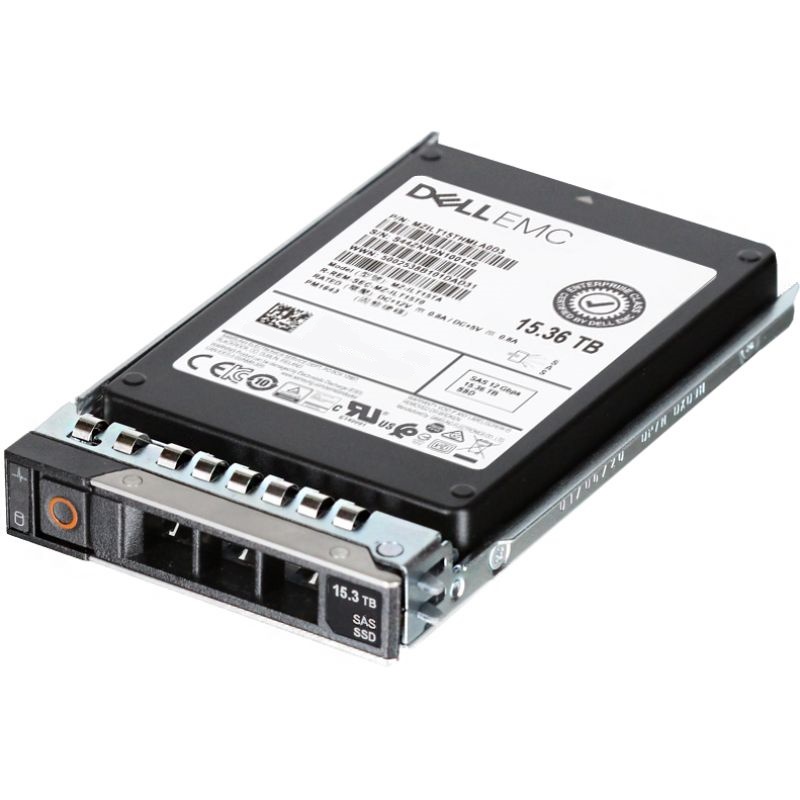


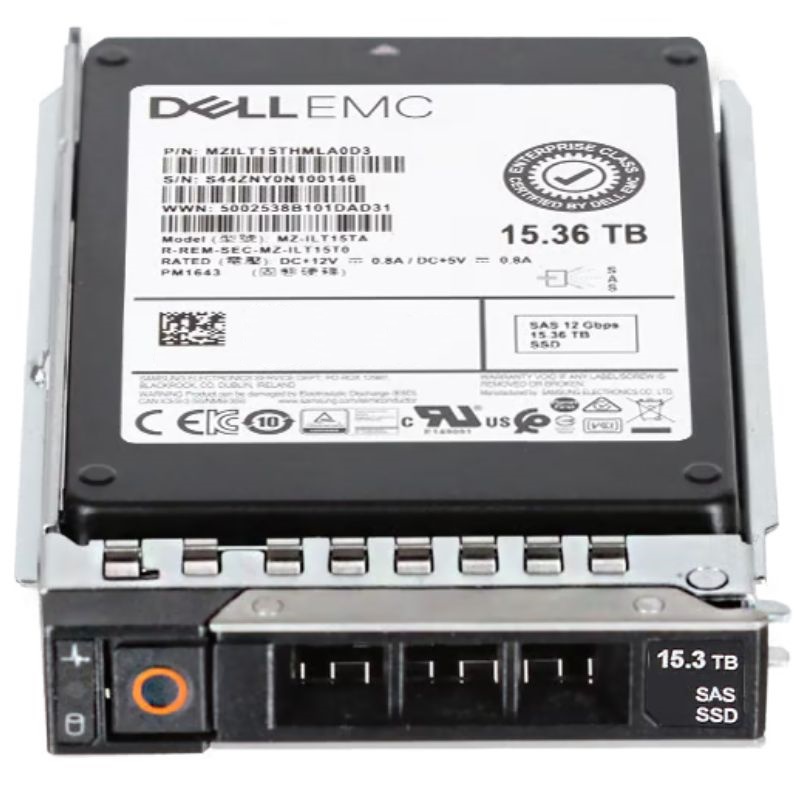
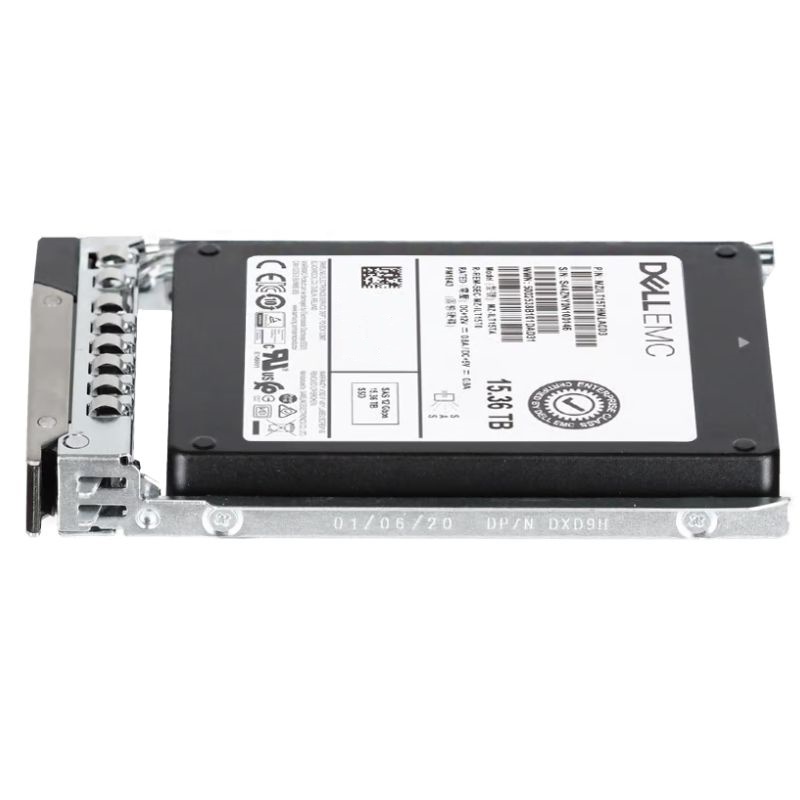
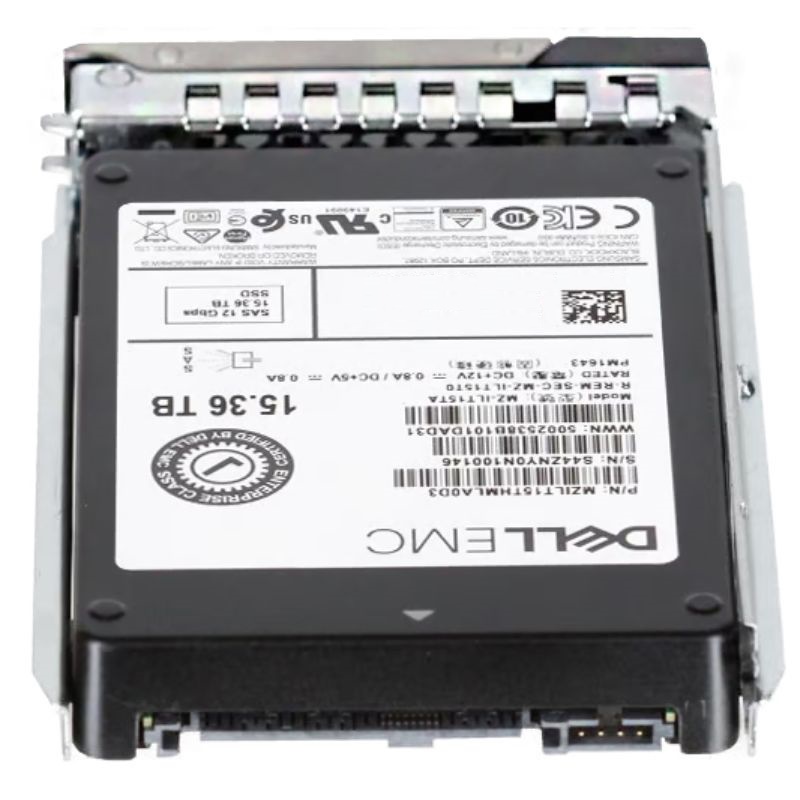
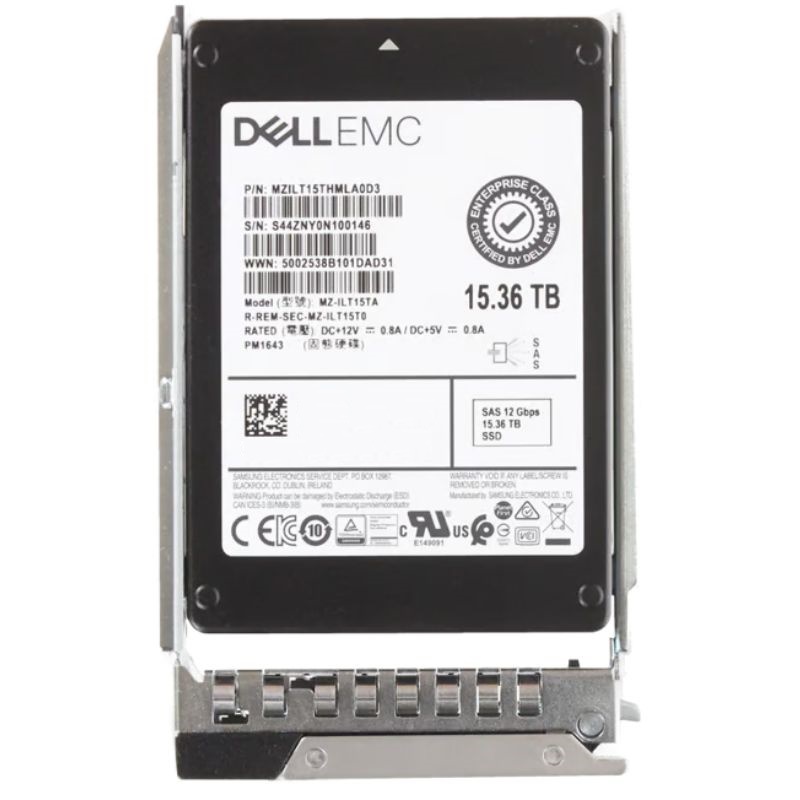
Dell 400-AVNH 15.36TB SAS-12GBPS Read-Intensive 1 DWPD TLC SFF Hot-Plug Certified with tray for Poweredge Server Solid State Drive. New Sealed in Box (NIB) with 1-Year Replacement Warranty
Dell 400-AVNH Enterprise-Grade internal SSD engineered for Poweredge servers. 15.36TB storage capacity designed for large-scale workloads. SAS 12Gb/s interface ensuring rapid data transfer.
The Dell 400-AVNH 15.36TB SAS-12GBPS Read-Intensive 1 DWPD TLC SFF Hot-Plug Certified with tray for PowerEdge Server Solid State Drive occupies a specific and valuable place in modern data center storage architectures. Engineered to deliver high-capacity, low-latency access to frequently read data, this model is designed for mixed enterprise workloads where read performance, predictable latency, and long sequential and random read throughput matter most. Combining 15.36TB of usable flash in a Small Form Factor enclosure, SAS-12Gbps connectivity and read-optimized TLC media rated at 1 DWPD, the Dell 400-AVNH is positioned as a primary building block for capacity-dense read caching, virtual desktop infrastructures, web-scale content delivery, analytics nodes, and database read replicas. The drive’s certification with PowerEdge servers, complete with a hot-plug carrier tray, makes it straightforward to integrate into existing Dell PowerEdge arrays and server chassis, minimizing deployment friction while ensuring hardware compatibility with common enterprise management stacks.
The physical identity of this drive centers on a Small Form Factor design, typically compatible with 2.5-inch bays found in modern rack servers. Its SAS-12GBPS interface provides full-duplex, point-to-point connectivity, enabling simultaneous command queues and robust link-level error detection and correction suitable for enterprise environments. The hot-plug capability allows drive insertion and removal without system downtime, a crucial feature during maintenance windows and emergency replacements. The supplied tray ensures mechanical compatibility with PowerEdge hot-swap backplanes, aligning the drive's latch, LED, and connector orientation with Dell’s serviceable standards. Because it uses SAS at 12 Gbps, this drive is well-suited for server backplanes and RAID controllers that support multi-lane, enterprise-class signaling and it integrates cleanly with existing server storage stack firmware and low-level management utilities.
The defining storage characteristic is the generous 15.36TB capacity, which helps consolidate more frequently accessed datasets on fewer drives and reduces the total number of spindles or devices required in a shelf or server. Using triple-level cell (TLC) NAND constructed and managed for data center use, the drive balances cost per gigabyte with acceptable endurance for read-intensive workloads. The endurance rating of 1 drive write per day (1 DWPD) indicates the drive can sustainably handle writes roughly equal to its capacity each day over the warranty period without exceeding manufacturer endurance assumptions. For read-intensive applications — where the majority of IO is read operations — this endurance is typically more than sufficient and yields attractive cost advantages over higher-endurance drives designed for write-heavy transactional workloads. Understanding the write patterns of the workload is essential: archival reads, analytics queries, and content delivery nodes will make efficient use of the media while avoiding premature write wear.
With SAS-12GBPS connectivity, the drive offers a high sustained throughput ceiling and robust command queuing behavior for random reads and moderate random writes. The read-intensive designation suggests firmware tuning and internal over-provisioning are optimized to deliver low, predictable read latencies even under sustained IO. Typical enterprise deployments will see this drive excel when serving read-heavy databases, search indices, or virtual machine boot storms. While peak sequential transfer speeds will be bounded by the 12 Gbps link and controller overheads, the more notable advantage lies in consistent IOPS delivery for random reads, minimizing jitter and ensuring predictable response times for downstream applications. Proper sizing of controller queue depths and ensuring the server firmware is configured to leverage native command queuing will extract the best read-latency characteristics from the Dell 400-AVNH.
Certification for PowerEdge servers means system integrators and administrators gain a predictable compatibility profile. The inclusion of a drive tray for PowerEdge models helps ensure the drive aligns with Dell’s front-bay indicators and serviceability markings, enabling quicker on-rack replacements and consistent behavior with server monitoring dashboards. The drive typically interoperates with Dell’s OpenManage suite, which provides firmware update orchestration, health telemetry, SMART-like attributes, and predictive failure indicators. Administrators will find that firmware bundles and management policies designed for PowerEdge ecosystems are often pre-validated with certified drives, minimizing the risk of unforeseen incompatibilities during scheduled maintenance. Enterprise SNMP and Redfish integrations are commonly used to collect drive health and telemetry for proactive capacity and endurance planning, making the Dell 400-AVNH a functional element within broader infrastructure automation and observability frameworks.
Read-intensive SSDs like the Dell 400-AVNH thrive in specific workload domains. Content delivery, metadata stores, large-scale web search index segments, virtual desktop infrastructure read caches, analytics query caches, and read-scale-out database replicas are exemplary use cases. When a workload requires massive read bandwidth and predictable latency for frequently accessed data, a high-capacity SAS SSD reduces the need to build larger RAID groups of spinning disks purely to increase read parallelism. In virtualization and cloud platforms, consolidating multiple read-heavy virtual machines on a 15.36TB SAS SSD can reduce storage contention and accelerate boot or snapshot operations. For distributed filesystems and object stores, placing hot subsets of data on read-optimized flash-tier nodes reduces tail latency and improves end-user experience. Where writes are cyclical or limited, employing this model as the read tier within a tiered storage strategy yields both cost-efficiency and performance advantages.
Integrating the Dell 400-AVNH into a tiered storage architecture can be approached in several ways without relying on complex proprietary software. At the simplest level, it serves as the server-local read tier, storing indexes, metadata, and hot files while archival or write-heavy content resides on high-capacity HDD arrays. In more sophisticated arrangements, software-defined storage layers can designate flash-backed read caches that become the first point of access for reads, with backend storage resolving cache misses. Because the drive supports hot-plug replacement and enterprise SMART reporting, automated rebalancing and rebuild operations can occur with minimal manual intervention. The drive’s endurance profile and high capacity make it practical to use multiple drives across nodes to create a read-focused aggregate that scales linearly with each added device.
Enterprise-grade SSDs are supported by an ecosystem of monitoring and failure-prediction tools. While individual drive internals manage wear through over-provisioning and flash translation layer algorithms, system-level visibility is provided through monitoring channels. From a maintenance standpoint, hot-plug capability and PowerEdge-certified trays reduce mean time to repair during field replacements. Administrators should plan for periodic firmware updates bundled by the server vendor, ensuring the drive's firmware revisions match controller firmware and server management utilities. RAID rebuild strategies should be tuned to leverage the drive’s sustained read performance while avoiding unnecessary write amplification. Health indicators, such as reserved spare usage, media wear percentages, and abnormal error counts, should feed automation playbooks to replace drives predictively before service impact occurs.
Despite improvements in flash energy efficiency, high-capacity enterprise SSDs still demand attention to thermal and power profiles. The dense NAND array and controller activity mean the drive will generate heat under sustained workloads. Proper airflow in the server chassis and rack-level cooling strategy maintains consistent operating temperatures, preserving media longevity and steady-state performance. Power consumption is typically favorable compared to equivalent-capacity HDD arrays, but system architects should account for the drive’s idle and active power draw when performing rack-level power budgeting. Monitoring ambient temperatures and drive junction temperatures allows administrators to detect throttling events or thermal stress before performance impact becomes visible to applications.
When deploying the Dell 400-AVNH, pay attention to server firmware, backplane compatibility, and RAID controller driver support. While the drive is certified for many PowerEdge configurations, validating firmware bundles in a staging environment before production rollouts reduces surprises. In configurations where the drive will be used in RAID, choose RAID policies that consider the balance between redundancy and rebuild times; the high throughput provided by SAS-12Gbps may shorten rebuild windows but also exposes other media to higher write activity during rebuilds. For software RAID and storage virtualization layers, align block sizes and caching strategies to the expected IO profile. When used with deduplication or compression layers, understand how such technologies interact with TLC media to avoid unexpected write amplification that could influence lifetime expectancy.
While the Dell 400-AVNH is primarily described by its performance and compatibility attributes, data protection is fundamental. Physical access controls, server-level disk encryption features, and backup policies remain central to protecting information at rest. When integrating these drives into environments with strict compliance or regulatory requirements, ensure that system-level encryption or host-based encryption aligns with organizational policies. Combine the drive’s certification and predictable performance with established backup windows, snapshotting frequency, and off-site replication strategies to maintain data sovereignty and integrity. Regularly test recovery processes to confirm that drives replaced under emergency conditions successfully restore data sets and maintain application-level consistency.
Within an OEM’s portfolio, the Dell 400-AVNH 15.36TB SAS-12GBPS Read-Intensive drive lives alongside higher-endurance, lower-capacity, or NVMe-based models. Compared to write-optimized SSDs, the read-intensive 1 DWPD rating signals a tailored cost/performance trade-off optimized for read-heavy workloads rather than intensive mixed read/write transactional workloads. Compared with NVMe devices, SAS-12GBPS drives may offer stronger integration scenarios for existing SAS backplane deployments and familiarity for administrators accustomed to SAS management paradigms. For teams migrating from spinning disk to flash, this drive represents a predictable step: similar logical management procedures, RAID options, and hot-swap serviceability while delivering the low-latency characteristics expected from solid-state media. Choosing between SAS and NVMe often depends on application sensitivity to latency versus deployment flexibility and server backplane capabilities; the Dell 400-AVNH remains a high-value option where SAS ecosystems are already entrenched.


 Contact Us
 Information
 Catalog
 Solid State Drives (SSD)
 Network Switches
 Hard Disk Drives
 HBA & Controllers
 PC & Servers
 PC & Server Memory
 CPU & Processors
 Network Routers
 Power Supplies
 Tape Drives & Libraries
 Network Devices
 Computer & Network Cables