(7% discount is applied at checkout)
Cart is empty
Your go-to destination for cutting-edge server products
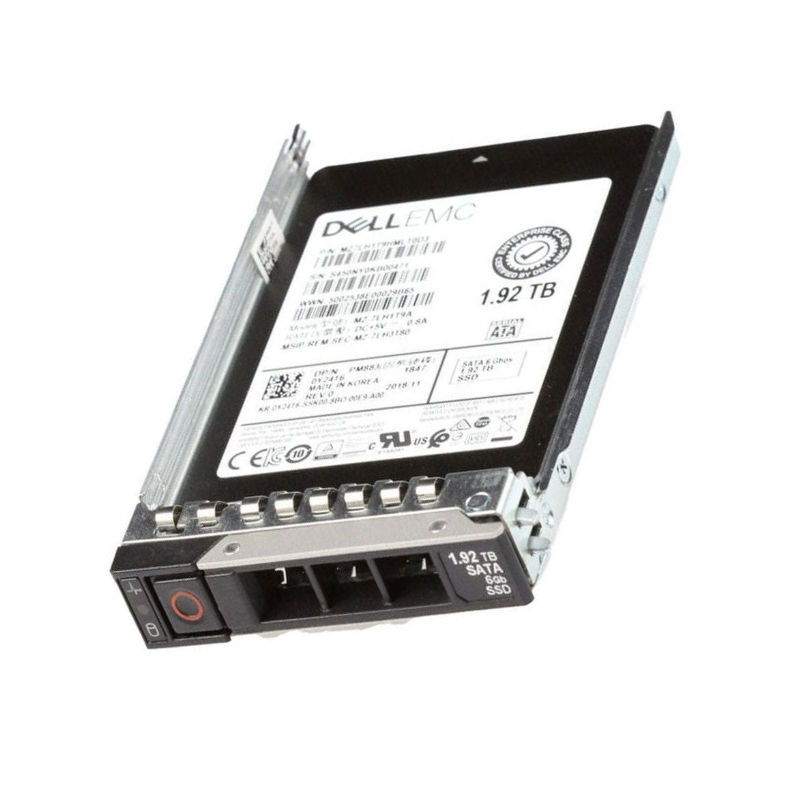


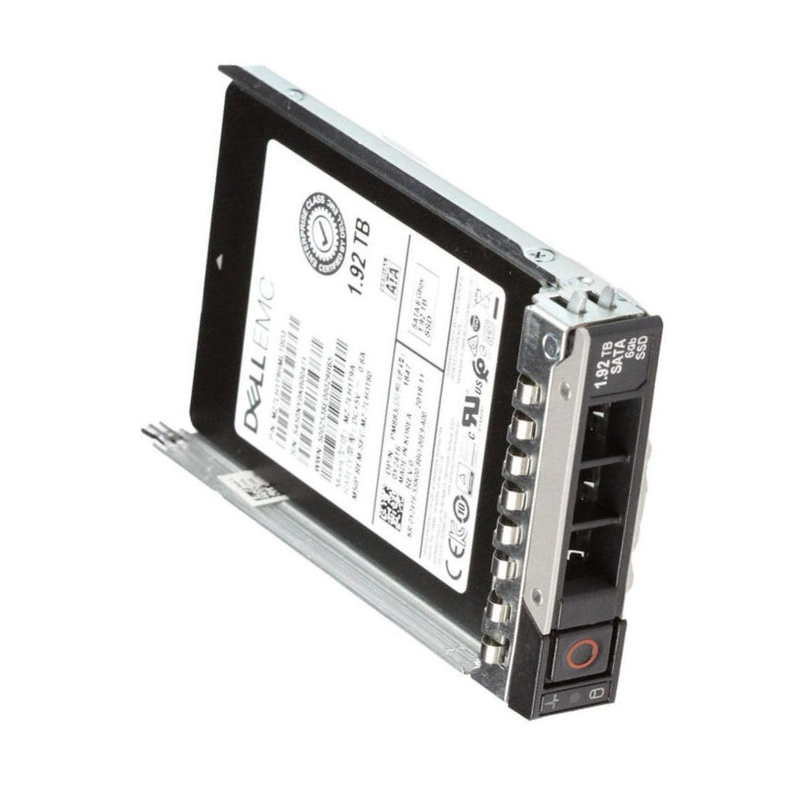
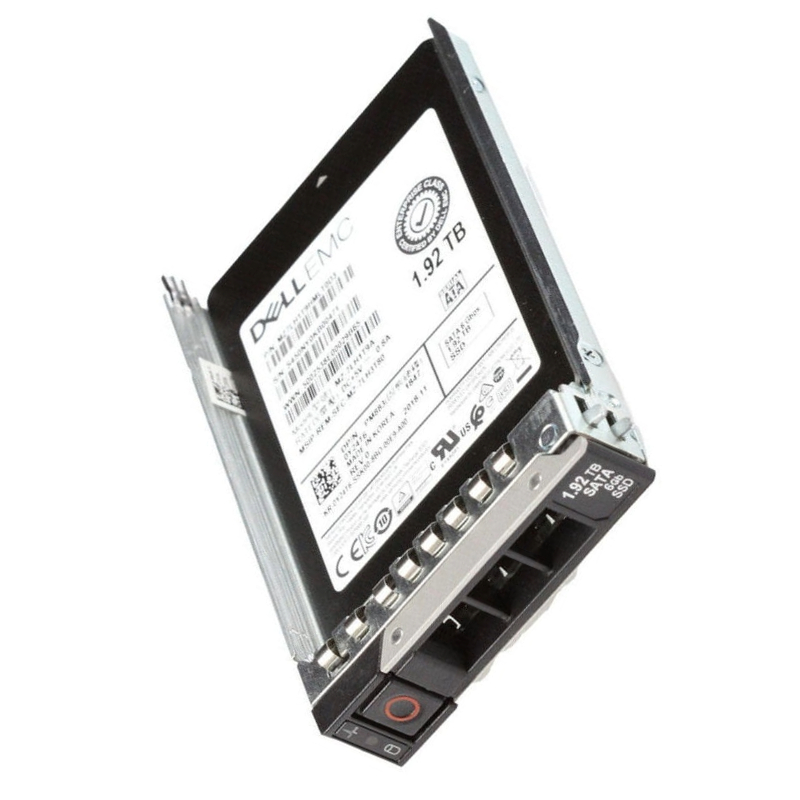
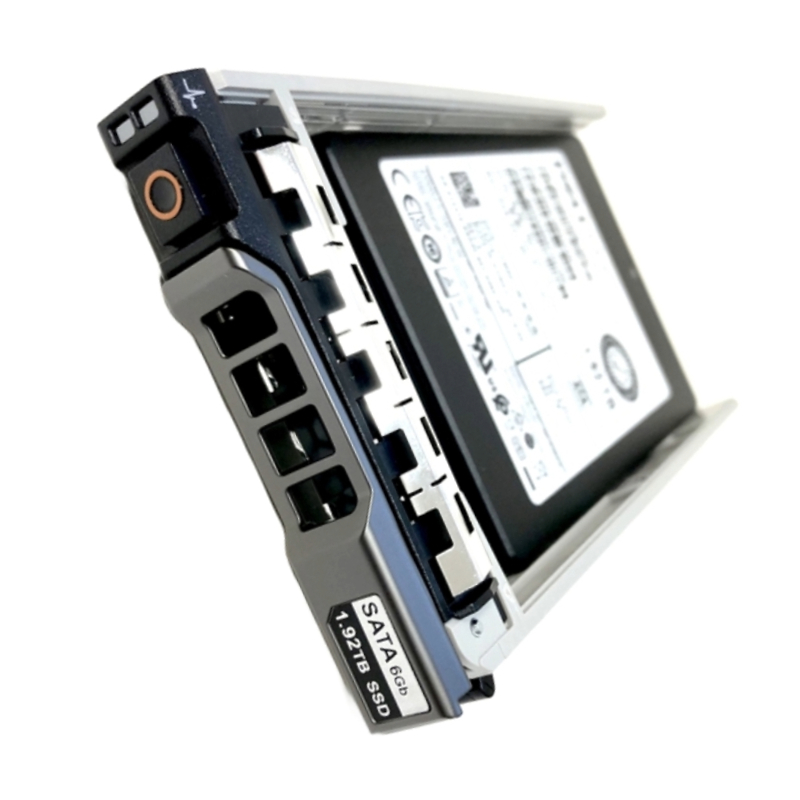
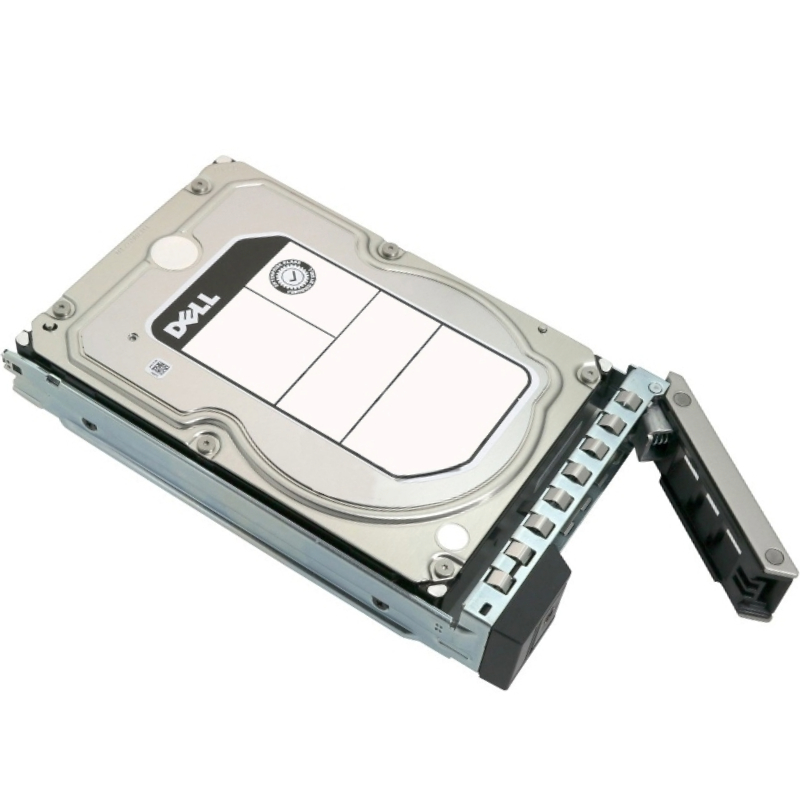
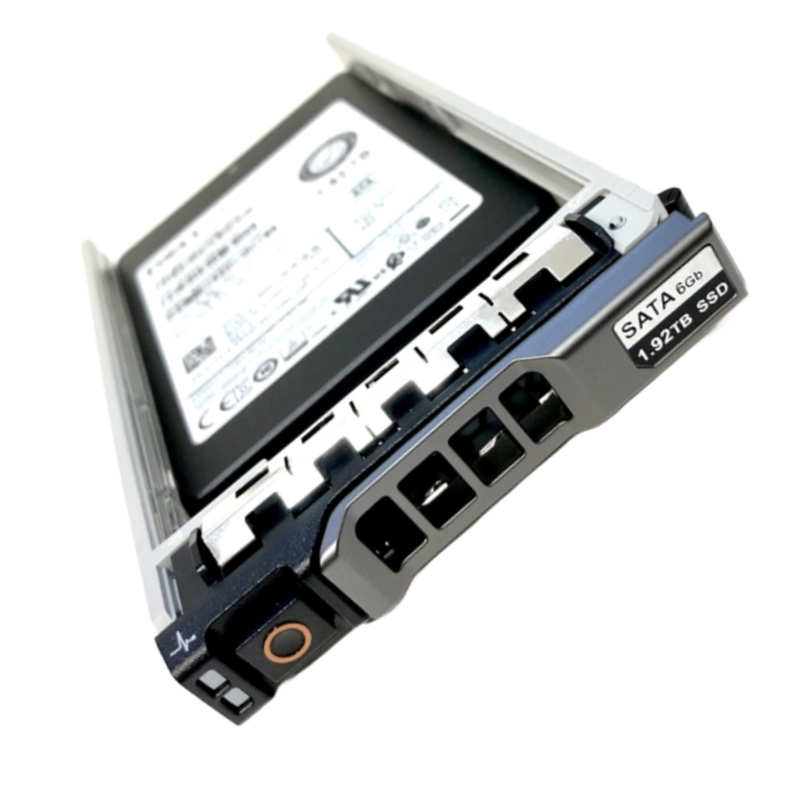
Dell 400-AXSD 1.92TB SATA 6GBPS SSD Read Intensive TLC with Tray for Server. Excellent Refurbished with 1 Year Replacement Warranty
| SKU/MPN | Warranty | Price | Condition | You save |
|---|---|---|---|---|
| 400-AXSD | 1 Year Warranty | $592.00 | Excellent Refurbished | You save: $207.20 (26%) |
| 400-AXSD | 1 Year Warranty | $940.00 | New Sealed in Box (NIB) | You save: $329.00 (26%) |
Dell 400-AXSD 14G — 1.92TB Read-Intensive TLC SATA SSD Overview
The Dell 400-AXSD is a high-capacity, read-optimized solid-state drive engineered for enterprise servers and data centers. Built on Triple-Level Cell (TLC) NAND and a SATA 6Gb/s interface, this 2.5-inch hot-plug SSD delivers reliable performance for read-heavy workloads, fast random reads, and lower latency compared with legacy spinning disks. Ideal for caching, database read operations, virtualization and content delivery.
Designed for read-dominant enterprise workloads, the 400-AXSD focuses on sustained read throughput, low I/O latency, and predictable performance under heavy concurrency. While TLC NAND provides cost-efficient density, the drive's firmware and enterprise-grade controllers optimize wear-leveling and error correction to extend usable life.
The 400-AXSD employs enterprise-grade ECC (error-correcting code), power-loss protection strategies (where supported by the system), and robust firmware controls to maintain data integrity and to minimize the risk of bit errors — essential for mission-critical deployments.
This drive is validated for a broad range of Dell PowerEdge platforms. Confirm firmware and server BIOS compatibility before deployment to ensure full feature support.
The Dell 400-AXSD excels in scenarios where reads dominate and predictable latency matters. Consider this drive for:
The Dell 400-AXSD 14G represents a specialized category of Solid State Drives engineered explicitly for Dell's 14th Generation (14G) PowerEdge servers. This series is part of Dell's branded storage solution, ensuring seamless compatibility, optimized performance, and simplified management within the Dell ecosystem. The specific 1.92TB model is a cornerstone for IT administrators and data center managers seeking a reliable, high-performance storage tier for applications where data is read far more frequently than it is written.
The "400-AXSD" nomenclature is Dell's unique identifier for this category of SATA SSDs. The "14G" designation is critical, confirming its validation and optimization for the 14th Generation PowerEdge server platform, including families like the R740xd, R640, T640, and MX740c. This drive is not a consumer-grade SSD; it is an enterprise-grade component built for 24/7 operation, featuring advanced error correction, power-loss protection, and extended endurance.
The 1.92TB capacity point is strategically chosen for the enterprise environment. It offers a substantial storage pool for operating systems, applications, and datasets while maintaining a favorable cost-per-gigabyte ratio. It's important to note that this is the user-accessible capacity. Enterprise SSDs typically include additional, hidden capacity known as over-provisioning (OP), which is reserved for the controller. This OP improves performance by providing spare area for garbage collection and wear leveling, and it significantly enhances the drive's longevity and write endurance.
This drive utilizes 3D TLC NAND flash memory. TLC stores three bits of data per memory cell, striking an excellent balance between cost, density, and endurance. For read-intensive workloads, TLC NAND is the ideal choice. It provides a much higher endurance and lower cost-per-gigabyte compared to consumer-grade TLC drives, thanks to enterprise-grade controllers, robust firmware, and the aforementioned over-provisioning. It delivers near-MLC performance for read operations while being more economical than MLC or SLC NAND.
The 2.5-inch form factor is the industry standard for modern servers. The "Hot-Plug" capability is a non-negotiable feature in enterprise and data center environments. It allows an administrator to remove and replace the drive without powering down the server, a crucial capability for maintaining high availability and performing maintenance with zero downtime. This drive is designed to slide directly into the hot-swap drive bays of Dell PowerEdge servers, connecting seamlessly with the server's backplane.
The Serial ATA (SATA) interface, specifically the 6 Gigabit-per-second (Gbps) revision, offers a robust and widely compatible connection. While not offering the peak sequential speeds of NVMe drives, SATA SSDs provide exceptional random read/write performance, which is the bottleneck for most server applications. The SATA interface eliminates the storage I/O bottleneck associated with traditional Hard Disk Drives (HDDs), making it a massive performance upgrade. Its compatibility with existing SATA infrastructure also makes it a cost-effective upgrade path.
The "Read-Intensive" (RI) classification is the core identity of this SSD category. It is engineered for applications where the vast majority of storage operations are data reads, with writes constituting a smaller percentage of the total workload. Understanding this distinction is key to selecting the right storage tier.
Endurance in SSDs is measured by Terabytes Written (TBW) or Drive Writes Per Day (DWPD). The Dell 400-AXSD 1.92TB, as a read-intensive drive, is typically rated for a lower DWPD compared to Mixed-Use or Write-Intensive drives. For example, it might be rated for 0.5 to 1 DWPD. This means over its 5-year warranty period, you can write between half to the entire drive's capacity (0.96TB to 1.92TB) every single day. For read-centric tasks, this is more than sufficient and represents a significant endurance improvement over consumer SSDs.
Web servers delivering HTML, images, CSS, and JavaScript files experience a workload that is overwhelmingly read-biased. Every page view is a series of read requests. Deploying read-intensive SSDs like the 400-AXSD in web servers drastically reduces page load times, improves user experience, and allows the server to handle a much higher number of concurrent users compared to HDD-based storage.
In VDI deployments, particularly for linked-clone or instant-clone environments, the boot process and operation of the virtual desktops generate a "boot storm" and ongoing operation that is heavily read-oriented. The master gold image and the operating system files are constantly being read to support the user sessions. Using read-intensive SSDs for the VDI base image store ensures fast logon times and a smooth, responsive user experience for all connected users.
Databases used for reporting, data mining, and business intelligence (e.g., Microsoft SQL Server, Oracle DB) often involve running complex queries that scan and read large datasets. The speed of these queries is directly limited by storage read performance. By storing these databases on a read-intensive SSD tier, organizations can achieve faster query results, enabling quicker business decisions and more efficient data analysis.
File servers hosting shared documents, application servers running executable files, and streaming media servers all primarily serve data to clients. The storage I/O pattern is sequential and random reads. Upgrading these servers with the 400-AXSD SSD can eliminate I/O wait times, accelerating application launches and file access across the network.
The primary performance advantage of any SSD over an HDD is dramatically reduced latency. While a high-performance HDD might have an access time of several milliseconds, the Dell 400-AXSD operates in the sub-millisecond or even microsecond range. This directly translates to higher Input/Output Operations Per Second (IOPS). For random read operations—the most common workload in server environments—this drive can deliver tens of thousands of IOPS, compared to a few hundred from an HDD. This means the server can process many more requests simultaneously.
While random performance is king for server applications, sequential speeds are also important for tasks like loading large files or data transfers. Leveraging the SATA 6Gbps interface, this drive can achieve sequential read speeds approaching the interface's theoretical limit of ~550 MB/s. Sequential write speeds will also be high, though potentially lower than the read speed, which is perfectly acceptable for its designated read-intensive role.
Using a Dell-branded drive like the 400-AXSD in a Dell PowerEdge server guarantees compatibility. The drive's firmware has been specifically tested and tuned by Dell to work flawlessly with the server's PERC (PowerEdge RAID Controller) and BOSS (Boot Optimized Storage Solution) hardware. This eliminates the guesswork and potential instability associated with using third-party, non-validated drives.
When installed in a Dell server, this drive is fully visible and manageable through the integrated Dell tools. IT administrators can monitor the drive's health, temperature, remaining lifespan, and SMART attributes directly from the iDRAC (Integrated Dell Remote Access Controller) interface or OpenManage systems management console. This provides proactive alerting and simplifies lifecycle management.


 Contact Us
 Information
 Catalog
 Solid State Drives (SSD)
 Network Switches
 Hard Disk Drives
 HBA & Controllers
 PC & Servers
 PC & Server Memory
 CPU & Processors
 Network Routers
 Power Supplies
 Tape Drives & Libraries
 Network Devices
 Computer & Network Cables