(7% discount is applied at checkout)
Cart is empty
Your go-to destination for cutting-edge server products
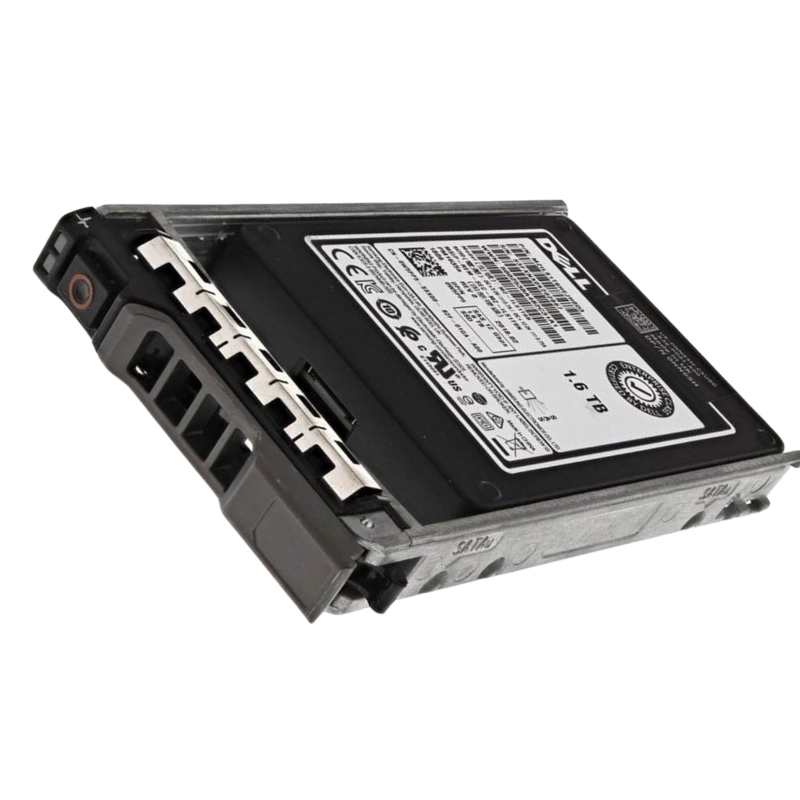


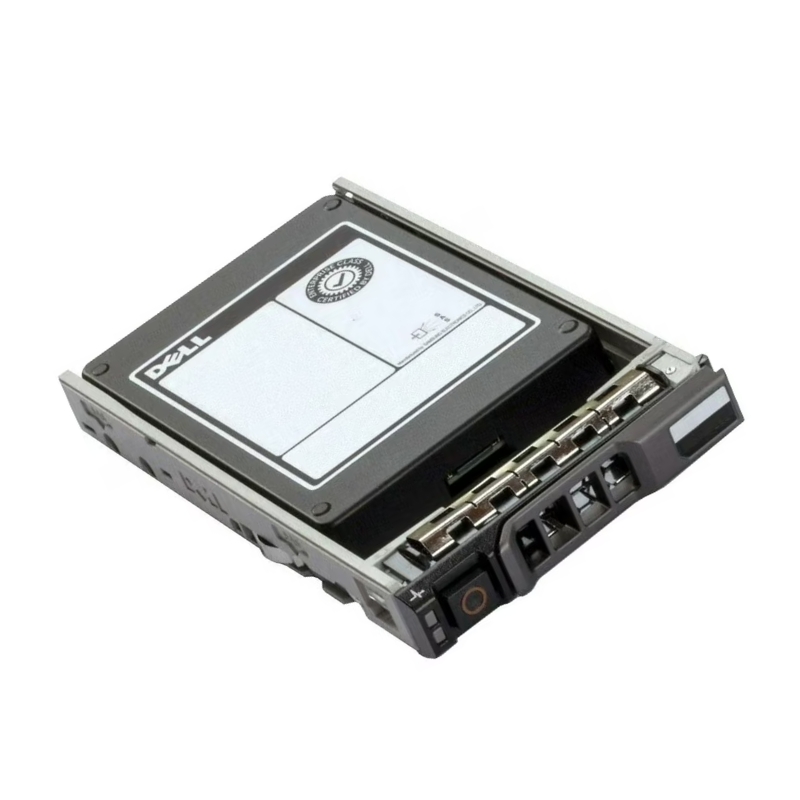
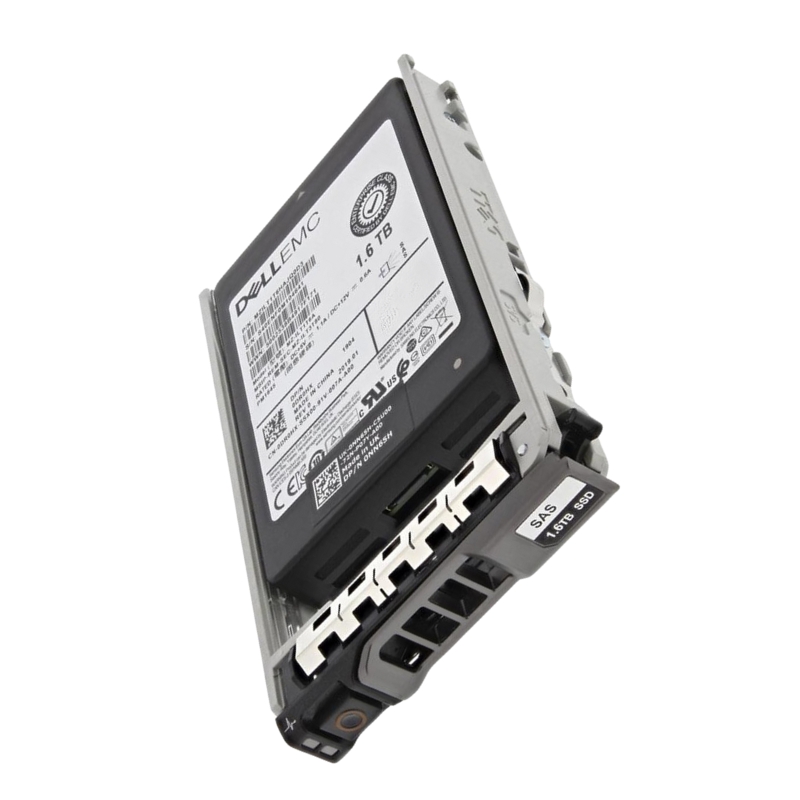
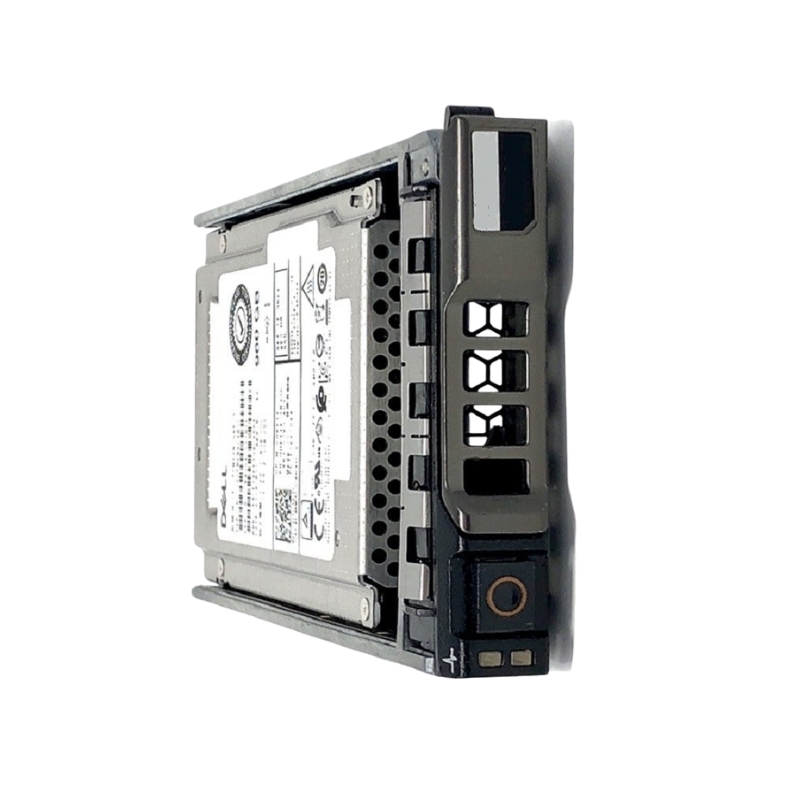
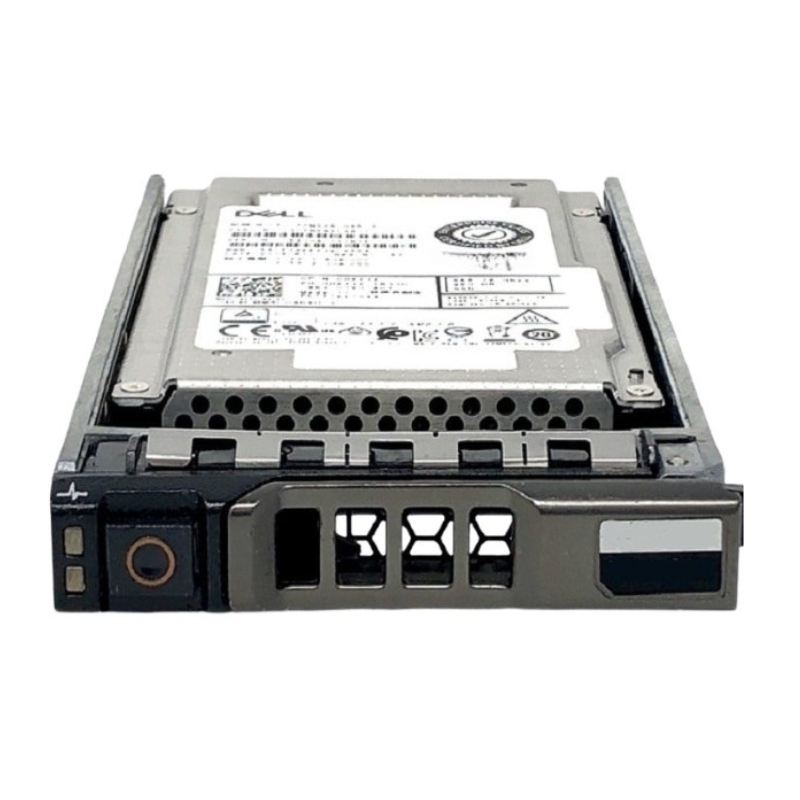
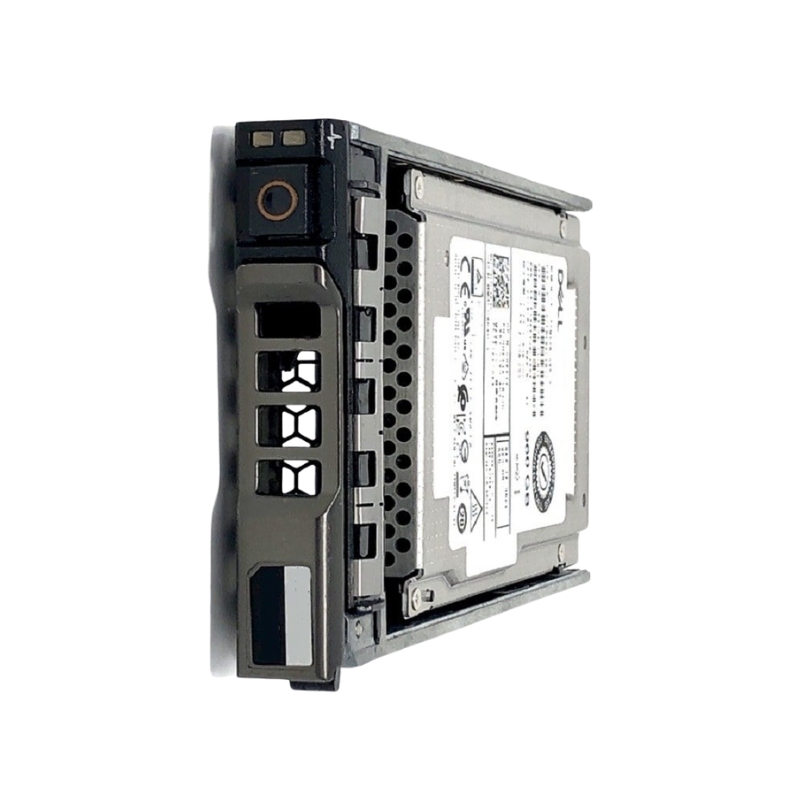
Dell 400-AZHJ 1.6TB Mixed Use Tlc SAS-12GBPS SFF Hot-Plug With Tray For Server SSD. New Sealed in Box (NIB) with 1-Year Replacement Warranty
Core Specifications
The Dell 400-AZHJ 1.6TB Mixed Use TLC SAS-12Gbps SFF Hot-Plug Server SSD with Tray is a purpose-built enterprise storage device engineered for mixed workload environments where a balance of capacity, consistent performance, endurance, and data integrity is required. Designed to integrate seamlessly into Dell PowerEdge servers and many industry-standard SAS infrastructures, this 1.6TB small form factor (SFF/2.5") drive uses triple-level cell (TLC) NAND optimized for mixed-use service profiles. The SAS 12Gbps interface delivers high throughput and low latency for transactional databases, virtualization hosts, web servers, VDI, and mail/file servers where both read and write activity matter.
The Dell 400-AZHJ delivers consistent low-latency performance by pairing enterprise-grade TLC NAND with intelligent controllers and firmware tuned for mixed workloads. On SAS 12Gbps backplanes, this SSD supports high sustained sequential throughput and strong random I/O performance — critical for OLTP databases, virtualization hosts, and mixed-read/write applications. Typical real-world metrics customers see in these classes include sustained sequential reads/writes in the multiple hundreds of MB/s range per drive, and random IOPS measured in the tens to hundreds of thousands depending on queue depth and workload profile.
Random IOPS performance is strongly influenced by queue depth and controller architecture. In moderate queue depth scenarios (QD1–QD16) — common in virtual desktop environments and general server tasks — the 400-AZHJ maintains predictable latency and throughput. In higher parallelized workloads where QD32 and above are common (e.g., large databases or heavy virtualization farms), aggregating multiple drives behind a capable SAS HBA/RAID controller will scale throughput and reduce latency variance.
For sequential streaming tasks such as bulk backups, media delivery, and large dataset transfers, the drive’s sequential throughput on SAS 12Gbps is optimized to saturate available link capacity when paired with an efficient controller. For random-heavy tasks — such as database index lookups and metadata-heavy operations — enterprise TLC with over-provisioning and firmware-level garbage collection helps sustain IOPS over time. Buyers should benchmark using workload profiles representative of their environment (e.g., 70/30 read/write mixes for mixed-use) to predict real-world behavior accurately.
Mixed-use TLC SSDs like the Dell 400-AZHJ have been designed with a focus on endurance that sits between client and pure write-intensive enterprise drives. Endurance is commonly specified in Drive Writes Per Day (DWPD) or total terabytes written (TBW) over the warranty period. While exact manufacturer-rated TBW can vary by firmware and production batch, mixed-use drives typically support workloads like virtualization, medium-duty databases, and email servers for several years under typical enterprise utilization.
To maximize lifespan, these SSDs employ dynamic wear-leveling, sophisticated flash translation layer (FTL) algorithms, and factory over-provisioning. Over-provisioning reserves a portion of the physical NAND for background operations like garbage collection and block retirement; this improves sustained performance and extends usable life. For write-heavy environments, administrators can set higher over-provisioning at provisioning time to further enhance endurance and latency stability.
Enterprise SSDs expose S.M.A.R.T. attributes and vendor-specific telemetry that help administrators monitor health indicators: percentage of NAND lifetime used, reallocated blocks, media errors, power-on hours, and uncorrectable errors. Integrating these metrics into server management tools (OpenManage, vendor HBAs, or third-party monitoring systems) allows predictive replacement workflows and reduces unplanned downtime.
The 400-AZHJ has been engineered to fit common enterprise environments. The SFF 2.5" form factor and included hot-swap tray make it compatible with Dell PowerEdge drive bays and many generic SAS backplanes. However, compatibility depends on server generation, backplane firmware, and controller support — especially for advanced features like hardware encryption and secure erase. Always verify compatibility matrices for your specific server model and controller firmware revisions.
When deploying SSDs in RAID arrays, choose controllers that support SSD-friendly features such as TRIM/pass-through (if supported by firmware), automatic background optimization, and sophisticated cache management. Hardware RAID controllers may present different performance characteristics compared to software RAID or host-based HBAs, so testing RAID stripe sizes and cache settings against your workload can reveal significant differences in latency and throughput.
If the drive supports dual-port SAS, organizations benefit from redundancy and high-availability topologies. Dual-porting allows multiple SAS paths to the drive (commonly used in SAN-attached servers or dual-controller JBODs), enabling multipathing for failover and increased uptime.
Because it balances performance and endurance, the Dell 400-AZHJ is ideal for a wide set of enterprise workloads:
Virtualization Hosts (VMware, Hyper-V): Store VM templates, OS disks, and hot VMs where a balance of reads and writes is expected.
Databases (OLTP/OLAP): Transactional systems with a mix of small random reads/writes — especially when combined with caching tiers.
Web and Application Servers: High-concurrency web servers and application stacks that demand consistent response times.
VDI (Virtual Desktop Infrastructure): Mixed profile VDI fleets, particularly non-persistent VDI pools that still benefit from predictable IOPS.
Hybrid Storage Tiers: Use as a mid-tier between NVMe or read-optimized SSDs and spinning media for cost-efficient performance.
Before purchase, profile your workloads: measure average queue depth, I/O size, read/write mix, and sequential vs random distribution. For workloads with extremely high write intensity (e.g., streaming write logs, heavy caching without write coalescing), consider higher endurance drives or NVMe alternatives. For workloads with dominant reads but occasional spikes, mixed-use SSDs combined with proper caching offer excellent price-performance balance.
Enterprise SSDs generate less heat than spinning disks but can still be sensitive to sustained high-temperature environments. Ensure appropriate chassis airflow and cooling are in place. SAS SSD power consumption is modest, but cumulative power draw for multiple drives should be considered for power provisioning and UPS sizing.
Designed for server environments, these drives withstand typical data-center vibration and shock levels. However, for JBODs or mobile use cases, verify vendor shock specifications where physical movement or transport is common.


 Contact Us
 Information
 Catalog
 Solid State Drives (SSD)
 Network Switches
 Hard Disk Drives
 HBA & Controllers
 PC & Servers
 PC & Server Memory
 CPU & Processors
 Network Routers
 Power Supplies
 Tape Drives & Libraries
 Network Devices
 Computer & Network Cables