(7% discount is applied at checkout)
Cart is empty
Your go-to destination for cutting-edge server products
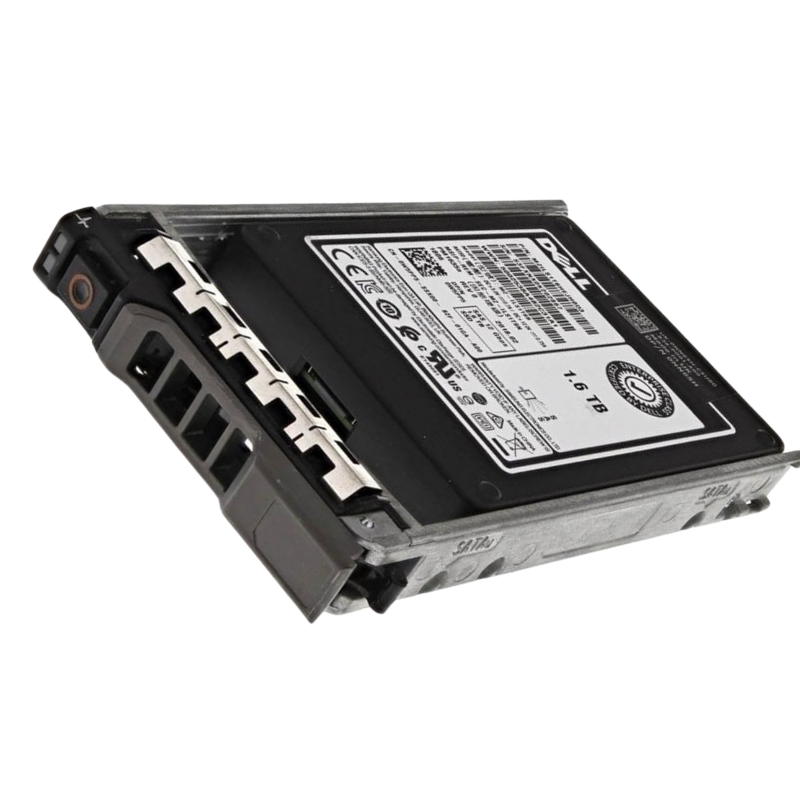


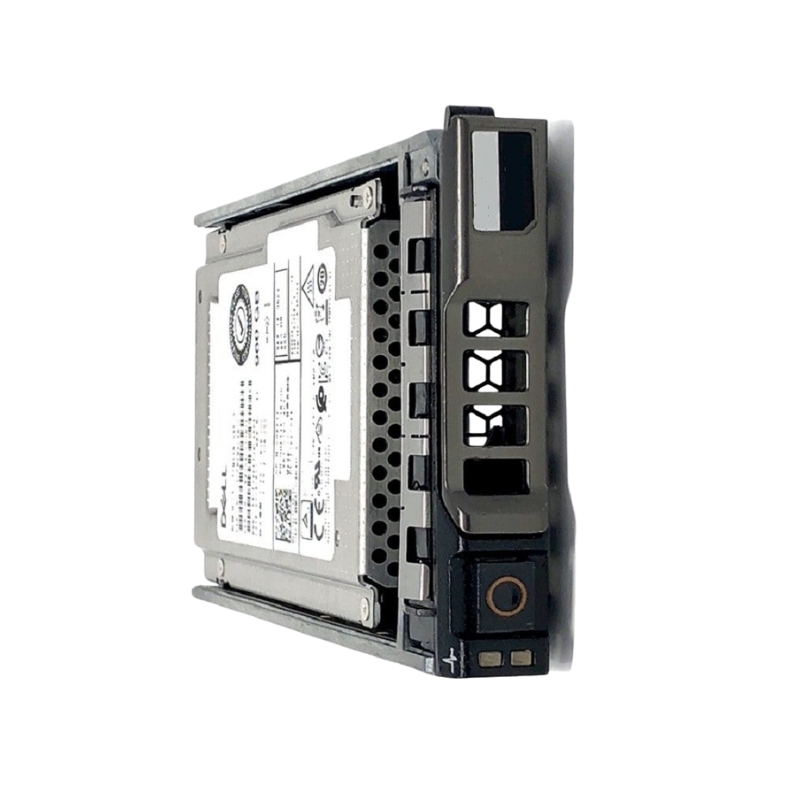
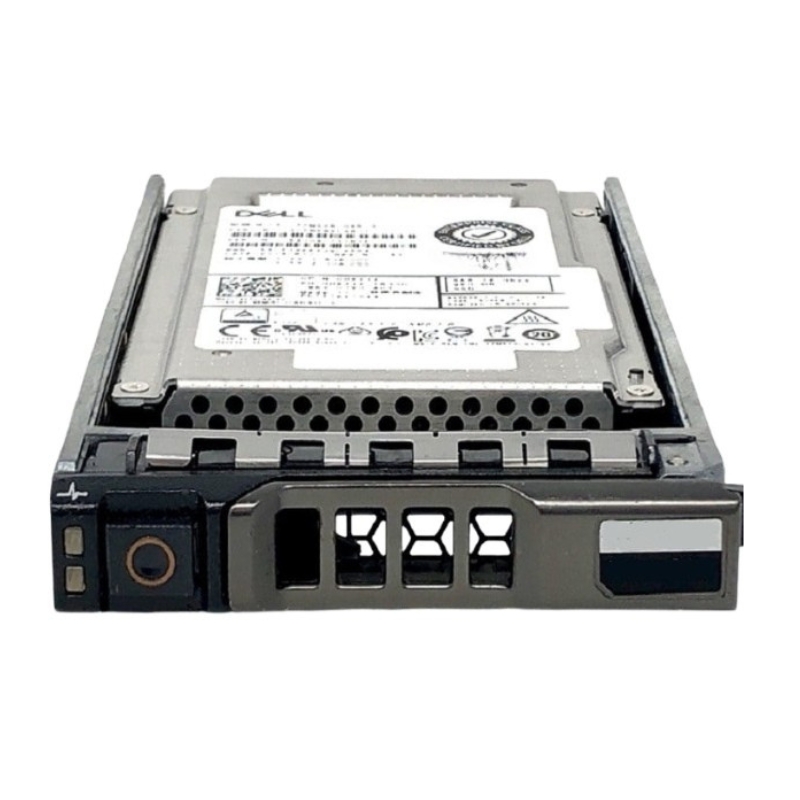
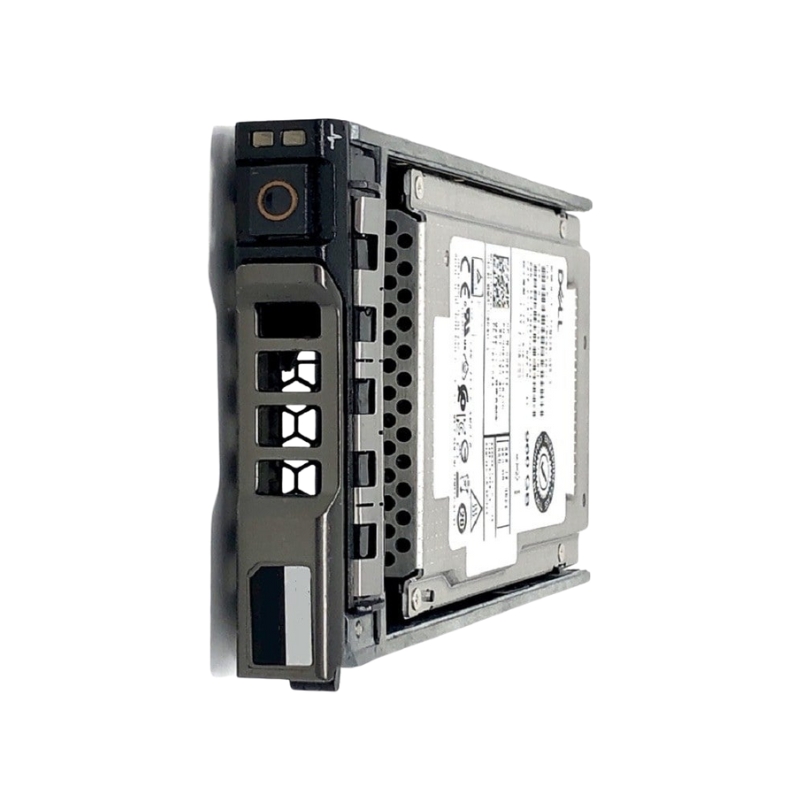
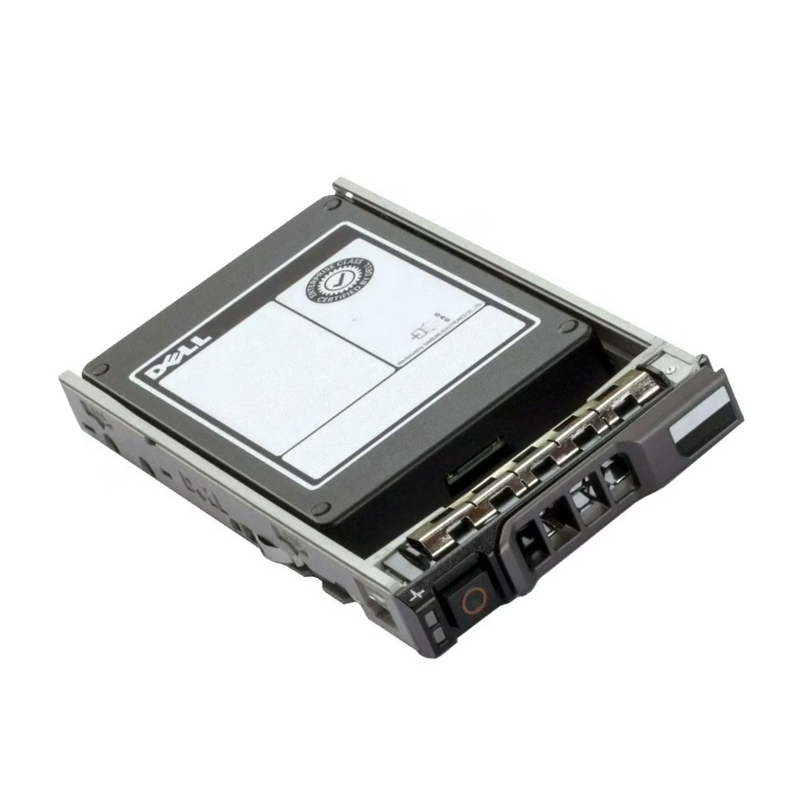
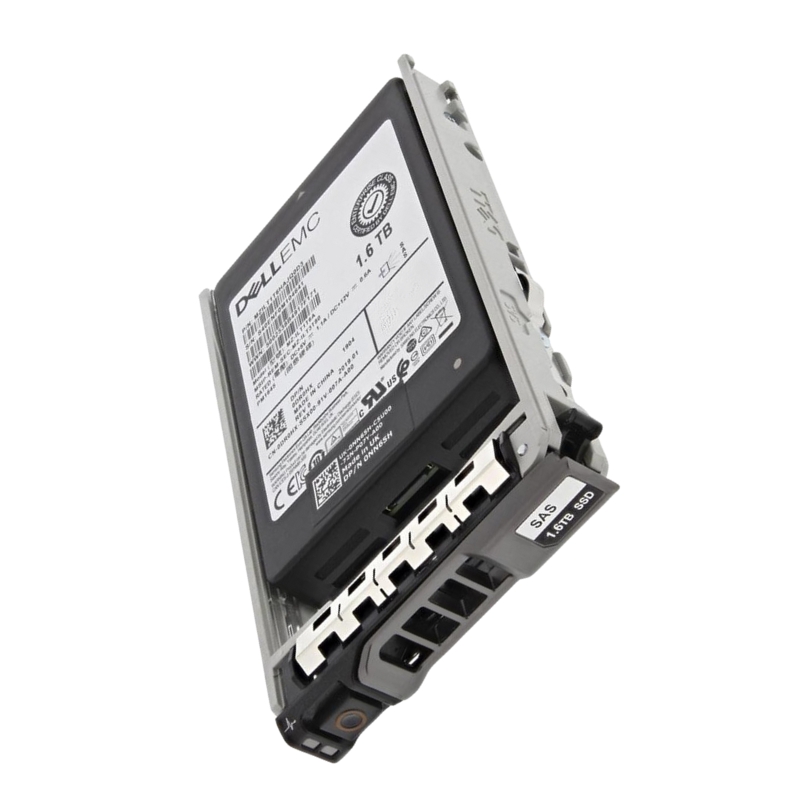
Dell 400-BFCB 1.6TB SAS 12GBPS Mixed Use TLC SFF Hot Plug SSD. New Sealed with 1 Year Replacement Warranty
Designed for demanding business environments, the Dell 400-BFCB 1.6TB SAS 12Gbps Mixed Use TLC SFF Hot Plug SSD delivers a balanced combination of low-latency access, sustained throughput and consistent I/O performance. With a Serial Attached SCSI (SAS) 12Gbps interface, this category of drives is optimized to handle mixed read/write workloads typical of virtualized servers, database applications, transactional systems and general purpose shared storage where both throughput and endurance are important. The mixed use TLC (triple-level cell) flash provides a cost-efficient storage medium that still maintains enterprise features—such as power loss protection, strong error correction, and robust firmware—making it suitable for production datacenter roles.
The small form factor (SFF) 2.5-inch profile allows data center designers to maximize drive density in blade servers, rack servers and storage arrays that accept 2.5-inch devices. Hot-plug capability ensures drives can be removed or replaced without powering down the host system, reducing maintenance windows and increasing overall system availability. The hot-plug design is particularly valuable in clustered environments and high-availability configurations where rapid replacement and minimal disruption are priorities.
The 400-BFCB SAS 12Gbps interface used across this category provides a reliable, full-duplex channel with enterprise-grade features not typically present in SATA-based consumer drives. SAS supports advanced command queuing, end-to-end data protection and dual-port functionality in some implementations, enabling better redundancy and multipathing in large storage environments. The 12Gbps signaling enables higher raw bandwidth compared to older 6Gbps SAS/SATA links, which helps sustain throughput for multiple concurrent operations and reduces bottlenecks in I/O-intensive workloads.
Triple-level cell (TLC) NAND stores three bits per memory cell, enabling higher capacities at lower cost per gigabyte compared to single-level cell (SLC) or multi-level cell (MLC) alternatives. In mixed use enterprise SSDs, TLC is typically deployed with advanced controller algorithms, overprovisioning and write-endurance management to extend usable life and maintain predictable performance. The controller coordinates wear leveling, bad block management, and garbage collection so that the drive can deliver consistent latency and throughput across varied application patterns.
Enterprise SSDs in this family rely heavily on firmware intelligence. Controller firmware manages background tasks, enforces quality-of-service (QoS) targets, and implements features such as power-loss protection, thermal throttling and SMART telemetry. Drives designed for mixed use include prioritized I/O handling to minimize latency spikes under heavy sustained writes and to preserve small random I/O performance that transactional applications require. Firmware updates periodically improve compatibility, reliability and occasionally performance, so a process for safely updating drive firmware in large fleets is an important operational consideration.
End-to-end data integrity is a cornerstone of any enterprise SSD category. These drives commonly include strong error correction codes (ECC), CRC checksums for command and data integrity, and power-loss protection capacitors or firmware-based flush mechanisms to protect against unexpected power events. Such mechanisms reduce the risk of silent data corruption and make these SSDs appropriate for mission-critical systems where data fidelity is non-negotiable.
Mixed use SAS SSDs are well suited to virtualized infrastructure where a diverse set of workloads coexists on shared hardware. The ability to handle both random reads and writes with reasonable endurance makes them a strong choice for virtual machine boot volumes, ephemeral storage, and mixed I/O virtual appliances. Density of 1.6TB per drive supports consolidation efforts while keeping cost per VM reasonable, and the enterprise interface simplifies integration into existing SAN/NAS architectures.
Relational databases, NoSQL stores and analytics engines that issue frequent small-block reads and writes benefit from the low latency profiles of SAS SSDs. For many database deployments, these drives can serve as primary storage for hot data sets or as high-performance cache layers in front of slower bulk storage. Mixed use endurance characteristics provide sufficient write cycles for moderate to heavy transactional activity when combined with smart caching strategies and appropriate capacity planning.
When implemented as part of a tiered storage strategy, 1.6TB SAS SSDs function effectively as an intermediate tier between ultra-fast NVMe or performance SSDs and cost-efficient HDD tiers. They are excellent for cache layers, metadata storage, and frequently accessed content that needs faster delivery than spinning disks can provide. Their balance of capacity and performance helps organizations reduce latency for end users while controlling infrastructure cost.
Analytic pipelines that ingest and process large volumes of data often require storage that can handle high concurrency and throughput. SAS 12Gbps drives in the SFF form factor can be integrated into compute nodes and storage clusters to accelerate intermediate data staging and shuffle operations that are common in distributed processing frameworks. While NVMe may offer lower raw latency for some HPC tasks, SAS mixed use SSDs remain a pragmatic choice for environments balancing cost, compatibility and density.
Before deploying drives from this category, confirm compatibility with server chassis, RAID controllers and storage arrays. Most enterprise systems that support 2.5-inch SAS devices will accept these drives, but firmware and HBA/RAID controller firmware versions can influence drive recognition and feature availability. Checking vendor compatibility lists and following recommended firmware baselines helps ensure predictable operation at scale.
Using SAS SSDs in RAID configurations requires attention to rebuild times, parity write amplification and the RAID level selected. Mixed use SSDs typically exhibit much faster rebuilds than HDDs, which reduces exposure windows for degraded arrays, but rebuild I/O can still affect performance of co-resident workloads. Consider RAID levels that balance storage efficiency with fault tolerance, and assess whether RAID controllers or software RAID stacks are optimized for flash characteristics—particularly in terms of cache policies and background reconstruction throttling.
Thermal design and power delivery are practical concerns when populating high-density 2.5-inch bays. Although SSDs generate less heat than high-RPM HDDs under many conditions, sustained heavy I/O and dense drive populations can create thermal hotspots that influence overall system reliability. Ensure adequate airflow and consider drive selection criteria that include operating temperature range. Additionally, hot-plug mechanisms rely on mechanical guides and connectors; careful handling during service operations helps avoid connector damage and maintains long-term reliability.
Endurance of enterprise SSDs is typically expressed in Drive Writes Per Day (DWPD) or Total Bytes Written (TBW). These metrics help planners estimate how long a drive will meet performance and reliability expectations under a projected workload. For mixed use drives, manufacturers set endurance targets that allow for a reasonable combination of read intensity and write activity. Proper capacity planning accounts for both peak I/O demand and long-term write rates to ensure drive replacement cycles and warranties align with expected usage.
Overprovisioning—allocating a percentage of physical NAND as spare area—plays a major role in sustaining performance over the life of an SSD. The extra space permits the controller to perform more efficient garbage collection and wear leveling, reducing write amplification and smoothing latency spikes. Some vendors allow configurable overprovisioning; in large deployments, tuning overprovisioning levels can extend usable life at the cost of raw capacity, which is a trade-off to evaluate against workload patterns.
Many enterprise SSDs support built-in encryption capabilities that protect data at rest without imposing CPU overhead. Hardware encryption standards such as SED (Self-Encrypting Drive) implementations can simplify compliance with data protection regulations by ensuring that data is unreadable if the drive is removed. Secure erase functions—when implemented correctly—allow drives to be sanitized prior to reallocation or decommissioning, supporting data lifecycle policies for regulated industries.
Enterprises operating in regulated sectors must integrate storage lifecycle activities into their audit and compliance frameworks. Maintain logs for firmware changes, drive replacements, secure erasures and telemetry events. These records demonstrate adherence to data protection guidelines and help during audits. When procuring drives, consider vendor documentation on encryption certifications, secure erase verification procedures and end-of-life handling recommendations.
Keeping drive firmware up to date is essential for stability and security, but firmware updates should be applied through controlled processes that include testing in representative environments. Use staged rollouts and maintain the ability to rollback in case of unexpected compatibility regressions. Document change control steps and coordinate firmware updates with broader maintenance windows to reduce operational risk.
Optimizing applications to align with the strengths of mixed use SSDs will improve cost effectiveness. Employ caching layers to absorb write bursts, relocate log and temporary I/O to flash tiers, and tune database checkpointing to avoid unnecessary write amplification. Combine flash-based caches with intelligent software tiering to preserve endurance while accelerating hot data access.
Before deployment at scale, benchmark candidate drives under workload profiles representative of production. Use tools that can simulate mixed random read/write patterns, sustained sequential loads and heavy concurrency. Monitor both throughput and latency percentiles to capture QoS characteristics. Benchmark results guide capacity planning, RAID level selection and identify whether drives meet the expected performance envelope for the intended role.
Compared with NVMe SSDs, SAS 12Gbps mixed use drives may deliver higher compatibility with legacy server and SAN infrastructures and can be less costly per gigabyte at certain capacities. NVMe provides lower latency and higher parallelism for ultra-low latency workloads but may require updated hardware architectures. Compared with SATA SSDs, SAS drives offer stronger enterprise features, improved error handling and higher sustained throughput for multi-client environments. Choose mixed use SAS SSDs when compatibility, density and balanced endurance are the priority.
For write-intensive logging systems, persistent memory caches or applications that demand the lowest possible latency, higher-endurance MLC or SLC-class drives—or NVMe-based SSDs—may be more appropriate. Conversely, for bulk read workloads and archival caching, lower-cost HDD tiers or read-optimized SSDs could suffice. The 400-BFCB 1.6TB SAS 12Gbps mixed use category fits between these extremes and is ideal for mixed workloads where versatility and predictable performance matter.
Enterprise buyers often evaluate drives on a combination of performance consistency, endurance guarantees, integration with existing SAN ecosystems, and lifecycle support. The 400-BFCB SAS 12Gbps mixed use SFF hot-plug drives offer a clear value proposition: strong compatibility with existing enterprise infrastructures, practical capacities for consolidation, and the enterprise features required for production environments.
Define standard operating procedures for hot swapping drives, including anti-static precautions, drive seat confirmation and system notifications that signal drive rebuilds. Training for operations teams reduces the likelihood of accidental damage and ensures that hot-plug replacements do not inadvertently trigger additional failures or data corruption.
When drives reach end of life, follow secure disposal mandates including verified secure erase and physical destruction if required by policy. Maintain chain-of-custody documentation for drives that contained sensitive data and coordinate with certified disposal vendors when physical destruction is needed to meet compliance standards.


 Contact Us
 Information
 Catalog
 Solid State Drives (SSD)
 Network Switches
 Hard Disk Drives
 HBA & Controllers
 PC & Servers
 PC & Server Memory
 CPU & Processors
 Network Routers
 Power Supplies
 Tape Drives & Libraries
 Network Devices
 Computer & Network Cables