(7% discount is applied at checkout)
Cart is empty
Your go-to destination for cutting-edge server products
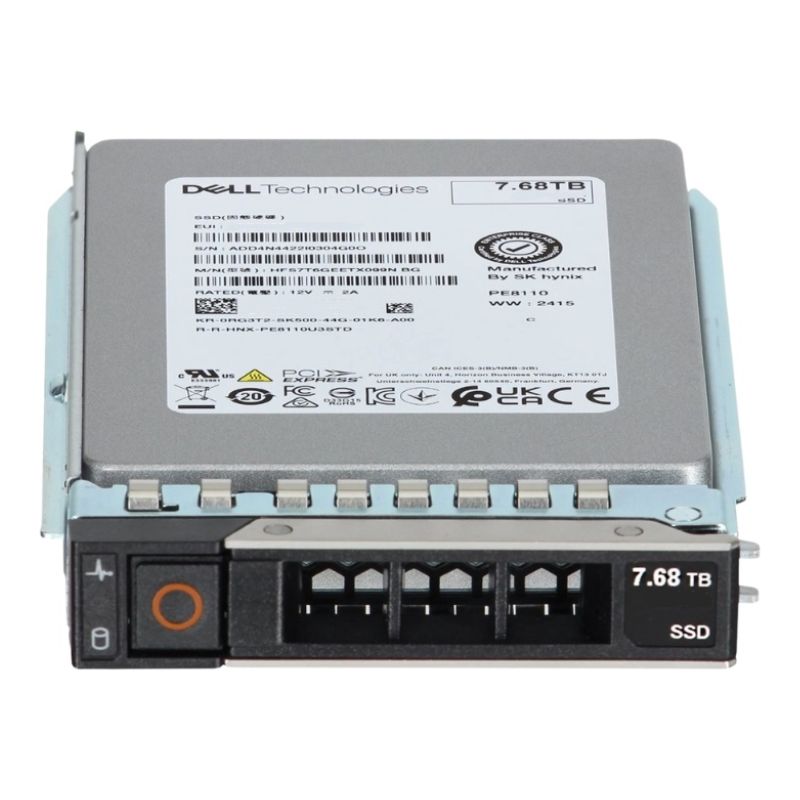


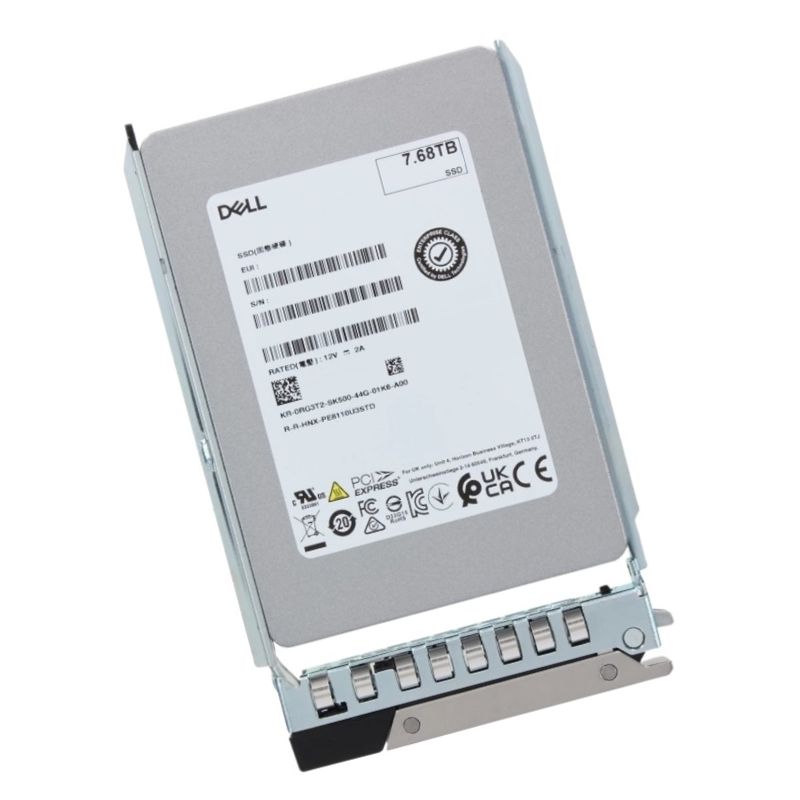
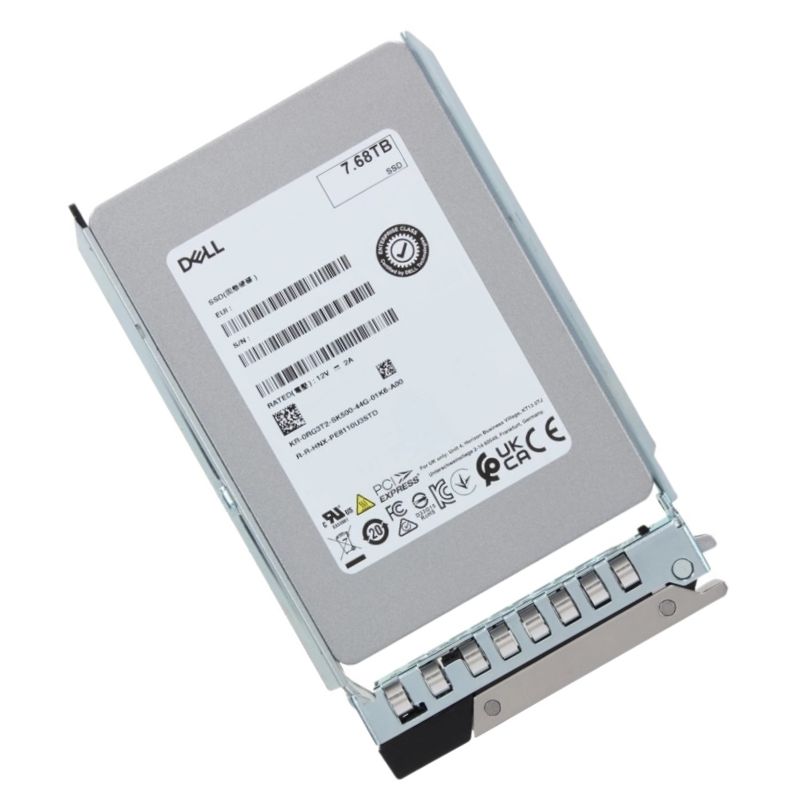
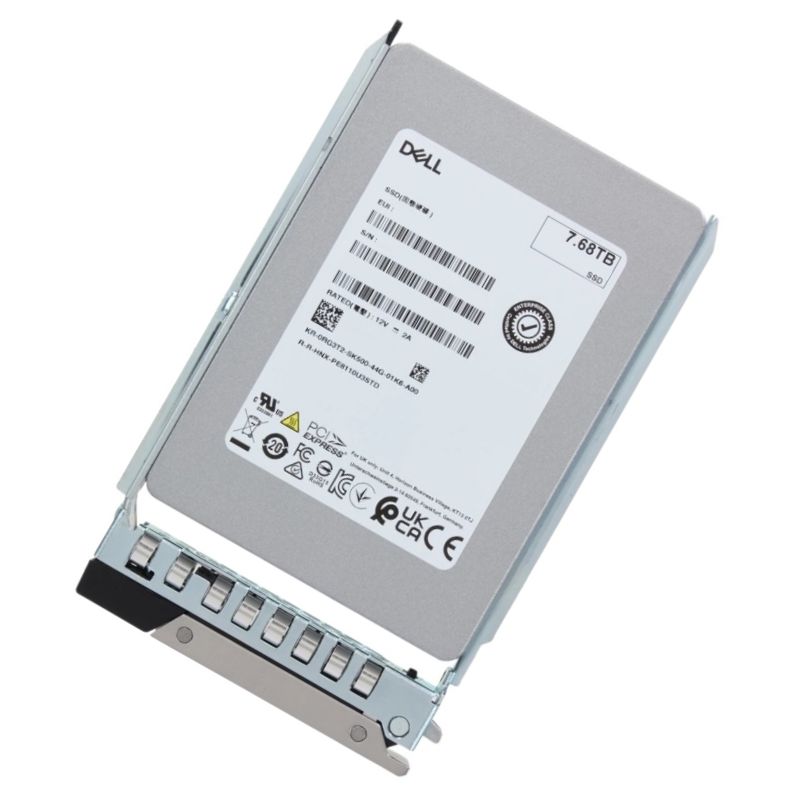
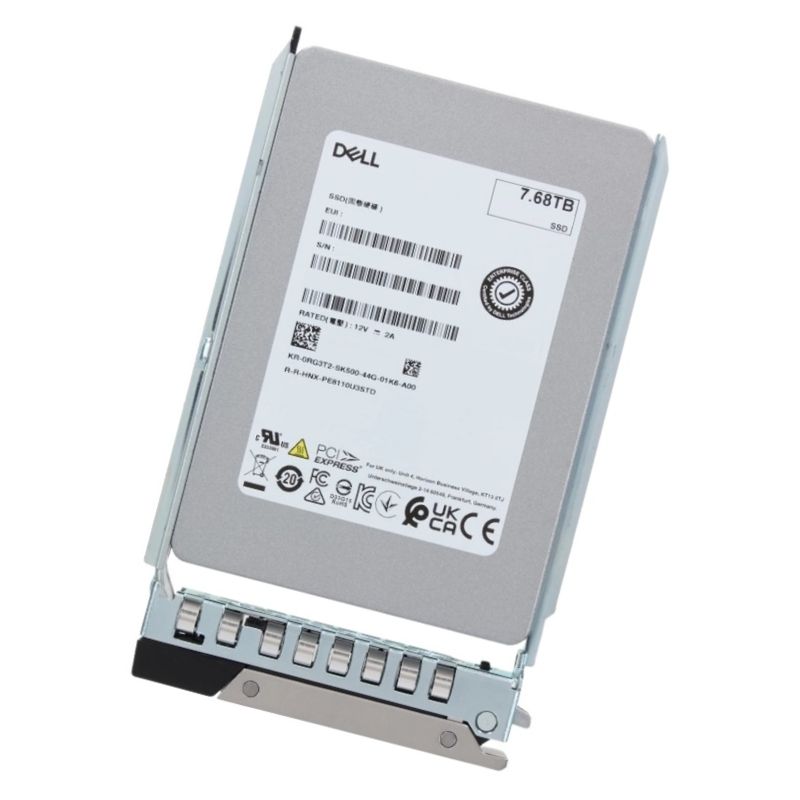
Dell 400-BJHK 7.68TB SATA 6GBPS Read Intensive TLC SSD. New Sealed in Box (NIB) with 1 year Replacement Warranty
Overview of the 7.68TB Solid State Drive
The 400-BJHK Dell 7.68TB SATA 6Gbps Read Intensive TLC Solid State Drive represents a high-capacity, enterprise-grade storage solution designed for modern data center environments that demand consistent read performance, durability, and efficient scalability. Built on triple-level cell (TLC) NAND flash technology and optimized for read-heavy workloads, this SSD is engineered to support virtualization platforms, cloud infrastructure, database querying systems, and content delivery networks where large volumes of data are accessed more frequently than they are written.
At the core of the 400-BJHK SSD is TLC NAND flash memory, which stores three bits of data per cell. This architecture enables higher storage density compared to single-level cell (SLC) and multi-level cell (MLC) technologies, making it more cost-effective for large-scale deployment. Although TLC typically offers slightly lower endurance than SLC or MLC, advancements in wear leveling, error correction algorithms, and controller optimization significantly enhance its reliability for read-intensive workloads.
This makes the drive particularly suitable for environments where data is written once and read many times, such as archival storage systems, web hosting environments, and media streaming platforms.
The drive utilizes a SATA 6Gbps interface, also known as SATA III, which ensures broad compatibility across enterprise and legacy systems. While newer interfaces like NVMe and PCIe offer higher throughput, SATA remains widely used due to its stability, compatibility, and cost efficiency. The 6Gbps bandwidth allows the SSD to deliver consistent read speeds sufficient for many enterprise workloads that do not require extreme parallel processing or ultra-low latency operations.
The 400-BJHK SSD is specifically classified as a read-intensive drive, meaning it is optimized for workloads where read operations significantly outweigh write operations. This design approach extends endurance and reduces wear on NAND cells, ensuring a longer operational lifespan in environments
In enterprise environments, performance consistency is often more critical than peak throughput. The 400-BJHK SSD delivers stable sequential read speeds optimized for large file access and data streaming. In addition, it supports high IOPS (Input/Output Operations Per Second) for random read operations, making it ideal for multitasking server environments where simultaneous data requests occur continuously.
This predictable performance is essential for minimizing latency in cloud services and ensuring smooth application responsiveness under load.
Latency reduction is a key benefit of solid-state storage, and this SSD leverages controller-level optimization to reduce access times significantly compared to traditional spinning hard drives. Reduced latency improves application responsiveness, particularly in environments like database query execution, virtualization host systems, and high-frequency transaction processing.
One of the major advantages of SSD technology over HDDs is power efficiency. The 400-BJHK model consumes significantly less power due to the absence of mechanical components. This contributes to reduced heat output and lower cooling requirements in data centers, improving overall infrastructure efficiency and reducing operational costs.
Enterprise SSDs must ensure data integrity under heavy workloads. The 400-BJHK drive includes advanced error correction code (ECC) algorithms that detect and correct data corruption at the NAND level. This ensures reliable data retrieval even in high-stress environments with frequent read cycles.
Wear leveling is a critical mechanism in flash storage devices. It distributes write and erase cycles evenly across all memory cells, preventing premature wear of specific blocks. This extends the usable life of the SSD and ensures consistent performance over time.
Enterprise-grade drives like the 400-BJHK often include power loss protection mechanisms designed to safeguard in-flight data during unexpected power interruptions. This helps prevent data corruption and ensures transactional consistency, particularly in database-driven environments.
The 400-BJHK Dell 7.68TB SATA SSD is designed for seamless integration into enterprise server environments, especially within rack-mounted and blade server systems. It is commonly deployed in storage arrays, virtualization clusters, and hyper-converged infrastructure systems.
Virtual machine environments benefit significantly from the consistent read performance offered by this SSD. Boot storms, where multiple virtual machines start simultaneously, are handled efficiently due to the drive’s high read throughput and low latency response time.
Cloud service providers rely on predictable and scalable storage solutions. The 400-BJHK SSD supports distributed storage architectures and helps maintain consistent performance across multi-tenant environments where resource isolation and speed are critical.
With 7.68TB of storage capacity, this SSD provides substantial space for enterprise workloads while reducing physical storage footprint. High-density drives help organizations optimize rack space utilization and reduce the number of physical devices required for large-scale storage deployments.
Consolidating multiple lower-capacity drives into fewer high-capacity SSDs simplifies infrastructure management, reduces cabling complexity, and improves airflow efficiency within server racks. This also contributes to lower maintenance overhead and improved system reliability.
Big data platforms require fast access to large datasets. The read-optimized design of the 400-BJHK SSD ensures efficient data retrieval for analytical queries, machine learning preprocessing, and reporting systems.
CDNs rely heavily on fast read performance to deliver static assets such as images, videos, and scripts. This SSD ensures rapid content access, reducing buffering times and improving user experience across global networks.
Relational and non-relational databases benefit from SSD storage by reducing query latency. The 400-BJHK drive supports high-speed data retrieval operations, improving performance for read-heavy database workloads such as reporting databases and data warehouses.
VDI environments experience heavy read loads during user login events. This SSD supports rapid provisioning and consistent performance, ensuring smooth user experiences in virtualized desktop systems.
End-to-end data path protection ensures that data remains consistent from host to NAND storage. This minimizes risks of corruption during transmission between system components.
Enterprise SSDs often include secure erase functions that allow complete data sanitization. This is essential for compliance with data security regulations and safe decommissioning of storage devices.
As organizations expand their digital infrastructure, scalable storage solutions become essential. The 400-BJHK SSD enables horizontal scaling in storage arrays and server clusters, allowing IT administrators to add capacity without disrupting existing workloads.
This scalability supports long-term infrastructure planning and helps organizations adapt to increasing data demands in cloud computing, AI processing, and enterprise analytics.
Hot-swap capability allows administrators to replace or upgrade drives without shutting down the system. This minimizes downtime and ensures continuous service availability in mission-critical environments.
The 400-BJHK Dell 7.68TB SATA SSD fits into broader enterprise storage strategies that combine performance tiers. It is typically used in mid-tier or read-optimized storage layers, complementing faster NVMe drives and slower archival HDD systems.
This tiered approach ensures optimal resource allocation, balancing cost, performance, and capacity across diverse workloads.


 Contact Us
 Information
 Catalog
 Solid State Drives (SSD)
 Network Switches
 Hard Disk Drives
 HBA & Controllers
 PC & Servers
 PC & Server Memory
 CPU & Processors
 Network Routers
 Power Supplies
 Tape Drives & Libraries
 Network Devices
 Computer & Network Cables