(7% discount is applied at checkout)
Cart is empty
Your go-to destination for cutting-edge server products
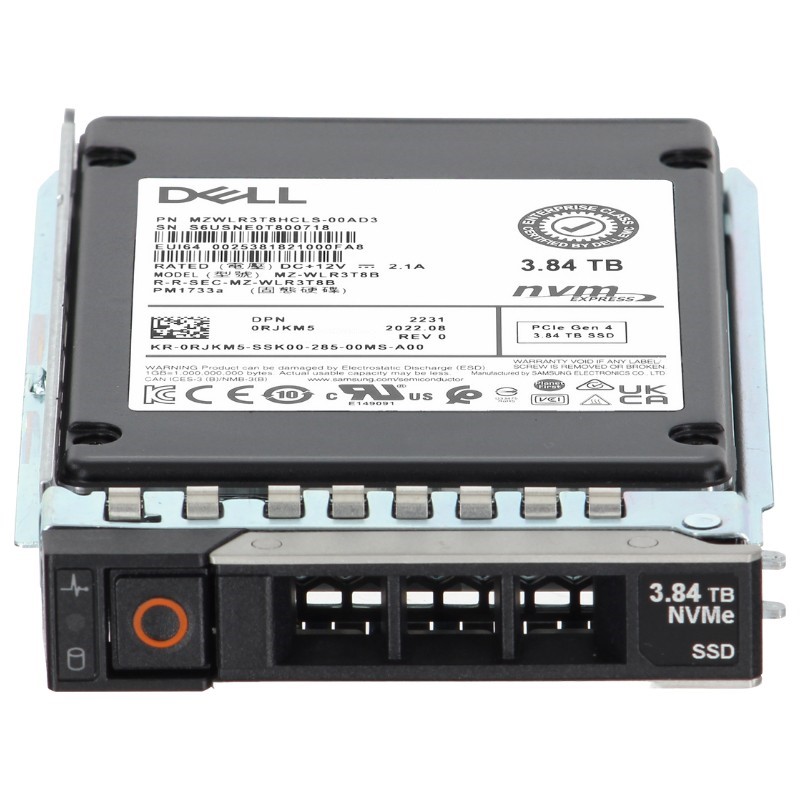


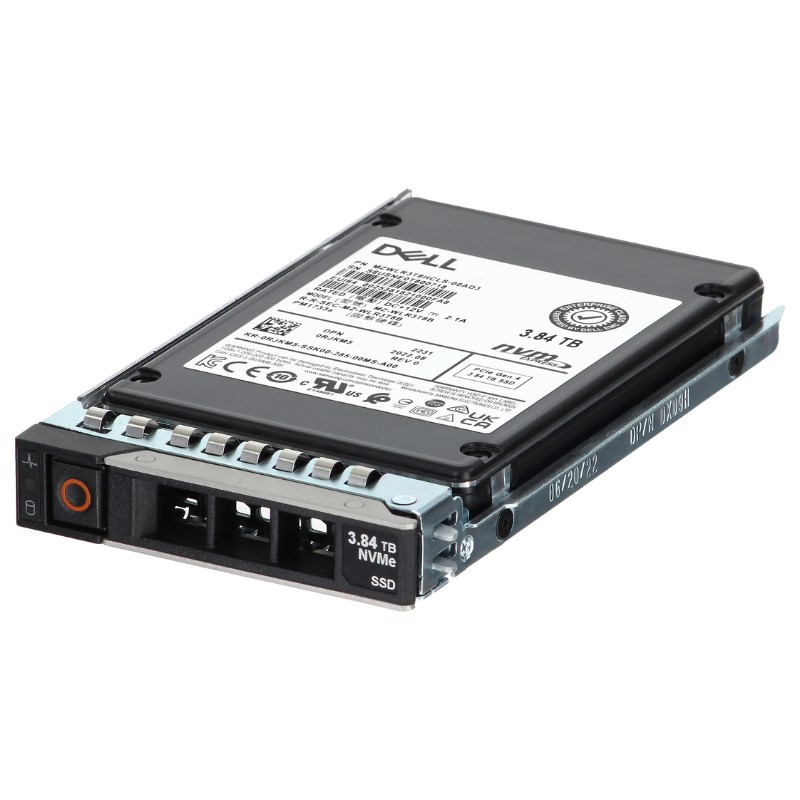
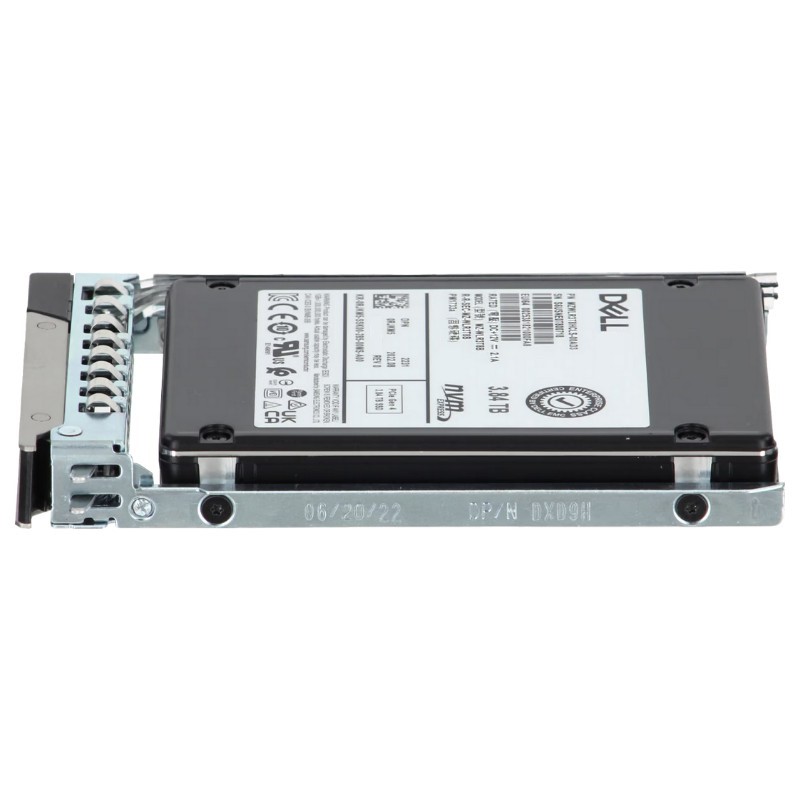
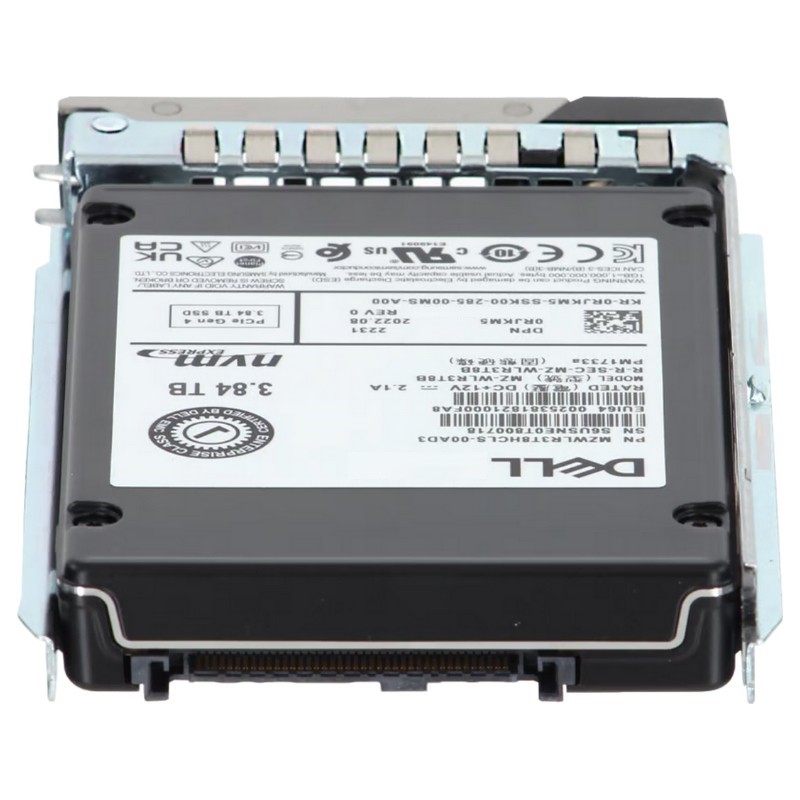
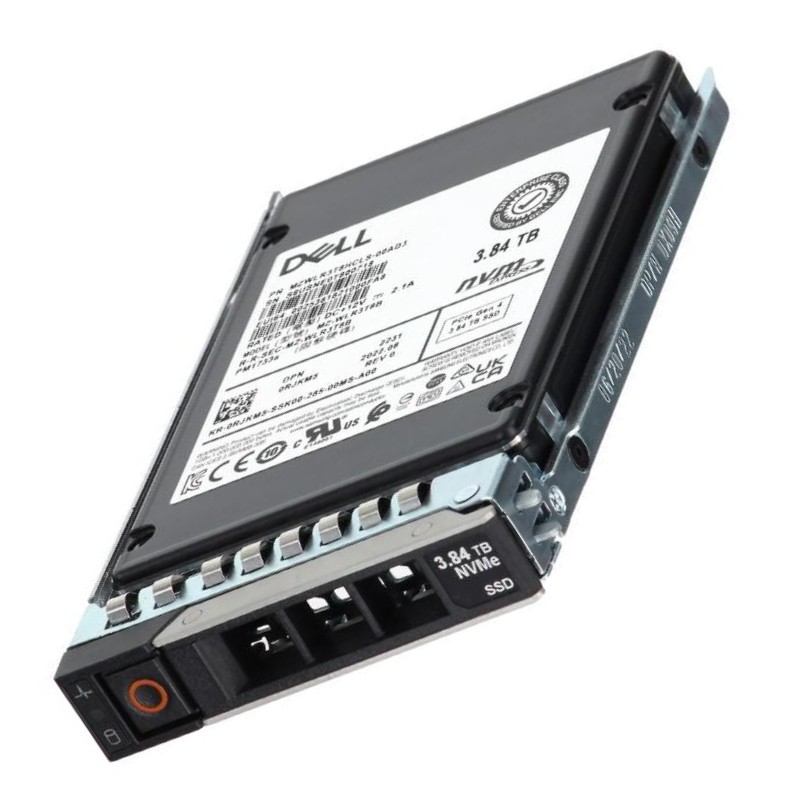
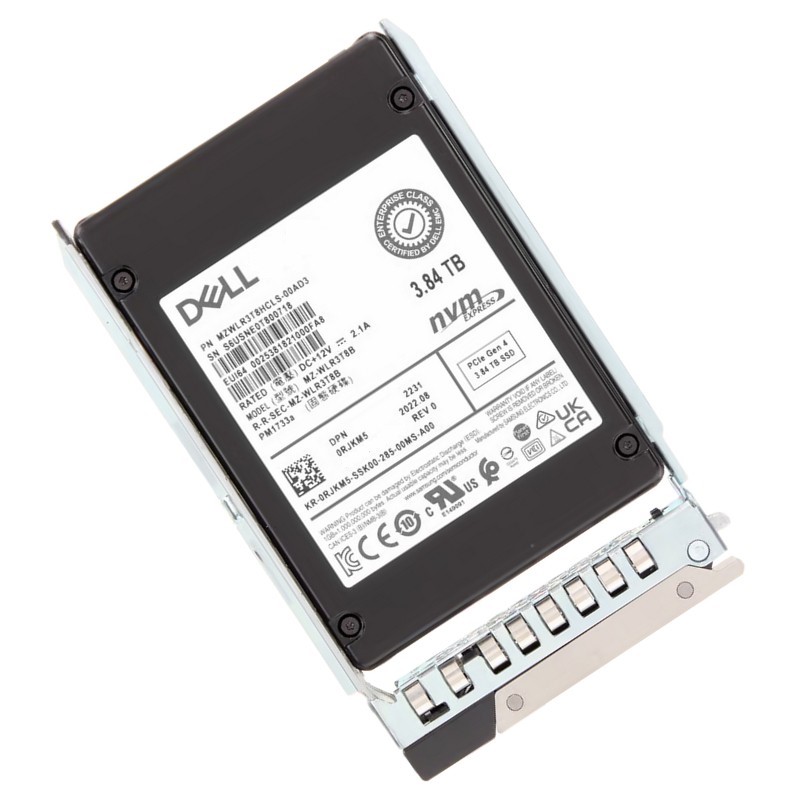
Dell 400-BKFP 3.84TB PCI-E Gen4 X4 NVMe TLC Read Intensive U.2 SFF Enterprise Solid State Drive. New Sealed in Box (NIB) with 1 year Warranty
This high-performance solid state drive delivers remarkable storage capabilities, engineered for demanding server environments. It boasts a substantial 3.84 Terabyte capacity, providing ample space for critical data and applications.
The drive is certified for flawless operation within numerous PowerEdge rack-mounted systems, including but not limited to:
Beyond rack servers, this component also provides robust performance in various other form factors:
Designed For modern data centers and performance-hungry enterprise platforms, the 400-BKFP Dell 3.84TB PCI-E Gen4 X4 NVMe TLC Read Intensive U.2 SFF Enterprise Solid State Drive delivers fast access to business-critical datasets while preserving low latency under sustained pressure. This drive’s NVMe protocol and PCIe Gen4 interface enable a substantial leap in throughput compared to SATA and older PCIe generations, helping administrators accelerate analytics, virtualization, content delivery, and microservices at scale.
Built Around advanced 3D TLC NAND, robust firmware, and enterprise reliability features, the solution emphasizes consistent read performance with predictable QoS rather than bursty, short-lived peaks. Its small form factor U.2 2.5-inch design integrates smoothly into contemporary PowerEdge backplanes and third-party NVMe-ready servers, offering a familiar mechanical footprint with cutting-edge electrical signaling and command sets.
Focused On read-intensive profiles, the 400-BKFP NVMe SSD is engineered to serve applications where the ratio of reads to writes is significantly higher, such as web-scale search indices, recommendation engines, electronic medical record viewing, media asset distribution, and database replicas. In these scenarios, the device’s read-optimized behavior translates into faster page loads, quicker query responses, and more efficient CPU utilization because threads spend less time waiting on storage.
Optimized For efficiency, the drive balances input/output operations per second with endurance and thermals. Datacenter operators gain deterministic service levels during peak intervals, supporting predictable user experiences even as concurrent sessions grow. With PCIe Gen4 x4 bandwidth, the solution can feed multi-core processors at a pace that minimizes bottlenecks across virtual machines and containers.
Implemented As a U.2 small form factor device, the 400-BKFP fits standard 2.5-inch NVMe bays, simplifying upgrades from earlier-generation SSDs without modifying chassis or cabling. The interface leverages PCIe Gen4 x4 lanes, unlocking higher sequential throughput and reduced latency per I/O compared to Gen3. The NVMe protocol, purpose-built for non-volatile memory, streamlines command processing and deep queue management, enabling parallelism that aligns naturally with multi-threaded application stacks.
Supported By hot-swap U.2 mechanics, operators can perform service without powering down the host server when the platform is configured for hot-plug NVMe. This capability shortens maintenance windows, facilitates proactive replacements, and reduces unplanned downtime risks, all of which benefit SLAs and user satisfaction.
Delivered With 3.84TB of usable class capacity, the drive presents an attractive middle ground between dense storage footprints and manageable redundancy plans. Administrators often deploy 3.84TB NVMe SSDs in mirrored or erasure-coded groups to blend performance with resilience. In read-intensive clusters, a pool of these drives can cache or serve hot datasets with minimal tail latency while colder tiers remain on larger-capacity media.
Considered Within backup and disaster recovery strategies, the 3.84TB capacity simplifies snapshot scheduling and replication sizing. Because snapshots and clones of read-heavy datasets are typically frequent, the capacity point helps balance cost per gigabyte and replication bandwidth, especially when combined with deduplication-aware software-defined storage layers.
Tuned For read intensity, the 400-BKFP emphasizes high sequential reads, strong random read IOPS, and consistent latency under queue depth. While exact benchmark values vary by firmware and platform, administrators can expect the profile to favor workloads like OLAP queries, log indexing, content retrieval, and boot storm scenarios in VDI. Sustained responsiveness across mixed but read-dominant patterns helps ensure that spikes in user activity do not cascade into application slowdowns.
Complemented By NVMe multi-queue capabilities, the device allows each CPU core to submit and complete I/O independently, reducing lock contention. This is particularly valuable in containerized environments where many small services perform overlapping read operations. The result is a smoother experience at scale and more predictable performance envelopes for capacity planning.
Measured Latency has an outsized effect on application responsiveness. NVMe’s streamlined command set and the drive’s read-optimized firmware target microseconds-level access granularity. For API gateways, inference models fetching embeddings, and time-series dashboards, lower latency translates to quicker response times and better end-user interactions. The drive’s ability to maintain low tail latency under load is a key differentiator for service consistency.
Categorized As a read-intensive SSD, the endurance model is typically expressed in drive writes per day appropriate for predominantly read workloads. This allows the 400-BKFP to allocate silicon budget and firmware behavior toward stable read QoS rather than excessive write amplification headroom. For deployment architects, the takeaway is that throughput and endurance are balanced for scenarios like content distribution networks, streaming catalogs, application binaries, and reference data layers where writes are structured, periodic, or batched.
Aligned With modern data pipelines, many organizations offload heavy ingest and transformation steps to write-optimized tiers while keeping prepared datasets on read-optimized NVMe for fast access. This separation of concerns often reduces total cost of ownership, because the read-tier devices like the 400-BKFP can be procured at attractive economics without overbuying write endurance that the workload rarely uses.
Engineered For enterprise integrity, the drive incorporates end-to-end data path protection that verifies data from host to NAND and back. Power loss protection capacitors help protect in-flight data during sudden outages, while robust error correction, wear management, and bad block handling maintain data validity over the device’s lifetime. Firmware-level telemetry supports SMART attributes and health counters so monitoring frameworks can project remaining useful life and plan replacements gracefully.
Hardened Against environmental dynamics seen in dense racks, the SSD monitors temperature and may employ throttling logic to preserve component longevity without compromising data integrity. Predictable behavior during thermal excursions is crucial in colocations and edge closets where airflow patterns may vary by rack position and season.
Delivered With optional security features typical of enterprise NVMe devices, the solution supports secure erase workflows and may include controller-based encryption capabilities depending on the exact sub-SKU. Administrators should align these controls with organizational policies for data at rest, chain-of-custody during RMA, and compliance requirements. Integrating the SSD with host-based encryption or key management services further strengthens a zero-trust storage posture.
Validated For Dell PowerEdge servers, the 400-BKFP integrates into NVMe-capable U.2 backplanes and works with controller modes that expose NVMe drives directly to the operating system or hypervisor. Commonly used systems include 14th, 15th, and newer generation platforms with native NVMe bays. For mixed-vendor environments, any chassis supporting U.2 PCIe Gen4 x4 NVMe connectivity and proper BIOS support can typically host the device, subject to vendor qualification and firmware alignment.
Coordinated With hypervisors, major platforms such as VMware vSphere, Microsoft Hyper-V, Proxmox, and KVM-based distributions can present the SSD to virtual machines or use it as a cache tier. Filesystems like XFS, ext4, and NTFS, plus cluster filesystems and object stores, can all benefit from NVMe’s low-latency behavior when tuned for queue depth and I/O scheduler settings appropriate to read-dominant patterns.
Accelerated Content delivery takes advantage of high sequential read bandwidth to serve images, videos, binaries, and static assets with minimal delay. For global applications, a tier of 400-BKFP drives at origin or regional points of presence can cut cold cache misses and raise cache-hit ratios, smoothing traffic bursts associated with product launches and campaigns.
Enhanced Analytics platforms often maintain curated datasets for dashboards and executive reporting. Because these workloads query far more than they rewrite, placing the curated layer on read-intensive NVMe shrinks refresh windows and speeds ad hoc exploration. Data scientists experience faster iteration cycles because sample selection and feature retrieval complete in less time.
Boosted Virtual desktop infrastructure sessions, golden images, and application streams benefit from the drive’s proficiency at parallel read streams. Boot storms, patch rollouts, and application launches hit the storage layer heavily; using a bank of 3.84TB NVMe devices maintains interactive responsiveness. In Kubernetes and other container orchestrators, microservices that repeatedly fetch configuration files, models, or static templates avoid I/O stalls when working from read-optimized NVMe.
Balanced Thermals ensure predictable operation in dense 1U and 2U servers where airflow is front-to-back and pressure differentials vary by slot. The drive’s heat dissipation profile pairs with Dell chassis airflow and fan curves. Power states are managed to maintain stability under sustained reads while preserving energy efficiency at idle or during off-peak hours.
Mechanically Compatible with U.2 SFF carriers, the SSD slides into standard NVMe bays using the same service motions technicians already know from SATA and SAS. Tool-less sleds in many PowerEdge systems further simplify deployment. The drive’s robustness against vibration and shock adheres to datacenter expectations, aiding longevity in busy racks.
Evaluated In the broader context of data efficiency, many organizations pair read-intensive NVMe tiers with file-level deduplication, compression, or application-aware caching. Because the 400-BKFP targets rapid retrieval, offloading redundancy elimination to upper layers preserves the SSD’s cycles for low-latency reads. Thin provisioning at the hypervisor or storage layer allows agile capacity assignment as projects evolve.
Strategized With tiering policies, frequently accessed datasets reside on the NVMe pool, while less active archives flow to high-capacity drives or object storage. This dynamic hierarchy aligns cost with performance, ensuring that the organization pays premium rates only for datasets that demonstrably benefit from NVMe speed.
Adopted In database read replicas, a set of 3.84TB drives can serve indices and query results with minimal contention. Application servers benefit from offloading read-heavy tables from shared arrays to local NVMe, reducing network hops and SAN congestion. In CI/CD artifact repositories, NVMe-backed read tiers deliver quick build artifact retrieval and high developer throughput.
Utilized In machine learning inference platforms, the drive accelerates model and embedding fetches for CPU or GPU serving nodes. Feature stores that emphasize lookups over writes fit the read-intensive profile, helping models achieve stable latency budgets. As inference traffic scales with user growth, the storage layer remains a strength rather than a constraint.
Recommended Settings often include adjusting IO schedulers to none or mq-deadline for NVMe, verifying alignment, and enabling write caching policies that match the workload’s safety requirements. Read-ahead values can be tested against typical access patterns to remove unnecessary prefetch overhead. NUMA-aware interrupt routing ensures that NVMe queues align with the cores running the application threads.
Documented Procedures for deployment should include firmware validation, slot mapping, and thermal checks under synthetic load. Post-deployment runbooks can define thresholds for warnings and critical alerts on temperature, media wear, and uncorrectable error counters. Including remediation steps in automation promotes consistency and avoids manual drift across clusters.
Coordinated Incident response improves when observability dashboards visualize p50, p95, and p99 latency over time, correlated with CPU utilization and application thread counts. If a regression appears after a change window, teams can quickly isolate whether the root cause stems from application logic, platform configuration, or storage conditions.
Scaled Adoption is straightforward: adding additional 3.84TB U.2 NVMe units increases both capacity and aggregate read throughput. Planning for refresh cycles becomes easier when health metrics indicate approaching wear limits, enabling staggered replacements that do not disrupt protected sets. Standardizing on the 3.84TB tier simplifies spares management and reduces training overhead for field technicians.
Evaluated Against budget constraints, the capacity point offers a sensible progression from smaller boot-class devices while avoiding the premium attached to ultra-high-capacity NVMe tiers. Organizations can right-size the number of drives per node to match data hot sets and fault tolerance models.
Observed In content management systems, the SSD accelerates asset retrieval for editors and viewers. Page rendering times contract because templates, thumbnails, and static bundles stream in quickly from the NVMe pool. Users perceive snappier interfaces, encouraging productivity and engagement.
Experienced In search and discovery platforms, index segments and term dictionaries benefit from rapid block access. Query latencies drop when the working set fits comfortably on the 3.84TB read-intensive tier. Service owners can tighten SLAs without overspending on write endurance they do not require.
Improved Artifact retrieval from NVMe-backed registries and repositories reduces pipeline idle time. Developers enjoy faster dependency resolution and container image pulls, especially during simultaneous build bursts after code freezes. The net effect is shorter feedback loops and higher release cadence without compromising reliability.
Strengthened Test harnesses that replay production traffic traces gain realism when storage latency mirrors live conditions. With a read-optimized NVMe tier, stress tests reveal true application ceilings rather than artifacts of slow storage. Teams invest engineering effort where it matters most.
Optimized Catalog browsing and playback start times are improved when frequently requested assets are kept resident on the 400-BKFP tier. Prefetchers and origin shields draw from the NVMe pool to prime CDN edges efficiently. During peak events, the origin remains responsive, minimizing cache-miss penalties.
Positioned For evolving software patterns, the 400-BKFP’s PCIe Gen4 foundation remains relevant as applications embrace parallelism. While higher PCIe generations continue to emerge, Gen4 x4 delivers robust throughput that keeps pace with many enterprise CPUs and NICs. The U.2 ecosystem remains widely supported, protecting investments across multiple hardware refresh cycles.
Adaptable To hybrid architectures, read-intensive NVMe tiers play an essential role as bridging layers between memory and capacity storage. As organizations adopt real-time analytics and AI-driven features inside every app, the need for predictable, low-latency storage close to compute continues to expand. The 3.84TB capacity point fits neatly into these blueprints, combining agility with operational familiarity.
Coordinated Snapshots and replication strategies should consider the read-heavy nature of the tier. Point-in-time copies for rapid rollback complement periodic full backups sent to capacity storage or cloud-based vaults. Testing restoration from these backups validates that recovery points and recovery times meet business objectives.
Balanced Economics at this capacity provide enough headroom for sizable working sets without pushing into price bands designed for ultra-dense configurations. Many organizations find that pairs or quorums of 3.84TB drives distribute risk effectively while sustaining high performance. When paired with efficient orchestration, scaling out becomes linear and predictable.
Right-Sized For mixed application stacks, the capacity supports both single-tenant and multi-tenant models where tenants have read-dominant access patterns. In managed hosting, providers can carve logical volumes that meet tenant SLAs while maintaining simple physical layouts and easy serviceability.
Maintained Focus on fundamentals such as firmware health, driver updates, and queue tuning keeps the storage layer performing at its best. Continuous profiling of application I/O patterns ensures the tier remains aligned to the business needs. As datasets evolve, the NVMe pool can be resized, rebalanced, or repurposed with minimal disruption.
Encouraged Collaboration among platform, database, and application teams leads to smarter caching strategies and fewer redundant reads. When developers understand the storage tier’s strengths, they can design access patterns that extract maximum value.
Viewed Through the lens of total cost of ownership, adopting a consistent 3.84TB NVMe read tier streamlines procurement, reduces integration friction, and improves day-two operations. The 400-BKFP’s enterprise protections, telemetry, and predictable performance make it a reliable component in high-availability architectures. As infrastructure teams standardize around this class of device, they unlock repeatable deployment patterns and measurable gains in user experience across diverse applications.


 Contact Us
 Information
 Catalog
 Solid State Drives (SSD)
 Network Switches
 Hard Disk Drives
 HBA & Controllers
 PC & Servers
 PC & Server Memory
 CPU & Processors
 Network Routers
 Power Supplies
 Tape Drives & Libraries
 Network Devices
 Computer & Network Cables