(7% discount is applied at checkout)
Cart is empty
Your go-to destination for cutting-edge server products
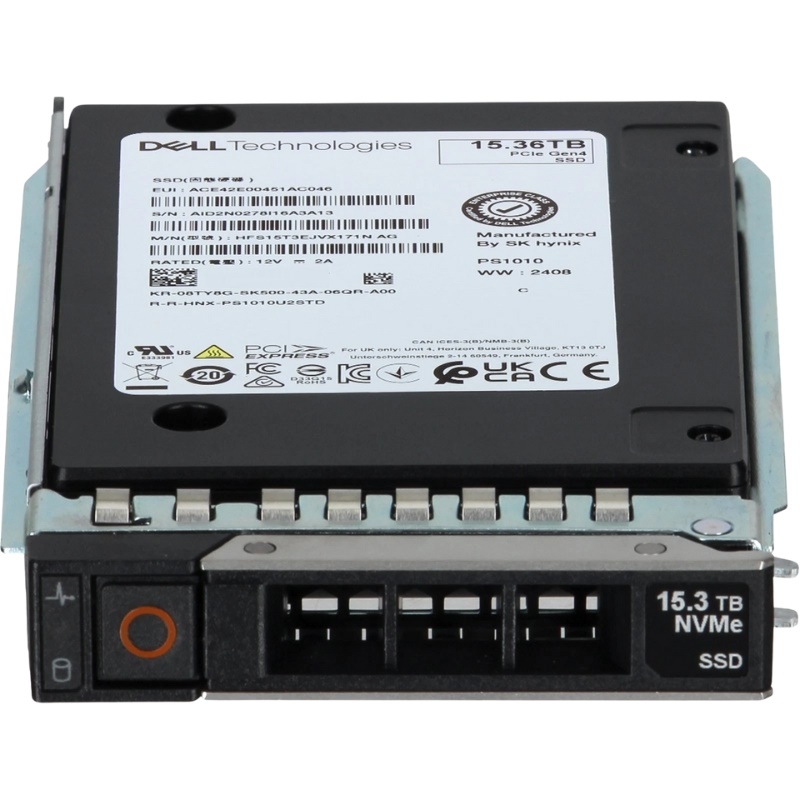


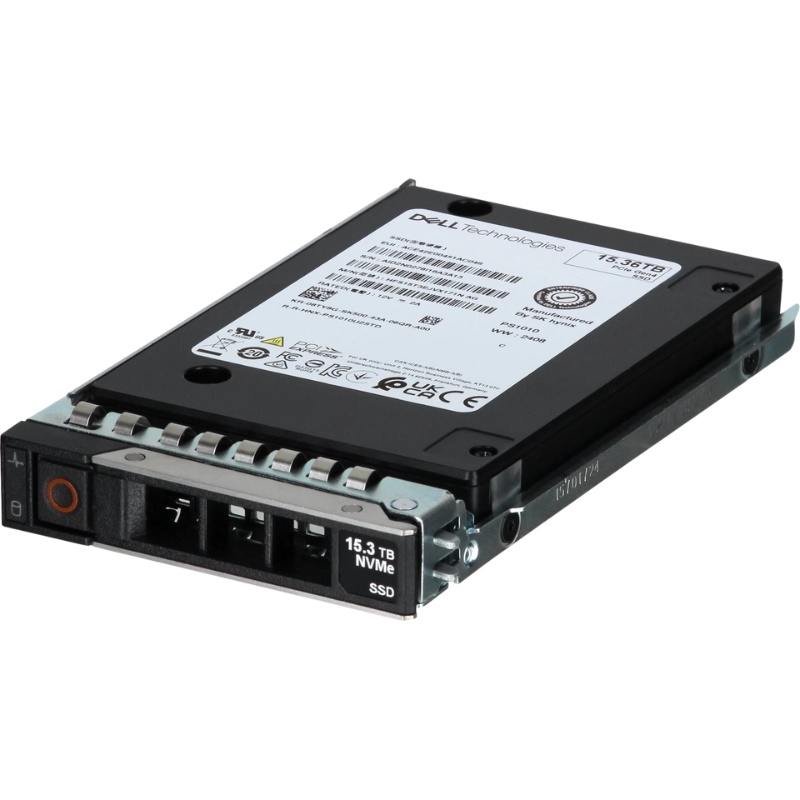
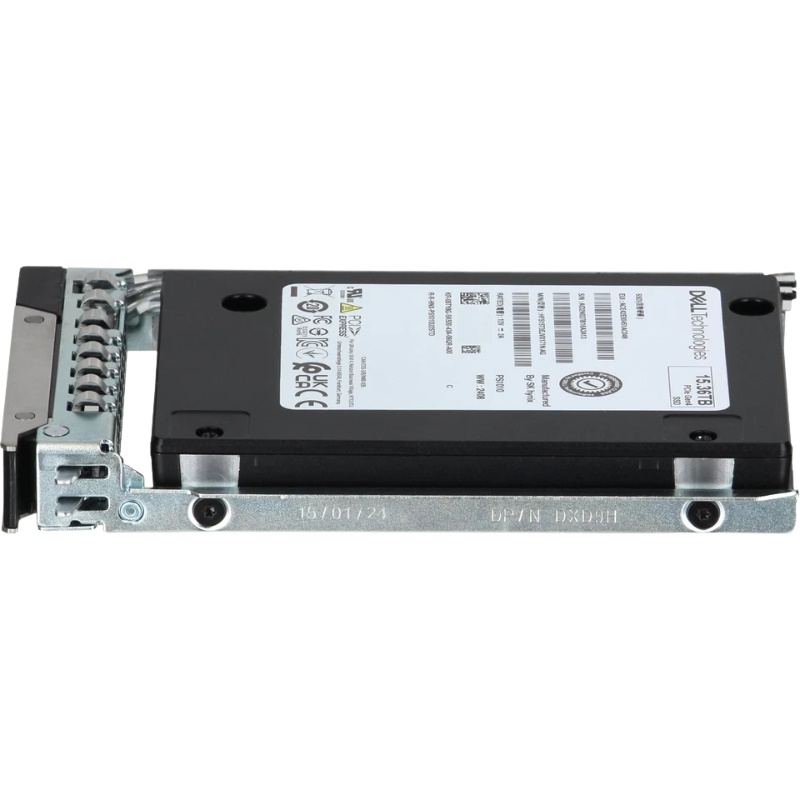
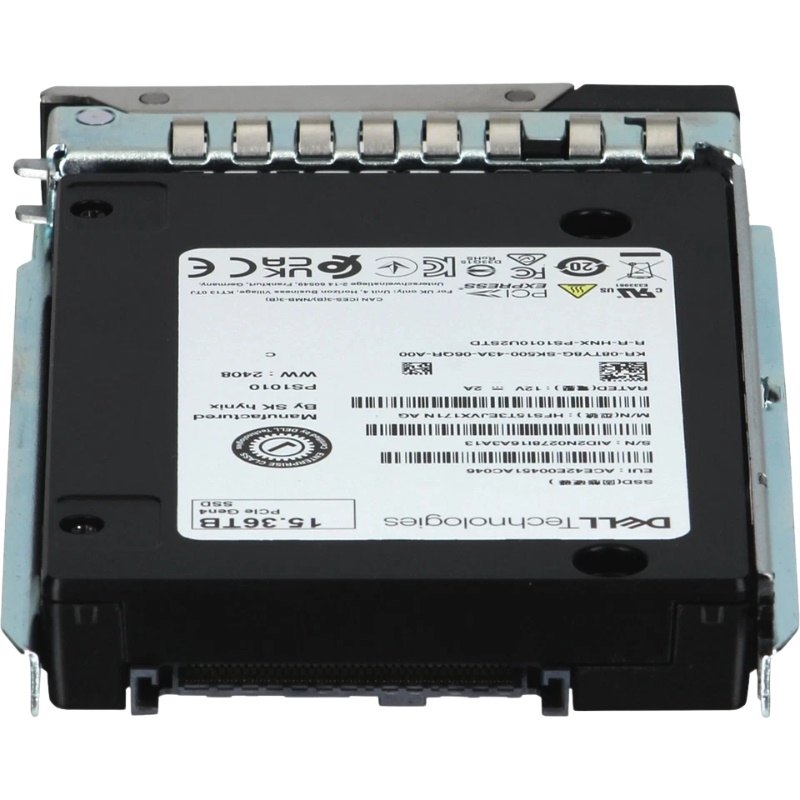
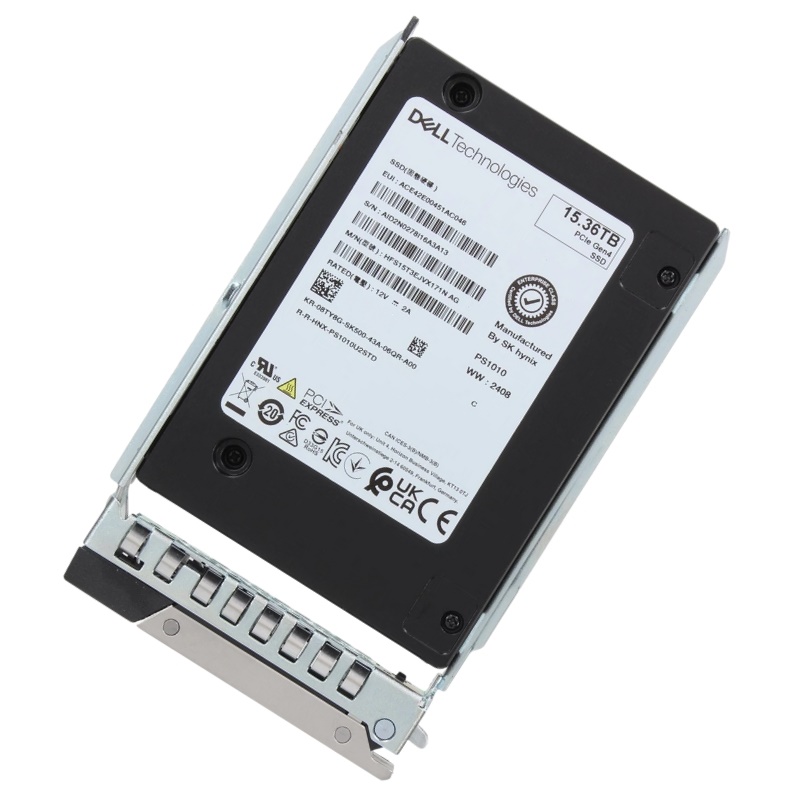
Dell 400-BMCO 15.36TB PCI-E Gen4 NVMe 2.5inch U.2 Read Intensive 1dwpd Enterprise Solid State Drive. New Sealed in Box (NIB) with 1 Year Warranty
The Dell 400-BMCO 15.36TB PCIe Gen4 NVMe U.2 SSD stands as a pinnacle achievement in this category, specifically engineered for read-intensive applications where data access speed, density, and endurance are non-negotiable. This enterprise-class drive represents a convergence of high-capacity NAND technology, a cutting-edge PCIe 4.0 interface, and a form factor optimized for data center deployment, delivering a transformative storage tier for cloud infrastructure, content delivery networks, data analytics, and large-scale virtualized environments.
The Dell 400-BMCO represents the pinnacle of enterprise storage technology, engineered for data centers and mission-critical applications demanding relentless performance, immense capacity, and unwavering reliability. As a 15.36TB PCIe Gen4 NVMe U.2 form factor drive, it sits at the intersection of high-density storage and cutting-edge interface speeds, designed specifically for read-intensive workloads where data accessibility and throughput are paramount.
At its heart, the 400-BMCO is built to deliver consistent, low-latency performance in enterprise environments. Its specifications define a drive meant for sustained operations rather than peak bursts, ensuring predictable behavior under constant load.
The drive offers a massive 15.36 terabytes (TB) of usable NAND flash storage. This capacity point is strategically chosen for high-density server deployments, allowing organizations to consolidate workloads and maximize storage per rack unit. The drive utilizes the 2.5-inch U.2 (SFF-8639) form factor, which is a staple in modern enterprise servers and storage arrays. This form factor supports the NVMe protocol over a PCIe interface while providing a familiar, hot-swappable footprint compatible with existing enterprise chassis infrastructure, offering a seamless upgrade path from older SAS and SATA drives.
The 2.5-inch U.2 form factor (formerly SFF-8639) is an industry-standard for enterprise NVMe drives. It provides a robust, hot-swappable enclosure that is familiar to data center technicians, ensuring easy serviceability and upgrades. The U.2 connector supports both the NVMe protocol over PCIe and provides necessary power lanes, allowing this high-performance drive to fit directly into existing 2.5-inch drive bays with compatible backplanes. This offers a significant advantage over add-in card (AIC) formats by maintaining a streamlined, serviceable, and scalable storage infrastructure.
Utilizing the NVMe (Non-Volatile Memory Express) protocol over PCIe is what unlocks the true performance of NAND flash. Unlike legacy protocols designed for slower spinning disks, NVMe is built from the ground up for solid-state storage. It supports massively parallel I/O queues (up to 64K queues with 64K commands per queue), dramatically reducing command overhead and latency. Features enabled by NVMe 1.4 further enhance performance and management in complex data center settings.
Utilizing the PCI Express 4.0 x4 interface, the drive doubles the bandwidth available compared to the previous PCIe 3.0 generation. This translates to a theoretical maximum interface bandwidth of up to 64 Gb/s (8 GB/s), removing bottlenecks and allowing the NAND flash to perform at its full potential. The protocol employed is NVM Express (NVMe) 1.4 or later, designed from the ground up for non-volatile memory. NVMe reduces command overhead, enables deep queue depths, and provides features essential for modern data centers, such as improved power management and enhanced error reporting.
Performance in an enterprise setting is measured not just in peak speeds but in consistent quality of service (QoS), input/output operations per second (IOPS), and latency under duress. The Dell 400-BMCO is architected with these metrics as a primary focus.
Categorized as a "Read-Intensive" drive, the 400-BMCO is optimized for workloads where the majority of operations are data reads. This is typical in scenarios such as web serving, content delivery networks (CDNs), data analytics queries, boot volumes, and virtual desktop infrastructure (VDI). The drive's internal architecture, including its controller algorithms and NAND management, prioritizes fast read access and sustained read throughput.
While exact figures may vary, drives in this class typically deliver sequential read speeds approaching 7,000 MB/s and sequential write speeds in the range of 3,500-4,000 MB/s. For random performance, which is crucial for database and virtualization operations, expect ratings in the hundreds of thousands of IOPS for random reads and tens to hundreds of thousands of IOPS for random writes. The advanced controller and DRAM cache on the drive work in concert to maintain these performance levels across the vast capacity, even as the drive fills up.
Beyond raw speed and capacity, enterprise drives differentiate themselves through a suite of features designed for 24/7 operation, data integrity, and simplified management in large-scale deployments.
Unexpected power loss is a major concern in data centers. The 400-BMCO incorporates robust power-loss protection (PLP) circuits, typically involving capacitors that provide sufficient hold-up energy. This allows the drive to complete any in-progress writes and flush data held in volatile caches to the non-volatile NAND memory, preventing data corruption. Furthermore, the drive employs end-to-end data path protection, using parity checks to ensure data is not corrupted as it moves between the host, the drive's DRAM, and the NAND media.
The drive leverages high-quality, multi-level cell (MLC) or triple-level cell (TLC) 3D NAND flash. 3D NAND provides higher density and better endurance than planar NAND. Sophisticated wear-leveling algorithms are used by the onboard controller to distribute write and erase cycles evenly across all the memory blocks. This prevents any single block from wearing out prematurely, directly contributing to the drive's ability to meet its TBW and DWPD ratings over its entire service life.
The specific design parameters of the Dell 400-BMCO make it an ideal solution for a range of demanding IT environments where large-scale data reads are the dominant pattern.
In platforms like Hadoop, Elasticsearch, or Splunk, large datasets are loaded and then subjected to numerous query operations. The workflow is predominantly read-heavy after the initial data ingestion. The high sequential read speed and massive capacity of the 400-BMCO allow for faster dataset scanning and query resolution, reducing the time-to-insight for data scientists and analysts.
Cloud service providers and large-scale storage arrays require high-density, predictable-performance storage bricks. The 15.36TB capacity allows for excellent storage density, while the 1 DWPD endurance and consistent read performance make this drive suitable for storing VM images, user file repositories, and backup data that is frequently accessed but less frequently modified.
HPC workloads often involve reading massive input files (e.g., genomic data, simulation models) and writing results. The drive's PCIe Gen4 bandwidth significantly reduces I/O wait times. For media streaming and content delivery, the drive can store and serve vast libraries of video or audio files with low latency, ensuring smooth streaming experiences for end-users.
Understanding where the Read-Intensive 1 DWPD drive fits requires looking at the broader enterprise SSD landscape.
Enterprise SSDs are often segmented by endurance. Read-Intensive drives (like the 400-BMCO, 1-3 DWPD) are for workloads with a high read/write ratio (e.g., 90/10). Mixed-Use drives (3-10 DWPD) are for more balanced workloads, such as transactional databases. Write-Intensive drives (10+ DWPD) are for extreme write environments like log aggregation or write caches. Choosing a read-intensive drive for its intended purpose offers the optimal cost-per-terabyte for that workload.
While SATA and SAS SSDs are still prevalent, the NVMe protocol provides a fundamental performance advantage. SATA is limited to ~600 MB/s, and SAS 12Gb/s to ~1,200 MB/s, both with higher latency. The PCIe Gen4 NVMe interface offers an order of magnitude higher bandwidth and significantly lower latency, which translates directly into reduced application response times and the ability to support more virtual machines or users per drive.


 Contact Us
 Information
 Catalog
 Solid State Drives (SSD)
 Network Switches
 Hard Disk Drives
 HBA & Controllers
 PC & Servers
 PC & Server Memory
 CPU & Processors
 Network Routers
 Power Supplies
 Tape Drives & Libraries
 Network Devices
 Computer & Network Cables