(7% discount is applied at checkout)
Cart is empty
Your go-to destination for cutting-edge server products
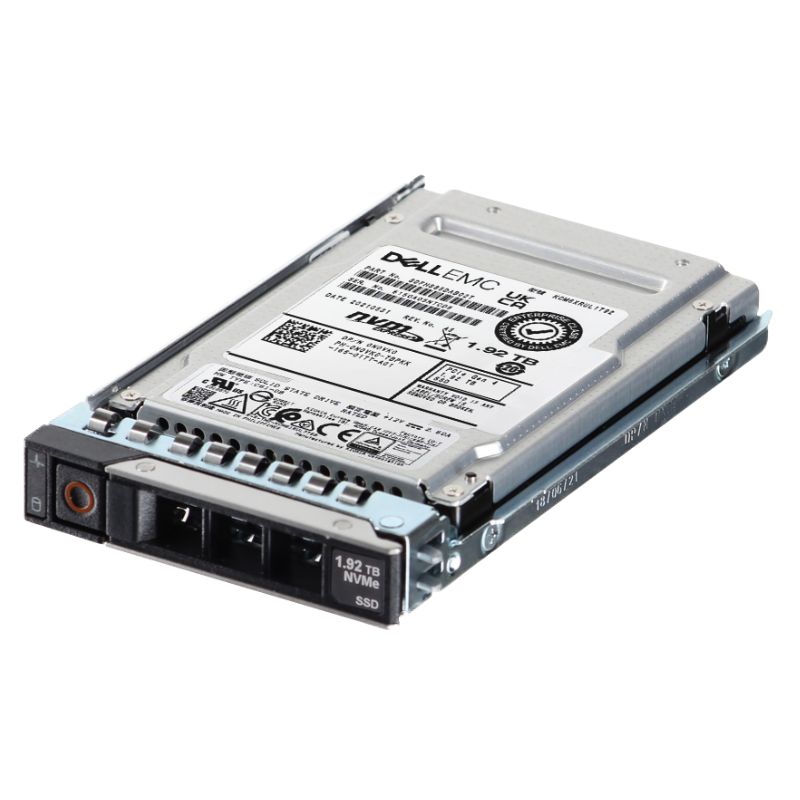


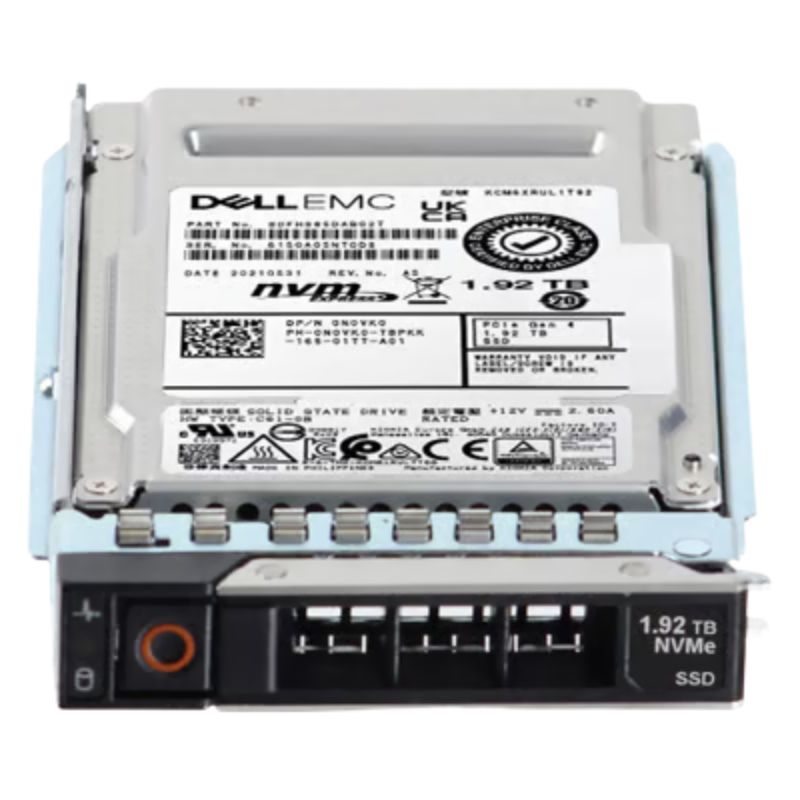
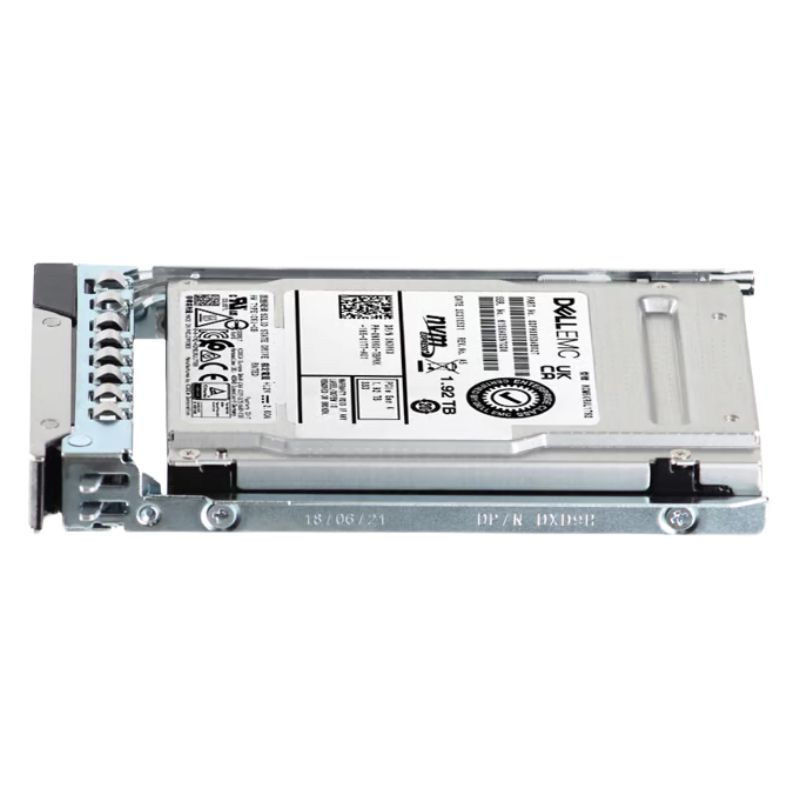
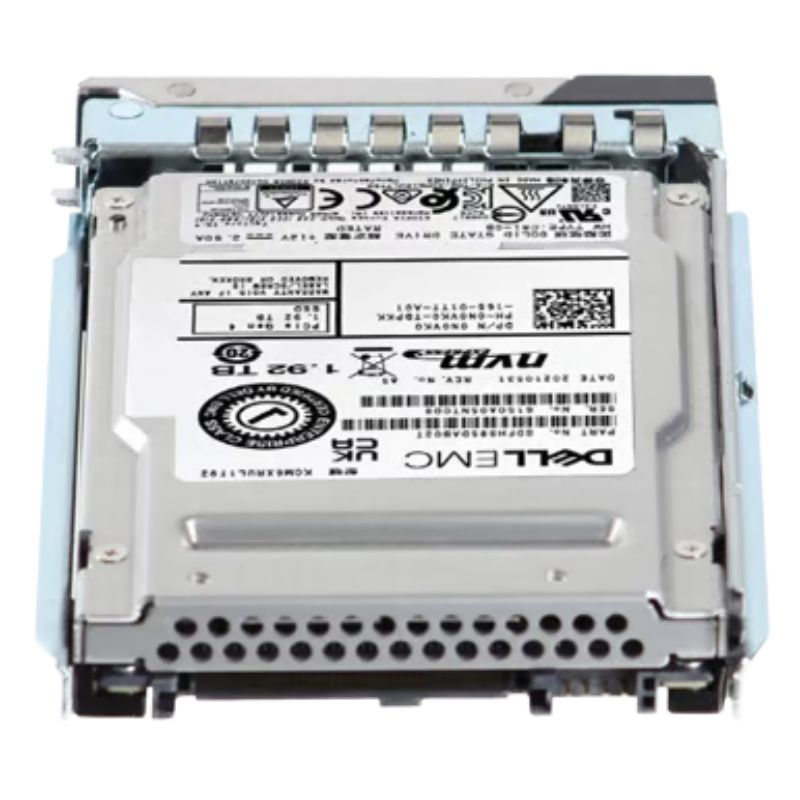
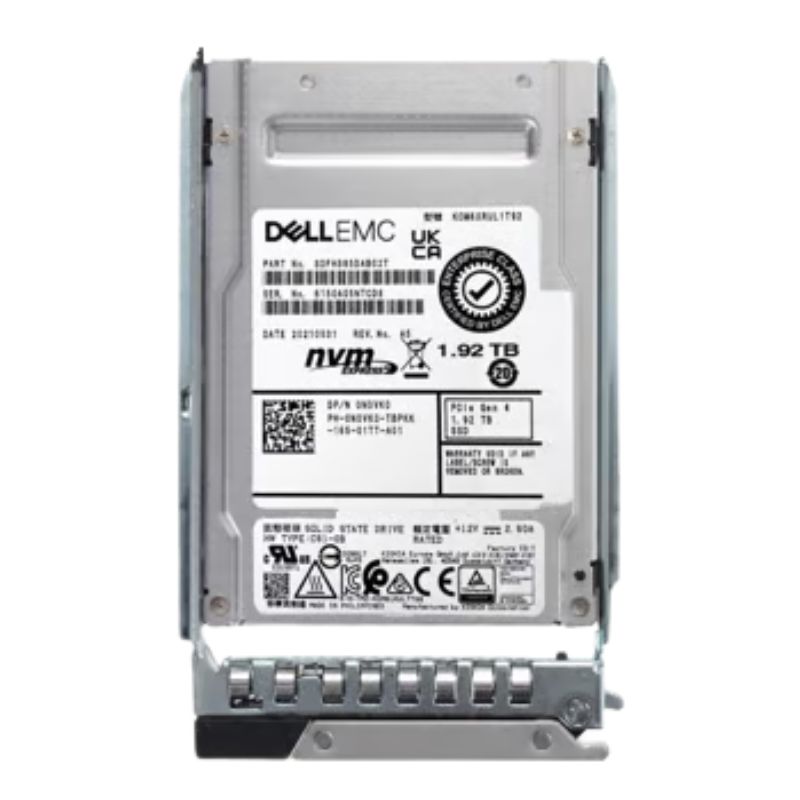
Dell 400-BOLX 1.92TB PCI-E Gen4 NVMe U.2 2.5Inch SFF Read Intensive Solid State Drive. New Sealed in Box (NIB) with 1 Year Warranty
The Dell 400-BOLX delivers high-speed data performance and long-lasting durability, designed for enterprise-class servers requiring efficient, secure, and consistent read-intensive operations. Featuring PCIe Gen4 x4 interface and advanced NVMe architecture, this 1.92TB U.2 solid-state drive ensures seamless data flow and faster responsiveness for demanding workloads.
The Dell 400-BOLX 1.92TB NVMe SSD is validated for multiple Dell PowerEdge servers, ensuring smooth integration and maximum compatibility across a wide range of enterprise hardware.
The Dell 400-BOLX 1.92TB PCI-E Gen4 NVMe U.2 2.5-inch SFF Read Intensive Solid State Drive belongs to a class of enterprise-grade storage devices designed for high-density server and storage-array environments. This category centers on NVMe U.2 form factor drives engineered specifically for read-intensive enterprise workloads. Devices in this family prioritize high sustained read performance, low latency, compatibility with modern NVMe infrastructures, and efficient power and thermal characteristics for data center deployments that demand reliability and predictable throughput. When positioned in eCommerce storefronts or category pages, this SSD sits at the intersection of server-grade NVMe performance and mid-capacity storage optimized for read-heavy applications such as content delivery, caching layers, database read replicas, analytics query reads, and virtualization boot volumes.
Key buyers for the Dell 400-BOLX category are IT infrastructure managers, systems architects, cloud engineers, and procurement specialists who need a reliable, high-performance NVMe drive that integrates seamlessly into existing Dell and multi-vendor server ecosystems. These professionals are searching for SSDs that offer an attractive balance between cost per gigabyte, read-centric endurance metrics, and compatibility with PCI-E Gen4 platforms. Procurement teams evaluating this category often focus on lifecycle total cost of ownership, warranty and vendor support, compatibility with U.2 bays and NVMe backplanes, and proven benchmarks under real-world read-intensive workloads.
The defining technical advantage of the Dell 400-BOLX drives is the PCI-E Gen4 NVMe interface. PCI-E Gen4 doubles the per-lane throughput compared to Gen3, enabling higher sequential and random throughput for NVMe drives capable of leveraging the interface. For read-intensive workloads that require high sequential read speeds and low 99th percentile latency, the Gen4 interface reduces queuing delays and enables faster data delivery to CPUs and GPUs. In practice, this translates into faster boot times for VMs, quicker large-file reads for analytics, and improved responsiveness for front-end application servers that depend on rapid access to large datasets.
The U.2 2.5-inch small form factor (SFF) offers a blend of enterprise serviceability and dense server rack deployment. U.2 connectors provide hot-swap capability in many server chassis, making the Dell 400-BOLX a practical choice where ease of replacement and drive-level management matter. The 2.5-inch SFF profile also enables high drive counts per enclosure, supporting consolidation strategies where many mid-capacity NVMe drives can be used in parallel to achieve desired aggregate capacity, redundancy, and throughput.
Read intensive SSDs are optimized for scenarios where reads far outnumber writes, offering endurance characteristics appropriate for caching, large-scale content distribution, and analytics reporting systems. The Dell 400-BOLX category emphasizes read I/O performance and maintains write endurance sufficient for metadata updates, log rotations, and periodic background writes while keeping cost-effective pricing relative to mixed-use or write-intensive drives. This makes them an excellent fit for use as operating system volumes for hypervisors, read replicas of databases, or high-performance content-serving nodes.
Enterprise SSDs in this category typically incorporate SMART telemetry, power-loss protection features, firmware features for background data management, and support for NVMe management standards. These features allow systems administrators to monitor drive health, perform predictive maintenance, and integrate the drives into existing storage management tooling. The Dell 400-BOLX drives are expected to include firmware optimizations that maintain consistent performance over long periods and provide stable quality of service for multitenant environments.
At 1.92TB, these drives target a sweet spot between per-drive capacity and cost efficiency. The capacity supports a variety of workloads where multiple mid-size volumes are preferred over fewer larger drives for reasons of fault domain isolation and parallel I/O scaling. For example, a single server populated with multiple 1.92TB U.2 drives can host several high-performance VM boot volumes or database partitions with adequate capacity and redundancy when paired with RAID or software erasure coding.
Performance should be assessed on both sequential throughput and random IOPS, because read-intensive workloads vary. Sequential read performance benefits large-file transfers and streaming use cases, while random read IOPS determine responsiveness for transactional reads and metadata operations. The Gen4 NVMe interface enables higher peaks in both dimensions, and these drives are tuned to sustain read performance under steady state conditions. For online services, consistent low-latency random reads typically provide the most tangible end-user experience improvements.
Low latency and low tail-latency (e.g., 95th/99th percentile latency) are critical for customer-facing applications. Drives in this category must minimize latency spikes during background tasks like garbage collection or firmware housekeeping. Enterprise-class firmware and internal parallelism within the drive’s flash channels help to sustain low latency, especially for read-dominant traffic patterns. When evaluating SSDs for latency-sensitive systems, administrators focus on tail-latency metrics under mixed background operations rather than just peak throughput numbers.
Although read-intensive SSDs are not built for heavy write cycles, endurance is still a consideration. Endurance is typically expressed in drive writes per day (DWPD) or total bytes written (TBW) over the warranty period. The Dell 400-BOLX class will be rated to handle the periodic background writes incurred by operating systems, metadata writes from applications, and snapshot operations, but it is not intended for continuous high-volume write workloads like intensive logging or heavy database indexing. For systems that perform occasional writes or updates, the drive provides a cost-efficient balance between endurance and capacity.
One of the most common use cases for 1.92TB read-intensive NVMe U.2 drives is hosting boot volumes for virtual machines and operating system images. The drive’s high random read performance reduces VM boot times and improves OS responsiveness, especially in environments where many VMs need to start or restart concurrently. Using read-intensive drives for OS volumes allows administrators to allocate higher-end write-intensive drives elsewhere for database or transactional workloads.
Applications such as read replicas for databases, OLAP query nodes, and analytical processing clusters benefit from drives tuned for fast read access. In these architectures, the majority of I/O is read operations executed by complex queries or report generation. Deploying Dell 400-BOLX drives as the local storage for analytics nodes reduces query latency and increases throughput for large dataset scans and index probes.
High-performance content delivery systems that serve static assets—images, media segments, compressed content—benefit from the predictable read performance of U.2 NVMe drives. When used as a local cache or edge node storage medium, these drives speed up content retrieval. Their U.2 form factor and hot-swap capability also simplify field maintenance for edge servers and CDN nodes.
Within larger storage arrays and hyperconverged nodes, these drives often serve specialized roles such as boot volumes for the storage controller or local metadata storage. Because metadata operations are read-heavy but latency sensitive, a read-optimized NVMe drive is an apt fit. Its small form factor helps maintain high density in storage enclosures where multiple functions must coexist.
U.2 interface compatibility is common on enterprise servers and many modern storage arrays. Before purchase, confirm that the target chassis provides U.2 bays or that the server supports NVMe drives via direct backplane connections. Adapters that convert U.2 to M.2 or U.3 are available in some environments, but native U.2 support maximizes hot-swap and management benefits. This category is intentionally built for environments that already adopt Dell server platforms and third-party servers with U.2 NVMe backplanes.
Modern Linux distributions and current Windows Server releases provide native NVMe driver support. When deploying these drives, ensure firmware compatibility and that the platform firmware (BIOS/UEFI) supports NVMe boot from U.2 if the drive is used as a boot device. Enterprise vendors often publish hardware compatibility lists (HCLs) that indicate supported server models and recommended firmware versions for optimal operation.
In many enterprise configurations, NVMe U.2 drives are deployed behind software RAID or consumed by software-defined storage layers. Because NVMe devices rely on their own internal parallelism, administrators typically prefer software-based RAID or erasure coding that preserves the drives’ performance characteristics. When integrating the Dell 400-BOLX family into storage clusters, test rebuild performance and impact on tail latency to ensure the cluster meets SLAs during drive rebuilds and node resynchronization.


 Contact Us
 Information
 Catalog
 Solid State Drives (SSD)
 Network Switches
 Hard Disk Drives
 HBA & Controllers
 PC & Servers
 PC & Server Memory
 CPU & Processors
 Network Routers
 Power Supplies
 Tape Drives & Libraries
 Network Devices
 Computer & Network Cables