(7% discount is applied at checkout)
Cart is empty
Your go-to destination for cutting-edge server products
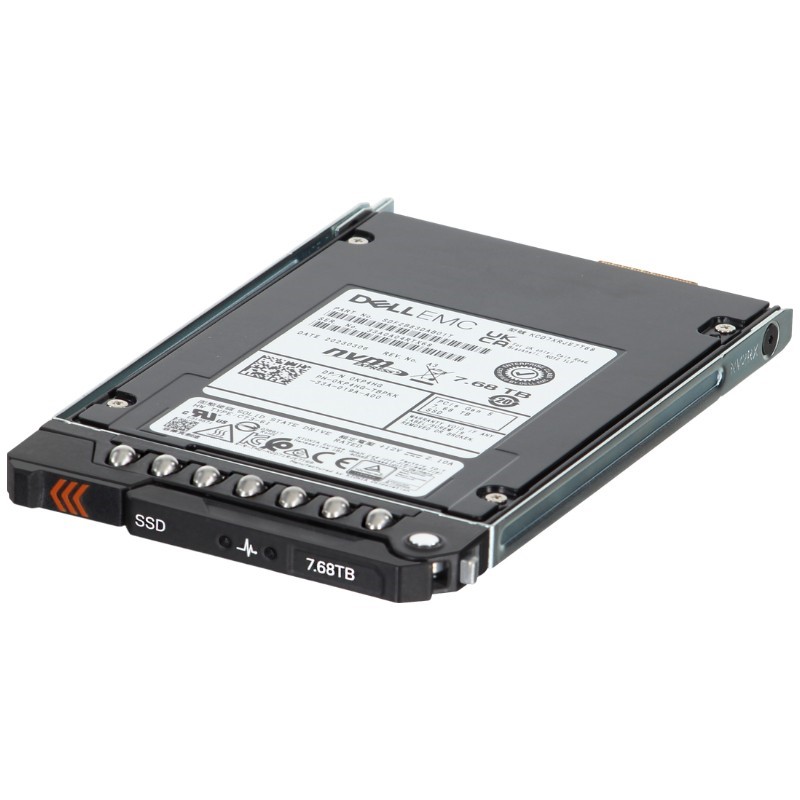


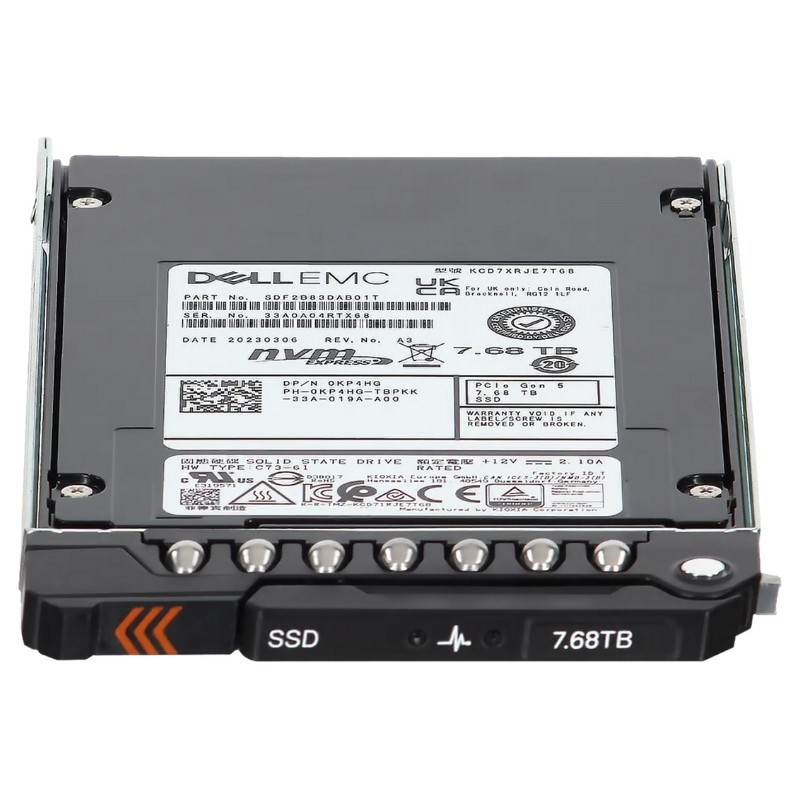
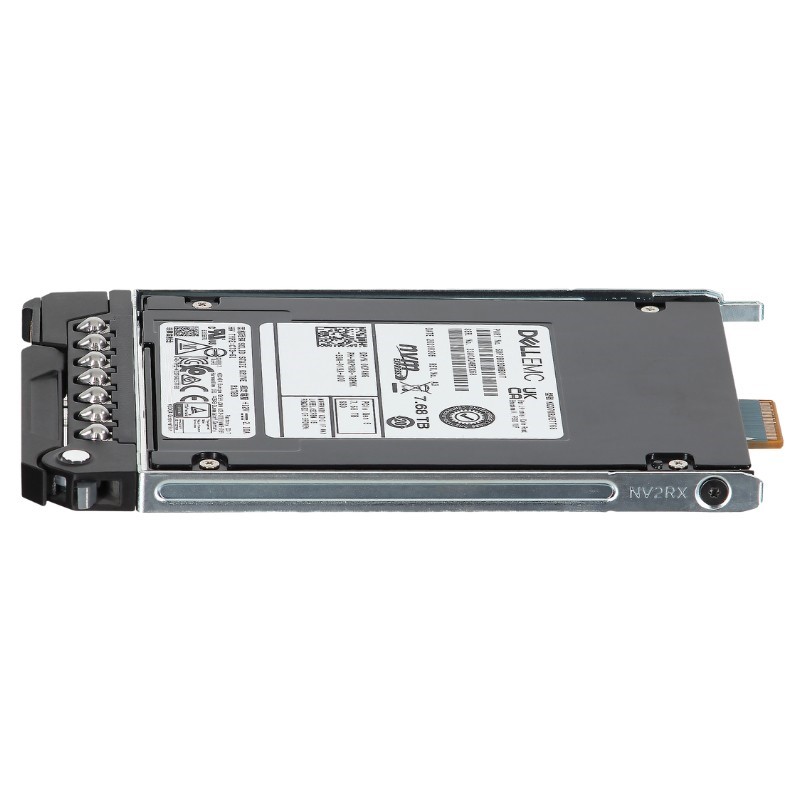
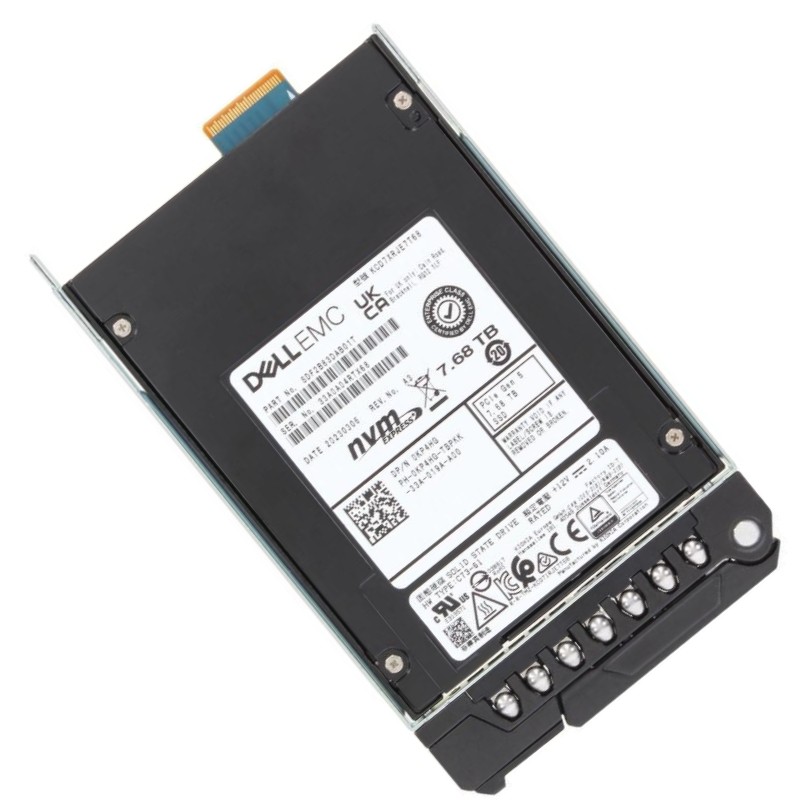
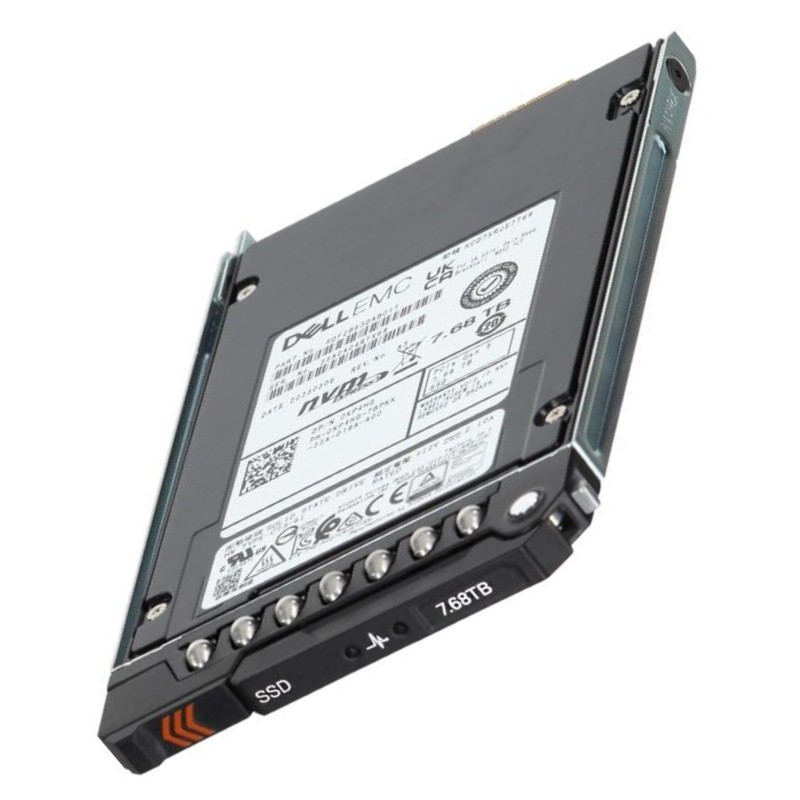
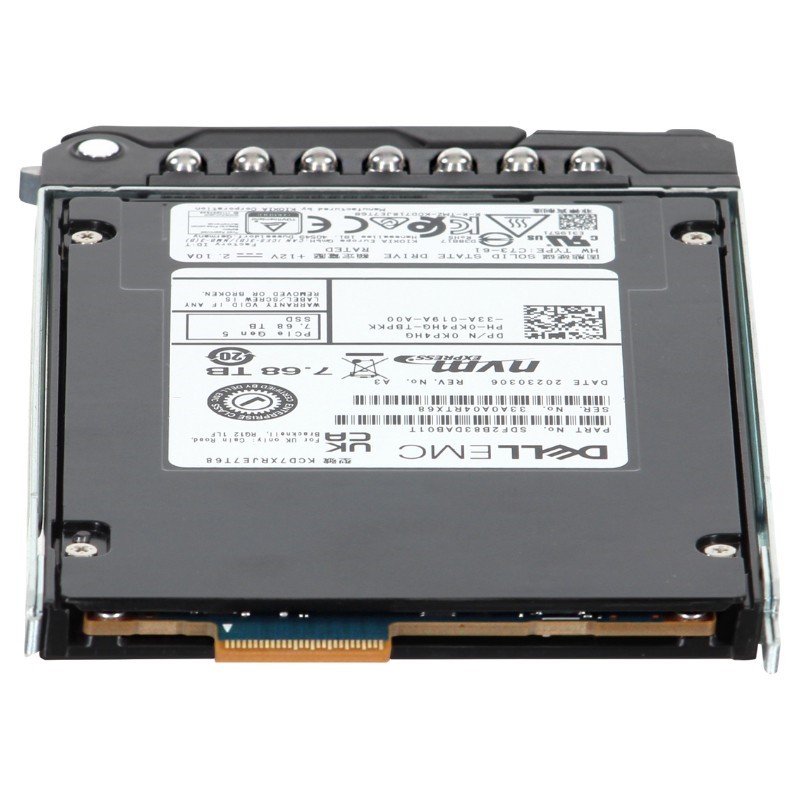
Dell 400-BOMN 7.68TB PCI-E Gen5 NVMe E3.S Read Intensive SFF TLC Internal Solid State Drive. Excellent Refurbished with 1 year replacement warranty
| SKU/MPN | Warranty | Price | Condition | You save |
|---|---|---|---|---|
| 400-BOMN | 1 Year Warranty | Contact us for a price | New Sealed in Box (NIB) | |
| 400-BOMN | 1 Year Warranty | $4,275.00 | Excellent Refurbished | You save: $1,496.25 (26%) |
Engineered for the most demanding data environments, this PCIe Gen5 NVMe SSD represents a monumental leap in storage technology. It is meticulously crafted to provide exceptional read velocity and unwavering reliability for enterprise servers, facilitating seamless operation across intensive computational tasks.
This storage solution excels in a multitude of high-demand environments, including:
Designed for modern data center acceleration, the Dell 400-BOMN 7.68TB PCIe Gen 5.0 x4 NVMe E3.S 2.5-inch read intensive TLC enterprise solid state drive with tray aligns capacity, latency, and sustained quality of service to match contemporary server refresh cycles across Dell PowerEdge 14G, 15G, 16G, and 17G platforms. Built on the E3.S form factor within the EDSFF family, the drive offers denser storage per rack unit, streamlined thermals, and forward-looking serviceability compared to legacy U.2 designs, while maintaining a familiar carrier for fast installation in mainstream Dell chassis.
With a focus on read-intensive workloads, the 7.68TB capacity targets hot data sets that benefit from large, low-latency media for content delivery networks, virtual desktop infrastructure, analytics dashboards, database read replicas, and cloud-native microservices. The PCIe 5.0 interface doubles peak bandwidth versus earlier PCIe 4.0 generations, reducing tail latencies under burst conditions and enabling more virtual machines, containers, or concurrent queries per server without overprovisioning compute.
Balanced performance is central to the Dell 400-BOMN design philosophy, providing rapid random read operations for transactional patterns and steady sequential throughput for scanning, reporting, and streaming. Queue depth efficiency is tuned for the I/O characteristics of hypervisors and modern Linux I/O schedulers, so applications observe predictable read completion times even when small writes, metadata updates, or journaling occur alongside throughput-heavy requests. By exploiting the PCIe 5.0 x4 link, the drive can keep multi-core CPUs fed with data at high concurrency, reducing idle cycles and improving node-level efficiency.
In multi-tenant environments, quality of service matters as much as peak numbers. The firmware of an enterprise read intensive TLC SSD prioritizes latency consistency by carefully managing media background tasks and wear-leveling, keeping variance tight across the 99.9th percentile. This behavior translates directly into smoother application response curves and more stable service-level objectives for latency-sensitive platforms such as customer-facing APIs and e-commerce search.
Endurance is engineered for read optimized usage, typically around one drive write per day class depending on final firmware configuration, capacity reservation, and overprovisioning. This endurance profile is ideal for data sets that are written once and read many times, or for pipelines where data is staged by upstream processes and accessed repeatedly by downstream consumers. The combination of high-density 3D TLC NAND, enterprise-grade controllers, and advanced error correction ensures data integrity even under sustained duty cycles and elevated ambient temperatures common in compact high-density racks.
Strategic overprovisioning and adaptive wear-leveling minimize write amplification, while background media scans and real-time parity checks safeguard blocks long before user workloads ever notice an anomaly. Power loss protection with dedicated capacitors preserves in-flight metadata during unexpected outages, enabling fast recovery and preventing file system inconsistencies across clustered nodes.
E3.S brings a meaningful step forward versus legacy 2.5-inch U.2 by enabling higher power envelopes, optimized airflow, and better signal integrity at PCIe 5.0 speeds. The compact card-like enclosure increases front-panel density so that each rack unit can host more drives without complex backplane changes. For operators, the standardized EDSFF mechanics simplify cable routing and improve thermal paths, resulting in lower fan speeds and reduced acoustic output when drives are deployed at scale.
Serviceability is a highlight, as the Dell tray integrates with PowerEdge tool-less carriers, LED indicators, and chassis health monitoring. Front-access hot-swap capability supports rapid replacement or capacity expansions during maintenance windows, while the predictable latch and guide-rail geometry reduces the risk of connector damage during frequent swaps in lab, staging, or cloud environments.
Versatility across multiple PowerEdge generations makes the Dell 400-BOMN a straightforward option for both new deployments and mixed-fleet upgrades. With appropriate backplanes and controller support for NVMe E3.S and PCIe 5.0 signaling, the drive integrates into mainstream 1U and 2U servers, dense storage sleds, and specialized edge appliances. Earlier-generation systems that negotiate at lower link speeds still benefit from the latency profile of NVMe, while current and next-generation platforms unlock the full bandwidth headroom of PCIe Gen 5.0.
Integration workflows remain consistent: administrators insert the drive using the included tray, verify detection in the system BIOS or iDRAC lifecycle controller, and provision logical volumes using the preferred RAID, passthrough, or software-defined storage approach. Hypervisor and operating system drivers for NVMe present the device with standard namespaces, enabling rapid deployment in VMware, Hyper-V, Proxmox, Red Hat Enterprise Linux, Ubuntu, and SUSE environments without customization. For orchestration, common tooling such as Ansible, PowerShell Desired State Configuration, and cloud-init scripts can automate partitioning, filesystem creation, and mount options at scale.
Content delivery networks thrive on large, read-biased caches. The 7.68TB capacity makes it practical to keep top-tier catalogs, popular binaries, container images, and frequently requested assets on fast local media close to compute. The result is reduced egress from object stores, fewer cache misses, and quicker page loads for globally distributed users.
Analytics and business intelligence workloads often scan large swaths of data for aggregations. A server outfitted with multiple Dell 400-BOMN drives exposes ample sequential bandwidth to feed in-memory engines while maintaining responsive small-block behavior for ad hoc queries. Data engineers can stage parquet, ORC, or compressed columnar files locally to accelerate iterative development cycles and reduce the cost of repeated object storage fetches.
Virtual desktop infrastructure deployments rely on fast read performance to expedite boot storms, profile loads, and application streaming. By hosting golden images and primary user profile caches on Dell 400-BOMN volumes, platform owners can compress login spikes into shorter windows, keeping end-user experience consistent during shift changes or patch cycles.
Database read replicas and search indices are classic read-heavy consumers. Placing replicas on PCIe 5.0 NVMe storage shortens replication catch-up times while reducing query latency for complex joins or full-text searches. In microservices, stateless pods benefit when their shared artifact stores, dependency bundles, and compiled assets reside on low-latency media, allowing autoscaling groups to spin additional instances quickly during traffic surges.
The E3.S drive slides into a Dell carrier engineered for proper seating force and precise alignment with the chassis backplane. The tray features status and activity LEDs aligned to the PowerEdge enclosure light pipes, providing immediate health and activity feedback during on-site diagnostics. Labeling areas along the bezel aid asset tracking and barcode scanning, while the matte finish resists fingerprints and abrasion in busy data center aisles.
Thermal design is optimized for front-to-back airflow. The E3.S geometry reduces turbulence at the inlet and directs cooling over the controller and NAND packages. Chassis fan curves can remain conservative thanks to the efficient heat dissipation across the metallic shell, extending component life and lowering overall power consumption in high-density arrays.
Enterprise firmware integrates end-to-end data path protection, ensuring that from the host interface through to the NAND cells, parity and checksums verify integrity. On-die ECC collaborates with controller-level LDPC to correct transient errors, while periodic media scrubs patrol idle regions to detect and remediate weak pages. Power loss protection capacitors capture enough energy to flush volatile metadata and in-flight writes to non-volatile storage, preventing journal corruption after abrupt outages or rack-level power events.
Secure management features include support for sanitize operations and cryptographic erase where enabled, allowing administrators to decommission or repurpose drives without lengthy overwrites. Authentication hooks through BMC workflows and role-based access in iDRAC reduce the surface area for misconfiguration, while audit-friendly logs record SMART events, thermal excursions, and interface errors for compliance review.
Operational excellence depends on visibility. The Dell 400-BOMN exposes SMART attributes and NVMe health counters that reveal wear, total bytes written, media temperature, and error rates. Fleet managers can collect metrics using native NVMe CLI tools, Redfish endpoints via iDRAC, or vendor storage utilities within Windows or Linux. With consistent telemetry, predictive maintenance becomes practical, allowing hot spares to be staged before a drive approaches its wear thresholds.
Firmware updates can be orchestrated through enterprise tools during scheduled windows, applying digitally signed images that introduce performance refinements, compatibility tunings, or security patches. Staggered rollouts across availability zones limit risk, and maintenance scripts can validate version compliance as part of standard configuration drift reports. When capacity expansions are planned, trays and backplanes designed for E3.S simplify incremental scaling without extensive cabling rework.
Performance depends on matching the storage stack to the workload. For databases and virtualization, larger block sizes and alignment to erase block boundaries help minimize write amplification. Journaling filesystems with tuned commit intervals strike a balance between durability and throughput, while mount options that reduce atime updates conserve write budgets for read intensive profiles. In Linux, leveraging multi-queue block I/O with tuned scheduler parameters can increase parallelism and reduce CPU contention in virtualized hosts with many guests.
When software-defined storage layers such as VMware vSAN, Red Hat OpenShift Local Storage, or Ceph are used, the Dell 400-BOMN functions effectively as a performance tier where read-heavy objects reside. Policy-driven placement can steer metadata and index structures onto NVMe, while colder content migrates to QLC-based capacity pools. This tiering approach optimizes both cost and experience, ensuring frequently accessed data always sits on the lowest-latency path.
Organizations upgrading from earlier generations will notice immediate benefits. PCIe 5.0 doubles the per-lane throughput of PCIe 4.0, and quadruples that of PCIe 3.0, translating into fewer drives required to saturate network uplinks or CPU memory bandwidth. In practice, this consolidation means fewer devices to manage, lower idle power draw across the fleet, and improved rack-level density for growth. For brownfield environments, gradual introduction of PCIe 5.0 storage in mixed-speed backplanes allows teams to capture performance wins incrementally while planning full-chassis refreshes.
Software compatibility remains straightforward. Standard NVMe drivers in present-day operating systems recognize the device seamlessly, and common monitoring stacks—whether agent-based or agentless via Redfish—continue to gather health and performance data without reengineering. The transition is less about rearchitecting and more about unlocking headroom in existing workflows, giving room for new services, larger datasets, and tighter SLAs.
Thermal efficiency impacts both longevity and environmental footprint. The E3.S envelope enables better heat spreading, and the Dell tray ensures alignment with chassis airflow. Dynamic power management features expose multiple power states so operators can favor lower draw during off-peak windows without sacrificing readiness for sudden demand. Over time, the combination of efficient cooling and right-sized device counts reduces fan duty cycles, cutting energy consumption per delivered IOPS and improving Power Usage Effectiveness at the data center level.
Sustainability goals benefit from consolidation. When a smaller number of PCIe 5.0 drives can replace racks of earlier-generation devices, organizations reduce embodied carbon across spares, cabling, and ancillary infrastructure. The drive’s durability extends service life within refresh cycles, and secure sanitization workflows facilitate responsible reuse or decommissioning.
Enterprise NVMe architecture relies on redundancy and verification across the data path. From the PCIe 5.0 physical link through the NVMe protocol layers, end-to-end CRCs and protection information detect and correct transient faults. Inside the SSD, LDPC error correction, RAID-like parity across NAND dies, and wear-leveling algorithms collaborate to prevent silent data corruption. Background scans test unused blocks proactively, remapping them before they enter any critical write path.
Telemetry from SMART logs reveals crucial leading indicators such as media warnings, lifetime percentage used, error rate trends, and temperature histories. Because this observability pairs with Dell’s system-level monitoring via iDRAC, operators can correlate storage events with chassis thermal alerts, fan speeds, or PSU loads to analyze root causes holistically rather than treating each component in isolation.
Security-conscious deployments can leverage cryptographic erase or sanitize operations, subject to model capabilities and policy. These functions enable rapid turnover for RMA, lab redeployments, or lease returns, reducing the time drives spend outside secure cages. Integration with change management systems ensures that only authorized personnel can initiate destructive operations, and audit logs preserve a record of actions for compliance frameworks that demand traceability.
At the platform level, BIOS passwords, signed firmware updates, and BMC role-based access keep the update chain protected. Operators pursuing zero-trust postures can further restrict access through network segmentation around management interfaces, ensuring that storage devices and their controllers are reachable only from approved maintenance networks.
Maintaining consistent firmware across fleets prevents subtle inconsistencies in garbage collection or namespace behavior. Scheduled health checks that collect SMART attributes and temperature readings flag anomalies early, while non-disruptive firmware updates during maintenance windows introduce controller improvements without risking data. Proper cable hygiene and avoiding repeated cold-removals outside hot-swap procedures reduce connector wear.
In virtualization, aligning guest filesystems with the host block device sector sizes avoids unaligned writes that inflate write amplification. For databases, enabling page checksums and aligning WAL or redo logs away from the read-intensive tier protects endurance. When workloads change and write volumes increase, administrators can repurpose drives to roles that suit their endurance class, using sanitize procedures to prepare media for the new assignment.
Tuning starts with baselines. Administrators capture synthetic measurements at installation to create reference points, then compare production metrics to detect regressions. For latency-sensitive APIs, alert thresholds track 99th percentile latencies during peak traffic, enabling early intervention before user experience declines. Observability stacks such as Prometheus with node exporters, Grafana dashboards, and syslog aggregation present unified views of storage health alongside CPU, memory, and network metrics.
When bottlenecks appear, investigation follows a top-down approach. If host CPU saturates, raising queue depth delivers little benefit, so right-sizing vCPU assignments or adjusting thread pools may help. If storage queues are consistently full, spreading workloads across additional namespaces or hosts evens the load. Firmware release notes may also include improvements to command batching or latency under mixed workloads that justify an in-place update to unlock smoother behavior.
Investments in E3.S and PCIe 5.0 position infrastructure for coming advances in controllers, NAND density, and host CPU capabilities. As firmware evolves to exploit new features in the NVMe specification, devices like the Dell 400-BOMN are well-placed to inherit improvements through signed updates. The mechanical and thermal baseline of EDSFF supports higher power devices if future generations require additional headroom, enabling capacity and performance scaling within the same chassis envelope.
Operational teams also benefit from the maturing tooling around NVMe management, making automation simpler and more robust over time. Standardized telemetry fields and vendor-neutral interfaces support multi-vendor fleets without sacrificing granular health insights or control over firmware behaviors.
Edge deployments often face power and space constraints. The efficient profile of E3.S reduces the number of drives required for a given service level, while the integrated tray supports hands-off colocation servicing by remote hands teams. Clear labeling on the carrier and predictable LED behavior reduce errors during guided replacements. Because read caches at the edge must survive power events, the drive’s power loss protection is an indispensable safeguard, ensuring data structures remain consistent after outages or generator transitions.
Latency-sensitive industrial control systems and retail point-of-sale networks depend on consistent read performance for state synchronization and local analytics. Hosting these artifacts on the Dell 400-BOMN minimizes jitter in polling intervals and accelerates dashboard refresh rates, improving operational awareness and customer experience without requiring costly upstream bandwidth upgrades.
Capacity at 7.68TB makes data locality strategies feasible for broad working sets. PCIe 5.0 x4 provides headroom so bandwidth is not the limiting factor during peak traffic. E3.S mechanics and the Dell tray enable dense, cool, and serviceable front bays. Read intensive TLC endurance aligns with workloads that write predictably but read continuously. Enterprise-grade protection and power-loss features maintain data integrity even in adverse conditions. Management hooks, telemetry, and secure updates streamline fleet operations, while multi-generation PowerEdge compatibility reduces integration friction.
When these attributes come together, architects can right-size storage tiers with confidence. They can deploy fewer devices per host, reduce cross-rack traffic, and deliver consistent user experiences without overspending on write endurance that their workloads will not consume. The result is a storage layer that is both fast and sensible, matching contemporary application realities.
Designing for read dominance means prioritizing low tail latency, rapid command completion, and opportunistic prefetch where beneficial. Controller firmware minimizes background interference, while caching algorithms emphasize predictability over aggressive write-back behaviors. Such choices allow the Dell 400-BOMN to excel in environments where the same data is accessed repeatedly by many clients, a pattern common to microservices, API gateways, and content platforms.
Lifecycle management via iDRAC and Dell’s server toolchain reduces administrative toil. Firmware baselines, health alerts, and inventory tracking all converge in familiar consoles, and Redfish APIs open the door to automation at scale. These integrations shorten mean time to innocuous tasks like updates or swaps, giving engineers more time for higher-level architectural improvements.
Predictability is a competitive advantage. By locking in a stable storage tier with known behavior across load ranges, teams can scale horizontally without revalidating performance with each incremental deployment. Planning for growth then becomes a matter of capacity arithmetic rather than complex tuning, because the underlying media exhibits dependable characteristics release after release.


 Contact Us
 Information
 Catalog
 Solid State Drives (SSD)
 Network Switches
 Hard Disk Drives
 HBA & Controllers
 PC & Servers
 PC & Server Memory
 CPU & Processors
 Network Routers
 Power Supplies
 Tape Drives & Libraries
 Network Devices
 Computer & Network Cables