(7% discount is applied at checkout)
Cart is empty
Your go-to destination for cutting-edge server products
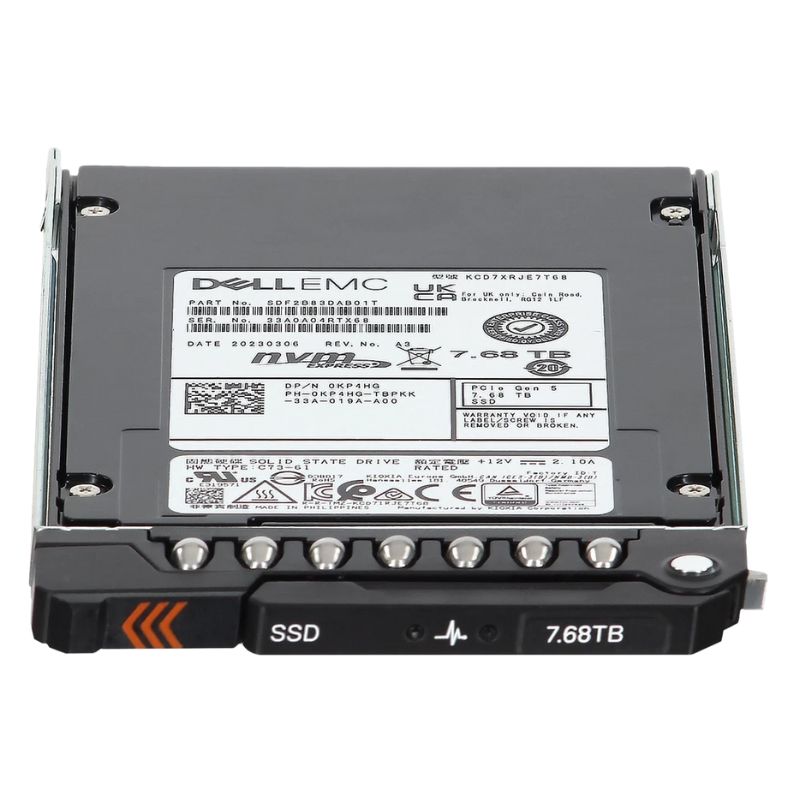


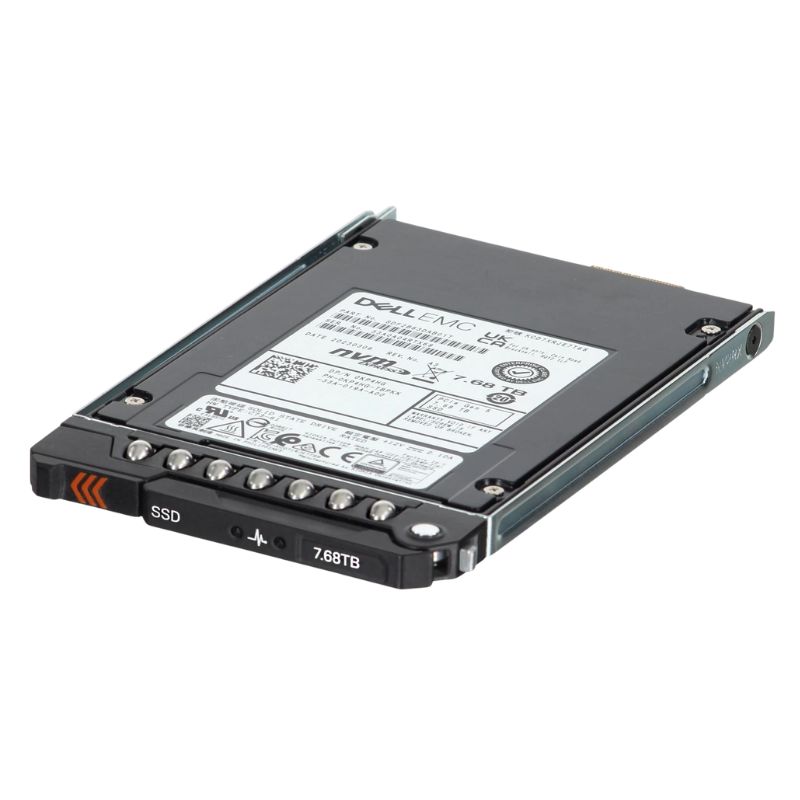
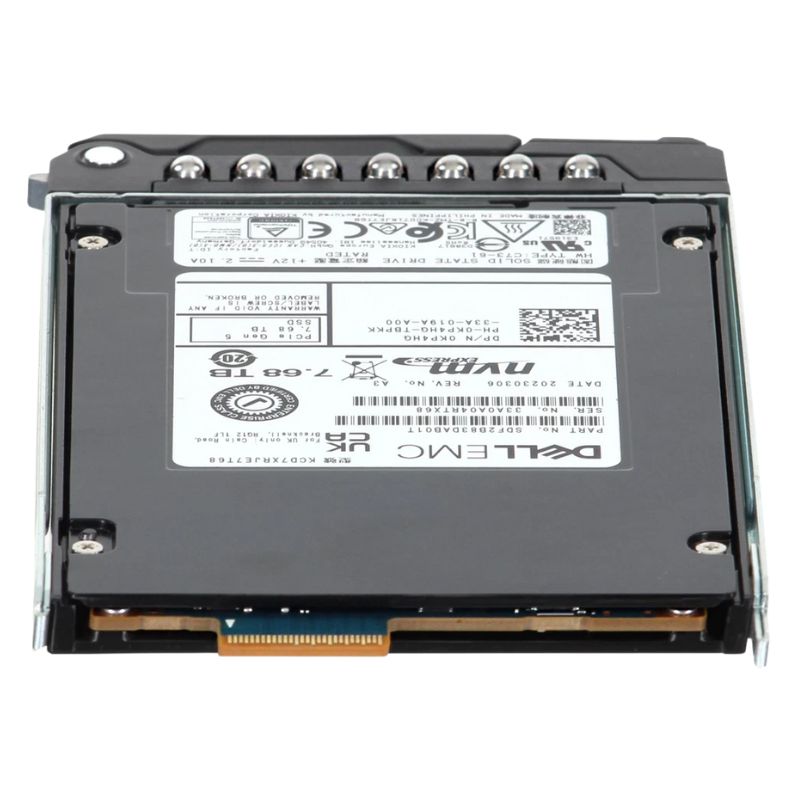
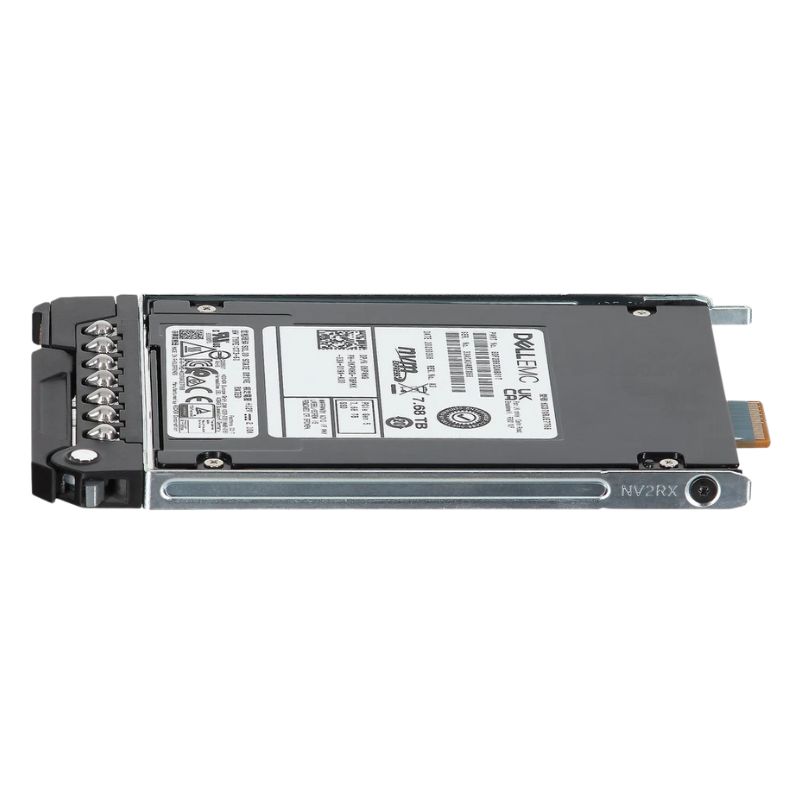
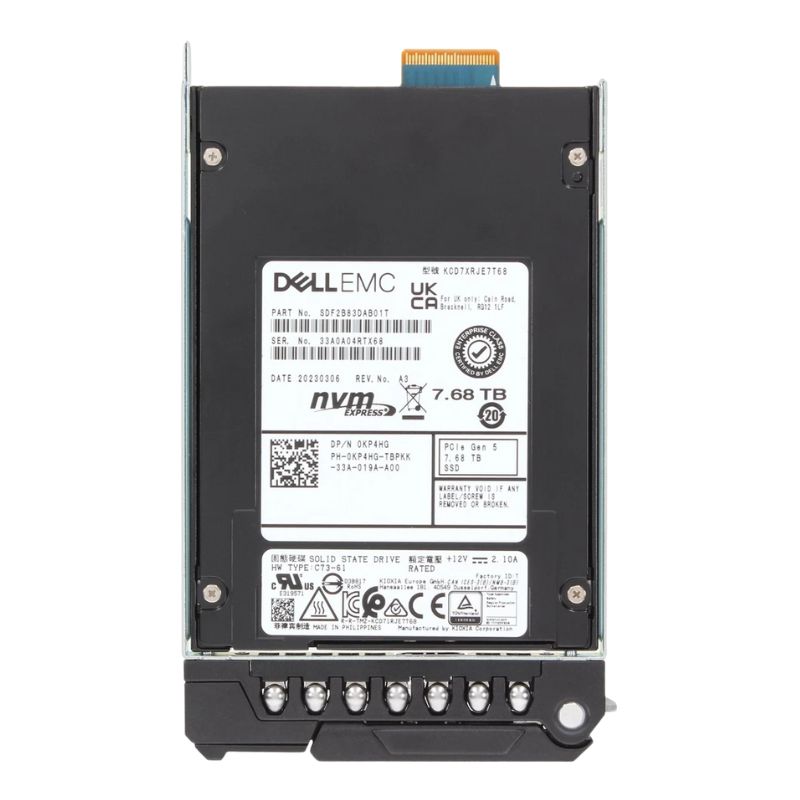
Dell 400-BOMO 7.68TB PCI-E Gen5 NVMe E3.s 2.5 Inch Solid State Drive. Excellent Refurbished with 1 year Replacement Warranty
The Dell 400-BOMO 7.68TB PCI-E Gen5 NVMe E3.s 2.5 Inch Solid State Drive represents a class of enterprise storage designed specifically for read-intensive environments where low latency, high sustained throughput, and compact server footprint matter. Positioned for modern Dell PowerEdge server platforms, this product category emphasizes PCI-Express Gen5 bandwidth, NVMe protocol efficiency, and the E3.s 2.5-inch form factor that balances density and thermal headroom. For system architects and storage managers, the category signals a shift from legacy SATA and SAS designs toward server-native NVMe solutions that reduce I/O bottlenecks and accelerate application performance across virtualization, analytics, content delivery, and cold/hot cache layers.
PCI-E Gen5 NVMe drives in the E3.s 2.5-inch form factor target use cases where read operations dominate and predictable latency is critical. Read-intensive enterprise applications include search indices, large-scale content delivery networks, analytics queries, machine learning inference pipelines that read large model files, and virtual desktop infrastructure where many guests issue read bursts. The Gen5 interface multiplies raw lane bandwidth compared to previous generations, enabling higher queue depth throughput while NVMe minimizes protocol overhead so that CPUs spend fewer cycles waiting on storage. The E3.s form factor provides a balance of thermal dissipation and capacity; at 7.68TB, the Dell 400-BOMO drive gives data centers a dense, rack-efficient option without compromising sustainment of high read throughput.
Adopting the Dell 400-BOMO series delivers multiple operational benefits. First, application responsiveness improves as reads complete faster and more predictably, which directly impacts user experience for latency-sensitive services. Second, because NVMe uses fewer CPU cycles per I/O compared to legacy storage, servers can allocate more processing to applications rather than I/O handling. Third, storage densification with 2.5-inch E3.s drives simplifies rack and chassis planning while still offering robust thermal control. Fourth, operational simplicity increases when drives come validated for PowerEdge servers and supported by Dell's firmware and management toolset, enabling consistent firmware updates, telemetry, and integration with server management consoles for firmware lifecycle and monitoring.
The most impactful technical traits of this category are interface generation (PCI-E Gen5), protocol (NVMe), form factor (E3.s 2.5-inch), and workload optimization (read-intensive). PCI-E Gen5 delivers a significant jump in raw I/O bandwidth per lane compared to Gen4, allowing storage arrays and scale-out servers to push larger blocks of data with lower overall latency. NVMe provides efficient command sets and queue management to exploit parallelism across multi-core server CPUs. The E3.s 2.5-inch mechanical envelope supports enterprise connectors and thermal solutions commonly used in PowerEdge server sleds and chassis. While capacity is commonly expressed in terabytes, endurance and performance tuning for read-heavy workloads are equally important and typically configured at the firmware level to favor read performance and background data integrity operations.
The E3.s 2.5-inch EDSFF-style (as used in many dense server designs) gives administrators a familiar mechanical footprint while enabling server vendors to optimize cooling around the drive. Compared with standard 2.5-inch U.2 solutions, E3.s often allows for better thermal interfaces and system airflow arrangements in modern PowerEdge chassis. Physical compatibility with insertion/extraction mechanisms, hot-swap capability, and drive carrier design are important to ensure that the Dell 400-BOMO drives integrate smoothly with existing drive bays. Administrators should confirm that the PowerEdge model in use supports E3.s devices natively or via validated backplanes to ensure full performance and hot-plug behavior.
Read-intensive SSDs like the Dell 400-BOMO are purpose-built for applications where reads vastly outnumber writes. Examples include web and media content servers delivering static assets, database read replicas used for analytics queries, large object stores that serve media and static files, indexing services, and cache layers in front of slower bulk storage. In these scenarios, the drive's firmware and flash management algorithms are tuned to prioritize read throughput and consistent latency, while still providing adequate background garbage collection and wear leveling to maintain data integrity and drive life. The high capacity of 7.68TB per drive enables large working sets to reside on fast storage without immediate reliance on tiered architectures.
Consider an online media platform that must serve thousands of concurrent streams of static video and image files. Moving large portions of the content library to Gen5 NVMe read-optimized storage reduces latency when files are requested, improves throughput during peak traffic, and allows the caching layer to operate at lower CPU overhead. Another scenario is a read-replica for an analytic database where complex reporting queries are executed. Using a 7.68TB Gen5 NVMe drive enables significant portions of hot indexes and data to be served at NVMe speeds, shortening query durations and enabling more concurrent analytic jobs per server. Virtual desktop infrastructure with many users logging in and launching applications benefits from low read latency during boot storms and application launch peaks.
Maximizing the benefit of Gen5 NVMe E3.s drives requires attention to system and software stack tuning. Aligning NVMe queue depth and submission strategies with the server's CPU topology ensures balanced utilization. Filesystem and application tunables that reduce synchronous small writes and favor larger sequential reads can magnify the read-intensive design advantages. When deploying multiple drives in a single server, consider distribution of workloads across CPU sockets to avoid NUMA penalties. For virtualized environments, present virtual disks aligned to NVMe block boundaries and configure guest I/O schedulers to respect NVMe’s low latency characteristics. Workload profiling before and after deployment is critical to quantify improvements and detect any new bottlenecks at the application layer.
High throughput drives produce heat, and the E3.s 2.5-inch form factor is optimized to work with server airflow designs. Ensure that PowerEdge chassis fans and airflow baffles are configured according to the vendor's recommendations for intake and exhaust to avoid thermal throttling. When populating dense chassis with multiple Gen5 NVMe drives, verify that drive temperature readings remain within the manufacturer’s recommended range during peak sustained operations. Proactive thermal management protects performance consistency and prolongs drive longevity.


 Contact Us
 Information
 Catalog
 Solid State Drives (SSD)
 Network Switches
 Hard Disk Drives
 HBA & Controllers
 PC & Servers
 PC & Server Memory
 CPU & Processors
 Network Routers
 Power Supplies
 Tape Drives & Libraries
 Network Devices
 Computer & Network Cables