(7% discount is applied at checkout)
Cart is empty
Your go-to destination for cutting-edge server products


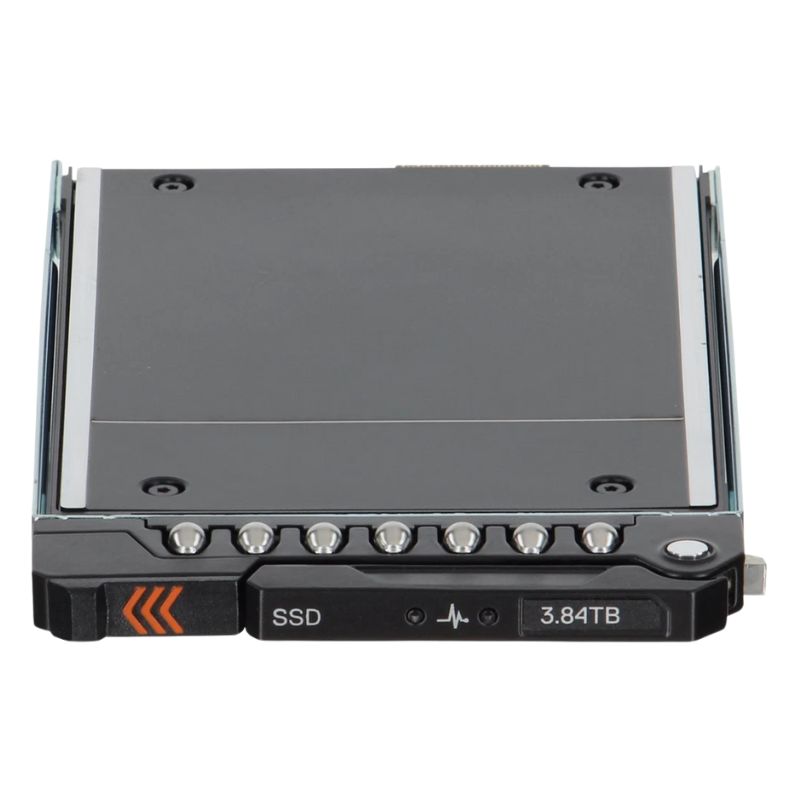
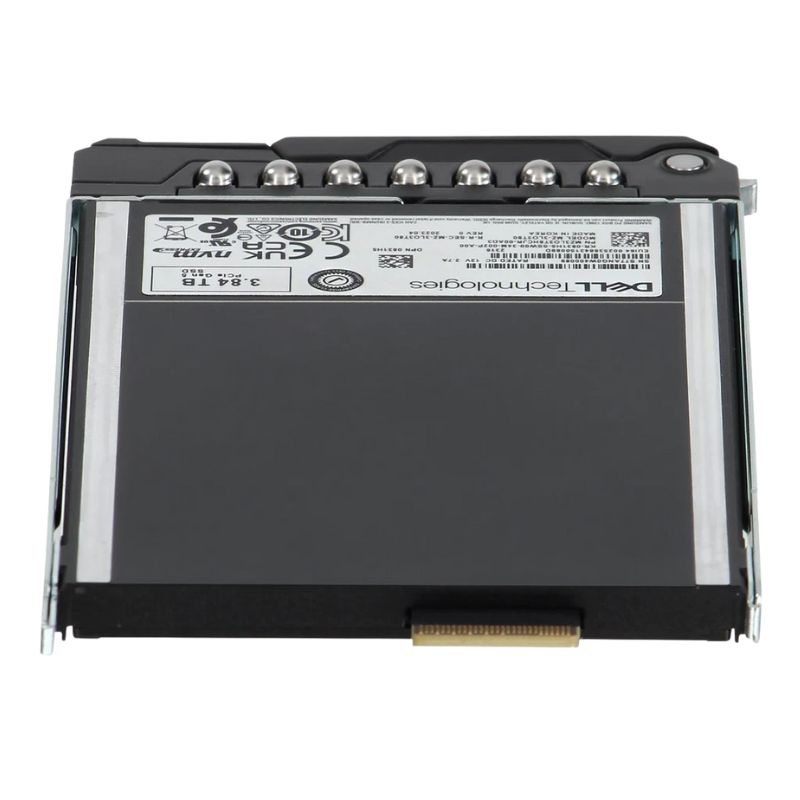
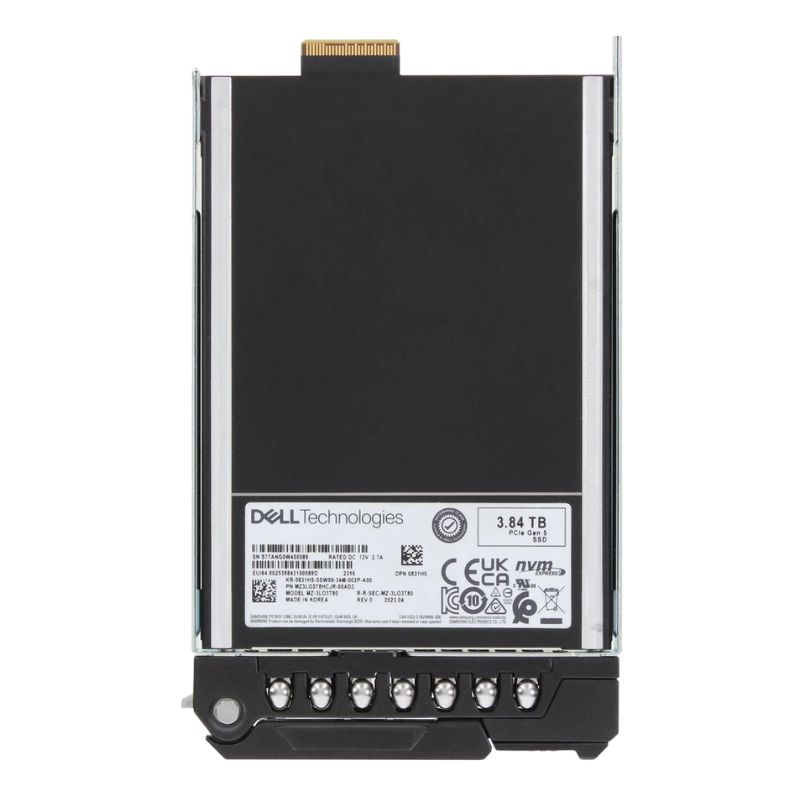
Dell 400-BOMP 3.84TB PCI-E Gen 5.0 X4 NVMe E3.s 2.5Inch Read Intensive Solid State Drive. New Sealed in Box (NIB) with 1 Year Warranty
The Dell 400-BOMP 3.84TB Solid State Drive delivers next-level storage performance designed for advanced data centers and enterprise applications. Built with PCI-E Gen 5.0 technology and an E3.s 2.5-inch form factor, it ensures superior data throughput, low latency, and long-term dependability for heavy workloads.
This Dell PCI-E Gen 5.0 NVMe SSD stands out for its optimized speed and efficiency. With read-intensive architecture, it is tailored for applications requiring fast access to data, improved reliability, and reduced latency.
The Dell 400-BOMP 3.84TB NVMe E3.s SSD is fully validated for use across multiple Dell PowerEdge platforms, ensuring perfect integration and reliability.
The Dell 400-BOMP 3.84TB PCI-E Gen 5.0 x4 NVMe E3.S 2.5-Inch Read Intensive Solid State Drive represents a modern class of enterprise NVMe storage designed for data center workloads that prioritize sustained read performance, low latency, high-density deployment, and power- and thermally-efficient operation. This category page focuses on the 3.84TB capacity class within the Dell 400-BOMP family, emphasizing the PCIe Gen5 x4 interface coupled with the compact E3.S 2.5-inch form factor. Content here addresses the technical characteristics, performance expectations, deployment patterns, compatibility considerations, lifecycle management, and the business value of choosing a read-intensive NVMe SSD like the Dell 400-BOMP for modern storage infrastructures.
The Dell 400-BOMP uses the E3.S 2.5-inch physical profile, a purpose-built enterprise form factor that balances compact density with excellent thermal characteristics. The E3.S (Enterprise and Datacenter SSD Form Factor) design enables higher rack density compared with larger form factors while still providing robust cooling and serviceability for hot-swap server and storage enclosures. The PCI-E Gen 5.0 x4 interface delivers a quantum leap in raw bandwidth and reduces I/O bottlenecks for read-heavy workloads when compared with prior generation PCIe Gen 3 or Gen 4 devices. The combination of E3.S packaging and PCIe Gen5 connectivity makes the 400-BOMP series well suited for next-generation storage arrays, NVMe-oF (NVMe over Fabrics) gateways, and high-density server configurations where maximizing throughput per U and minimizing latency are essential.
PCIe Gen5 doubles the per-lane throughput of Gen4, and when paired with an x4 link it opens significantly more sustained bandwidth to the controller and NAND. For read-intensive SSDs like the Dell 400-BOMP, this means larger sequential read windows, better parallelism across NAND channels, and improved handling of heavy small-block random read patterns. Real-world benefits appear in faster database query responses, improved cache hit rates in read-optimized tiers, and lower read tail latency for analytics and search workloads. Enterprises deploying NVMe fabrics or high-performance boot volumes benefit from Gen5 bandwidth headroom that extends the lifespan of system architectures before additional upgrades are needed.
The 3.84TB capacity point in the Dell 400-BOMP family is optimized for applications requiring large read datasets with predictable write patterns. Read-intensive SSDs are engineered for workloads where read operations dominate—examples include content delivery networks, media streaming proxies, object stores, distributed file systems with read-heavy nodes, analytics repositories, and caching layers in cloud services. At 3.84TB, the drive offers a substantial working set for frequently accessed data while allowing operators to provision capacity with granularity for tiered storage strategies. This capacity is ideal for scaling read caches, hosting large indices for search engines, or supporting virtual desktop infrastructure (VDI) environments where read traffic dwarfs write activity.
Common workload profiles for the 3.84TB Dell 400-BOMP include sequential and random read operations measured in high IOPS with minimal latency variance. Use cases frequently exhibit heavy read amplification on warm or hot datasets, with occasional background writes for metadata, log appends, or consistency checkpoints. Because these drives are read-intensive, endurance metrics are tuned toward read performance and overall mean time between failures (MTBF), rather than extreme write durability. Workloads well matched to this class maximize value by using the drive as a high-speed read layer while relegating heavy write activity to higher-endurance tiers.
The Dell 400-BOMP 3.84TB PCI-E Gen5 x4 NVMe SSD delivers a blend of high sequential throughput and strong random read IOPS, which together accelerate data retrieval operations at scale. Performance characteristics for read-intensive SSDs are balanced to favor low latency and sustained throughput under multi-threaded, concurrent access patterns. Operators can expect consistent read response times, improved tail latency management under mixed traffic, and the ability to serve more concurrent client requests per drive compared to older NVMe generations.
Latency for read-intensive NVMe SSDs is one of the defining metrics. The PCIe Gen5 link and modern NVMe controllers reduce protocol overhead and improve command processing times, yielding lower average and tail latencies. Random read IOPS scale with parallelism across NAND channels and controller cores, and the 3.84TB capacity helps maintain high internal parallelism because more NAND dies are available for striping. Sequential throughput peaks are useful for large dataset scans and backups, while random IOPS matter for databases and metadata operations. System architects should measure performance in their target environment, but can reliably anticipate a significant uplift over Gen4 devices for read-heavy tasks.
One of the advantages of purpose-built read-intensive SSDs is consistent sustained performance. Unlike consumer SSDs that rely on large SLC caches that may drain during prolonged writes, read-intensive enterprise drives are tuned to avoid dramatic performance cliffs during long read windows and predictable maintenance tasks. This stability matters for production environments where predictable SLAs, consistent query times, and deterministic service responses are required. For storage clusters, consistent performance reduces variability across nodes and simplifies capacity planning and load balancing.
Endurance for read-intensive drives emphasizes the expected workload composition—primarily reads with controlled write volumes for metadata and periodic snapshots. The 3.84TB Dell 400-BOMP offers endurance ratings appropriate for the read-intensive class, balancing cost per GB with projected lifecycle for enterprise deployments. Reliability considerations include power-loss protection, background media management (GC and wear-leveling), and robust firmware designed to preserve data integrity across the drive’s useful life.
Enterprise SSDs such as the Dell 400-BOMP integrate rich SMART telemetry and vendor-specific health indicators that enable proactive maintenance and predictive replacement. Monitoring tools can track parameters like remaining spare capacity, bad block counts, total host reads/writes, temperature history, and firmware event logs. By ingesting SMART metrics into an infrastructure monitoring platform, operators can trigger replacement workflows before drive failures impact availability, reduce unplanned downtime, and optimize spare inventory strategies.
Firmware plays a critical role in sustaining performance, managing errors, and optimizing NAND utilization. The Dell 400-BOMP drives are expected to ship with firmware that supports secure erase, namespace management, and enterprise-grade error recovery. Regular firmware updates can deliver bug fixes, performance refinements, and enhanced telemetry. Security features such as TCG Opal support and AES-based encryption options help protect data at rest; organizations should plan for secure key management workflows and routine validation of encryption status during provisioning.
E3.S form factor delivers thermal advantages through efficient heat transfer and placement in hot-swap bays. The Dell 400-BOMP 3.84TB is designed to operate within data center thermal envelopes while providing high sustained performance. Power efficiency matters in large scale deployments where watts per terabyte and watts per IOPS influence rack power budgets and cooling strategies. Choosing read-intensive drives for read-heavy tiers reduces the total cost of ownership because these drives offer a favorable balance of power consumption and performance for their intended workloads.
Integrators should follow OEM guidance on airflow orientation, bay population rules, and backplane compatibility to ensure consistent cooling and avoid thermal throttling. Because the E3.S 2.5-inch profile supports dense configurations, administrators should validate ambient temperature ranges and implement rack-level monitoring to detect hotspots. For NVMe over Fabrics gateways and storage appliances, proper airflow and chassis management preserve peak performance and maintain firmware health metrics related to temperature history.
Compatibility is a crucial consideration when adding PCIe Gen5 NVMe drives into existing infrastructure. The Dell 400-BOMP family is engineered for broad compatibility with modern servers, storage platforms, and NVMe-aware hosts that support E3.S devices and Gen5 links. When deploying these drives, validate platform firmware, BIOS/UEFI NVMe drivers, and any vendor-specific drivers or management utilities to ensure full feature support. In hybrid data centers where Gen5 host connectivity is not yet ubiquitous, these drives can still be useful in Gen4 or backward-compatible environments, though throughput will be capped by the host's link speed.
Advanced deployment patterns such as multiple NVMe namespaces, virtualization with passthrough, and multipathing for high availability are supported by enterprise NVMe drives. Administrators can create namespaces to isolate workloads, dedicate portions of the 3.84TB capacity to specific services, or use namespaces to optimize quality of service across tenants. Multipath I/O helps ensure resilient access across redundant fabrics and increases uptime for critical applications. Storage architects should coordinate namespace strategies with backup, snapshot, and replication policies for consistent data protection.
The Dell 400-BOMP 3.84TB is well suited to be the “read tier” in a multi-tier storage architecture. Frequently accessed data can be served from these high-speed NVMe drives while less frequently accessed objects reside on higher capacity, lower cost media. Automated tiering policies can place hot segments on E3.S NVMe storage to maximize performance and reduce latency for end users while lowering overall cost by confining high-cost NVMe capacity to where it delivers the most value.


 Contact Us
 Information
 Catalog
 Solid State Drives (SSD)
 Network Switches
 Hard Disk Drives
 HBA & Controllers
 PC & Servers
 PC & Server Memory
 CPU & Processors
 Network Routers
 Power Supplies
 Tape Drives & Libraries
 Network Devices
 Computer & Network Cables