(7% discount is applied at checkout)
Cart is empty
Your go-to destination for cutting-edge server products
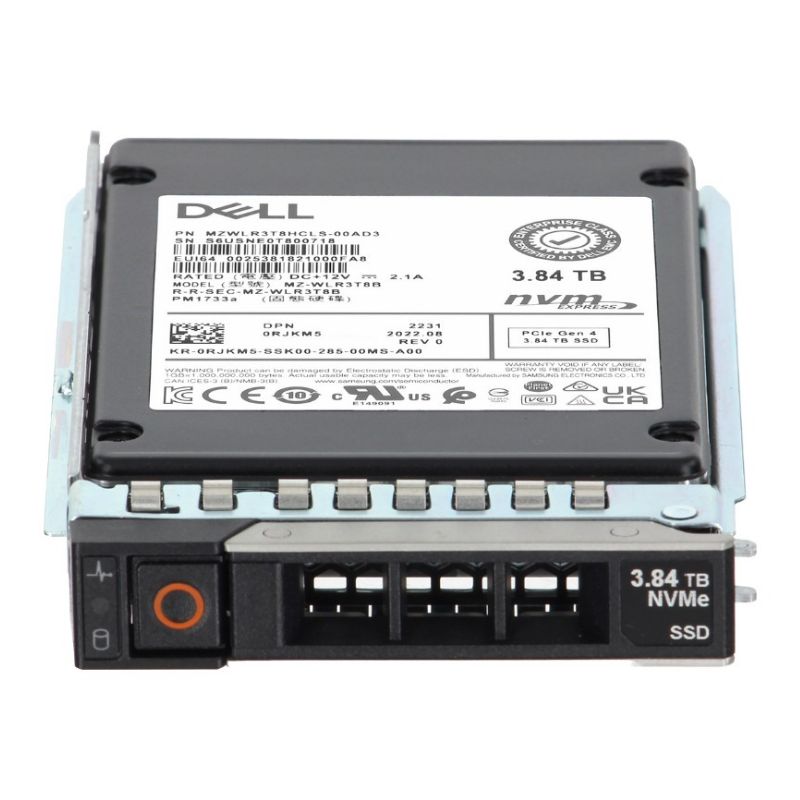


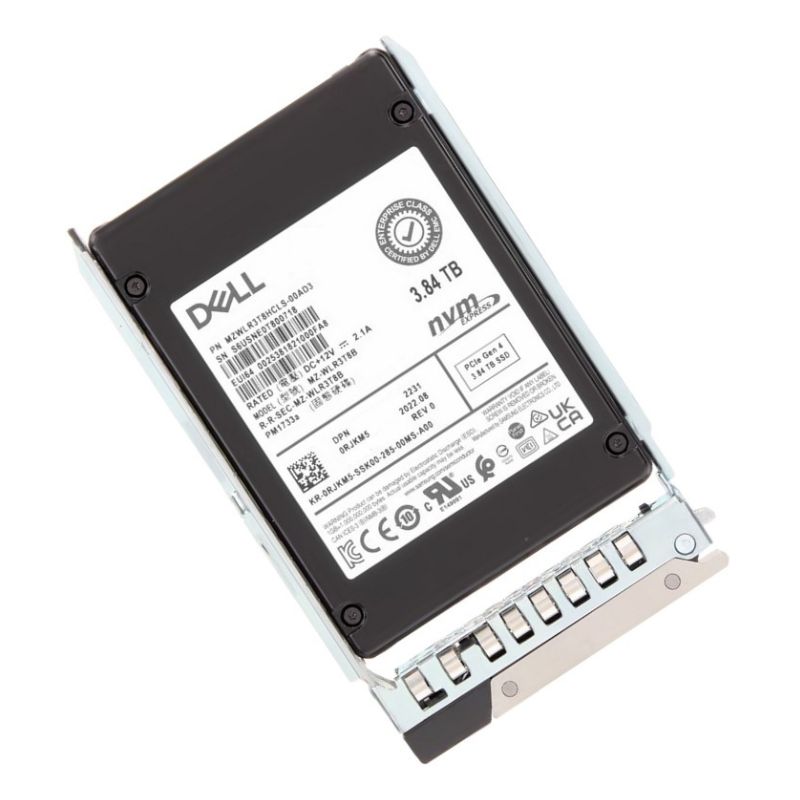
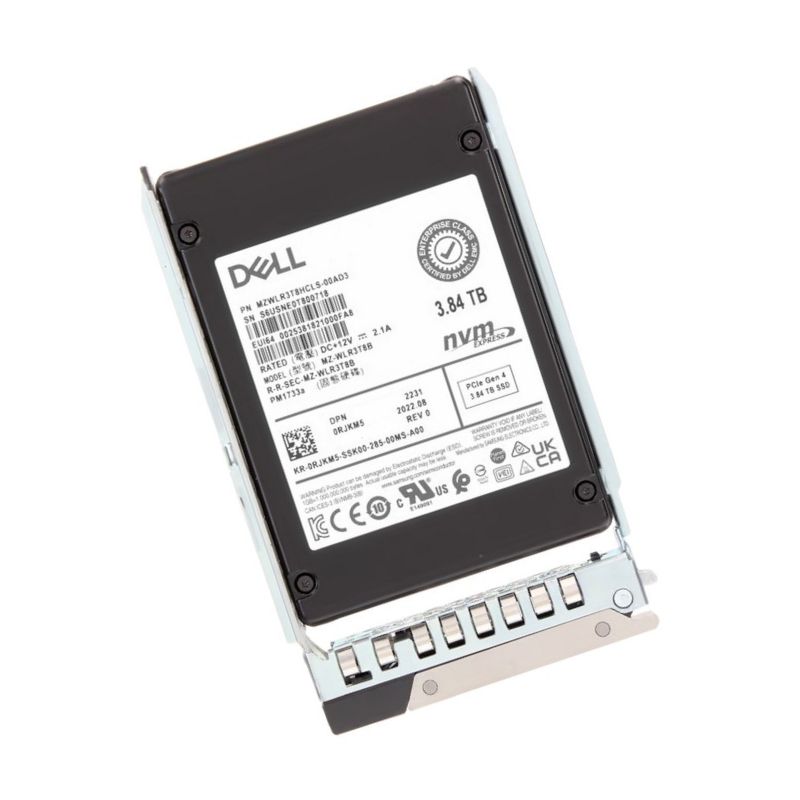
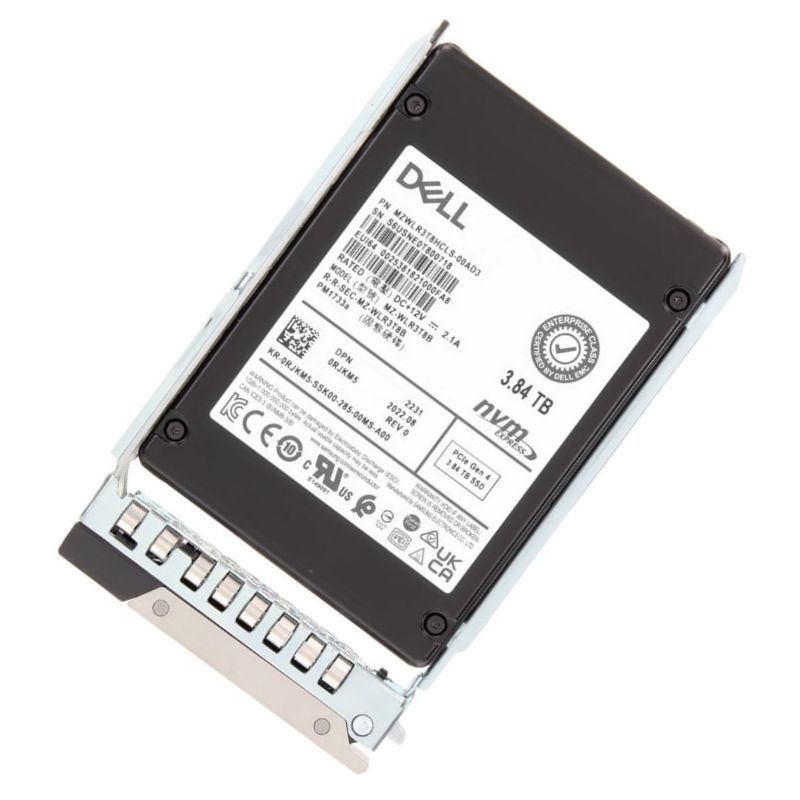
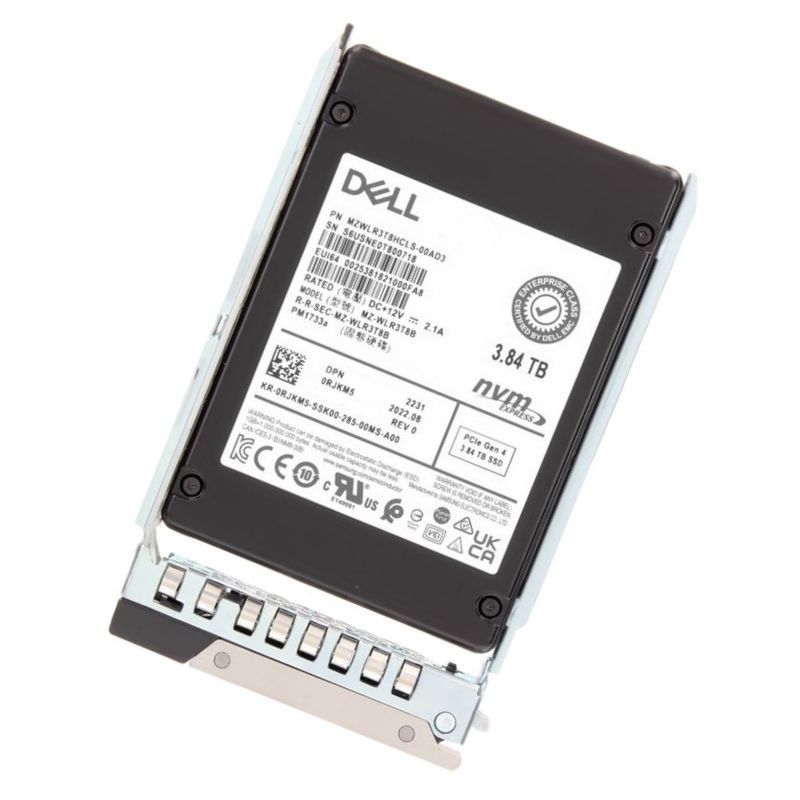
Dell 400-BOZL 3.84TB PCIe NVMe Gen5 E3.S Read Intensive SSD. New Sealed in Box (NIB) with 1 year Replacement Warranty
Overview of the 3.84TB Solid State Drive
The Dell 400-BOZL 3.84TB PCIe NVMe Gen5 E3.S Read Intensive Solid State Drive represents an advanced enterprise-grade storage solution engineered for modern data center environments, cloud infrastructures, virtualization platforms, and mission-critical workloads requiring exceptional read performance, reduced latency, and superior reliability. Designed to meet the evolving demands of next-generation server architecture, this high-capacity NVMe SSD leverages PCIe Gen5 technology and the E3.S form factor to deliver remarkable throughput improvements over legacy SATA, SAS, and earlier NVMe generations.
At the core of this enterprise SSD is its 3.84TB storage capacity, providing substantial room for high-speed data access, large-scale application datasets, virtual machine deployments, transactional databases, and AI-driven analytics workloads. Organizations managing high-frequency read operations can benefit significantly from this read intensive drive architecture, which is optimized specifically for workloads where data retrieval vastly exceeds write activity. Typical use cases include content delivery platforms, read-heavy database clusters, virtual desktop infrastructure (VDI), business intelligence environments, machine learning inference storage, and high-performance caching layers.
The PCIe NVMe Gen5 interface marks a substantial leap forward in bandwidth capability. Compared to PCIe Gen4, Gen5 doubles the available throughput, enabling significantly faster sequential read speeds and improved IOPS handling. This enhancement reduces bottlenecks across enterprise systems and allows storage subsystems to fully support modern multi-core CPUs and accelerated computing environments. Dell’s implementation of Gen5 NVMe technology ensures compatibility with current and emerging PowerEdge server platforms designed for advanced enterprise deployments.
The E3.S form factor is another defining characteristic of the Dell 400-BOZL SSD. Unlike traditional 2.5-inch SSDs, E3.S is part of the Enterprise and Datacenter Standard Form Factor (EDSFF) family, engineered to optimize thermal efficiency, power delivery, serviceability, and density. This compact yet high-performance design enables better airflow management in server chassis while allowing data centers to maximize storage scalability without compromising cooling efficiency. The E3.S standard also supports future-forward hardware modularity, making it ideal for organizations investing in long-term infrastructure modernization.
Enterprise reliability remains a critical component of the Dell 400-BOZL category. Read intensive SSDs are purpose-built with endurance specifications tailored for environments where data is frequently accessed but written less often. This specialization allows for optimized NAND utilization, cost efficiency, and sustained performance consistency. Advanced wear leveling, bad block management, power-loss protection, and integrated firmware safeguards help maintain data integrity and operational continuity under demanding workloads.
Security capabilities are equally important in enterprise storage deployments. Dell enterprise SSDs often support advanced encryption standards, secure erase functions, and firmware-level protection mechanisms that help organizations maintain compliance with internal governance policies and external regulatory frameworks. These features are essential for sectors such as finance, healthcare, government, and telecommunications where secure data lifecycle management is mandatory.
The Dell 400-BOZL category is especially relevant for organizations migrating from legacy storage arrays to software-defined infrastructure. NVMe over PCIe drastically reduces protocol overhead compared to SATA and SAS interfaces, resulting in lower latency and more responsive application behavior. Businesses seeking to optimize ERP systems, cloud-native applications, edge computing nodes, and real-time analytics pipelines can leverage this SSD to achieve measurable improvements in service delivery and operational efficiency.
Dell’s enterprise ecosystem integration adds another layer of value. Compatibility with Dell PowerEdge servers, storage management platforms, lifecycle controllers, and firmware monitoring tools simplifies deployment and ongoing administration. IT teams can monitor health metrics, update firmware, track endurance levels, and proactively identify anomalies through centralized management solutions, reducing administrative overhead and minimizing downtime risks.
Performance is the defining advantage of the Dell 400-BOZL 3.84TB PCIe NVMe Gen5 E3.S SSD, particularly for organizations managing latency-sensitive and data-intensive enterprise applications. PCIe Gen5 technology introduces unprecedented bandwidth improvements, allowing storage systems to process significantly larger volumes of transactional and analytical data with minimal delay.
Traditional SATA SSDs are limited by interface constraints, often capping performance well below the demands of modern enterprise software ecosystems. Even SAS SSDs, though enterprise capable, struggle to match the responsiveness and throughput of direct NVMe communication over PCIe. By utilizing NVMe as its foundational protocol, the Dell 400-BOZL bypasses many of the inefficiencies associated with older storage communication stacks, dramatically reducing command latency and accelerating parallel data handling.
Read intensive optimization means this SSD is specifically engineered for environments where data retrieval dominates operational patterns. Applications such as customer-facing portals, digital libraries, video streaming repositories, large-scale search indexing, and analytics dashboards benefit immensely from this architecture. High random read IOPS enable near-instant access to fragmented datasets, while exceptional sequential throughput supports rapid loading of large files and structured database segments.
In virtualization environments, storage responsiveness directly impacts user experience and infrastructure efficiency. Virtual desktop infrastructure deployments, for example, require simultaneous access to operating system images, application libraries, and user profiles. The Dell 400-BOZL’s low latency helps eliminate storage bottlenecks during login storms, software updates, and simultaneous user activity spikes.
Database acceleration is another key advantage. Read-heavy relational databases, NoSQL clusters, and distributed data services depend on fast query response times. This enterprise SSD supports improved indexing performance, faster cache retrieval, and reduced wait times during analytics processing. Business intelligence systems handling dashboards, trend analysis, and predictive modeling can benefit from shorter execution cycles and improved data freshness.
Cloud infrastructure providers and managed hosting environments also gain significant value from PCIe Gen5 NVMe adoption. Multi-tenant workloads demand predictable storage behavior even during peak utilization. The Dell 400-BOZL delivers stable throughput and quality-of-service consistency, reducing latency variability and supporting service-level agreement compliance.
Artificial intelligence and machine learning inference pipelines rely on rapid access to trained model artifacts and large feature datasets. While write-intensive model training may require different storage optimization, inference environments often involve repeated read access patterns, making this read intensive SSD particularly effective. Faster model loading and reduced data retrieval delays can improve inference responsiveness across recommendation engines, fraud detection systems, and intelligent automation platforms.
PCIe Gen5 also enhances future scalability. As server processors continue increasing in core counts and memory bandwidth, storage systems must evolve to avoid becoming performance bottlenecks. The Dell 400-BOZL ensures storage infrastructure can keep pace with computational advancements, supporting long-term architectural modernization.
The E3.S form factor used in the Dell 400-BOZL SSD reflects a major shift in enterprise storage engineering, prioritizing density, thermal efficiency, serviceability, and future scalability. As part of the EDSFF (Enterprise and Datacenter Standard Form Factor) family, E3.S addresses many of the limitations associated with traditional 2.5-inch U.2 drives and earlier server storage designs.
One of the most important advantages of E3.S is improved thermal management. High-performance NVMe Gen5 SSDs generate substantial heat due to increased controller activity and NAND throughput. The E3.S design enables better airflow distribution within server chassis, helping maintain optimal operating temperatures without excessive cooling overhead. Effective thermal control is essential for preserving SSD longevity, sustaining performance consistency, and minimizing throttling under heavy load.
Data center density is another critical benefit. Organizations increasingly seek to maximize compute and storage capacity within limited rack space. E3.S allows server manufacturers like Dell to support more storage devices per chassis while maintaining manageable power and cooling requirements. This translates into higher storage density, better resource utilization, and reduced physical infrastructure expansion costs.
Serviceability and operational simplicity also improve significantly with E3.S deployment. Hot-swappable design compatibility enables rapid replacement and maintenance without requiring extended downtime. IT administrators can upgrade storage, replace aging drives, and perform hardware diagnostics with minimal service interruption, which is especially important in mission-critical production environments.
Power efficiency remains a major concern for enterprise infrastructure teams. The E3.S standard supports enhanced power delivery mechanisms, allowing high-performance SSDs to operate more effectively while reducing inefficiencies associated with older connector designs. Improved energy utilization contributes to lower operational expenses and supports sustainability initiatives aimed at reducing data center power consumption.
The mechanical design of E3.S also supports broader ecosystem innovation. As hardware vendors adopt standardized EDSFF interfaces, organizations benefit from greater interoperability and easier upgrade paths. Future server generations are increasingly optimized for E3.S compatibility, making investments in drives like the Dell 400-BOZL strategically aligned with long-term infrastructure planning.
Workloads requiring edge deployment can also benefit from E3.S advantages. Compact data centers, edge compute nodes, and distributed processing environments often face thermal and spatial limitations. The efficient design of E3.S SSDs allows enterprise-grade performance in constrained physical environments without sacrificing reliability or manageability.
Dell’s integration of E3.S technology into enterprise server ecosystems ensures validated compatibility and optimized airflow engineering. Organizations deploying Dell PowerEdge systems can take advantage of firmware synchronization, enclosure-level diagnostics, and hardware lifecycle support designed specifically for advanced NVMe storage components.
Reliability is one of the most important criteria when selecting enterprise SSD solutions, and the Dell 400-BOZL 3.84TB PCIe NVMe Gen5 E3.S SSD is designed to deliver consistent performance and long-term operational resilience in demanding environments. Read intensive SSDs are optimized specifically for workloads where write cycles are relatively limited compared to frequent data retrieval, enabling efficient endurance allocation and cost-effective deployment.
NAND flash endurance is carefully managed through sophisticated wear-leveling algorithms that distribute write activity evenly across memory cells. This prevents premature degradation of specific NAND regions and helps maximize usable drive lifespan. Enterprise firmware continuously monitors usage patterns and reallocates resources dynamically to preserve storage integrity.
Bad block management is another critical feature. Over time, flash memory may develop unusable sectors, but enterprise SSD controllers proactively identify and isolate problematic blocks before they impact performance or data availability. Automatic remapping ensures transparent continuity without requiring manual intervention from administrators.
Power-loss protection mechanisms are essential in enterprise storage systems. Sudden power interruptions can lead to incomplete writes, metadata corruption, and application instability. Dell enterprise SSDs typically incorporate onboard capacitive technologies that preserve critical in-flight data and ensure proper transaction completion during unexpected shutdown events.
Data integrity safeguards such as end-to-end error correction, checksum validation, and ECC (Error Correction Code) algorithms help detect and correct data anomalies before they propagate into application layers. These protections are especially valuable for financial systems, healthcare records, and transactional databases where data corruption can have severe operational consequences.
Security functionality is increasingly central to enterprise storage strategy. The Dell 400-BOZL category may support hardware-based encryption and secure erase capabilities, enabling organizations to protect sensitive information both during active use and during decommissioning or repurposing. Compliance-driven industries can use these features to align with internal security mandates and external regulatory requirements.
Firmware stability and validation are equally important. Dell’s enterprise qualification processes help ensure compatibility across supported server platforms and software ecosystems. Certified firmware reduces unexpected behavior, improves interoperability, and allows administrators to deploy updates confidently through centralized management tools.
Predictive health monitoring further enhances operational reliability. SMART telemetry, endurance metrics, temperature tracking, and performance diagnostics allow proactive maintenance planning. IT teams can identify wear trends, estimate replacement timelines, and avoid unplanned failures that could disrupt business continuity.
For organizations operating 24/7 services, downtime avoidance is a strategic priority. The reliability-focused architecture of the Dell 400-BOZL SSD supports continuous availability, helping enterprises maintain customer satisfaction, application responsiveness, and revenue-generating service continuity.
The Dell 400-BOZL 3.84TB PCIe NVMe Gen5 E3.S Read Intensive SSD is suitable for a broad range of enterprise applications where high-speed data access and predictable storage responsiveness are essential. Its combination of advanced NVMe performance, optimized read endurance, and enterprise reliability makes it particularly valuable in modern digital infrastructure.
Virtualization platforms represent one of the most common deployment scenarios. Enterprises running VMware, Hyper-V, or containerized orchestration environments require storage capable of supporting simultaneous access from multiple virtual workloads. Fast read performance helps accelerate boot operations, application loading, and dynamic resource scaling.
Database environments are another ideal use case. Customer relationship management systems, analytics platforms, e-commerce databases, and content repositories often involve substantially more read operations than writes. The Dell 400-BOZL improves query performance, reduces latency for user requests, and enhances application responsiveness across data-driven platforms.
Content delivery networks and media streaming systems benefit from rapid access to large libraries of static assets. Whether serving images, software packages, educational media, or entertainment content, read optimized SSD performance helps ensure low-latency content retrieval and improved end-user experiences.
Artificial intelligence inference environments rely on rapid access to trained models and associated datasets. Recommendation systems, intelligent assistants, fraud detection engines, and predictive analytics platforms often perform repeated read operations, making this SSD an effective storage layer for high-speed inference tasks.
Edge computing deployments also benefit from enterprise NVMe SSD adoption. Retail analytics systems, industrial monitoring platforms, telecommunications edge nodes, and IoT gateways require compact, reliable, and high-performance storage solutions capable of operating in constrained environments.
Cloud hosting providers and managed service organizations can deploy the Dell 400-BOZL to improve multi-tenant workload consistency. Stable latency and predictable throughput support quality-of-service objectives while enabling efficient infrastructure consolidation.
Backup acceleration and caching layers are additional strategic applications. Frequently accessed backup metadata, disaster recovery indexes, and high-demand cached datasets can be stored on read intensive NVMe drives to improve retrieval speed and shorten recovery timelines.
Organizations planning long-term infrastructure modernization can use the Dell 400-BOZL as a foundation for scalable next-generation storage architecture. Its PCIe Gen5 performance, E3.S compatibility, and enterprise-focused reliability position it as a strategic component for future-ready data centers.


 Contact Us
 Information
 Catalog
 Solid State Drives (SSD)
 Network Switches
 Hard Disk Drives
 HBA & Controllers
 PC & Servers
 PC & Server Memory
 CPU & Processors
 Network Routers
 Power Supplies
 Tape Drives & Libraries
 Network Devices
 Computer & Network Cables