(7% discount is applied at checkout)
Cart is empty
Your go-to destination for cutting-edge server products
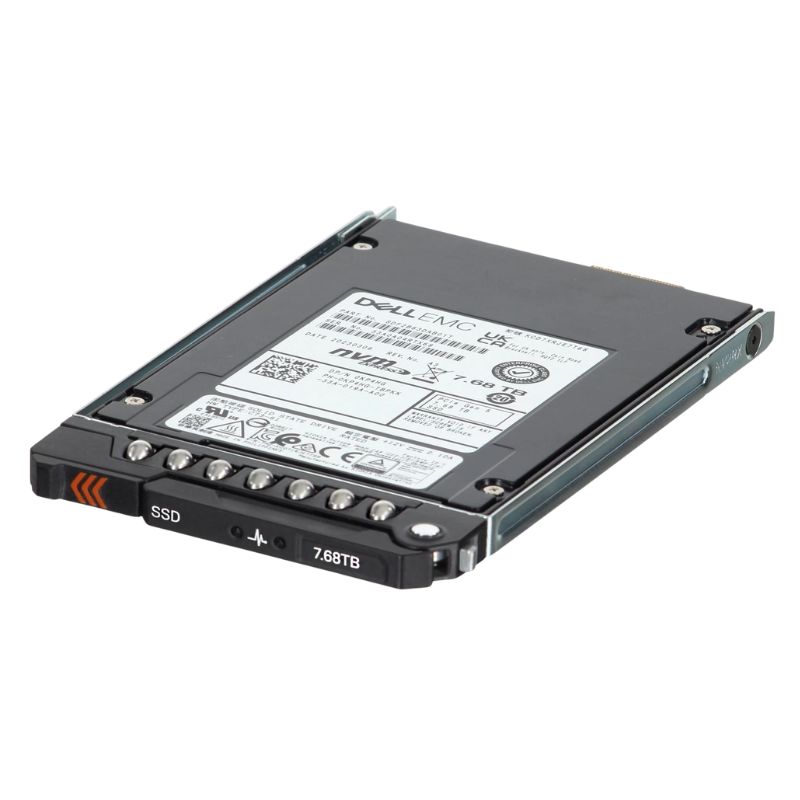


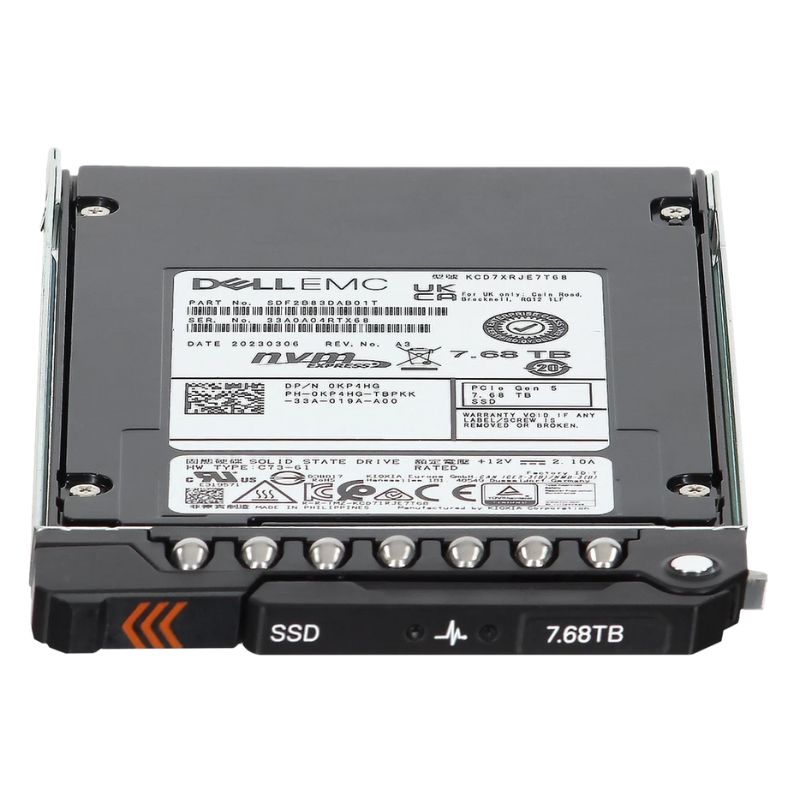
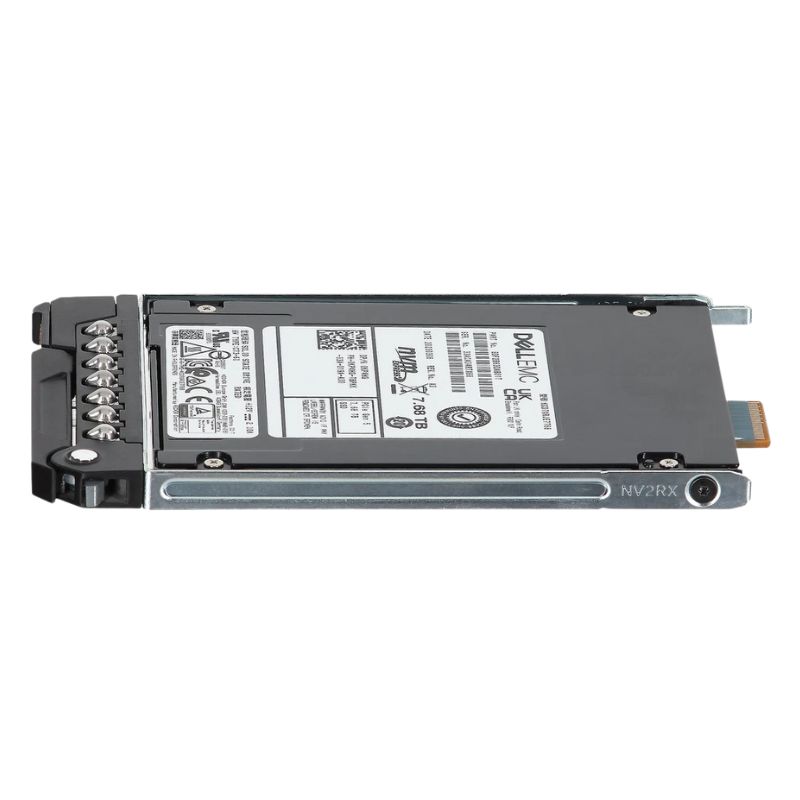
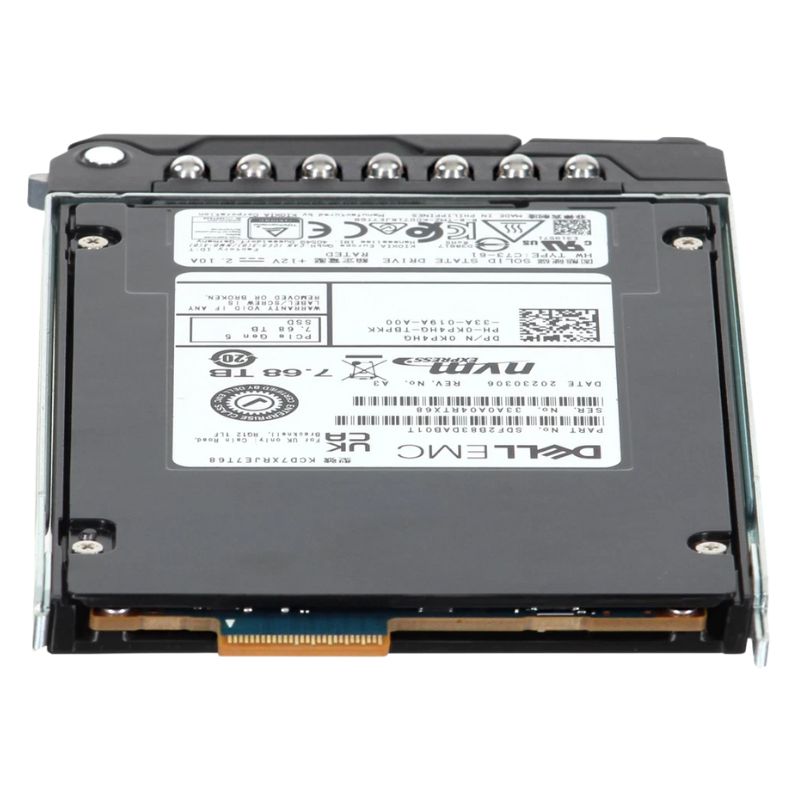
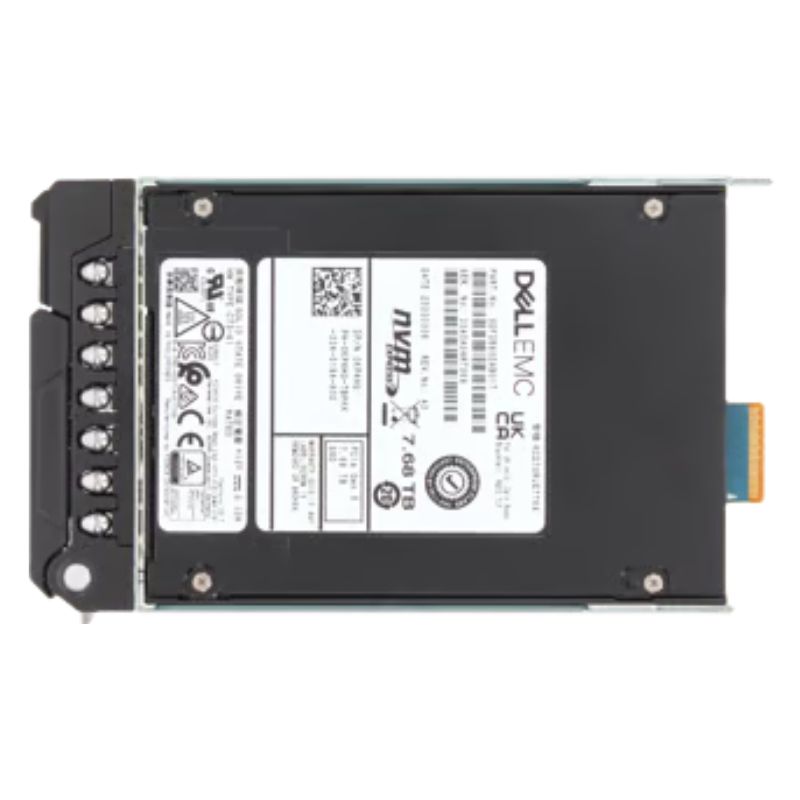
Dell 400-BOZM 7.68TB PCI-E Gen5 NVMe E3.S 2.5Inch Read Intensive Solid State Drive. Excellent Refurbished with 1 year Replacement Warranty
The Dell 400-BOZM PCIe Gen5 NVMe E3.S SSD offers exceptional read-intensive performance, advanced data safeguarding, and enterprise-class durability. Designed for demanding workloads, this 7.68TB solid-state solution ensures faster response times and reliable throughput in modern data centers.
This Dell NVMe SSD is engineered to maintain consistently high throughput and extremely low latency under read-heavy server loads.
The Dell 400-BOZM integrates seamlessly with a wide range of Dell PowerEdge systems, ensuring optimal performance and firmware compatibility.
The Dell 400-BOZM 7.68TB PCI-E Gen5 NVMe E3.S 2.5-inch Read Intensive Solid State Drive represents a modern enterprise storage category optimized for high-throughput, low-latency read-centric workloads. This category focuses on NVMe drives built to the E3.S form factor and PCI Express Gen5 interface, delivering a significant generational leap in bandwidth and I/O operations per second compared to PCIe Gen4 solutions. Designed primarily for data center, cloud and hyperscale environments, these read intensive SSDs balance raw sequential bandwidth with sustained random read performance, making them well suited for content delivery, large-scale database queries, analytic reporting, virtualization read caching, and high-density storage tiers that prioritize read longevity and predictable performance.
Drives in the Dell 400-BOZM 7.68TB category are defined by several interlocking technical choices: a 7.68 terabyte capacity point aimed at a mainstream- to high-density slot occupancy, PCI-Express Gen5 connectivity which doubles the per-lane throughput over Gen4, the NVMe protocol for minimized controller overhead and direct command parallelism, and the E3.S 2.5-inch envelope that enables higher power budgets and improved thermal headroom in modern servers and storage arrays. These attributes coalesce to provide data center architects with a storage device that supports sustained read operations at scale, predictable tail latencies under mixed access patterns, and improved drive consolidation, which reduces rack space and power per terabyte for large deployments.
The E3.S form factor emerges as a favored choice for enterprise-grade NVMe SSDs. Unlike older 2.5-inch U.2 or M.2 formats, E3.S provides a purpose-built balance of density, serviceability, and cooling efficiency. E3.S enables vendors like Dell to deliver higher-capacity single-sided modules with better airflow characteristics and thermal dissipation. For system integrators and hyperscalers, E3.S simplifies tray-level serviceability and allows chassis vendors to design optimized front-to-back cooling paths. The 2.5-inch E3.S module also eases migration in rack and blade systems that expect standardized drive geometries while enabling next-generation power delivery and signal integrity that PCIe Gen5 demands.
The performance profile of drives in this category centers on high sequential read bandwidth and elevated random read IOPS, with particular attention paid to maintaining low 99th-percentile latencies under heavy queue depths. With PCIe Gen5 lanes delivering substantially increased raw throughput, these NVMe drives can saturate downstream controllers and host interfaces in real-world workloads such as large object retrieval, media streaming, and read-heavy analytical queries. Read intensive tuning often includes firmware optimizations that prioritize read caches, read-centric wear-leveling heuristics, and reduced background write amplification processes during sustained reads. As a result, users can expect strong sustained read throughput with consistent latency behavior even during prolonged high concurrency access patterns, which is crucial for user-facing applications and real-time analytics.
A 7.68TB capacity point is chosen to strike a balance between individual drive density and the economics of scale for enterprise arrays. For data centers focused on maximizing usable capacity per chassis, 7.68TB modules allow administrators to reduce the number of drives required for a given raw capacity target, simplifying rebuild times and lowering cumulative power draw. At the same time, larger capacities per module reduce the relative overhead of parity and metadata in many RAID or erasure-coded configurations, improving effective capacity utilization. System architects should weigh the advantages of fewer, higher-capacity drives against recovery time objectives and the physical distribution of data across multiple failure domains.
Read-intensive SSDs are engineered with endurance characteristics tailored to workloads that perform substantially more reads than writes. Manufacturers calibrate NAND choice, over-provisioning ratios, and firmware routines to reduce write amplification and optimize the long-term viability of the drive under read-dominant use. The Dell 400-BOZM category therefore fits workloads such as content delivery networks, media streaming, large-scale search indices, cold-tier cache layers, machine learning inference repositories where models are read frequently but updated infrequently, and certain database workloads where reads outnumber writes by large margins. Understanding the expected read/write mix and peak write bursts remains critical; while read-intensive drives offer excellent read stability, they can exhibit shorter write endurance compared to mixed-use or write-intensive enterprise drives if subjected to frequent large-volume writes.
Firmware plays an outsized role in delivering the predictable QoS enterprise environments demand. Drives in this category typically include advanced garbage collection scheduling, prioritization of foreground read traffic over background tasks, and telemetry features that report health and performance metrics to host management systems. Firmware-level QoS controls can dynamically tune response to multi-tenant workloads, preventing background maintenance from interfering with critical read paths. Additionally, these drives often implement host-managed heat throttling and power management states to ensure stable throughput under thermal constraints; integrated SMART telemetry and NVMe namespace reporting allows centralized monitoring and predictive maintenance within enterprise orchestration frameworks.
Integration of Dell 400-BOZM E3.S NVMe drives into existing infrastructure requires attention to server motherboard support for PCIe Gen5, BIOS/UEFI NVMe compatibility, and physical E3.S drive bay accommodation. Many modern servers from major OEMs include PCIe Gen5-capable CPU lanes or dedicated Gen5 switch fabrics; however, legacy platforms will fall back to Gen4 or Gen3 signaling, limiting bandwidth accordingly. Administrators should ensure firmware versions on their server platforms and storage controllers support E3.S device enumeration, NVMe hot-swap behavior, and proper power management. Compatibility matrices provided by vendors like Dell detail validated server models, backplane compatibility, and recommended BIOS settings to unlock full performance while preserving device reliability.
The Dell 400-BOZM drives are particularly effective in software-defined storage (SDS) environments where NVMe pooling, tiering, and caching policies rely on uniform device behavior. When used as read-tier accelerators or metadata stores, consistent read latencies across drives improve cluster-level performance and reduce tail latency amplification. In hyperconverged infrastructures, these SSDs can act as the primary read cache or tier-0 storage layer that front-ends slower spinning disk arrays or object stores. Integration with popular SDS platforms requires ensuring that scheduler settings, O_DIRECT paths, and NVMe multipathing are tuned to exploit Gen5 bandwidth without introducing contention at the host level.
PCIe Gen5 and E3.S devices operate with higher potential power envelopes than their predecessors. The thermal design of the drive and the host chassis must accommodate this, especially under sustained high-throughput operations. Proper airflow, airflow directionality, and heatsink utilization are essential to prevent thermal throttling which can degrade sustained throughput and increase tail latencies. Many E3.S modules incorporate passive or active thermal management strategies including integrated heat spreaders, thermal pads interfacing with chassis ducts, and firmware-driven throttling thresholds. Data center planners should evaluate rack airflow profiles and ensure front-to-back cooling strategies align with the thermal profile of Gen5 NVMe deployments.
While power consumption per drive may be higher relative to Gen4 devices when fully active, the power per terabyte metric often improves due to greater capacity in a single module. Efficiency analyses should consider both idle and active power states, as well as drive behavior under mixed workload scenarios. Drives that support deeper NVMe power states and fine-grained host power management allow data centers to achieve dynamic energy savings during low-activity periods. The economic benefit of fewer drives for the same capacity can be persuasive in TCO calculations, as reduced drive count impacts not only power but also cooling and maintenance overhead.
Enterprise read-intensive SSDs typically include a complement of reliability features such as end-to-end data path protection, power-loss protection capacitors or firmware-managed atomic write sequences, and advanced ECC algorithms tuned for NAND characteristics. These drives may also support secure erase and cryptographic features that integrate with key management services for regulatory compliance. For deployments requiring high availability, pairing Dell 400-BOZM drives with software or hardware RAID solutions, erasure coding, and distributed replication ensures data resilience while minimizing rebuild times. Crucially, the combination of predictable read performance and robust telemetry enables effective failure prediction and minimization of unplanned downtime.
SMART attributes on these NVMe devices often extend beyond basic counts to include temperature trends, program/erase cycles, media errors, and internal reserved capacity usage. Telemetry pipelines can export these metrics to central monitoring dashboards and trigger automated maintenance workflows. Predictive maintenance practices that fuse SMART telemetry with workload telemetry allow teams to address potential failures proactively. Drives that support sector-level reporting and namespace health visibility improve the precision of such interventions, reducing false positives and preventing unnecessary drive replacements.
Typical deployment scenarios for the Dell 400-BOZM 7.68TB NVMe category include cache layers for object storage, read-optimized tiers for distributed databases, front-line media streaming caches, machine learning model serving repositories, and large-scale search and indexing platforms. In a content distribution scenario, these SSDs supply consistent delivery performance for frequently accessed assets; in analytics clusters, they speed up query response times and reduce the need for compute nodes to wait on disk I/O. For virtualization platforms, deploying these drives as read caches for virtual disk images can dramatically reduce VM boot storms and improve VM density by lowering average I/O wait times.
Imagine a hyperscale content provider that serves billions of read requests per day. Replacing an older Gen4 cache tier with Gen5 E3.S drives at 7.68TB per slot can reduce the number of cache nodes required, lower inter-node traffic due to improved local cache hit rates, and reduce overall rack-level power consumption. Firmware optimizations that avoid unnecessary background writes and prioritize read QoS help preserve endurance while maintaining high availability. The net effect is a reduced number of required nodes for the same service level and an improved cost profile driven by reduced hardware footprint and lower management complexity.
Compared to mixed-use or write-intensive enterprise SSDs, read-intensive models like the Dell 400-BOZM favor read path optimization at the expense of some write endurance. Compared with SATA or SAS SSDs, NVMe Gen5 drives deliver much greater parallelism and far lower protocol overhead. Versus PCIe Gen4 NVMe modules, Gen5 devices bring higher aggregate bandwidth and future-proofing for bandwidth-hungry applications. When evaluating alternatives, administrators should prioritize the expected read/write ratio, latency requirements, rack density goals, and budget. In many hybrid architectures, mixing read-intensive Gen5 NVMe drives for hot data and slower tiers for cold data provides an ideal blend of performance and cost efficiency.
Migrating to Gen5 NVMe E3.S drives requires coordination across firmware stacks, driver versions, and orchestration tooling. Operators should validate that host controllers support NVMe firmware updates and that monitoring tools can interpret extended SMART and vendor telemetry fields. A phased migration plan, starting with less critical clusters or read-heavy caches, helps validate thermals and QoS under operational loads. In large fleets, automation scripts that perform health checks, firmware updates, and staged rollouts reduce risk and accelerate adoption while preserving service continuity.
Total cost of ownership for deploying Dell 400-BOZM 7.68TB Gen5 NVMe drives should be evaluated across acquisition cost, power and cooling, management overhead, expected lifespan under the targeted workload, and the potential cost savings from consolidation of drive count and chassis. Sizing strategies must consider usable capacity after RAID or erasure coding overhead, realistic over-provisioning needs for performance and endurance, and headroom for future growth. For many enterprises, purchasing higher-capacity read-intensive drives reduces drive-related service events and simplifies procurement cycles, though initial BOM costs may be higher per module than lower-capacity alternatives.
Enterprise drives typically come with vendor-backed warranties that cover media failure and firmware faults for a specified period or total bytes written (TBW) threshold. For read-intensive models, warranty terms often emphasize read/write ratios and define conditions for replacement. Buyers should review Dell’s warranty and support terms for the 400-BOZM family, confirm on-site or depot replacement options, and verify service level agreements for urgent replacements. Extended support packages and firmware maintenance contracts can be crucial for production deployments where uptime and predictable performance are contractual requirements.
Security capabilities for enterprise SSDs can include hardware-based encryption, secure erase, and integration with KMIP-compliant key management solutions. For regulated industries, secure deletion and cryptographic features reduce exposure when disks are decommissioned or repurposed. Drives in the Dell 400-BOZM category frequently support TCG Opal or NVMe-native security primitives, enabling encryption of data at rest without impacting performance. Compliance-driven deployments should verify certification status and ensure that key lifecycle management is integrated into operational procedures.
Operational best practices for maximizing the value of these drives include regular firmware updates following vendor guidance, careful monitoring of SMART attributes and temperature trends, and workload shaping to avoid extended write bursts that would stress read-optimized media. Periodic capacity planning exercises should track usable vs raw capacity and factor in expansion needs. Where possible, configuring host-level QoS controls and prioritizing latency-sensitive reads reduces the likelihood of disruptive background tasks affecting critical application paths. Finally, documenting recovery procedures and performing routine failure drills ensures teams can handle drive replacements and rebuilds swiftly while preserving SLAs.


 Contact Us
 Information
 Catalog
 Solid State Drives (SSD)
 Network Switches
 Hard Disk Drives
 HBA & Controllers
 PC & Servers
 PC & Server Memory
 CPU & Processors
 Network Routers
 Power Supplies
 Tape Drives & Libraries
 Network Devices
 Computer & Network Cables