(7% discount is applied at checkout)
Cart is empty
Your go-to destination for cutting-edge server products
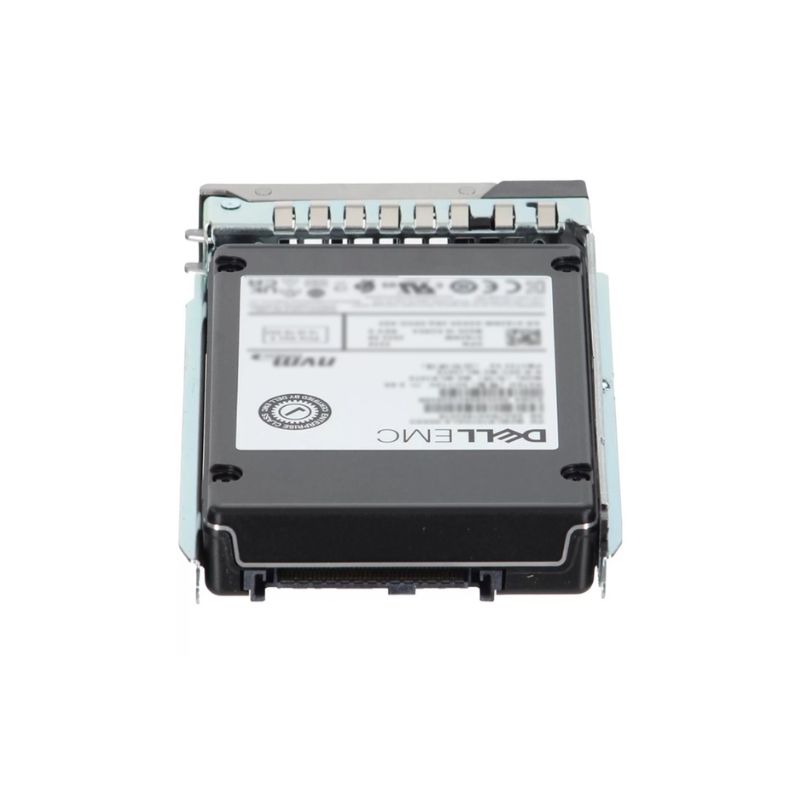


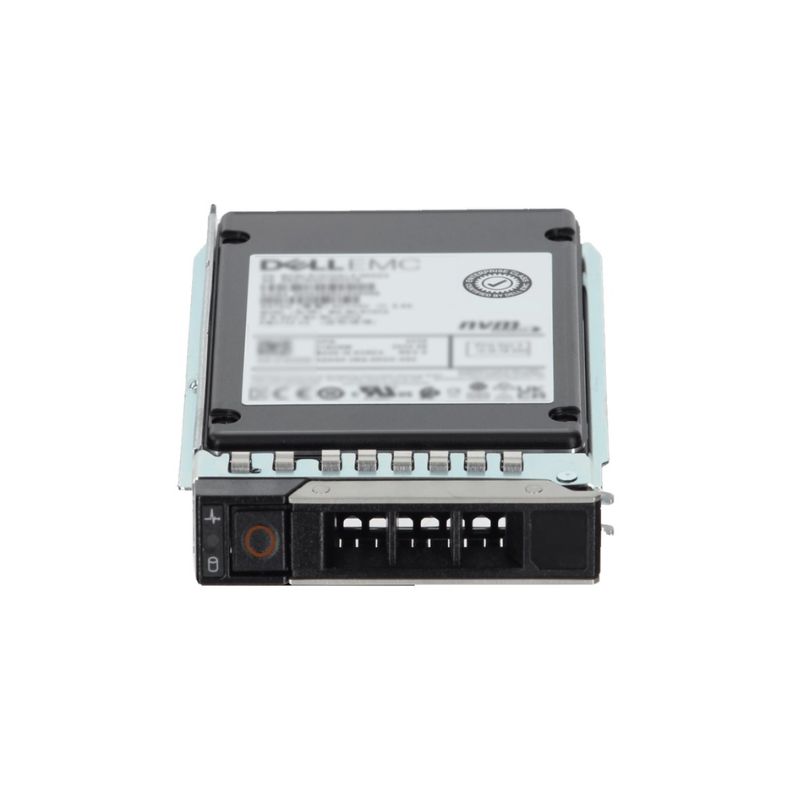
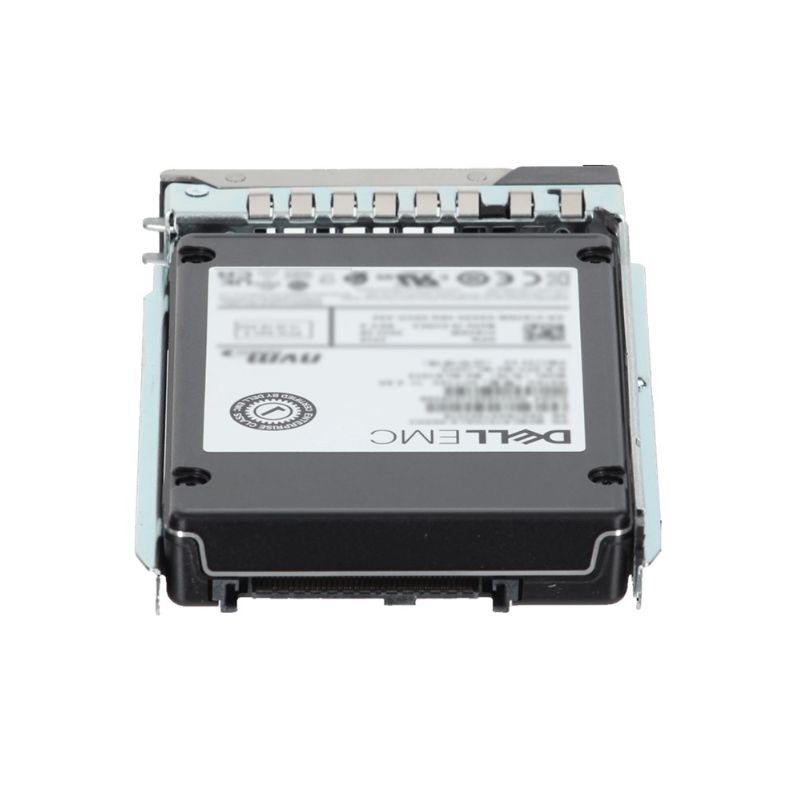
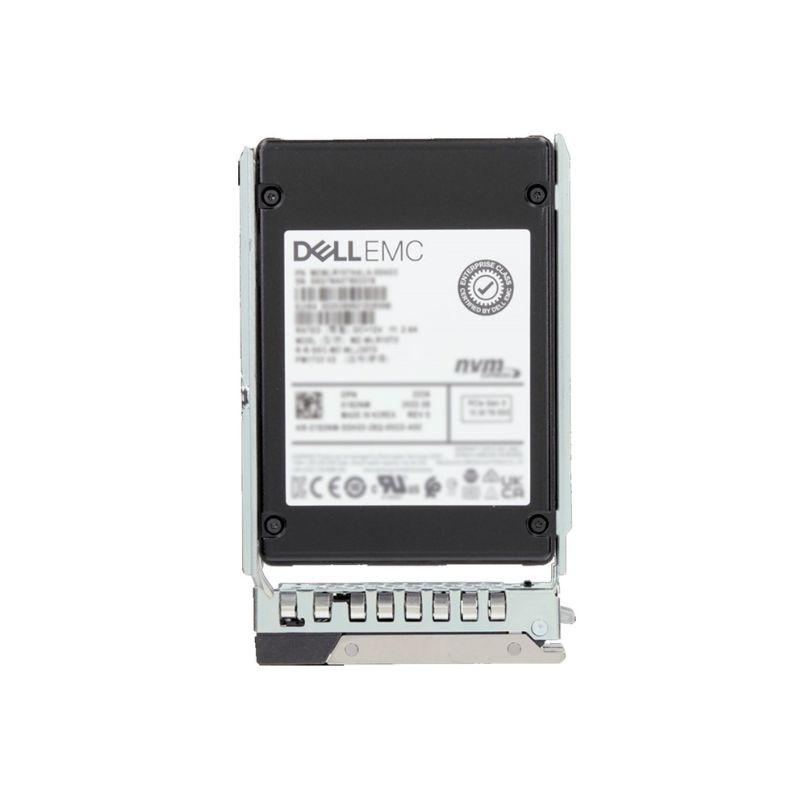
Dell 400-BPBW 1.92TB Pcie Nvme 2.5-inch Small Form Factor (SFF) Read Intensive Solid State Drive For Server. New Sealed in Box (NIB) with 1 year replacement warranty
The DELL 1.92TB PCIe Gen 4.0 x4 NVMe U.2 SFF 2.5-inch SSD represents a robust storage solution engineered for DELL PowerEdge 14G, 15G, 16G, and 17G servers. Designed for enterprise-grade performance, this compact 15mm drive delivers impressive read-intensive capability, ensuring faster access to mission-critical data and smooth operation under heavy workloads.
Engineered for data centers and enterprise-grade workloads, the DELL 1.92TB NVMe SSD delivers consistent and efficient performance, ensuring optimal read/write speeds for demanding applications.
Tailored for read-focused operations, this SSD accelerates data retrieval, improving responsiveness in virtualized environments, database management, and analytical processing systems.
DELL integrates advanced data protection mechanisms and monitoring systems to ensure reliability, data integrity, and security at all operational levels.
The solid-state architecture minimizes moving components, reducing failure rates and enhancing reliability in high-temperature environments. Continuous temperature tracking ensures sustainable operation and reduces thermal stress.
This DELL NVMe SSD is compatible with a wide range of PowerEdge server models, supporting multiple generations for flexible deployment in both rack and tower configurations.
Combining PCIe Gen 4.0 throughput with NVMe architecture, this drive offers faster communication between the CPU and storage subsystem, reducing latency and boosting data throughput. Its TLC 3D NAND technology ensures superior endurance and storage density, ideal for virtualization, data analytics, and cloud workloads.
The Dell 400-BPBW 1.92TB PCIe Gen 4.0 x4 NVMe U.2 solid-state drive is purpose-built for high-performance, read-intensive server workloads. Packaged in a 2.5-inch small form factor (SFF) with a 15mm z-height and U.2 connector, this SSD leverages the PCIe Gen4 x4 NVMe interface to deliver significantly higher sequential and random read throughput compared to older SATA and PCIe Gen3 devices. Designed for enterprise environments where read IOPS, low latency and consistent performance are paramount, this model uses triple-level cell (TLC) NAND optimized for read-heavy usage patterns and includes the firmware and thermal features to operate reliably in dense server chassis. The 1.92TB capacity positions the drive centrally in mainstream enterprise tiers—balancing cost-per-GB, usable capacity after over-provisioning, and endurance sufficient for most read-dominant applications.
The drive uses the PCIe Gen4.0 x4 NVMe protocol over a U.2 (SFF-8639) connector, enabling native NVMe performance in servers that accept U.2 bays. The 2.5-inch footprint and 15mm height make it compatible with modern rack and tower servers that provide the 15mm U.2 drive bays or with caddies that support U.2-to-2.5" interfaces. PCIe Gen4 doubles the per-lane bandwidth compared to Gen3, meaning Gen4 x4 drives can achieve substantially higher sequential throughput and improved queue-depth performance when paired with Gen4-capable server platforms.
With 1.92TB of raw capacity, the 400-BPBW delivers a usable capacity that depends on firmware reserved regions and over-provisioning levels. The drive uses TLC NAND cells which strike a balance between storage density and longevity — tuned here for read-intensive endurance profiles. TLC provides cost advantages over MLC while still supporting high read reliability; firmware-level error correction and wear-leveling algorithms help maintain data integrity over the product lifecycle.
This model is engineered for read-intensive workloads. Typical performance highlights include very high sequential read speeds (leveraging Gen4 bandwidth), strong random read IOPS at low latency, and competitive write performance appropriate for occasional write bursts and background maintenance tasks. Because it is a read-optimized drive, sustained write throughput and drive write endurance will be lower than mixed-use or write-intensive models, but still sufficient for logging, content-delivery, large-scale read caching, VM boot images, and analytic query workloads where reads dominate.
In multi-tier storage architectures, the Dell 400-BPBW is ideally placed as a high-speed read cache or hot-tier device. When paired with slower high-capacity HDDs or archive tiers, this U.2 NVMe SSD reduces read latency for frequently accessed datasets, accelerating database queries, web-serving, and virtualization boot storms. Its balance of capacity and read throughput makes it an efficient choice for caching many small hot files or for storing frequently-read VM images.
CDN edge nodes and media streaming servers benefit from the drive's fast sequential reads and high concurrent IOPS. Streaming large media files or delivering static web assets to many users simultaneously requires consistent read performance under concurrent access patterns — a scenario where read-optimized SSDs shine.
VDI deployments often produce heavy read bursts, particularly when many desktops boot or update at once. Deploying Dell 400-BPBW drives in host servers helps reduce boot times and improves overall desktop responsiveness. Their 2.5" form factor and enterprise-grade thermal management make them suitable for dense blade or rack servers commonly used in VDI farms.
Analytics engines and read-heavy OLAP databases that execute large-scale queries or index lookups can be accelerated by the low-latency, high-throughput characteristics of NVMe Gen4 drives. When the working set fits (or partially fits) on SSD capacity, query response times improve dramatically relative to HDD-based tiers.
Although specific endurance metrics vary by firmware revision and vendor reporting, read-intensive SSDs like the Dell 400-BPBW typically offer endurance ratings expressed in drive writes per day (DWPD) or total bytes written (TBW). For procurement and operational planning, compare the DWPD across candidate models to ensure the drive meets lifecycle expectations for your workload. Remember that read-optimized models reduce BOM cost by trading some write endurance for capacity and are suitable where writes are comparatively limited.
Enterprise SSDs usually incorporate power-loss protection to prevent data corruption during unexpected power events. While implementations differ, look for hardware capacitors or firmware-based protection that flushes volatile buffers to NAND and ensures metadata consistency. This drive family is designed with enterprise-grade data path protection measures to safeguard user data and drive metadata under real-world power conditions.
Modern SSD controllers pair advanced error-correction code (ECC) algorithms with bad-block management and scrubbing routines to maintain data integrity as NAND cells age. The Dell 400-BPBW leverages these technologies to sustain low uncorrectable bit error rates (UBER) and to extend usable life — essential for long-term data center reliability.
U.2 NVMe drives operating in dense server chassis must manage heat effectively. The controller and NAND generate thermal load during sustained IO; firmware implements thermal throttling and dynamic performance scaling to prevent overheating and to ensure drive longevity. Many chassis and backplanes provide airflow profiles and physical heat sinks or drive caddies tuned to dissipate heat from 15mm drives. When deploying multiple drives in a single server, confirm that the server's airflow and ambient temperature limits align with the SSD vendor's operating temperature specifications.
PCIe Gen4 NVMe devices may consume more power during high throughput activity than Gen3 or SATA SSDs, but the improved performance-per-watt of modern controllers helps offset energy costs by completing workloads faster. Consider idle power, active power during random and sequential operations, and any power-optimization features offered by the firmware when estimating operating costs at scale.
Typical enterprise SSDs comply with industry environmental standards such as operating temperature ranges, shock and vibration tolerances, and regulatory certifications (CE, FCC, RoHS). Check vendor datasheets for exact operating ranges and certification lists — these are critical when installing drives in telco, edge, or industrial environments.
While the U.2 form factor and NVMe protocol are standardized, real-world compatibility depends on server firmware (BIOS/UEFI), HBA/RAID controller support, and driver availability. Many enterprise servers offer native NVMe U.2 backplanes or adapters; others require an NVMe HBA or a U.2 to M.2/PCIe adapter. When integrating into production fleets, validate compatibility matrices for the Dell 400-BPBW with your server vendor and ensure BIOS/firmware revisions support NVMe booting, NVMe namespaces, and any vendor-specific features you plan to use.
NVMe drives are frequently used in conjunction with software-defined storage, NVMe-oF (NVMe over Fabrics), or host-based RAID solutions that leverage the raw speed of NVMe devices. Hardware RAID controllers that present NVMe drives as logical devices are less common; instead, PV-based solutions (like software RAID or distributed storage) and HBAs that expose raw NVMe devices to the OS are the norm. Confirm your storage stack's best practices for RAID levels, rebuild strategies, and monitoring when deploying these drives.
When benchmarking the Dell 400-BPBW, use workload profiles that mirror your production use cases. For read-intensive workloads, run sustained random-read and mixed-read tests at representative queue depths and concurrency levels. Synthetic tools such as FIO (Flexible I/O Tester) configured to match block sizes, queue depths, and read/write ratios can reveal both peak and steady-state performance. Include warm-up phases to allow the SSD's firmware to reach steady-state and account for background garbage collection and thermal throttling in long-duration tests.
Peak sequential throughput is important for large-file streaming, whereas IOPS and latency at small block sizes (4K or 8K) often determine responsiveness for transactional workloads. For database and virtualization use, prioritize 4K random read IOPS at low single-digit millisecond or sub-millisecond latencies. Be aware that advertised peak numbers assume ideal conditions; steady-state performance under mixed workloads is the more realistic indicator of user experience.
Compared to SATA SSDs, PCIe Gen4 NVMe drives deliver far higher throughput and lower latency. SATA interfaces are bandwidth-limited and often unsuitable for high-concurrency server workloads. The Dell 400-BPBW's Gen4 performance advantage makes it the preferred choice where IO density and latency are critical.
Gen4 NVMe doubles theoretical per-lane bandwidth versus Gen3. When paired with Gen4-capable platforms, the 400-BPBW can deliver higher sequential read/write throughput and improved performance at higher queue depths than Gen3 counterparts. In platforms limited to Gen3, the drive will fall back to Gen3 speeds, so verify platform compatibility to realize Gen4 benefits.
Write-intensive SSDs allocate more NAND and controller features to bolster write endurance, typically costing more per GB. If your workload includes heavy writes, consider mixed-use or write-optimized models instead. For predominantly read-driven workloads, read-intensive TLC models are cost-effective while still delivering excellent read performance.
Maintain a rolling firmware update schedule, perform regular health checks, and monitor thermal behavior closely in dense installations. Use over-provisioning or controller-level configuration options to tune the drive for sustained performance if your workload deviates from strictly read-intensive patterns.


 Contact Us
 Information
 Catalog
 Solid State Drives (SSD)
 Network Switches
 Hard Disk Drives
 HBA & Controllers
 PC & Servers
 PC & Server Memory
 CPU & Processors
 Network Routers
 Power Supplies
 Tape Drives & Libraries
 Network Devices
 Computer & Network Cables