(7% discount is applied at checkout)
Cart is empty
Your go-to destination for cutting-edge server products
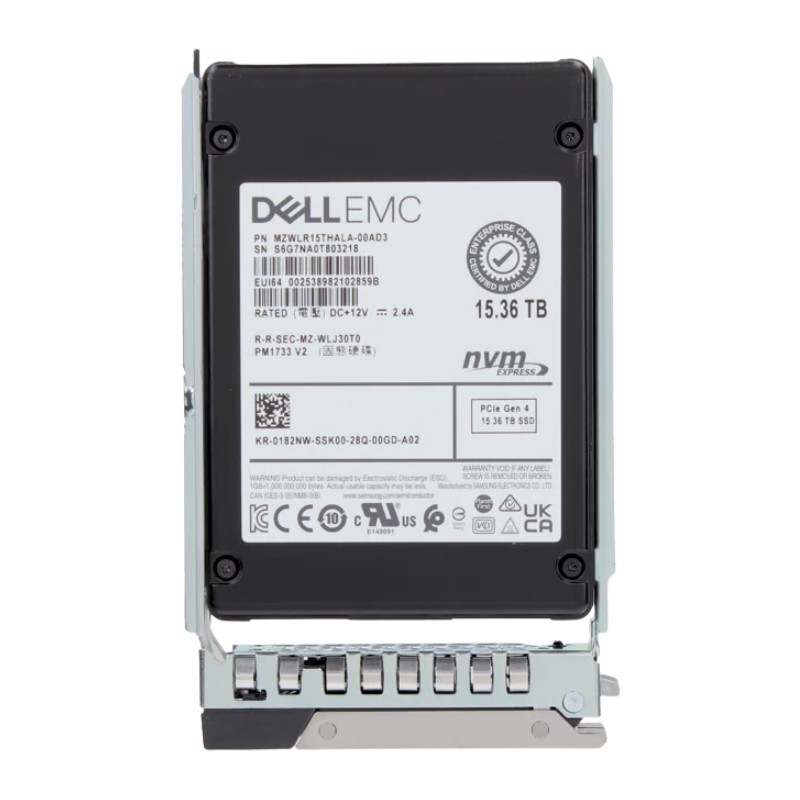


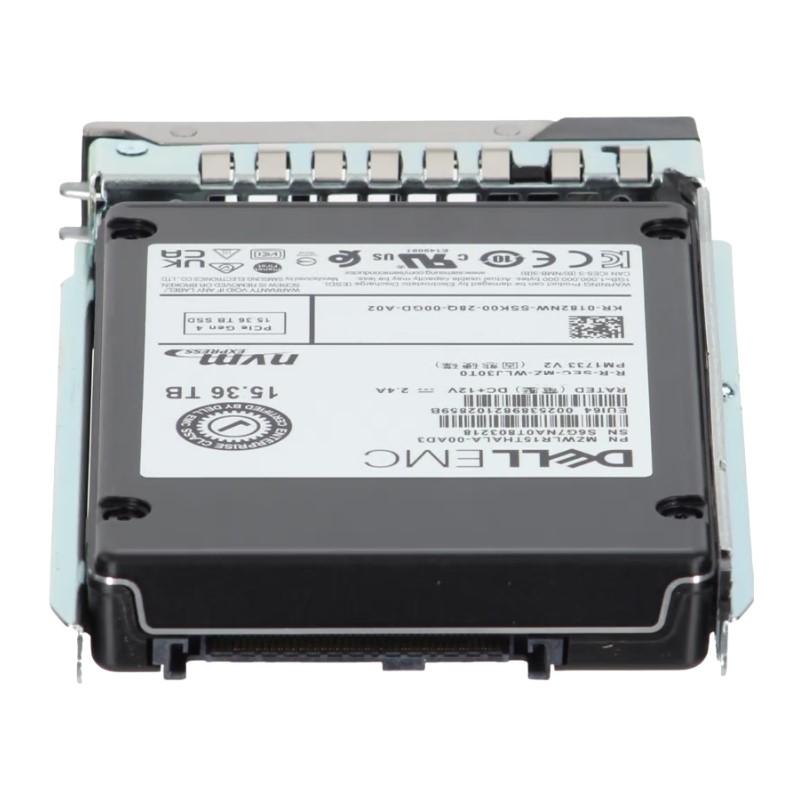
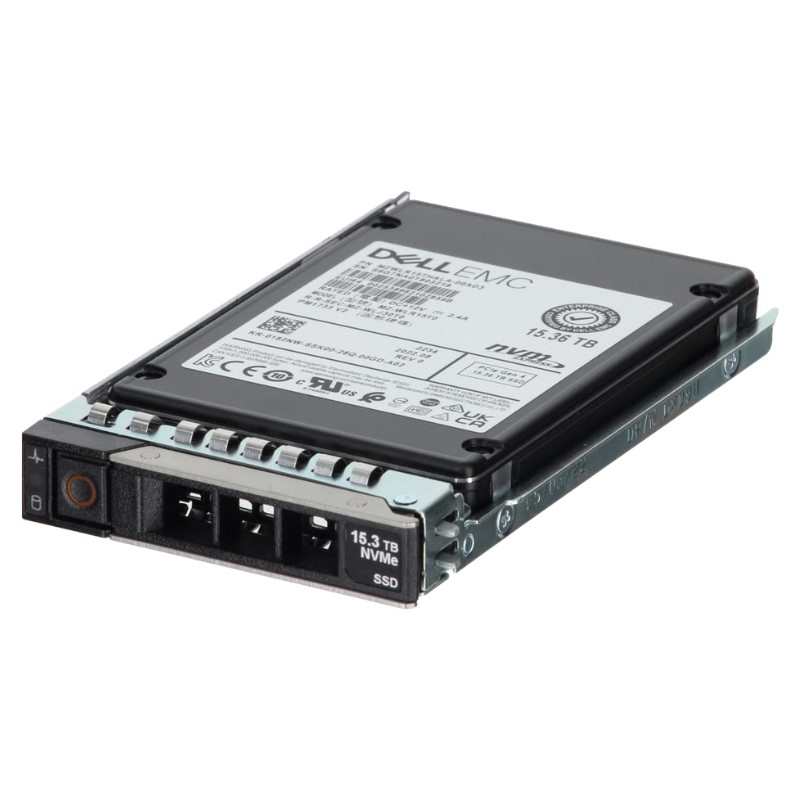
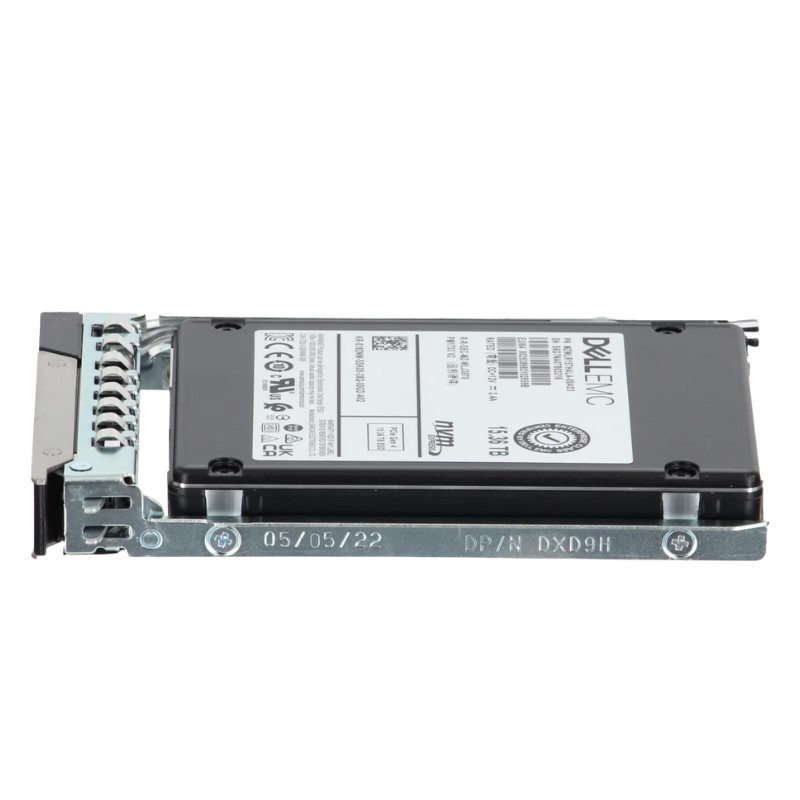
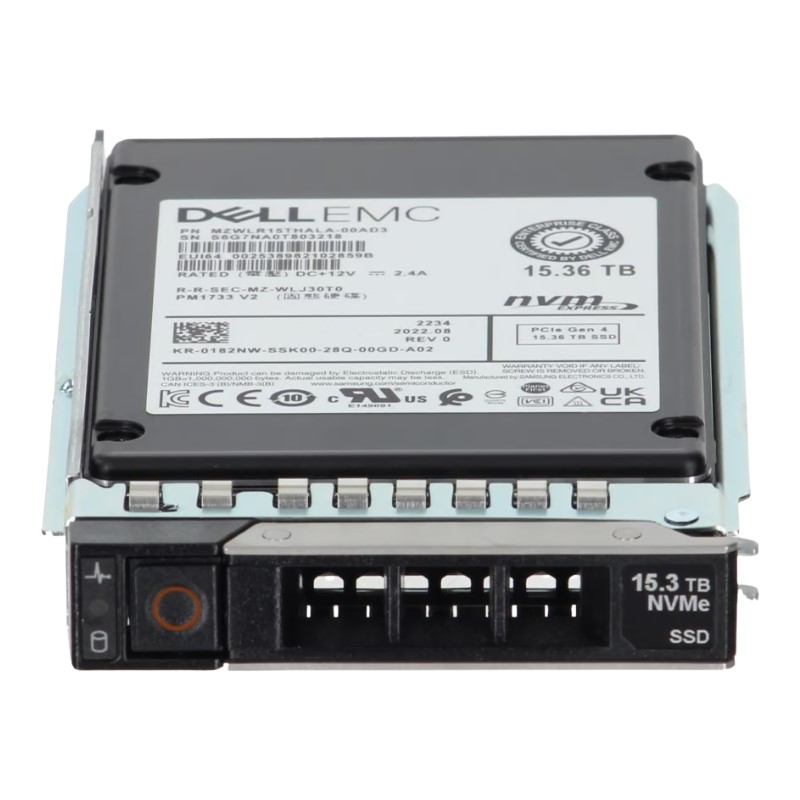
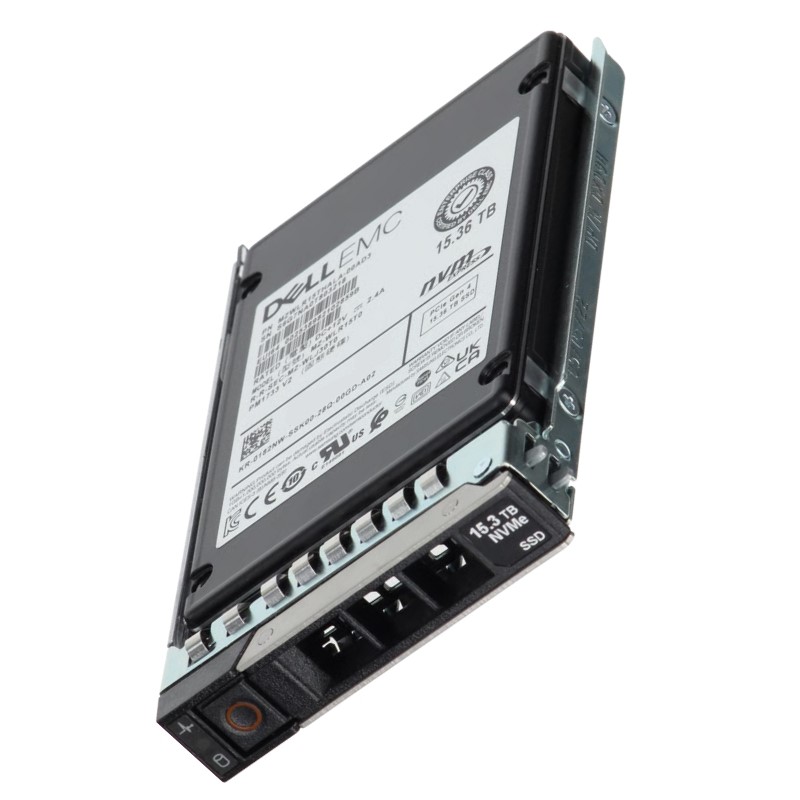
Dell 400-BRTG 15.36TB NVME PCI-E 2.5inch U.2 Read Intensive Enterprise Solid State Drive. New Sealed in Box (NIB) with 1 year Warranty
Boost datacenter performance with the Dell 15.36TB PCIe Gen4 NVMe U.2 2.5-inch read‑intensive enterprise SSD (with tray), engineered for Dell PowerEdge 14G, 15G, 16G, and 17G servers. Designed for consistent throughput, low latency, and dependable read workloads, this high‑capacity drive helps accelerate virtualization, analytics, and large‑scale storage applications.
Achieve faster query response times and smoother scalability for virtual machines, content delivery, and business intelligence dashboards. The Gen4 NVMe backbone provides higher I/O rates and improved queue handling for read‑heavy applications, enhancing user experience and reducing bottlenecks.
Built to Dell’s enterprise standards, the U.2 2.5‑inch drive integrates cleanly into PowerEdge backplanes. The included tray ensures consistent fit, cable management, and airflow alignment, simplifying maintenance and upgrades across generations.
The 1 DWPD read‑intensive profile aligns with workloads where data is primarily read with moderate writes. This endurance class balances performance, lifespan, and total cost of ownership, making it ideal for steady‑state enterprise operations.
The Dell 400-BRTG represents a specialized class of enterprise storage engineered specifically for read-intensive applications where data retrieval performance takes precedence over write endurance. This 15.36TB NVMe U.2 SSD leverages PCI-E technology in the compact 2.5-inch form factor to deliver exceptional read performance while maintaining cost-effectiveness for large-scale deployments. Unlike mixed-use or write-intensive drives, the 400-BRTG is optimized for workloads where read operations typically constitute 80-90% of total I/O operations, making it ideal for data analytics, content delivery, and database query applications. The drive's architecture reflects this specialization through carefully balanced components that maximize read throughput and latency characteristics while maintaining sufficient write capability for operational requirements.
In modern enterprise storage hierarchies, the 400-BRTG occupies a strategic position between performance-optimized write-intensive drives and capacity-optimized archival storage. This positioning addresses the economic reality that not all data requires the highest endurance characteristics, but still demands superior access performance. By implementing intelligent data placement strategies where frequently accessed read-heavy datasets reside on the 400-BRTG, organizations can achieve near-optimal performance at a significantly lower total cost of ownership compared to deploying higher-endurance drives across the entire storage infrastructure.
The Dell 400-BRTG delivers 15.36TB of usable capacity in the industry-standard 2.5-inch U.2 form factor, providing an optimal balance between storage density and performance. The U.2 interface (SFF-8639) ensures broad compatibility with modern enterprise servers and storage arrays while supporting the full bandwidth capabilities of the NVMe protocol. This form factor enables high-density configurations in standard 1U and 2U server platforms, allowing organizations to maximize storage capacity within constrained rack space. The drive's mechanical design incorporates enterprise-grade components capable of withstanding the vibrational stresses and thermal challenges of data center environments.
At the heart of the 400-BRTG's read-optimized architecture lies enterprise-grade 3D TLC NAND flash memory specifically binned and qualified for read-intensive applications. This NAND selection prioritizes read latency consistency and data retention characteristics over extreme write endurance, enabling cost optimization without compromising reliability for the target workload profile. The flash management system implements advanced read disturbance mitigation techniques that maintain data integrity even during sustained read operations, a critical capability for applications that involve scanning large datasets.
The 400-BRTG fully leverages the NVMe (Non-Volatile Memory Express) protocol, which eliminates the legacy constraints of older storage interfaces like SAS and SATA. NVMe's streamlined command set and parallel processing capabilities enable the drive to achieve exceptional read performance with queue depths that far exceed what traditional protocols can support. The drive's controller implements multiple command queues that can process up to 64,000 commands simultaneously, dramatically reducing command overhead and enabling the low-latency access patterns essential for responsive read-intensive applications.
In standardized enterprise benchmarks, the 400-BRTG demonstrates sequential read speeds exceeding 3,500 MB/s and random read performance surpassing 800,000 IOPS. These performance characteristics represent a significant advancement over SAS-based SSDs and a substantial improvement over SATA SSDs. The drive maintains consistent read latency profiles even under sustained workload pressure, with 99.9th percentile latencies remaining within acceptable thresholds for demanding enterprise applications. This predictable performance enables organizations to meet service level agreements and user experience expectations for responsive data access.
The 400-BRTG is engineered with endurance characteristics optimized specifically for read-dominated workload profiles. With a Total Bytes Written (TBW) rating of 11.0 petabytes and a Drive Writes Per Day (DWPD) rating of 0.33 over the 5-year warranty period, the drive provides sufficient write endurance for the update patterns typical of read-intensive applications. This endurance calculation assumes the entire 15.36TB capacity is written approximately one-third of the way each day, which comfortably accommodates the write requirements of most read-focused workloads while maintaining a cost-optimized price point.
Advanced write amplification reduction techniques are fundamental to the 400-BRTG's endurance optimization. The drive controller implements sophisticated garbage collection algorithms that minimize unnecessary write operations to the NAND flash. Through intelligent data placement and wear-leveling strategies that prioritize read performance consistency, the controller ensures that background maintenance operations have minimal impact on foreground read operations. This balanced approach extends the practical endurance of the drive while maintaining the responsive read characteristics that define its value proposition.
Despite its read-optimized focus, the 400-BRTG maintains comprehensive enterprise-grade data protection features, including advanced power-loss protection. The drive incorporates tantalum capacitors and specialized firmware that provide sufficient hold-up time to complete in-progress write operations and flush volatile cache data to non-volatile storage during unexpected power events. This protection mechanism ensures data consistency and prevents corruption, maintaining the integrity of file systems and database structures even during unplanned power interruptions.
Modern analytics platforms generate predominantly read-oriented I/O patterns as they scan, filter, and process large datasets. The 400-BRTG excels in these environments by providing low-latency access to analytical datasets, accelerating query performance and reducing time-to-insight. Whether deployed in data warehouse appliances, Hadoop clusters, or real-time analytics platforms, the drive's consistent read performance enables faster data processing cycles. The capacity point of 15.36TB allows organizations to maintain substantial datasets locally, reducing dependency on network storage and minimizing data movement bottlenecks.
In database environments, read-intensive drives like the 400-BRTG dramatically improve the performance of reporting queries, read replicas, and analytical processing workloads. While write-intensive drives might be reserved for transaction log storage and primary database files, the 400-BRTG provides an optimal storage tier for database copies used for reporting, backup, and development purposes. The drive's performance characteristics reduce query response times and improve concurrent user scalability, directly enhancing application responsiveness and user productivity.
VDI environments exhibit strongly read-oriented patterns during boot storms and user session initialization, where multiple virtual desktops simultaneously read from golden images and application binaries. The 400-BRTG provides the high random read performance necessary to support dense VDI deployments without compromising user experience. During operational phases, the write workload typically remains well within the drive's endurance specifications, making it a cost-effective choice for large-scale VDI implementations where storage economics directly impact deployment feasibility.
The 400-BRTG implements a multi-layered approach to data protection that ensures integrity throughout the data path. Advanced LDPC (Low-Density Parity Check) error correction capabilities correct both random and burst errors that may occur during NAND flash operations. End-to-end data protection schemes maintain CRC (Cyclic Redundancy Check) values from the host interface through the controller to the NAND flash, detecting and correcting any corruption that might occur during internal data transfers. These protection mechanisms operate transparently, ensuring data integrity without impacting host performance. Enterprise deployment environments demand robust thermal management, and the 400-BRTG incorporates sophisticated temperature control mechanisms. Multiple thermal sensors monitor critical components, enabling the drive to autonomously adjust operation parameters to maintain optimal temperatures. If temperatures approach upper thresholds, the controller can implement performance throttling to prevent damage while maintaining data integrity.
As a read-optimized drive, the 400-BRTG delivers exceptional performance per watt compared to write-intensive alternatives. The specialized architecture focuses energy consumption on read acceleration rather than supporting extreme write endurance, resulting in better efficiency for target workloads. This efficiency becomes particularly significant in large-scale deployments where power and cooling costs represent substantial ongoing operational expenses. The drive's environmental specifications also address RoHS compliance and material selection for reduced environmental impact.
The 400-BRTG supports comprehensive management through standard NVMe Management Interface specifications, enabling integration with enterprise management frameworks. Administrators can retrieve detailed telemetry including temperature readings, percentage of life used, available spare capacity, and media error statistics. This information facilitates proactive maintenance planning and capacity management, helping organizations optimize storage resource utilization and avoid unexpected downtime. The management interface also supports secure firmware updates that can be applied without system shutdown, maintaining application availability while ensuring access to performance and security enhancements.
Enhanced S.M.A.R.T. (Self-Monitoring, Analysis and Reporting Technology) attributes provide deeper insight into drive health and performance characteristics specific to read-intensive operation. Beyond standard health indicators, the drive reports read-specific metrics including read command timeouts, read error rates, and read retry statistics. These specialized attributes enable more precise health monitoring and predictive failure analysis, allowing administrators to identify potential issues before they impact application performance. Integration with enterprise monitoring systems enables automated alerting and reporting for large-scale deployments.
The 400-BRTG seamlessly integrates with enterprise management platforms including Dell OpenManage, VMware vSphere, and Microsoft System Center. This integration enables centralized monitoring, provisioning, and maintenance across heterogeneous storage environments. Support for Redfish API standards and SNMP protocols facilitates automation through popular infrastructure management tools, reducing administrative overhead and improving operational efficiency. The drive's standardized interfaces ensure compatibility with storage management frameworks regardless of the server platform or hypervisor environment.
Successful deployment of read-intensive SSDs begins with thorough workload analysis to verify the read-dominated characteristics that justify the selection. I/O monitoring tools should be employed to quantify the read/write ratio, queue depth requirements, and access patterns of target applications. Workloads with sustained write components exceeding 30-40% may be better served by mixed-use drives, while genuinely read-dominated workloads will benefit from the 400-BRTG's optimized performance and economic advantages. Historical performance data and growth projections should inform capacity planning to ensure adequate resources throughout the deployment lifecycle.
In heterogeneous storage environments, the 400-BRTG typically occupies a performance tier for active datasets while less frequently accessed data resides on more economical storage. Automated tiering solutions can dynamically promote hot data to the read-intensive SSD tier based on access patterns, maximizing performance for active workloads while minimizing storage costs. The 15.36TB capacity point provides substantial tier space for working datasets, reducing the frequency of data movement between tiers and improving overall system efficiency.
When deploying multiple 400-BRTG drives in RAID configurations, careful consideration should be given to the balance between performance, capacity efficiency, and data protection. RAID levels that minimize write penalty (such as RAID 10) complement the drive's read-optimized characteristics while providing high availability. Software-defined storage implementations should leverage modern file systems and volume managers that are optimized for NVMe performance characteristics. Monitoring should include both individual drive health and array-level performance to identify potential bottlenecks or degradation before they impact application performance.


 Contact Us
 Information
 Catalog
 Solid State Drives (SSD)
 Network Switches
 Hard Disk Drives
 HBA & Controllers
 PC & Servers
 PC & Server Memory
 CPU & Processors
 Network Routers
 Power Supplies
 Tape Drives & Libraries
 Network Devices
 Computer & Network Cables