(7% discount is applied at checkout)
Cart is empty
Your go-to destination for cutting-edge server products
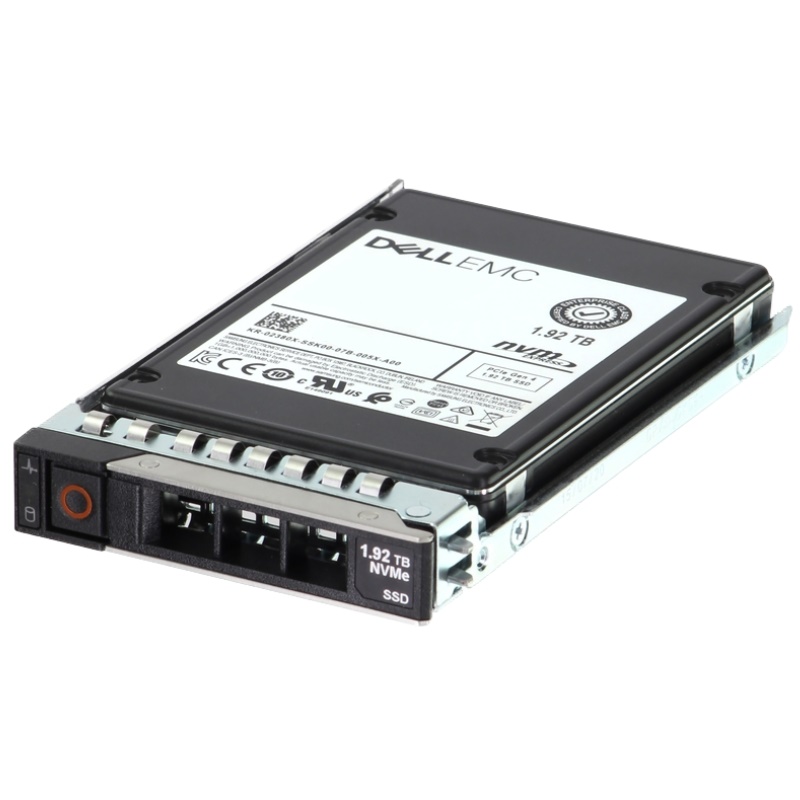


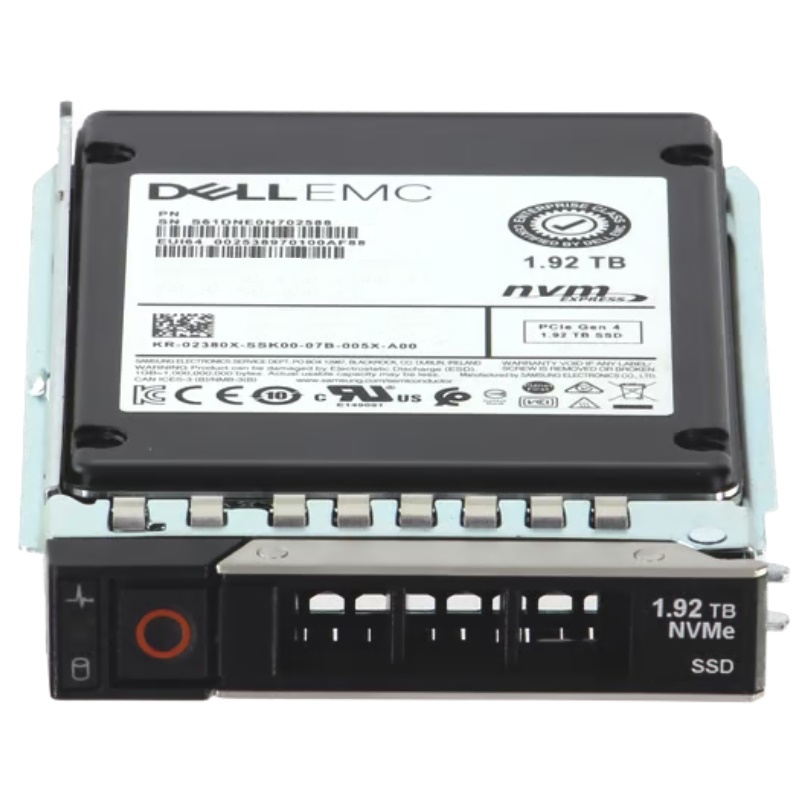
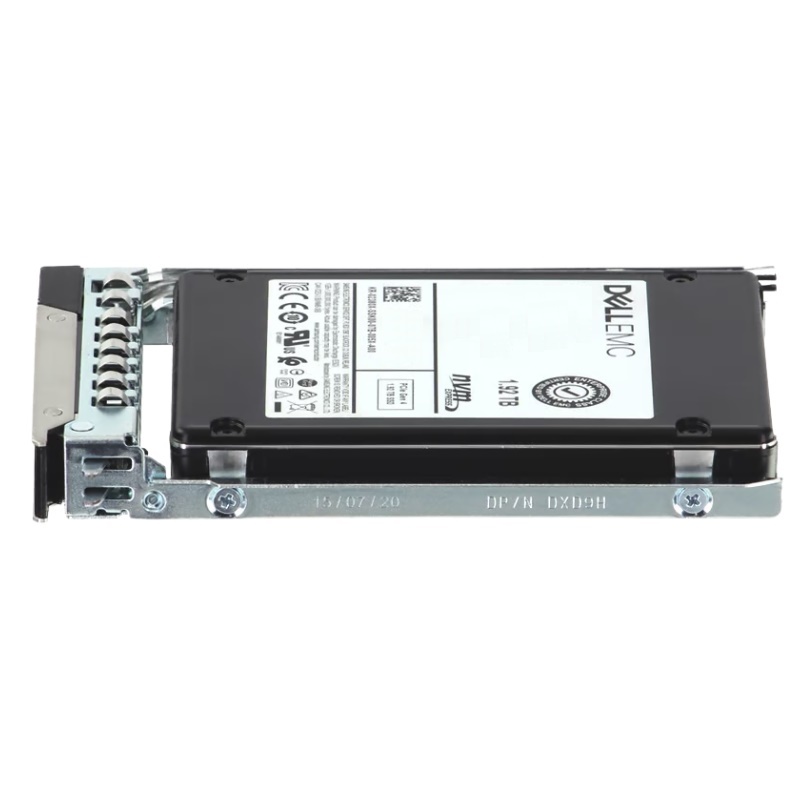
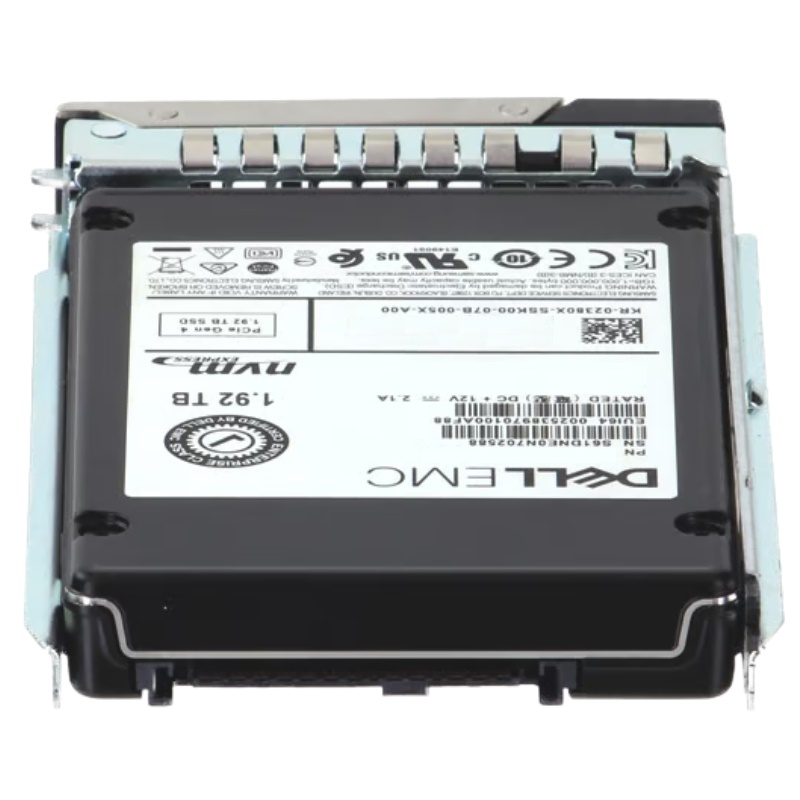
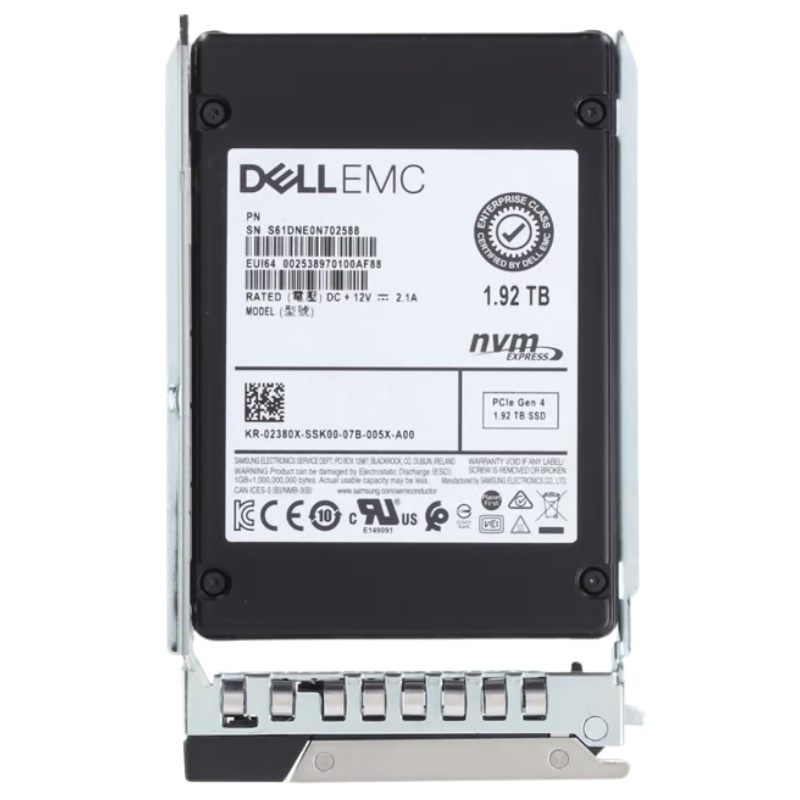
Dell 400-BSHZ 1.92TB PCI-Express Gen 4.0 X4 NVMe U.2 SFF 15mm Read-Intensive TLC 3D Nand for Poweredge Server Solid State Drive. New Sealed in Box (NIB) with 1-Year Replacement Warranty
The Dell 400-BSHZ 1.92TB PCI-Express Gen 4.0 x4 NVMe U.2 SFF 15mm drive occupies a focused category within enterprise storage that emphasizes high-density, server-optimized, read-intensive solid state storage for PowerEdge server platforms. This category groups drives designed to deliver sustained read throughput, low latency, and predictable performance under heavy read-centric workloads, while maintaining the endurance and reliability characteristics necessary for data center environments. The core specification set — NVMe protocol over PCIe Gen 4.0, U.2 small form factor 15mm height, 1.92TB capacity, and read-optimized TLC 3D NAND — defines a product family suited to caching layers, content delivery, telemetry and logging, search indexes, and large-scale database read replicas. In enterprise deployments where consistent IOPS per dollar for reads matters more than random write peaks, this category addresses a specific need: maximizing read performance while balancing cost, power, and thermal behavior for rack-mounted PowerEdge systems.
PCI-Express Gen 4.0 x4 is the physical and electrical backbone that enables the Dell 400-BSHZ to achieve substantially higher bandwidth than previous PCIe generations. Coupled with the NVMe protocol, which is purpose-built for flash media and optimized for parallelism and low CPU overhead, this combination delivers rapid command execution, deep queue depth support, and minimal latency for read operations. NVMe’s streamlined command set reduces I/O stack complexity compared to legacy SATA or SAS protocols, enabling PowerEdge servers to extract higher effective throughput and better CPU efficiency from each SSD. For workloads that frequently access large datasets from storage, the Gen 4 x4 physical channel and NVMe command translate directly into lower application response times and higher sustained read rates.
The U.2 small form factor with a 15mm height supports dense but serviceable drive placement in enterprise servers. Unlike M.2, which is typically used for single-board or edge scenarios, U.2 drives are hot-pluggable in many PowerEdge chassis and are designed for ease of replacement and field serviceability. The 15mm profile allows for higher capacity per unit while maintaining compatibility with drive trays and backplane assemblies used in rack and tower servers. This form factor enables data centers to balance capacity density with operational simplicity: technicians can swap a U.2 drive quickly, and system management firmware in PowerEdge servers often offers direct visibility into drive health, SMART attributes, and temperature telemetry for U.2 devices.
Triple-level cell (TLC) 3D NAND is selected here for a balance of cost per gigabyte and acceptable endurance for read-heavy profiles. In read-intensive variants, firmware and over-provisioning strategies are tuned to prioritize read amplification reduction and stable performance under sustained read pressure. The 3D stacking approach enhances density and improves error resilience through improved cell architecture and on-die error correction.
The combination of NVMe and PCIe Gen 4.0 provides a wide data pipe and efficient queue handling, which reduces tail latency for random and sequential reads. Typical enterprise use cases that benefit include content delivery networks, machine learning inference layers that frequently fetch model shards, OLAP queries, and object storage metadata operations. Because these drives are read-optimized rather than write-optimized, write amplification is controlled via firmware algorithms and over-provisioning, enabling steady-state read performance while maintaining sufficient write tolerance for background maintenance tasks and occasional rebalances.
Endurance for read-optimized TLC drives must be considered in terms of drive writes per day (DWPD) and the expected rewrite patterns in the target workload. Although overall write endurance numbers for TLC 3D NAND are lower than some single-level cell (SLC) or enterprise-grade MLC parts, the read-preferential firmware and management features of this category mitigate endurance concerns for the intended use cases. When planning deployments, administrators estimate array-level write amplification by benchmarking typical daily write volumes and mapping hot data movement patterns. Over-provisioning and conservative write caching policies often extend life expectancy, while workload placement policies ensure that foreground writes do not concentrate on drives not rated for such stress.
Drives in this category are commonly deployed behind hardware or software RAID controllers, in erasure-coded object stores, or as replicated nodes in distributed filesystems. The choice of data protection depends on the service-level objectives for availability and rebuild times. Because rebuild operations can stress remaining drives in a RAID group, it is prudent to model rebuild impact on read-optimized devices; longer rebuilds can increase read latency for surviving volumes. Modern PowerEdge management stacks and SAN fabrics support features like drive-level encryption, background scrubbing, and predictive failure analysis, enabling smoother replacement and reduced chances of data loss. For cloud-native or scale-out uses, erasure coding reduces storage overhead while tolerating drive failures, and replication across nodes ensures that read traffic can be load-balanced for better performance.
Compatibility with PowerEdge systems involves both mechanical and logical considerations. Mechanically, the U.2 SFF 15mm profile must fit the server’s drive bays and backplane connector layout; many PowerEdge chassis support mixed-height U.2 units with drive trays designed for easy servicing. Logically, server BIOS/UEFI, RAID controllers, and iDRAC management firmware need to recognize NVMe devices and present them appropriately to the operating system or hypervisor. Dell frequently validates SSD models against PowerEdge families to ensure topologies like NVMe passthrough, direct-attach, and mixed-drive configurations work without compromising bootability for system volumes.
Compared to M.2, the U.2 SFF category trades slightly lower density per server motherboard slot for hot-plug capability and broader compatibility with enterprise backplanes. U.3 is an evolution that offers multi-protocol support allowing NVMe and SAS/SATA coexistence; however, U.2 remains prevalent for proven server compatibility and mature ecosystem support. When comparing options, consider serviceability, backplane compatibility, and whether the server chassis supports the chosen protocol and physical connectors at the required performance level.
Test NVMe drive behavior with PowerEdge server features such as intelligent power capping, dynamic fan control, and iDRAC telemetry integration. Confirm that in-band and out-of-band monitoring present accurate metrics and that the management stack can perform non-disruptive replacements when necessary.
In hybrid topologies where edge nodes perform local caching or read acceleration before propagating results to the cloud, the read-optimized NVMe category provides low-latency local storage for frequently accessed data. At the core and in the data center, these drives act as an efficient read tier for CDN-like services and analytics pre-aggregation layers. The economic rationale is clear: allocate faster read storage where user experience and query performance matter most while offloading bulk archival and write-heavy processing to alternative tiers.
Virtualized infrastructure benefits from consistent read performance during boot storms, patch deployment, and user profile loading. For containerized microservices, placing read-heavy image caches and frequently used artifacts on these drives reduces network traffic and accelerates startup times. Tying storage policies to workload labels allows orchestrators to place persistent volumes onto the appropriate physical tier automatically, improving both resource utilization and predictable application performance.


 Contact Us
 Information
 Catalog
 Solid State Drives (SSD)
 Network Switches
 Hard Disk Drives
 HBA & Controllers
 PC & Servers
 PC & Server Memory
 CPU & Processors
 Network Routers
 Power Supplies
 Tape Drives & Libraries
 Network Devices
 Computer & Network Cables