(7% discount is applied at checkout)
Cart is empty
Your go-to destination for cutting-edge server products
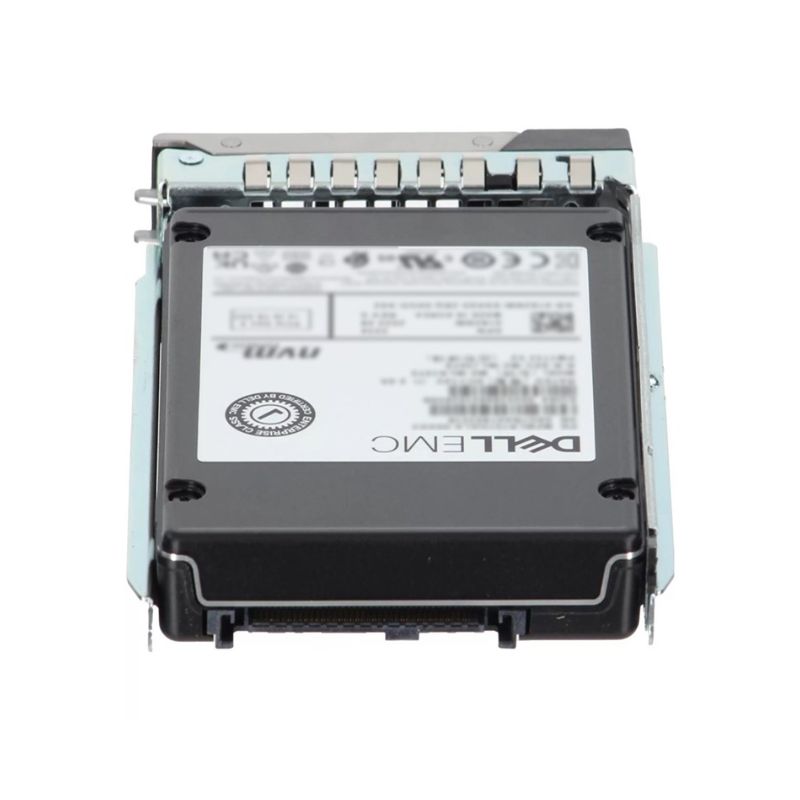


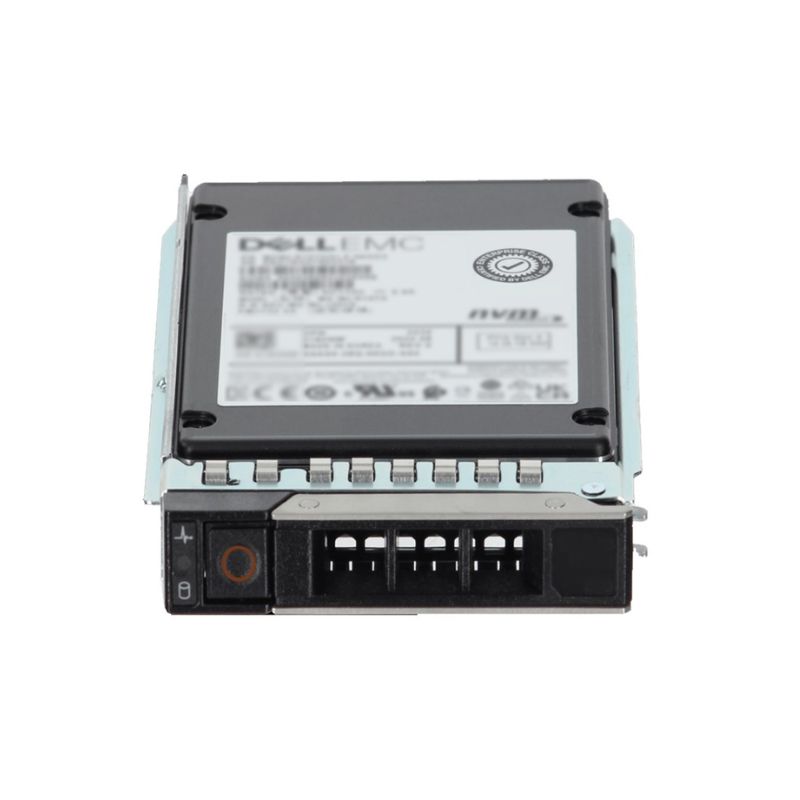
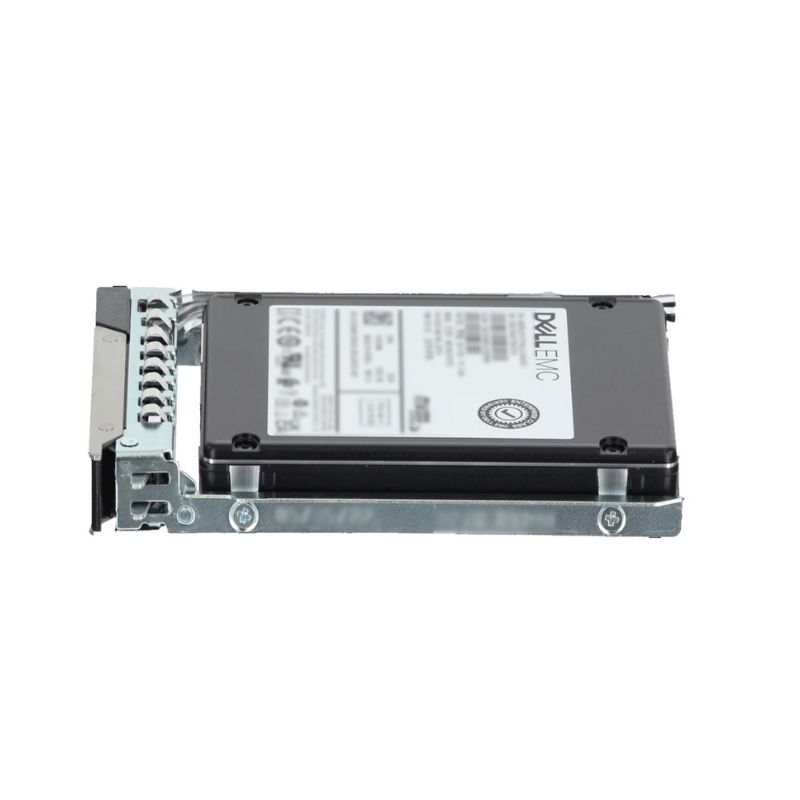
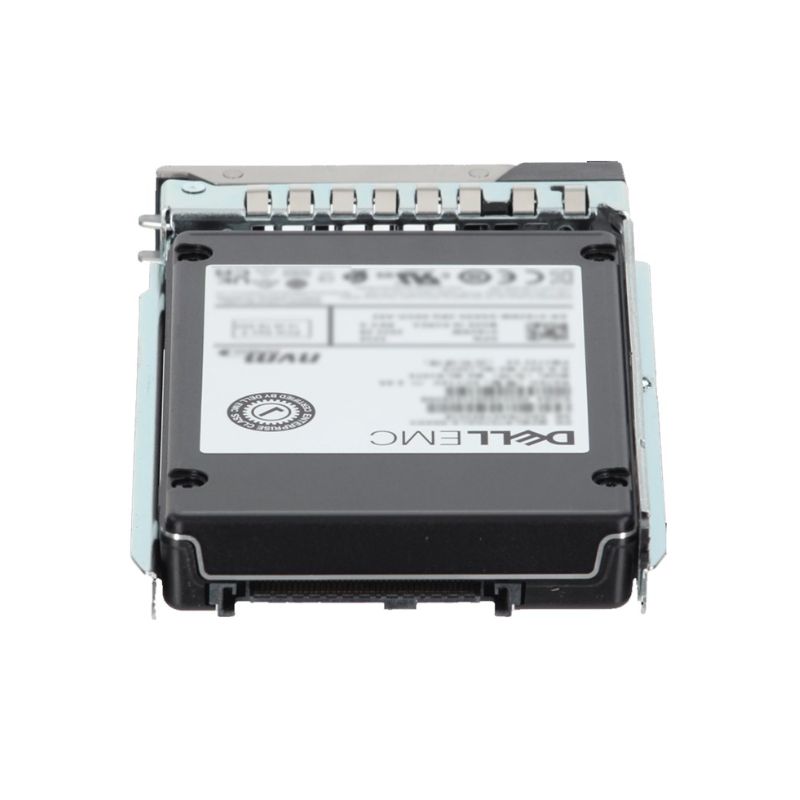
Dell 400-BTSX 61.44TB Pcie Gen4 4.0 X4 NVMe U.2 2.5 Inch Sff Enterprise Solid State Drive Server. New Sealed in Box (NIB) with 1 year replacement warranty. Call
The DELL 61.44TB PCIe Gen4 NVMe U.2 2.5-inch Small Form Factor (SFF) SSD is an ultra-high-capacity enterprise-grade storage solution crafted for performance-critical workloads. Engineered with QLC 3D NAND architecture, this solid-state drive offers exceptional data density, high throughput, and durability, making it a preferred choice for data centers, virtualization, and large-scale storage applications.
Designed to meet the rigorous demands of enterprise workloads, the DELL 61.44TB NVMe SSD delivers consistent performance across both sequential and random operations. The PCIe Gen4 interface enables rapid data throughput, reducing latency and improving responsiveness in virtualized and high-performance computing environments.
This SSD is built to operate continuously under intense workloads, maintaining stability and endurance in 24/7 server environments. Its combination of advanced NAND technology and robust error correction ensures data integrity, even during heavy transactional processing or large-scale data migrations.
The DELL 61.44TB PCIe Gen4 NVMe SSD integrates seamlessly with a wide range of PowerEdge servers, ensuring effortless deployment across enterprise infrastructures. Its compatibility with multiple generations allows for scalability and flexible configurations in hybrid or all-flash storage arrays.
Whether deployed in rack-mounted systems or dense data center arrays, this enterprise SSD enhances storage performance while reducing power consumption. It’s fully optimized for use in DELL’s 14G through 17G PowerEdge servers, ensuring complete hardware and firmware synergy.
The 192-layer QLC 3D NAND flash structure allows for superior data density and cost efficiency, maximizing performance in high-capacity configurations. This design supports faster access speeds, improved endurance, and lower latency during intensive read/write operations.
With double the bandwidth of PCIe Gen3, the PCIe 4.0 x4 interface empowers this SSD to achieve ultra-fast data streaming rates, minimizing bottlenecks and enhancing throughput for AI, machine learning, and virtualization applications.
With a mean time between failures (MTBF) of 2 million hours, the DELL 61.44TB NVMe SSD provides exceptional reliability for mission-critical systems. Its shock resistance of up to 1000G ensures operational stability in demanding physical environments.
The SSD’s low-power design significantly reduces energy draw while maintaining exceptional performance metrics. This contributes to lower operational costs and enhanced data center sustainability without compromising on speed or reliability.
The Dell 400-BTSX 61.44TB PCIe Gen4 x4 NVMe U.2 2.5" SFF SSD is engineered for demanding data center and enterprise server environments that require high-capacity, low-latency, cost-efficient flash storage. Built with QLC 3D NAND technology and an enterprise-class controller, this drive blends exceptional density with power efficiency and predictable performance for large-scale archival, cold/hot data tiers, and read-intensive workloads. Its U.2 2.5-inch small form factor and compatibility with standard server trays allow easy integration into existing Dell PowerEdge or other OEM configurations, while PCIe Gen4 x4 NVMe protocol ensures modern high-bandwidth connectivity with reduced I/O overhead.
Designed as a standard U.2 2.5-inch SFF drive, the Dell 400-BTSX plugs into typical enterprise hot-swap bays and fits into existing trays used by server manufacturers. The drive's mechanical compatibility lowers procurement friction—no custom adapters required in most modern racks. When planning deployments, rack architects should verify carrier/backplane support for U.2 NVMe devices and confirm that the server's BIOS/firmware supports PCIe Gen4 lanes to extract full throughput.
The SSD ships with a server tray compatible with Dell PowerEdge families and many third-party enclosures. Tray-based installation ensures rapid replacement and straightforward servicing during maintenance windows. For environments with mixed SAS/HDD bays, administrators should confirm backplane pinout and hot-swap architecture to prevent inadvertent compatibility issues.
High-capacity NVMe drives can generate sustained thermal output under heavy read/write cycles. The 400-BTSX is engineered with power-saving modes and thermal throttling safeguards, but data center operators should still budget adequate airflow in the chassis and monitor drive temperatures using SMART telemetry. When densely populating multi-drive sleds with multiple high-capacity NVMe units, consider enhanced cooling and airflow baffles to maintain SLAs and avoid performance throttling.
While QLC NAND emphasizes storage density, Dell's 400-BTSX pairs QLC media with intelligent controllers and firmware that use caching and write-acceleration techniques to deliver consistent service for targeted workloads. PCIe Gen4 x4 NVMe delivers significant bandwidth for parallel I/O operations and lowers latency compared to legacy SATA/SAS architectures.
QLC-based drives are optimized for read-heavy or mixed workloads with a predominance of reads. Write endurance is lower than TLC or SLC alternatives, so the 400-BTSX is ideal for:
For write-intensive transactional databases or high-endurance caching layers, consider using a blend of drive types (e.g., NVMe TLC or enterprise SSD caching tiers) to protect lifetime and performance.
To bridge the gap between bursty writes and QLC endurance, the drive's controller implements pseudo-SLC caching (also known as SLC buffer) and dynamic over-provisioning. These mechanisms accelerate small writes and maintain low latency during common operation patterns. When provisioning multiple drives, configure RAID and caching layers to complement the drives' strengths: use write-back caches on higher-endurance devices and offload bulk cold writes directly to the QLC pool.
The NVMe protocol minimizes host CPU overhead and enables high concurrency across deep I/O queues. Expect competitive random read IOPS for large-capacity QLC drives; however, random write IOPS will depend on SLC-cache sizing, workload pattern, and sustained write intensity. In practice, organizations see substantial gains in throughput and lower CPU context switching when migrating from SAS/SATA arrays to NVMe fabrics with Dell 400-BTSX class drives.
Dell equips these enterprise-class SSDs with features required for mission-critical operations: robust error correction codes (ECC), end-to-end data protection, and firmware-level routines for wear levelling and bad-block management. These drives also provide SMART attributes and vendor-specific telemetry to integrate seamlessly with monitoring suites and server management tools, enabling predictive failure detection and efficient maintenance workflows.
Power-loss protection circuits ensure the drive can flush in-flight data to NAND during unexpected outages, minimizing the risk of data corruption. For multi-drive arrays, combine drives with UPS and graceful shutdown scripts at the server layer to protect metadata and filesystem integrity.
SMART attributes provide visibility into drive health, including wear percentage, total bytes written (TBW), uncorrectable error counts, and temperature readings. Integrating these metrics into central monitoring systems (e.g., Dell OpenManage, Prometheus exporters, or enterprise SIEM tools) enables proactive replacement and lifecycle forecasting.
When assessing total cost of ownership, review manufacturer-specified endurance ratings (TBW), mean time between failures (MTBF), and warranty terms. QLC devices typically present attractive $/GB economics but require careful workload alignment to meet warranty conditions—overprovisioning and firmware updates often extend usable life. Plan periodic firmware maintenance windows and track TBW consumption to maximize long-term value.
The 61.44TB Dell 400-BTSX is a compelling option in various architectural topologies where capacity density and NVMe performance are prioritized over absolute write endurance. Below are common patterns and recommended pairings.
When analytics jobs query large historical datasets, the combination of high-capacity QLC drives and NVMe throughput reduces query planning time while keeping storage costs manageable. Optimize query engines to use sequential reads where possible and avoid excessive random writes to the pool.
Moving to 61.44TB NVMe devices reduces rack space and simplifies cabling and power budgeting. For accurate capacity planning, compute effective usable capacity after accounting for RAID/erasure coding, filesystem overhead, and expected data-change ratios (change rate). Because QLC provides density at a lower cost per GB, it is ideal when raw capacity is the dominant metric in the TCO model.
When deploying in RAID or erasure-coded topologies, the usable capacity will be a fraction of the raw total. For example, using a common erasure coding scheme like 6+3 reduces raw capacity by the parity overhead. Always account for spare capacity reserved for wear levelling and over-provisioning—reserve 5-20% based on workload profile and endurance targets.
High-density SSDs typically consume less power and generate less heat per TB than equivalent HDD arrays, often resulting in lower operational costs at scale. Still, the power draw per drive should be modeled (active vs. idle) to correctly size PDUs and HVAC systems. Implement power management features and drive low-power states where supported by the OS and firmware.
Even with enterprise-grade SSDs, redundancy planning remains essential. Design for failure by distributing data across failure domains, leveraging erasure coding, and integrating with orchestration layers that can transparently rebuild or rehydrate data onto replacement drives.
Traditional RAID controllers may not fully leverage NVMe's parallelism; consider software-defined storage stacks or NVMe-aware controllers that can orchestrate rebuilds efficiently. For very large-capacity drives, rebuild times can be lengthy—minimize rebuild impact by using erasure codes that reduce data movement and by maintaining hot spares to accelerate rebuild processes.
Combine on-premises NVMe pools with offsite replication, tape vaulting, or cloud archival tiers for long-term retention. Straightforward replication reduces risk from site-level disasters and provides additional read-only clones for analytics and reporting.
When procuring Dell 400-BTSX 61.44TB NVMe drives, follow a checklist to ensure compatibility, performance alignment, and long-term supportability:
Enterprise customers should consider including support contracts or extended warranties to reduce downtime risk. Dell’s support packages often include proactive replacement and firmware updates. If deploying at scale, negotiate SLAs and parts-exchange policies that match your recovery time objectives (RTOs) and recovery point objectives (RPOs).


 Contact Us
 Information
 Catalog
 Solid State Drives (SSD)
 Network Switches
 Hard Disk Drives
 HBA & Controllers
 PC & Servers
 PC & Server Memory
 CPU & Processors
 Network Routers
 Power Supplies
 Tape Drives & Libraries
 Network Devices
 Computer & Network Cables