(7% discount is applied at checkout)
Cart is empty
Your go-to destination for cutting-edge server products
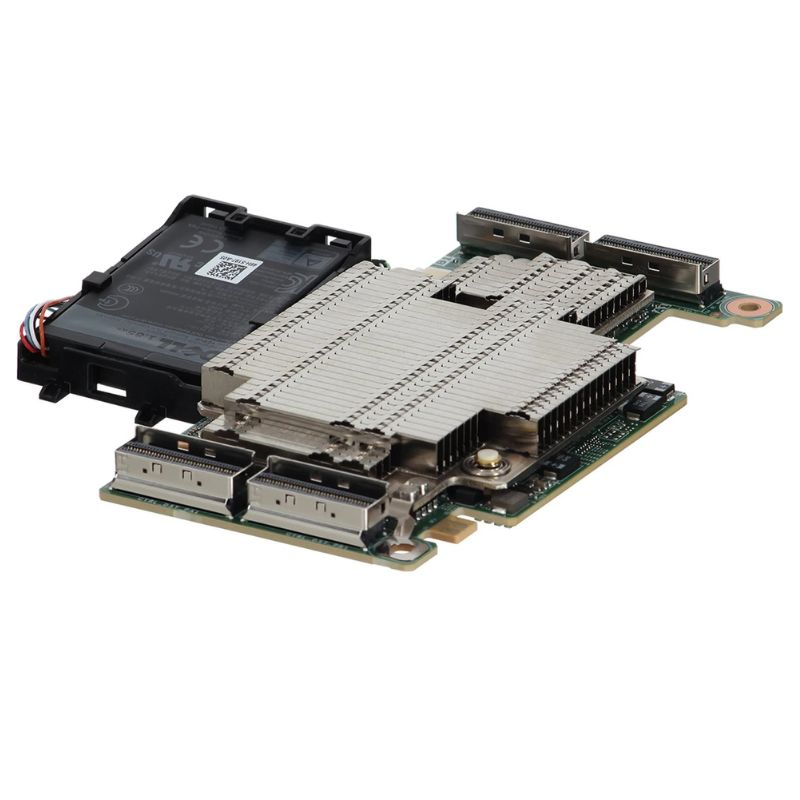


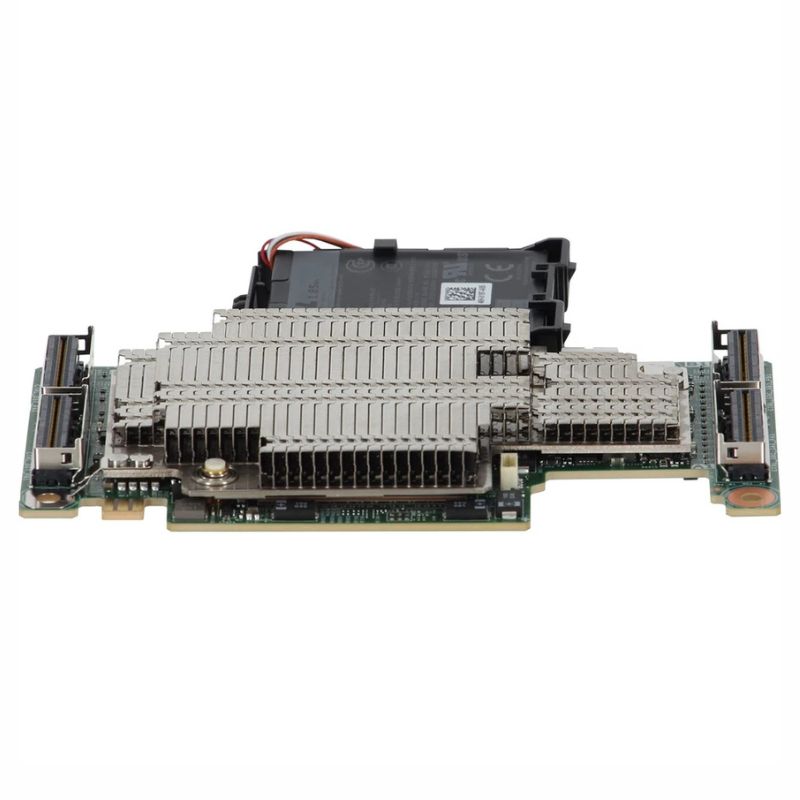
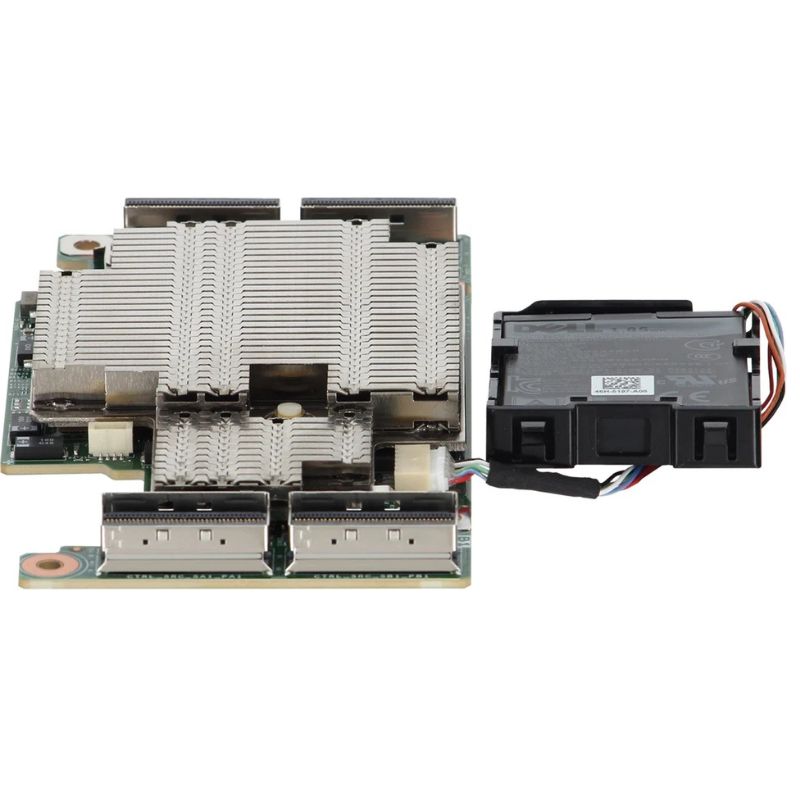
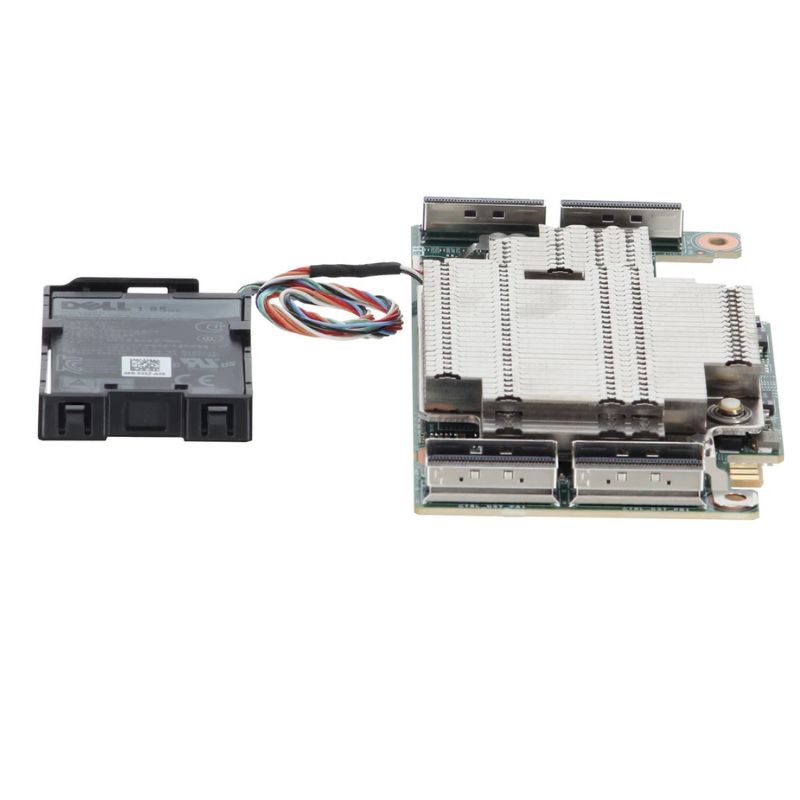
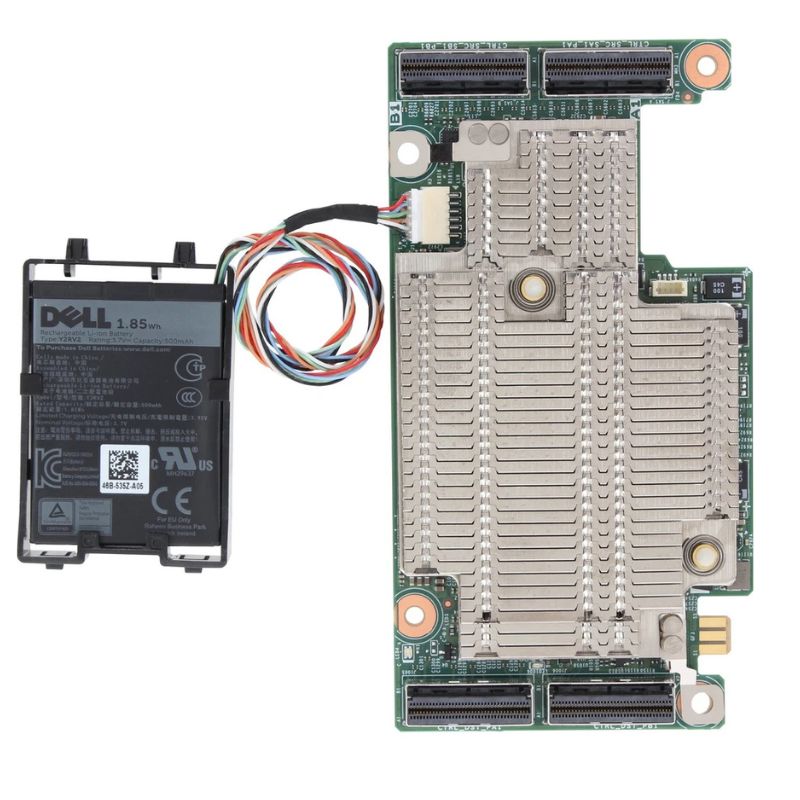
Dell 405-ABDM PERC 16-lane PCI-E 4 H965i Front Internal Raid Controller. New (System) Pull with 1 Year replacement warranty
Overview of Dell 405-ABDM PERC Internal RAID Controller
The Dell 405-ABDM PERC H965i front internal RAID controller is engineered to meet the demanding storage requirements of next-generation data centers and enterprise server environments. Built with a robust 16-lane PCI Express Gen 4 interface, this controller delivers exceptional bandwidth and low latency, enabling servers to handle intensive workloads with confidence. By supporting SAS, SATA, and NVMe drives within a unified design, it offers flexible deployment options for organizations seeking scalable and future-ready storage infrastructures.
The Dell 405-ABDM PERC H965i front internal RAID controller represents a high-performance enterprise storage controller category designed for modern data center servers that demand reliability, scalability, and consistent throughput across mixed media environments. This category focuses on advanced RAID controllers that integrate SAS, SATA, and NVMe protocol support into a single front-accessible solution, enabling organizations to consolidate storage management while maintaining strict performance and availability standards. Built around a 16-lane PCI Express Gen 4 interface operating at 16 GT/s per lane, this class of controller is engineered to remove I/O bottlenecks in compute-intensive workloads, virtualization platforms, and transaction-heavy applications.
Within this category, the emphasis is on controllers that can serve as the central intelligence layer between server processors and internal storage devices. The Dell PERC H965i family is positioned for enterprise servers that require both hardware-based RAID acceleration and compatibility with next-generation NVMe drives, allowing seamless integration of high-capacity SAS or SATA drives alongside ultra-low-latency NVMe media. This architectural positioning makes the category relevant to organizations modernizing legacy storage infrastructures without sacrificing backward compatibility.
The 16-lane PCIe Gen 4 interface is a defining attribute of this RAID controller category. Operating at 16 GT/s, PCIe Gen 4 effectively doubles the bandwidth available per lane compared to Gen 3, delivering significantly higher aggregate throughput for storage traffic. In the context of enterprise RAID controllers, this increased bandwidth ensures that the controller can simultaneously service multiple high-speed drives without saturating the host interface.
For servers populated with NVMe drives, the PCIe Gen 4 x16 interface becomes particularly critical. NVMe media is capable of extremely high IOPS and sequential throughput, and older interfaces can easily become a limiting factor. Controllers in this category are designed to sustain heavy parallel I/O operations, ensuring that RAID processing, cache management, and parity calculations do not impede the raw performance capabilities of the underlying storage devices.
Another key characteristic of the Dell 405-ABDM PERC H965i category is the optimization of data paths for mixed media configurations. Many enterprise deployments rely on a combination of SAS HDDs for capacity, SAS SSDs for balanced performance, and NVMe SSDs for latency-sensitive workloads. Controllers in this category are engineered to intelligently manage these heterogeneous environments, providing consistent performance across varying media types while maintaining unified RAID management.
The 16-lane architecture ensures sufficient headroom for simultaneous access to multiple drive groups, allowing administrators to design tiered storage pools without concern for controller-level congestion. This capability is particularly valuable in hyper-converged infrastructures and software-defined storage platforms where storage traffic patterns can be unpredictable and bursty.
This RAID controller category distinguishes itself by offering native support for SAS, SATA, and NVMe storage protocols. Traditional RAID controllers often focus exclusively on SAS and SATA, but modern enterprise environments increasingly rely on NVMe for performance-critical workloads. The Dell PERC H965i category bridges this gap by enabling unified management of all three protocols under a single controller framework.
SAS support in this category includes compatibility with high-speed 12 Gb/s SAS drives, ensuring reliable connectivity to enterprise-grade HDDs and SSDs. SATA compatibility extends support to cost-effective SATA drives commonly used for archival or less performance-sensitive data. NVMe support, delivered through PCIe connectivity, allows direct access to NVMe SSDs with minimal latency, providing a significant performance advantage for applications such as databases, analytics, and virtualization.
One of the primary advantages of this category is the ability to manage RAID arrays that span different drive technologies while maintaining consistent management interfaces and operational behavior. Administrators can configure RAID volumes, monitor drive health, and manage rebuild operations across SAS, SATA, and NVMe devices using a unified toolset provided by the controller firmware and management software.
This unified approach simplifies storage administration in complex environments and reduces the learning curve associated with managing multiple controller types. It also allows organizations to incrementally adopt NVMe technology without overhauling existing SAS or SATA infrastructures.
The front internal design of the Dell 405-ABDM PERC H965i category is optimized for modern server chassis layouts where front-accessible drive bays are standard. This design facilitates efficient cabling and airflow management, contributing to overall system reliability and serviceability. Front internal connectivity also simplifies drive replacement and expansion, enabling faster maintenance operations and reduced downtime.
Integration with Dell PowerEdge servers is a core focus of this category, ensuring mechanical compatibility, optimized firmware interactions, and validated performance profiles. This tight integration allows the controller to leverage platform-specific features such as advanced power management and thermal monitoring.
Enterprise RAID controller categories like the Dell 405-ABDM PERC H965i emphasize comprehensive data protection through support for a wide range of RAID levels. Hardware-based RAID acceleration ensures that parity calculations and data mirroring operations are offloaded from the host CPU, preserving compute resources for application workloads.
Typical RAID levels supported in this category include standard configurations designed for performance, capacity, or redundancy optimization. The controller firmware is engineered to deliver predictable performance during normal operation while also minimizing performance degradation during rebuilds or background consistency checks.
An integral component of this RAID controller category is the inclusion of an 8GB cache memory subsystem. Cache memory plays a critical role in accelerating write operations, reducing latency, and smoothing I/O bursts. By temporarily storing write data in cache, the controller can acknowledge write requests quickly while efficiently flushing data to disk in optimized sequences.
The cache architecture is designed to handle enterprise workloads characterized by random I/O patterns and high transaction rates. In database and virtualization environments, this can translate into significant performance gains, particularly for write-intensive operations.
The presence of a battery-backed cache is a defining feature of this category, providing protection for cached data in the event of power loss. The battery ensures that unwritten data stored in cache is preserved until power is restored, at which point the controller can safely flush the data to disk. This capability is essential for maintaining data integrity in mission-critical applications.
Battery-backed cache technology also enables aggressive write-back caching policies, further enhancing performance without compromising reliability. Organizations deploying transactional databases or enterprise resource planning systems benefit from the combination of high performance and robust data protection inherent in this category.
Controllers in this category employ sophisticated cache management algorithms that dynamically adapt to workload characteristics. These algorithms prioritize critical I/O operations, manage cache line allocation efficiently, and ensure fair access across multiple volumes. The result is consistent performance even under heavy load conditions.
Reliability is further enhanced through continuous cache health monitoring and predictive failure alerts. Administrators can proactively address battery or cache-related issues before they impact system availability.
The Dell 405-ABDM PERC H965i RAID controller category is designed with scalability in mind, supporting deployments ranging from single-server configurations to large-scale enterprise clusters. The ability to handle a high number of drives and multiple RAID volumes makes this category suitable for diverse use cases, including virtualization hosts, private cloud infrastructures, and high-performance computing environments.
Scalability is achieved not only through hardware capabilities but also through firmware optimizations that allow the controller to maintain performance as storage capacity and workload complexity increase. This ensures that organizations can expand their storage environments without encountering diminishing returns on performance.
In virtualized environments, storage controllers must deliver consistent low-latency performance to support multiple virtual machines competing for I/O resources. The PERC H965i category addresses this requirement through efficient queue management, high IOPS capability, and robust caching mechanisms. These features enable virtualization platforms to deliver predictable performance even during peak utilization.
Cloud infrastructure deployments benefit from the controller’s ability to support mixed workloads and rapid provisioning of storage resources. The unified management of SAS, SATA, and NVMe drives simplifies storage tiering strategies commonly used in cloud environments.
For database and analytics workloads, storage performance and data integrity are paramount. The high bandwidth PCIe Gen 4 interface, combined with hardware RAID acceleration and battery-backed cache, makes this category well-suited for latency-sensitive and transaction-heavy applications. Databases can leverage fast NVMe volumes for logs and indexes while using high-capacity SAS or SATA drives for bulk data storage.
Analytics workloads that process large datasets benefit from the controller’s ability to sustain high sequential throughput and handle concurrent read operations efficiently. This ensures timely data processing and reduced query execution times.
Thermal efficiency and power management are increasingly important in modern data centers, where energy consumption and cooling costs are significant considerations. RAID controllers in this category are designed to operate efficiently within the thermal envelope of enterprise servers, minimizing their impact on overall system power consumption.
Advanced power management features dynamically adjust controller behavior based on workload intensity, reducing power draw during idle or low-utilization periods. This contributes to lower operational costs and improved data center sustainability.
Enterprise environments often require continuous operation with minimal downtime. The Dell 405-ABDM PERC H965i category is engineered for high reliability under sustained workloads, incorporating robust components and extensive validation testing. This ensures consistent operation in demanding scenarios where storage availability is critical.
Long-term reliability is further supported through error detection and correction mechanisms, as well as support for hot-swappable drives that allow maintenance activities without service interruption.


 Contact Us
 Information
 Catalog
 Solid State Drives (SSD)
 Network Switches
 Hard Disk Drives
 HBA & Controllers
 PC & Servers
 PC & Server Memory
 CPU & Processors
 Network Routers
 Power Supplies
 Tape Drives & Libraries
 Network Devices
 Computer & Network Cables