(7% discount is applied at checkout)
Cart is empty
Your go-to destination for cutting-edge server products
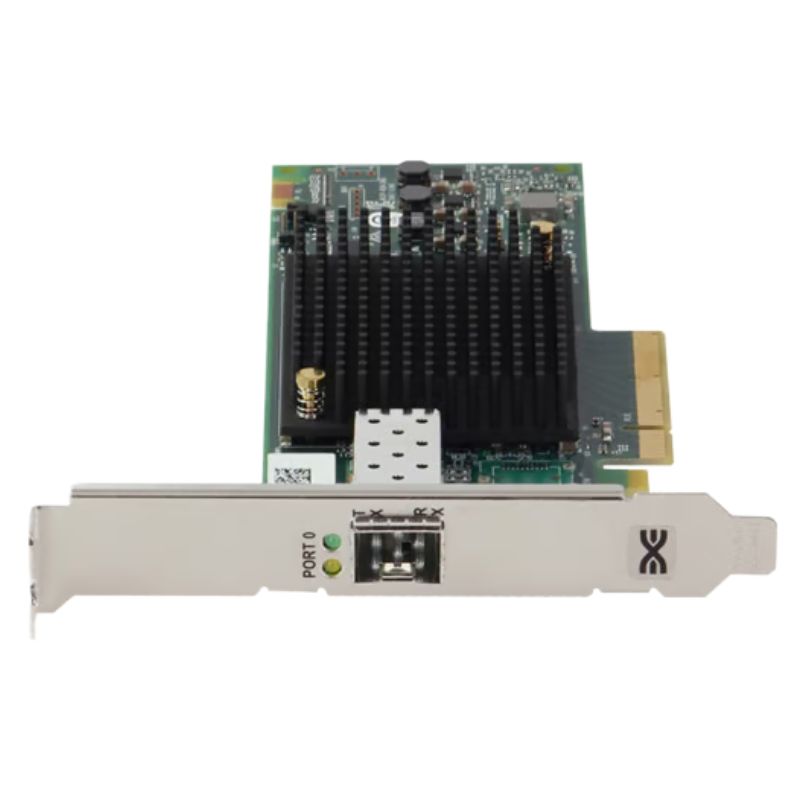


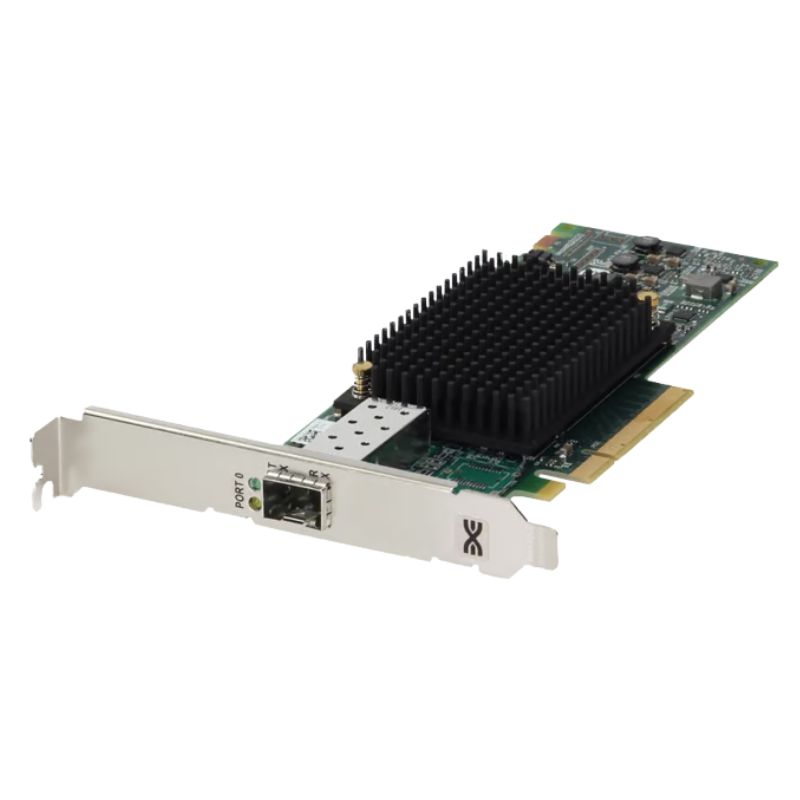
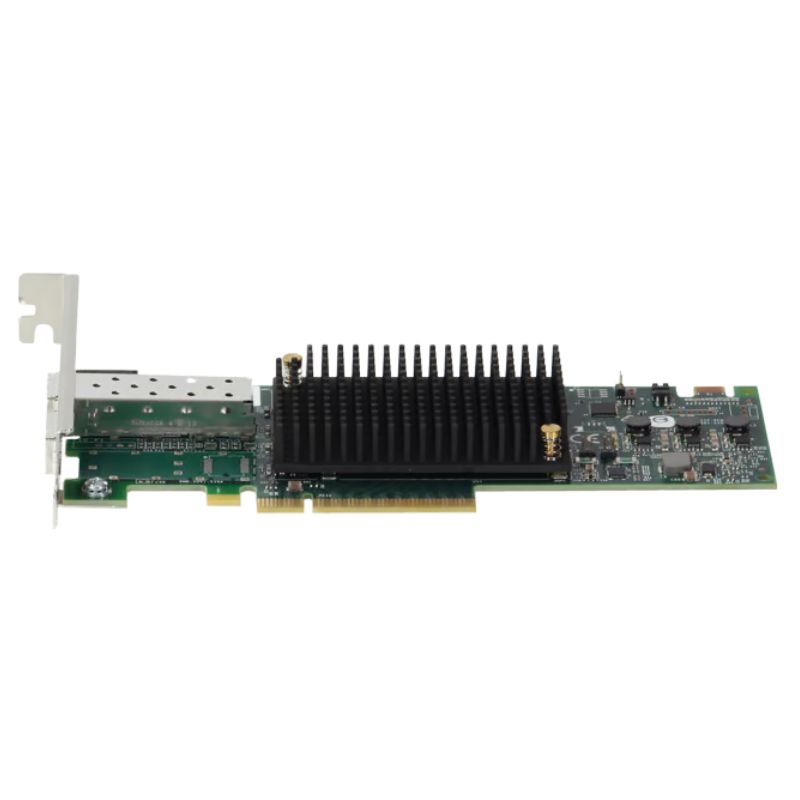
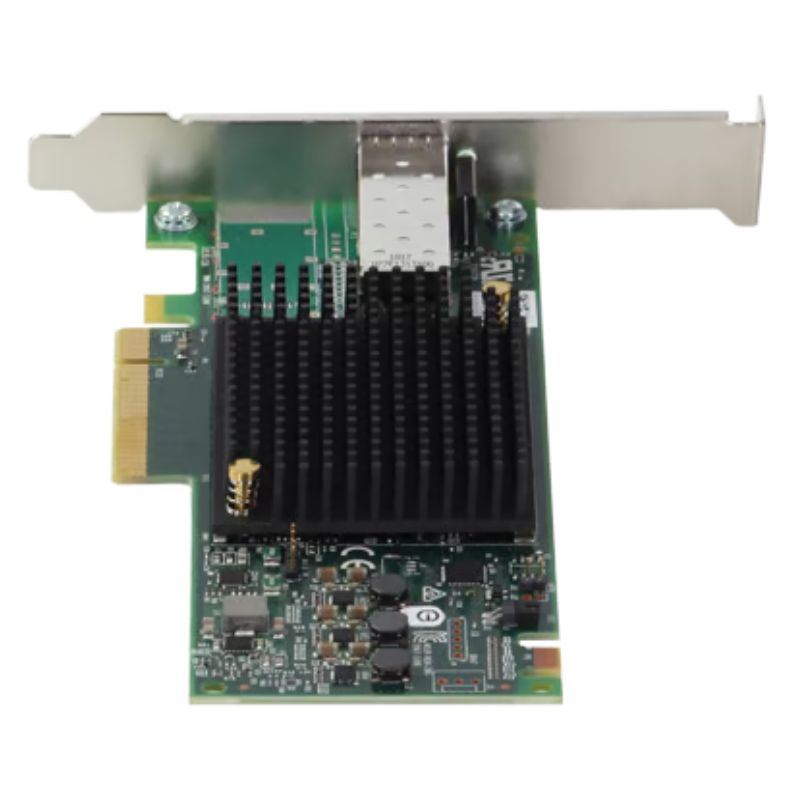
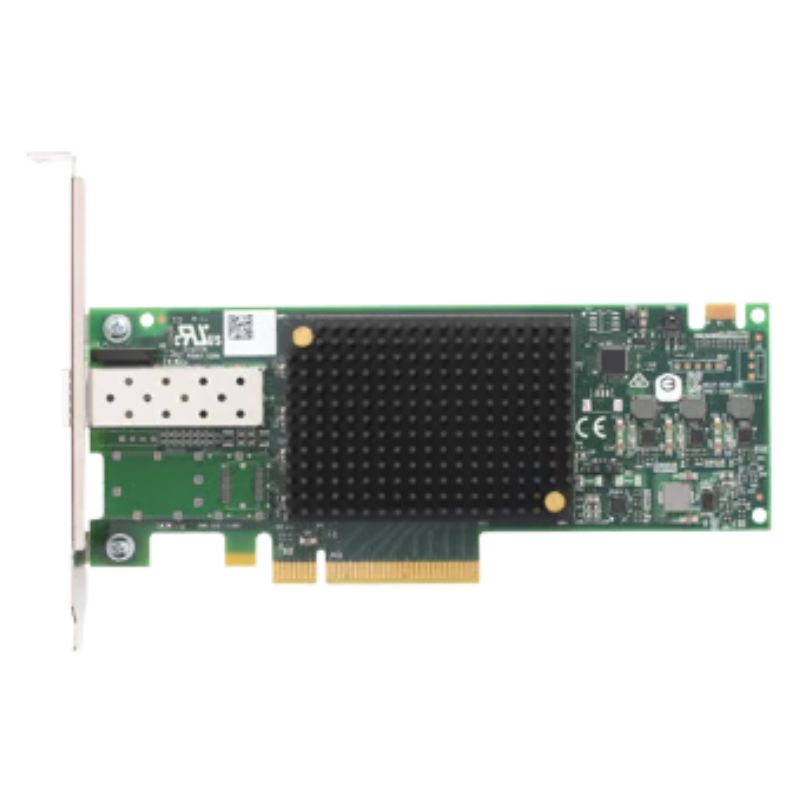
Dell 406-BBTJ Emulex Lpe35000 Single Port PCI-E 4.0 32GB Fibre Channel Sfp+ Host Bus Adapter. New (System) Pull with 1 year replacement warranty
The Dell 406-BBTJ Emulex Lpe35000 Single Port PCI-E 4.0 32GB Fibre Channel SFP+ Host Bus Adapter delivers exceptional performance for enterprise-grade networking environments. Designed with advanced Gen 7 technology, this adapter ensures high-speed data transfer, superior reliability, and seamless scalability for modern data centers.
The adapter supports a wide range of fiber optic cables for flexible deployment in various environments:
Auto-detection enables adaptive speed adjustments for optimal throughput:
This adapter utilizes shortwave lasers with LC-type connector optics, ensuring reliable and secure connections for enterprise infrastructures.
The Dell 406-BBTJ is designed to support multiple architectures:
This adapter is compatible with leading enterprise operating systems, offering robust integration options:
The Dell 406-BBTJ Emulex LPe35000 single port PCI-E 4.0 32GB Fibre Channel SFP+ Host Bus Adapter (HBA) represents a high-performance, enterprise-grade category of SAN connectivity hardware designed for demanding storage environments. This category page focuses on the LPe35000 family and closely related single-port 32Gbps Fibre Channel SFP+ HBAs that deliver low latency, high throughput, and robust feature sets for virtualization, database, backup, and high-availability clusters. The Dell Emulex LPe35000 is optimized for PCI-Express 4.0 platforms and is a natural fit for modern server architectures that need to maximize I/O density without sacrificing reliability or manageability. This category encompasses product specifications, compatibility guidance, installation best practices, performance tuning, firmware and driver considerations, management utilities, use cases, and procurement advice for IT teams focused on storage networking.
At the core of this category are several consistent technical attributes: a single SFP+ slot supporting 32 Gigabit Fibre Channel (32Gb FC), PCI-Express 4.0 x8 connectivity for host throughput, enterprise Emulex silicon with offload capabilities, low CPU overhead for storage I/O, and broad driver support across major operating systems. The Emulex LPe35000 adapter often provides hardware-assisted features such as NPIV (N_Port ID Virtualization), full fabric login support, wide port and longwave SFP compatibility, and robust error-recovery mechanisms. Its PCI-E 4.0 interface allows server platforms to fully utilize the HBA’s bandwidth potential while maintaining backwards compatibility with PCI-E 3.0 systems when necessary. From a physical perspective the single-port SFP+ form factor simplifies cabling and port management in data centers where density and port conservation are priorities.
The SFP+ interface supported by the Dell 406-BBTJ is a critical attribute of the category. SFP+ transceivers are available in both short reach and long reach variants, enabling direct connection to SAN switches or long-distance links between storage arrays and servers. Single-port HBAs reduce switch port consumption while offering native 32Gbps Fibre Channel speeds, making them ideal for high-performance single-server deployments and for consolidating traffic in hyperconverged or virtualization hosts. In practice, choosing the correct SFP+ module—whether SR, LR, or an optical transceiver suitable for the existing fiber infrastructure—affects link budget, planned reach, and interchangeability across switch and storage vendors.
Performance planning for this HBA category hinges on understanding how the adapter’s capabilities map to workload characteristics. Databases, virtualization hosts, backup targets, and streaming workloads all demand predictable latency and sustained throughput. The LPe35000 line is engineered to provide high IOPS at low latency, with features like hardware offload for protocol processing and optimized DMA engines to minimize host CPU cycles. Scalability is addressed on two dimensions: vertical scaling of a single server using a high-speed single port, and horizontal scaling by deploying multiple servers each with single-port HBAs connected to a high-density SAN switch. For large-scale SAN fabrics, administrators frequently pair single-port 32Gb HBAs with multi-port director switches, zoning strategies, and multipathing to balance load and ensure failover.
A category advantage of the Dell 406-BBTJ Emulex LPe35000 adapters is their interoperability with a wide range of servers, storage arrays, and SAN switches. Dell-branded adapters are often validated for compatibility in PowerEdge platforms, but Emulex drivers and firmwares also support leading OEMs and third-party storage vendors. This makes the adapters suitable for heterogeneous environments. Compatibility extends to support for the latest operating systems and hypervisors; administrators should verify driver and firmware versions for their specific OS build to ensure feature availability and performance parity. When integrating into an existing fabric, confirm switch firmware and port speed negotiation capabilities to avoid auto-negotiation mismatches or link down events.
The single-port 32Gb Fibre Channel HBA category is well suited to a set of practical deployment scenarios. In virtualization hosts running dozens of VMs, the LPe35000 provides the low-latency storage access required for consolidated workloads and enterprise-class storage services. In database servers where transaction rate and response time are business critical, the adapter supplies the direct, predictable path to SAN arrays. Backup targets and replication appliances benefit from the high sustained throughput. In smaller data centers or remote office environments where switch port counts are limited, the single port reduces hardware footprint and power consumption while preserving performance. For high-availability clusters, HBAs are combined with multipath I/O solutions to deliver failover resiliency and rebalancing during maintenance windows.
Virtualization platforms demand HBAs that can deliver both bandwidth and manageability. The Dell Emulex LPe35000 supports NPIV and can present multiple virtual N_Port IDs to the fabric, enabling per-VM zoning and more granular control of storage resources. Integration with VMware vSphere, Microsoft Hyper-V, and KVM environments is handled through vendor-supplied drivers and management tools that expose advanced statistics and diagnostics into the hypervisor management console. For cloud operators adopting private cloud models, the adapter’s offload features and predictable performance profile help meet SLAs for I/O bound services and support live migration of VMs with minimal storage impact.
When procuring Dell 406-BBTJ Emulex LPe35000 adapters or equivalent single-port 32Gb HBAs, buyers should prioritize compatibility with current server platforms and SAN fabric, vendor-backed driver and firmware support, and warranties or support options. Confirm whether a server vendor requires a validated SKU for warranty purposes and whether factory-installed options are preferable to field upgrades. It is prudent to purchase compatible SFP+ transceivers from reputable suppliers and to validate transceiver compatibility lists provided by both server and switch vendors to avoid interoperability surprises. Consider the lifecycle: ensure that the chosen model remains supported for the expected lifetime of the server or that migration paths exist to newer technologies over time.
The category clearly distinguishes itself from alternative storage connectivity options such as NVMe over Fabrics, iSCSI over 10/25/40GbE, and older 16Gb Fibre Channel HBAs. Compared with iSCSI, Fibre Channel HBAs typically offer lower latency and are purpose-built for storage fabrics with features tuned for block storage. NVMe over Fabrics offers superior performance for NVMe storage devices but often requires different hardware and software stacks and may not be suitable for environments standardized on block storage arrays accessed via Fibre Channel. When selecting between technologies, weigh the existing storage environment, software stack, and long-term roadmap for storage modernization.
Organizations using the Dell Emulex LPe35000 series often cite improved application response times, reduced backup windows, and simplified SAN management. Typical architectures pair single-port 32Gb HBAs with redundant SAN switches, enterprise arrays providing tiered storage, and multipath drivers to ensure continuous access. In virtualized clusters, zoning and NPIV are used to allocate storage resources per tenant or application, while in database clusters, the HBA’s predictable latency characteristics contribute to consistent transaction throughput. These real-world deployments emphasize planning around fabric capacity and ensuring firmware parity across hosts for consistent behavior.
Maintaining a lifecycle plan for HBAs includes tracking firmware and driver EOL (end of life) notices, scheduling periodic firmware audits, and planning hardware refresh cycles that align with server and storage array lifecycles. For organizations with strict change controls, maintain a test lab for validating firmware updates before production rollout. End-of-support considerations should influence procurement choices; selecting an adapter with long vendor support cycles reduces risk and simplifies security patching. When a migration is planned toward newer fabric technologies, maintain compatibility bridges to minimize disruption.


 Contact Us
 Information
 Catalog
 Solid State Drives (SSD)
 Network Switches
 Hard Disk Drives
 HBA & Controllers
 PC & Servers
 PC & Server Memory
 CPU & Processors
 Network Routers
 Power Supplies
 Tape Drives & Libraries
 Network Devices
 Computer & Network Cables