(7% discount is applied at checkout)
Cart is empty
Your go-to destination for cutting-edge server products
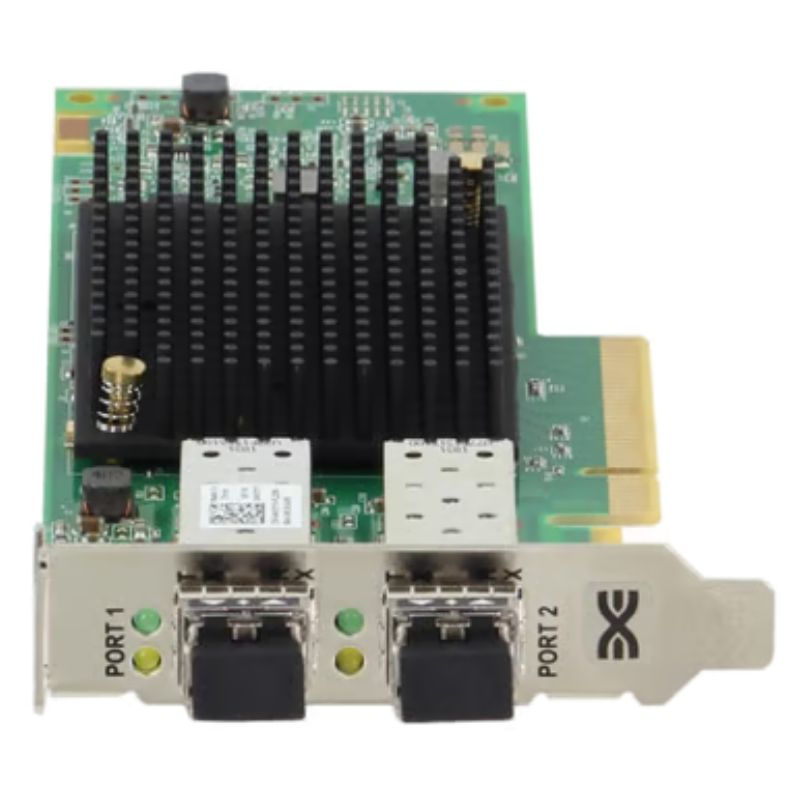


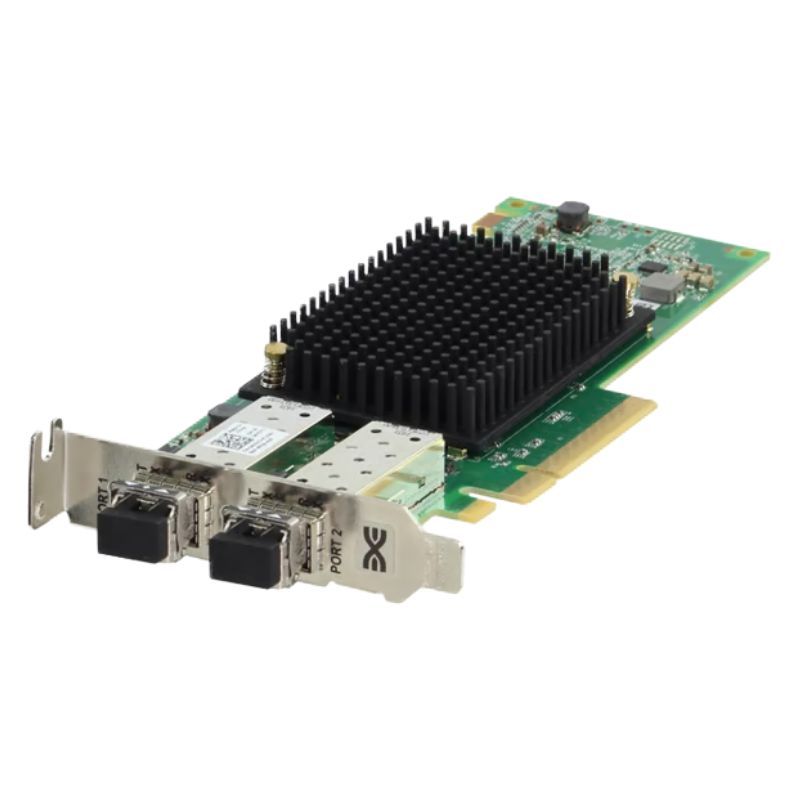
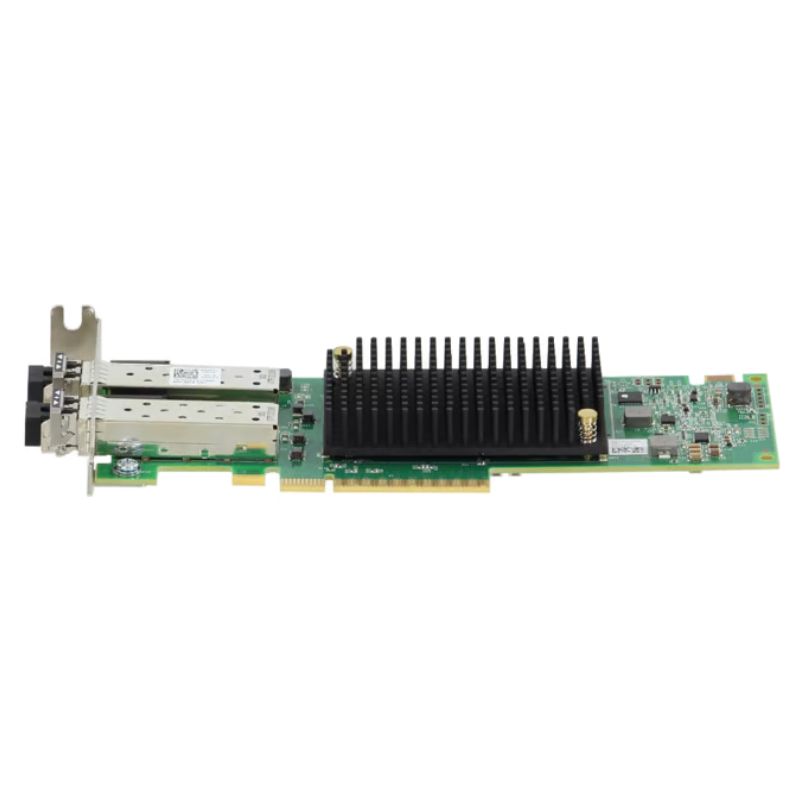
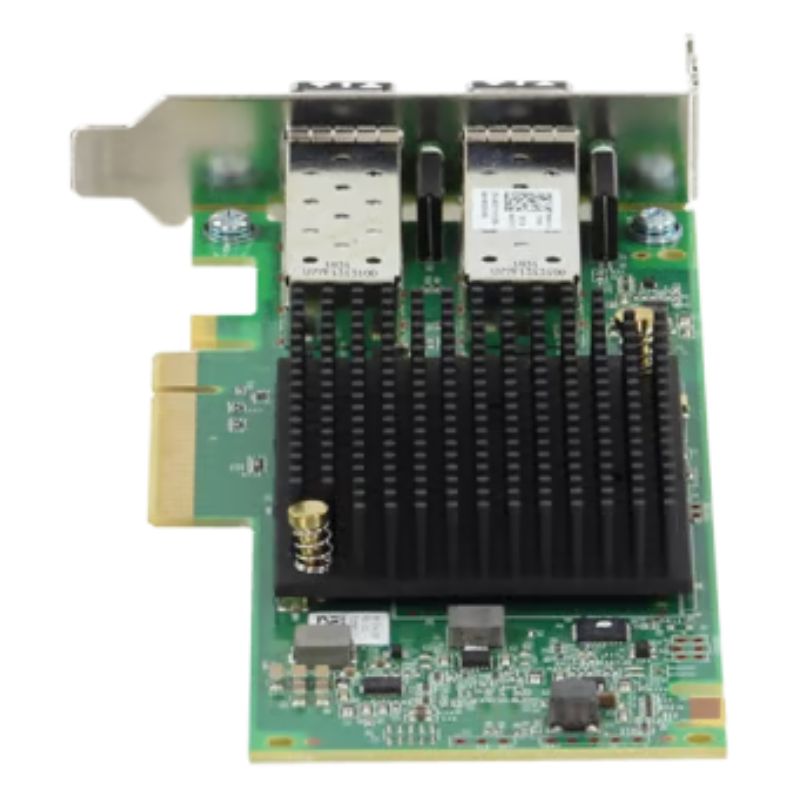
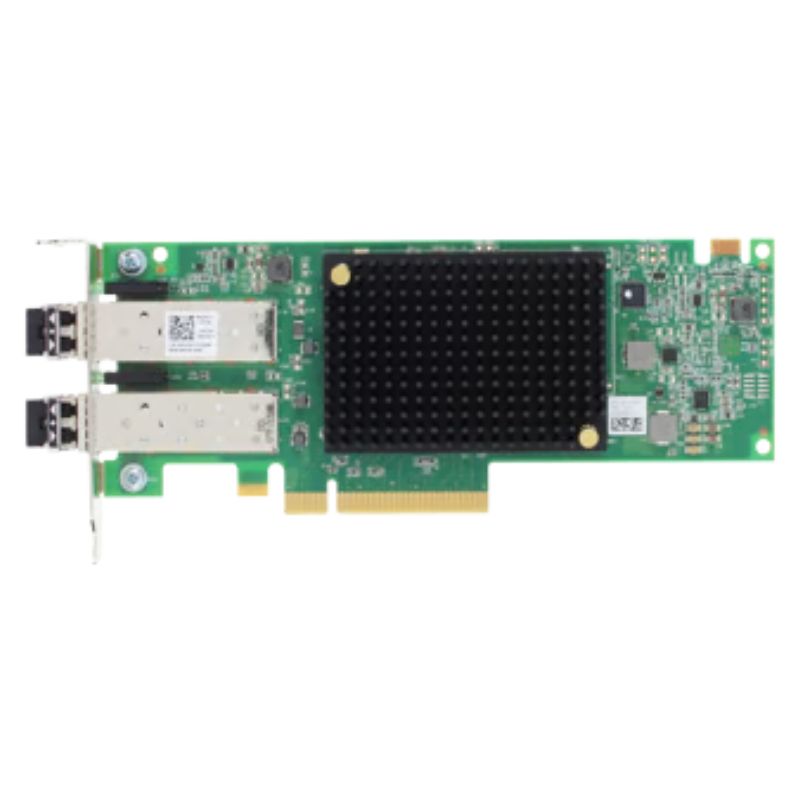
Dell 406-BBTM LPE35002 32GB Dual Ports PCI-E X8 Fiber Channel Host Bus Adapter. New (System) Pull with 1 year replacement warranty
The Dell 406-BBTM LPE35002 is a powerful 32GB dual-port PCIe x8 Fibre Channel Host Bus Adapter designed for enterprises requiring reliable connectivity, superior bandwidth, and efficient performance in data-intensive environments. Its advanced hardware architecture delivers seamless communication between servers and storage infrastructures.
This model is built as a short, low-profile PCIe card, making it ideal for compact server installations without compromising efficiency.
The Dell 406-BBTM LPE35002 32GB Dual Ports PCI-E x8 Fibre Channel Host Bus Adapter (HBA) represents a high-performance class of storage connectivity hardware designed for enterprise-class SAN deployments, virtualized data centers, and high-throughput transactional environments. This category page focuses on the 32Gb Fibre Channel HBA family—specifically the Dell LPE35002 series—detailing performance characteristics, compatibility considerations, deployment patterns, and purchasing guidance for IT architects, system administrators, and procurement teams seeking reliable and low-latency connectivity between servers and shared storage arrays. Emphasis throughout is placed on practical integration, scalability, firmware and driver management, and the ways this HBA accelerates storage I/O and improves overall application responsiveness.
In practical deployments, the difference a 32Gb HBA makes is observable in faster backup windows, lower database query times, and smoother VM migrations. When paired with well-configured SAN arrays and modern switch fabrics, the LPE35002 helps reduce I/O wait times and avoids common storage bottlenecks. For I/O-intensive applications—such as OLTP databases, large-scale analytics, or media rendering farms—the adapter’s capacity to maintain high IOPS with minimal latency can translate directly into business value by reducing processing time and increasing system throughput. Proper fabric design and end-to-end testing are essential to realize these benefits, and this category section encourages buyers to evaluate the entire data path from initiator to storage target.
One of the primary considerations for selecting a Dell 406-BBTM LPE35002 HBA is ensuring firmware, driver, and operating system compatibility. Because HBAs function at the intersection of server hardware and SAN infrastructure, buyers should verify support matrices for their specific server models and OS versions. The LPE35002 is commonly validated with major enterprise server platforms and a wide range of SAN switches and arrays, but administrators must still confirm that the latest vendor drivers and firmware updates are applied to avoid interoperability issues. Multiprotocol fabrics, mixed-speed environments, and third-party transceivers should be validated in lab environments before production rollouts to prevent unexpected downgrades in line speed or link negotiation challenges.
Although the HBA itself sets the interface standard, the choice of optical transceivers and fibre cabling will influence real-world performance and reach. Selecting manufacturer-recommended SFP modules and fibre grades ensures reliable link negotiation and error rates across distances. In dense rack layouts or when connecting across data halls, administrators must plan port utilization and zoning carefully to sustain signal integrity and minimize error recovery events. The category content here advises on fabric best practices: redundant zoning, careful zoning naming conventions, and avoiding oversubscription at critical switching points. Proper zoning and fabric monitoring complement the HBA’s capabilities and help maintain consistent SLAs.
The 32Gb dual-port HBA is particularly well-suited to virtualized infrastructures where many virtual machines share a single physical storage backend. In hyperconverged or hypervisor-based setups, the LPE35002 enables high-density VM consolidation without sacrificing I/O performance. For database servers, predictable latency and sustained throughput reduce transaction times and improve concurrency. Backup and replication hosts also benefit from the adapter’s capacity to move large datasets quickly, accelerating backup windows and recovery point objectives. Each scenario requires careful tuning of multipathing software, queue depths, and fabric Quality of Service settings to align host behavior with storage array characteristics.
To extract optimal performance from the LPE35002, system administrators should review and tune host-level settings such as queue depth, interrupt moderation, and driver parameters. Multipathing policies must be aligned with the SAN and application needs; for instance, round-robin balancing may enhance throughput for some workloads while adaptive policies could reduce failover times for others. Integrating monitoring tools that surface HBA metrics—link utilization, error counters, and latency distributions—helps teams detect early signs of fabric congestion or hardware issues. The category deeply encourages consistent change control processes for firmware and driver upgrades to minimize disruption in production environments.
As organizations plan for growth, the right HBA choice becomes a strategic decision. The dual-port 32Gb interface offers headroom for scaling storage traffic without immediate hardware refreshes. Its presence in a server population allows IT teams to adopt a phased approach to increasing fabric speeds or expanding SAN capacity. For environments anticipating higher throughput requirements or emerging workloads like containerized databases and AI training datasets, the LPE35002 provides a stable, well-understood technology base. However, architects should also evaluate roadmap alignment with evolving standards to determine when investment in higher-speed fabrics would be warranted.
Beyond the sticker price of the adapter, total cost of ownership includes support contracts, firmware lifecycle management, spare parts, and the operational overhead of SAN administration. Choosing a widely adopted HBA like the Dell LPE35002 often reduces risk because it has established vendor support channels, plentiful documentation, and clear upgrade paths. Procurement teams should balance initial acquisition cost with long-term reliability and compatibility benefits. In many cases, purchasing certified hardware bundles that include transceivers and validated firmware can avoid cross-vendor compatibility surprises and speed deployment timelines.
Keeping the HBA’s firmware and drivers current is essential for stability, security, and performance. Regularly applying vendor-released updates addresses known vulnerabilities, resolves edge-case interoperability issues, and can introduce performance optimizations. The category content recommends establishing a scheduled maintenance window for firmware testing and deployment, combined with a rollback plan if regressions occur. Comprehensive logging and version tracking enable teams to correlate issues with recent changes. For regulated industries, documenting firmware versions and change approvals supports audit readiness and compliance reporting.
Before deploying new driver or firmware versions to production, validate changes in a staging environment that mirrors production topology. Testing should include link failover scenarios, mixed-speed negotiation, and interactions with multipathing layers. Running synthetic I/O tests and representative workloads during validation helps predict performance impacts. The category page underscores the importance of vendor release notes and compatibility matrices as authoritative guidance for update scheduling and risk assessment.


 Contact Us
 Information
 Catalog
 Solid State Drives (SSD)
 Network Switches
 Hard Disk Drives
 HBA & Controllers
 PC & Servers
 PC & Server Memory
 CPU & Processors
 Network Routers
 Power Supplies
 Tape Drives & Libraries
 Network Devices
 Computer & Network Cables