(7% discount is applied at checkout)
Cart is empty
Your go-to destination for cutting-edge server products
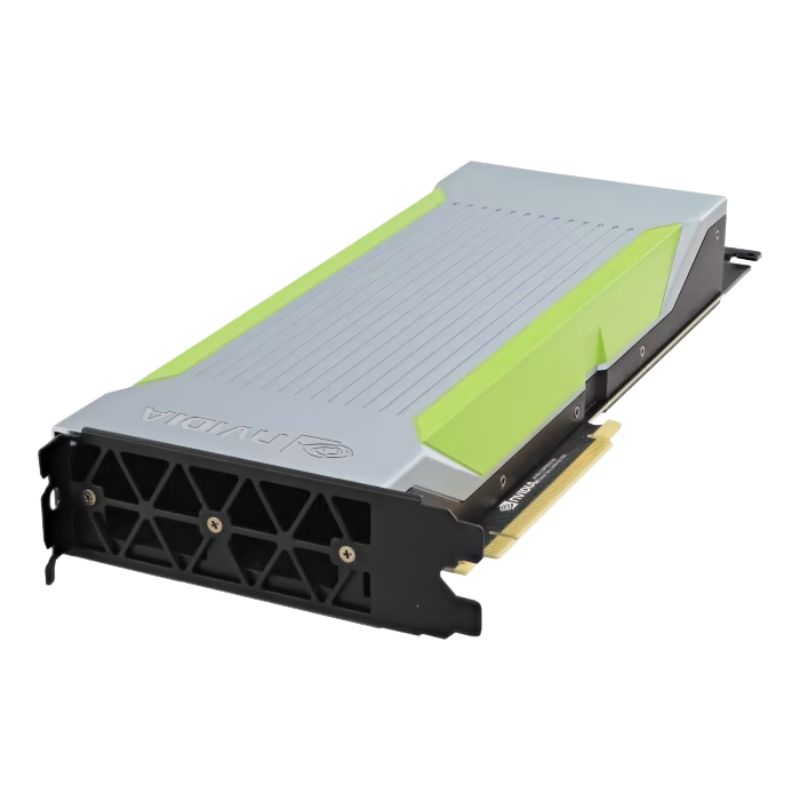


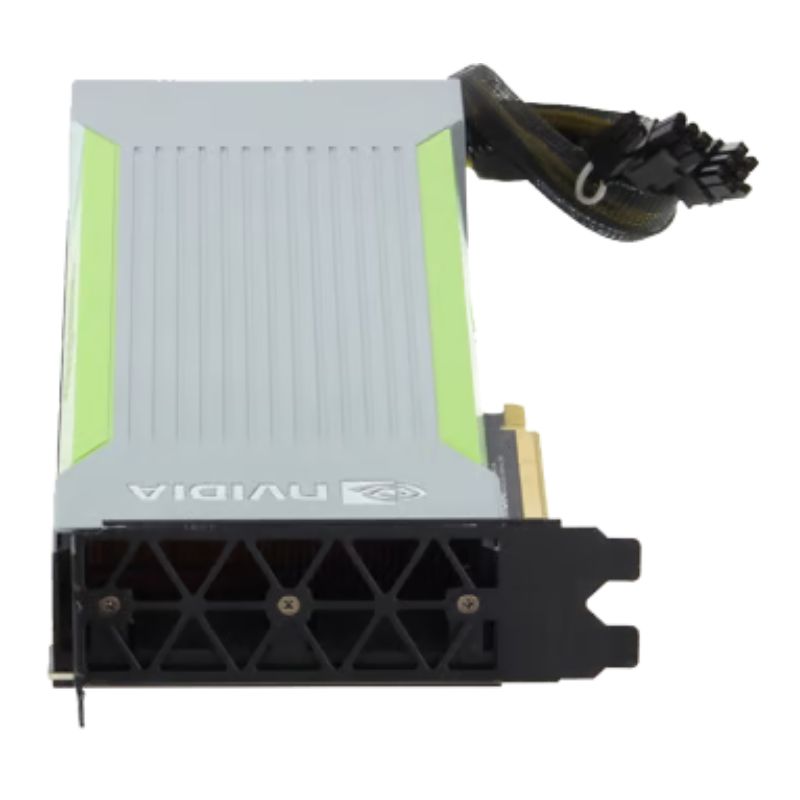
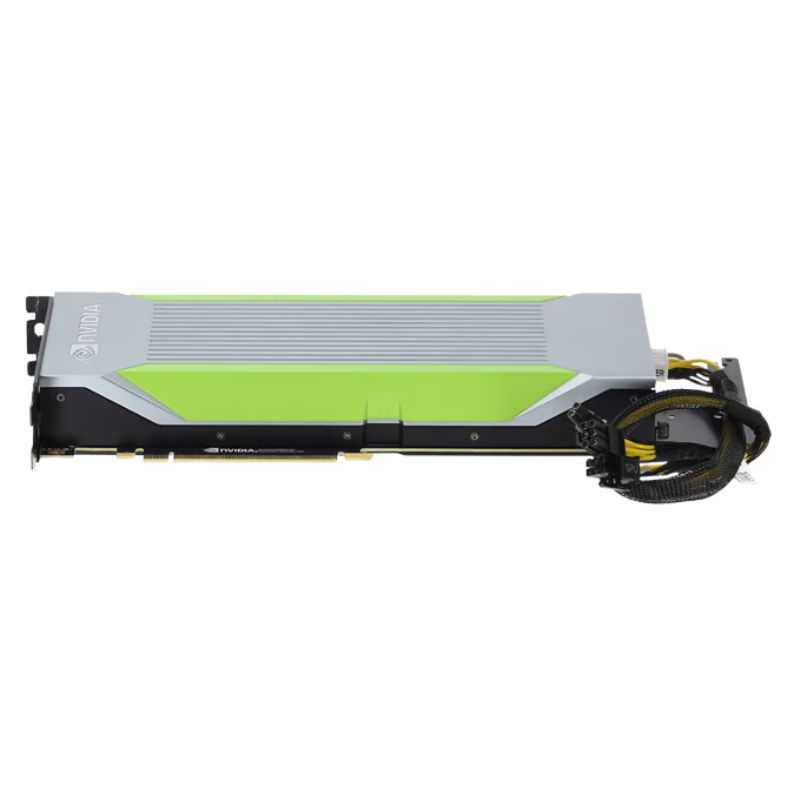
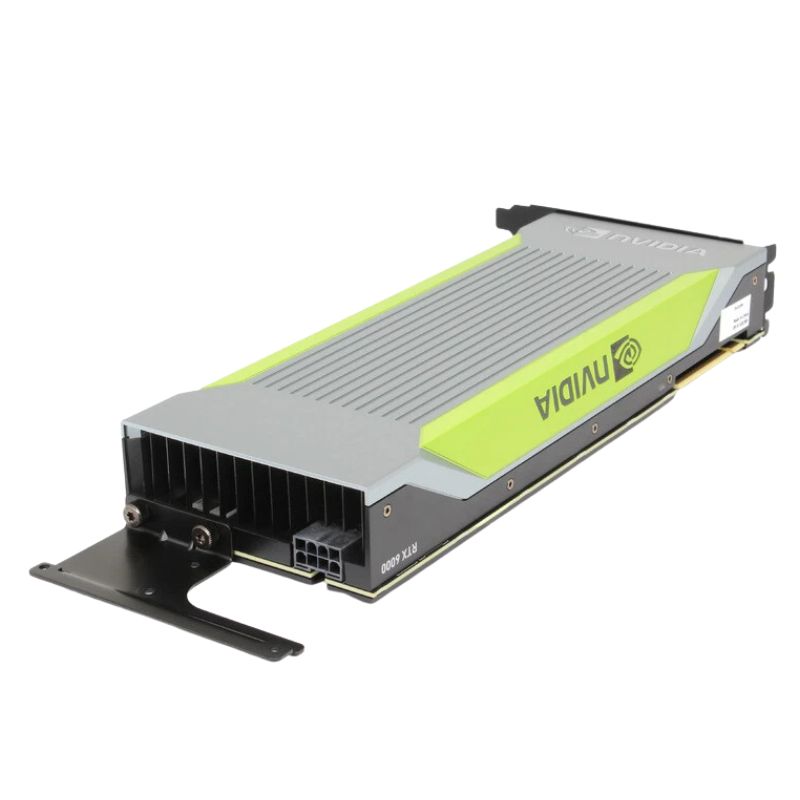
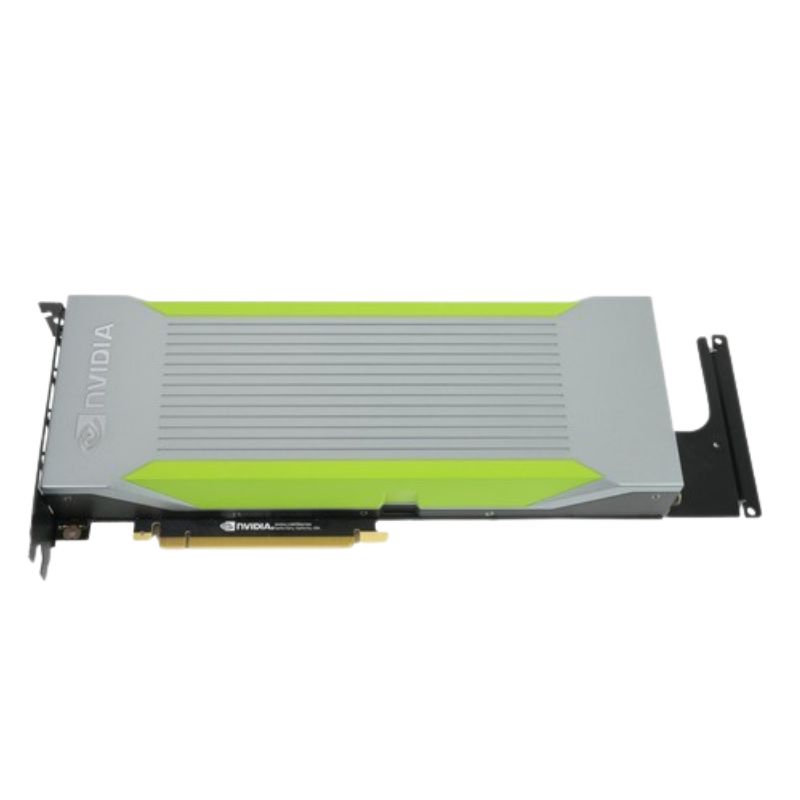
Dell 490-BFSU NVIDIA Quadro RTX 6000 24GB GDDR6 Graphics Card Passive Cooled. Excellent Refurbished with 1 Year Replacement Warranty
The Dell 490-BFSU NVIDIA Quadro RTX 6000 is designed to deliver ultra-fast rendering, advanced AI capabilities, and real-time ray tracing. With an outstanding architecture featuring 4608 CUDA cores, 72 RT cores, and 576 Tensor cores, this workstation GPU redefines professional visualization and computing efficiency.
These performance metrics make the RTX 6000 an excellent choice for deep learning, data science, and AI model training.
Equipped with 24GB of GDDR6 ECC memory and a 672 GB/sec memory bandwidth, this GPU supports complex datasets and high-resolution modeling workflows. It ensures stable and efficient data transfer even under heavy professional workloads.
Whether you're working on 3D animation, CAD, or VR development, the card’s exceptional ray tracing and rendering features accelerate production timelines.
This GPU is passively cooled to suit dense workstation or server environments, maintaining performance stability while minimizing noise. Its maximum power consumption of 250W ensures reliable efficiency during demanding computational tasks.
The Dell 490-BFSU NVIDIA Quadro RTX 6000 24GB GDDR6 graphics card sits at the high end of professional visual computing, delivering a rare combination of massive frame buffer capacity, true workstation-grade drivers, and accelerated hardware for ray tracing, AI-assisted workflows, and large-scale visualization. This category page focuses specifically on the passive-cooled variant, a design choice that targets noise-sensitive professional environments, rack-mounted workstations, and thermally managed chassis where airflow is controlled by the system rather than the card. If your projects demand uncompromised precision, predictable driver support, and GPU memory to handle multi-gigabyte datasets, render caches, and complex simulations, this category addresses those needs from procurement to deployment.
The Quadro RTX 6000 architecture builds on NVIDIA's Turing and subsequent professional-class refinements, combining dedicated RT cores for hardware accelerated ray tracing, Tensor cores optimized for deep learning and AI-augmented tasks, and high-throughput CUDA cores for general compute. The 24GB of GDDR6 on this Dell-branded SKU provides a broad memory ceiling that enables multi-layer compositing, ultra-high-resolution texture sets, volumetric datasets, and large working sets in scientific and engineering applications. For teams working on photorealistic content creation, simulation, or point cloud processing, the extended VRAM reduces the need for cumbersome dataset partitioning and minimizes memory thrash during complex renders.
Dedicated RT cores in the Quadro RTX family accelerate BVH traversal and ray/triangle intersection algorithms, enabling artists and engineers to iterate with interactive lighting previews rather than waiting for final passes. The passive-cooled Dell 490-BFSU maintains the same silicon and core counts as its actively cooled siblings, delivering identical hardware path acceleration for ray traced shadows, reflections, global illumination, and ambient occlusion. When deployed in well-cooled workstations or data center chassis with strong directed airflow, passive cooling does not degrade the GPU’s ability to sustain complex rendering workloads. Instead, it often improves acoustic conditions for creative professionals who require quiet environments for color grading, audio post-production, or client presentations.
Tensors cores on the RTX 6000 accelerate matrix operations foundational to AI inference and training shortcuts. In creative applications, these cores are leveraged for denoising, upscaling, and intelligent image enhancement. In engineering and scientific computing, tensor acceleration expedites sparse linear algebra routines and machine learning models used for predictive simulations, anomaly detection, and pattern recognition. The Dell variant preserves vendor-optimized firmware and is validated with major ISV applications, so when you run denoising passes in rendering engines or AI-based segmentation in digital content creation suites, the card delivers consistent and certified performance characteristics.
Passive cooling refers to a heatsink-only thermal solution without an integrated blower or fan on the card itself. This design choice favors acoustics and the ability to place the GPU in environments where local fan noise is undesirable. The passive Dell 490-BFSU is engineered to rely on system-level airflow to evacuate heat. As such, system builders and IT teams should be deliberate about chassis selection, intake/exhaust fan planning, server rack airflow, and ambient temperature thresholds. When combined with proper airflow management, the passive RTX 6000 provides excellent thermal stability and sustained performance.
Passive-cooled cards are quieter and often preferred for content creation studios, broadcast environments, and meeting rooms where noise can interfere with audio monitoring and critical listening. Beyond acoustic benefits, the absence of on-card fans can simplify maintenance in multi-GPU systems because there are fewer moving parts to fail. For long-term reliability in professionally maintained racks and workstations, passive designs can be advantageous when paired with enterprise-class environmental controls.
To achieve optimal performance with a passive card, system integrators should ensure that chassis airflow produces sustained positive pressure paths over the GPU heatsink. Rack servers and tower workstations should be configured with intake fans positioned to deliver directed airflow across the card's fin array, and exhaust fans should be placed to remove heated air efficiently. Ambient temperature must be monitored; passive cards tolerate professional workload heat but will throttle if chassis cooling is inadequate. Administrators should validate thermal headroom through stress testing, and where necessary, adjust fan curves, add ducting, or ensure that neighboring components do not block air pathways.
One core differentiator for Quadro-class cards like the RTX 6000 is the rigorous ISV certification and driver validation cycle. Dell's 490-BFSU Quadro RTX 6000 ships with drivers and firmware that are typically tested and certified against software packages used in CAD, CAM, DCC, GIS, and medical imaging. This validation reduces risk for studios and enterprises by ensuring predictable behavior with major applications. Professional drivers prioritize stability, accurate color management, and feature parity for professional APIs and SDKs, eliminating many of the unpredictable behaviors that can appear with consumer-grade drivers.
Clients who use the Dell Quadro RTX 6000 for design and engineering workflows benefit from tested interoperability with leading suites. When paired with Dell's workstation hardware and validated drivers, the card supports complex assemblies, large simulation datasets, and advanced rendering pipelines without extensive driver tuning. This is especially critical for industries with strict verification standards such as automotive, aerospace, and architectural visualization where model fidelity and reproducibility are essential.
Maintaining certified driver versions is a best practice for production environments. Enterprises frequently rely on a defined driver baseline to prevent regression in critical applications. Dell and NVIDIA publish driver release notes and security advisories; system administrators should coordinate update cycles with application owners, test new drivers on staging systems, and follow change control procedures before wide deployment. This careful approach minimizes downtime and protects validated workflows.
The Quadro RTX 6000 excels across a broad performance spectrum. In compute-heavy tasks using CUDA, such as physics simulation or GPU-accelerated data processing, the card offers high single-GPU throughput. For rendering, whether in viewport previews or final frame renders utilizing hardware ray tracing, the RTX 6000 provides substantially faster iteration times compared to previous-generation pro cards. Visualization workloads that handle large meshes, dense point clouds, or high-resolution textures leverage the expansive 24GB framebuffer to maintain interactive frame rates while manipulating complex scenes.
Benchmarks are useful for baseline comparisons, but production throughput depends on the entire system: CPU, memory bandwidth, storage I/O, and driver configuration. In many content creation tasks, GPU memory becomes the gating factor, and the 24GB capacity minimizes out-of-core transfers to system memory. Users should benchmark with datasets that mirror their production pipelines—realistic texture sizes, complex shader stacks, and final render settings—to understand how the card will perform in situ.
While the RTX 6000 supports multi-GPU setups for certain workloads, the passive cooling variant requires careful attention to slot spacing, airflow, and power distribution. Multi-GPU scaling benefits rendering engines that support distributed rendering or frameworks that parallelize large neural network inference tasks. For compute clusters and virtualization environments, NVLink and GPU virtualization features provide additional avenues for scaling, though these often require specific driver stacks and host hardware support.
The Dell Quadro RTX 6000 passive-cooled card is particularly well-suited to professional scenarios that balance the need for high GPU memory and deterministic performance with a controlled, quiet environment. Film and VFX studios benefit from large framebuffers for compositing and high-resolution playback. Architectural firms and product design teams gain the ability to visualize complex assemblies with accurate lighting and materials. Scientific research centers and medical imaging facilities use the extended memory for volumetric datasets and 3D reconstructions. Additionally, broadcast studios and audio-visual presentation environments appreciate the acoustic benefits when paired with noise-controlled chassis.
In editing and post-production, the RTX 6000 enables smoother scrubbing through timelines composed of high-bitrate codecs, layered effects, and multiple tracked elements. GPU-accelerated effects, color grading transforms, and noise reduction algorithms execute faster and more responsively when the GPU can keep large frame caches resident in VRAM. Passive cooling ensures quieter edit bays, which is particularly important where audio mixing and ADR sessions occur in proximity to visual artists.
Engineering teams leverage the card for finite element analysis visualization, high-density CAD rendering, and simulation post-processing. Large mesh datasets and dense point clouds used in LiDAR processing and geospatial analysis benefit from the substantial memory footprint and compute acceleration. For scientific visualization, the card enables researchers to interactively explore multi-terabyte datasets when used in tandem with high-bandwidth storage and properly configured host systems.


 Contact Us
 Information
 Catalog
 Solid State Drives (SSD)
 Network Switches
 Hard Disk Drives
 HBA & Controllers
 PC & Servers
 PC & Server Memory
 CPU & Processors
 Network Routers
 Power Supplies
 Tape Drives & Libraries
 Network Devices
 Computer & Network Cables