(7% discount is applied at checkout)
Cart is empty
Your go-to destination for cutting-edge server products
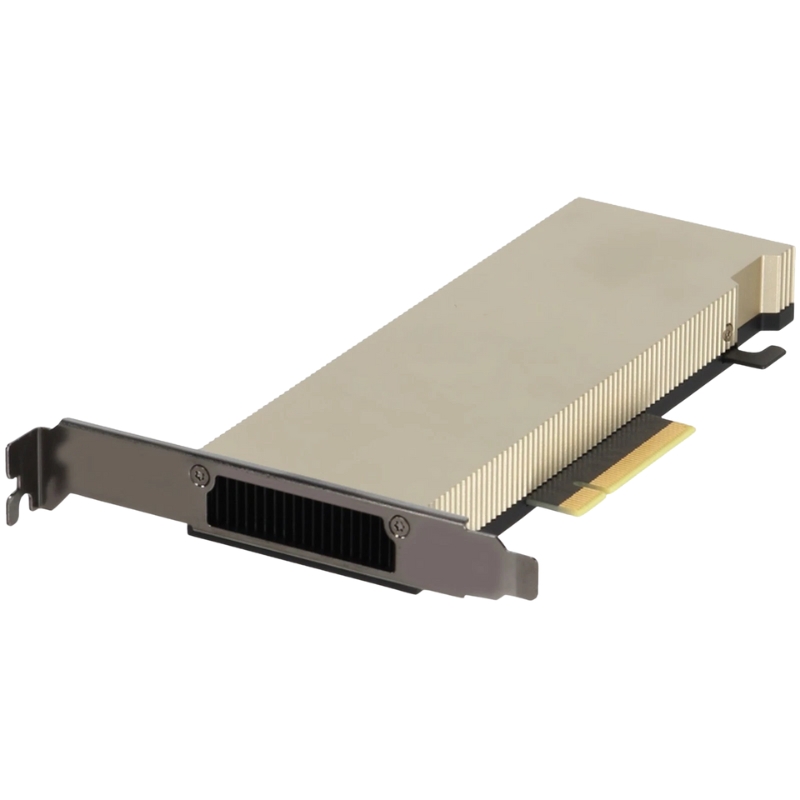


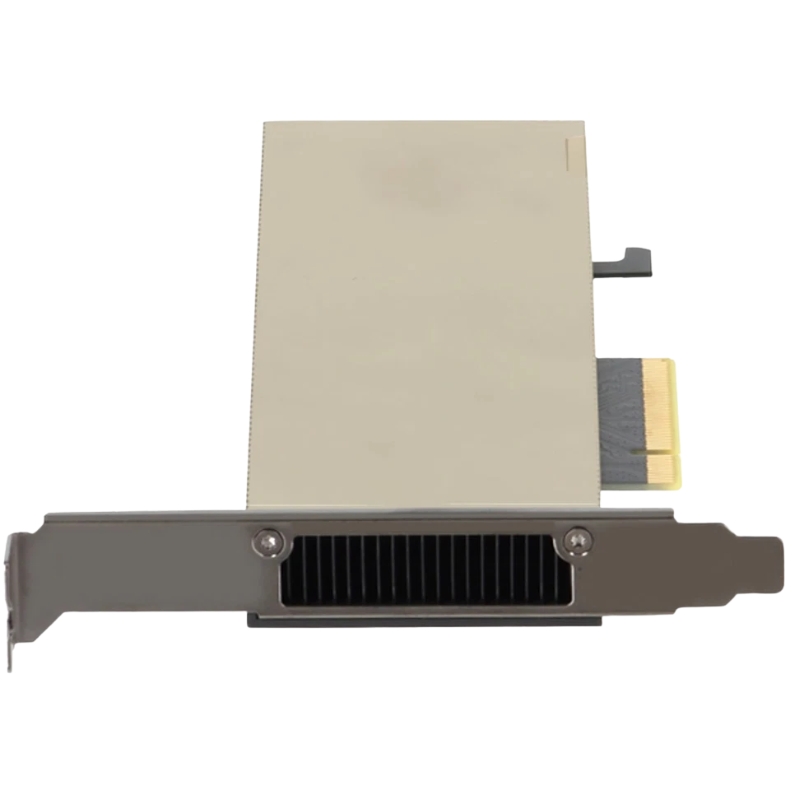
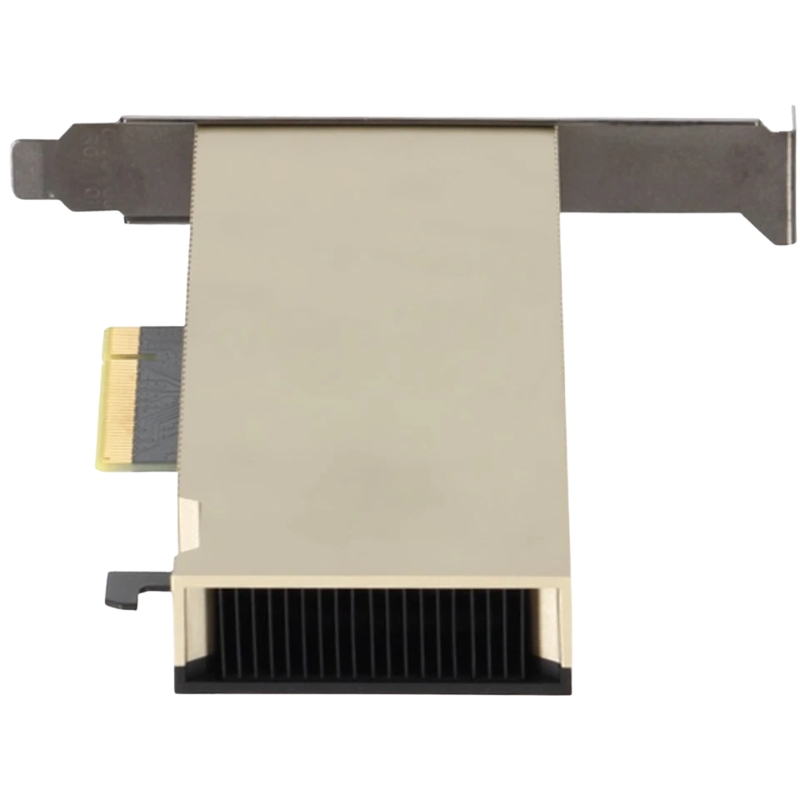
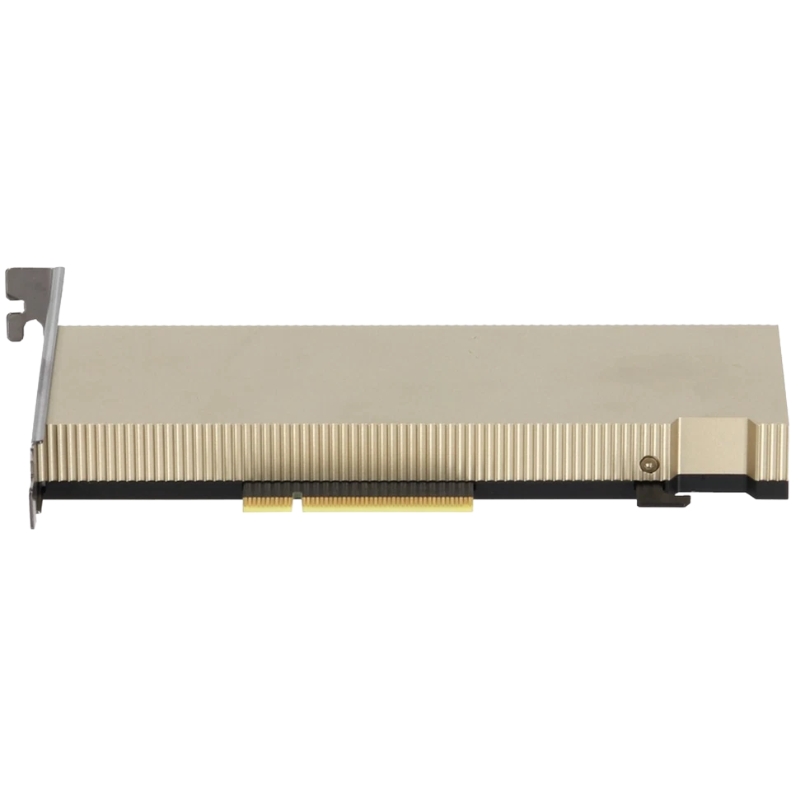
Dell 490-BHVP Nvidia A2 Tensor Core GDDR6 60W FHHL SW FH 16GB PCI-E GPU. Excellent Refurbished with 1 Year Replacement Warranty
The Dell 490-BHVP is a professional-grade graphics processing unit built around Nvidia's groundbreaking Ampere architecture, specifically the A2 Tensor Core GPU. Its 16GB of GDDR6 memory and robust Tensor Cores deliver the necessary computational throughput for machine learning and deep learning tasks without the excessive power draw of larger, more expensive GPUs.
The Dell 490-BHVP is a professional-grade graphics processing unit built around the revolutionary Nvidia Ampere architecture. This PCI-E card, furnished in a flexible Single-Width, Full-Height, Half-Length (SW FHHL) form factor, encapsulates the power of Nvidia's A2 Tensor Core GPU. Designed for data center, edge computing, and specialized workstation environments, it delivers an exceptional balance of performance, power efficiency, and space-conscious design. Its core mission is to accelerate AI inferencing, video transcoding, and virtual desktop infrastructure (VDI) at the edge, bringing data center-class capabilities to compact and power-constrained deployments.
The Dell part number 490-BHVP provides specific information about the card's configuration and intended use. As a Dell-manufactured board, it adheres to stringent quality and compatibility standards for enterprise integration. This model features the passive heat sink cooling solution, indicated by its design, making it ideal for systems with strong, directed chassis airflow commonly found in servers and purpose-built appliances. The inclusion of "Nvidia A2" confirms the underlying GPU silicon, while "16GB GDDR6" specifies the high-speed memory capacity. The "FHHL" and "60W" descriptors are critical for system integrators, confirming its compact dimensions and low thermal design power, which allows for broad deployment compatibility.
At the core of the Dell 490-BHVP lies the Nvidia A2 GPU, engineered on the cutting-edge Ampere architecture. This represents a significant leap in efficiency and performance per watt. The architecture introduces enhanced Tensor Cores and improved streaming multiprocessors (SMs) that deliver faster AI and compute performance compared to previous generations. These advancements are pivotal for running complex neural networks and parallel processing tasks with reduced latency and power consumption, making the A2 an optimal solution for scalable edge AI deployments.
The A2 GPU integrates a dense array of CUDA Cores, the parallel processing workhorses of the Nvidia architecture. These cores are organized within advanced Streaming Multiprocessors (SMs) that provide tremendous throughput for diverse computational workloads, from scientific simulations to graphics rendering in virtualized environments.
A defining feature of the Ampere architecture is its third-generation Tensor Cores. These specialized units accelerate matrix operations, which are fundamental to AI and deep learning inferencing. For the Dell 490-BHVP, this means the ability to efficiently run models for image recognition, natural language processing, and predictive analytics at the network edge, where data is generated and immediate insight is critical.
The technical specifications of the Dell 490-BHVP are meticulously crafted to meet the demands of modern accelerated computing. Below is a comprehensive breakdown of its key hardware and performance characteristics.
Based on the Nvidia A2 GPU, this card offers a precise balance of capabilities tailored for inference and light compute. Its performance metrics are optimized for efficiency rather than peak FP32 throughput, aligning with its role in cost- and power-sensitive scenarios.
The substantial 16GB of GDDR6 memory is a standout feature. This high-bandwidth memory interface is crucial for handling large AI models, multiple concurrent video streams for transcoding, or supporting numerous virtual desktop users. The GDDR6 technology provides faster data transfer rates compared to previous GDDR generations, reducing bottlenecks in memory-intensive applications and ensuring smooth performance during inferencing on complex datasets.
Paired with a wide memory bus, the GDDR6 memory delivers high bandwidth, enabling rapid access to the model weights and data required for real-time AI processing. This is essential for maintaining high throughput and low latency in server and edge computing applications.
The card's 60W Thermal Design Power (TDP) is a key engineering achievement. It allows the GPU to deliver meaningful acceleration while staying within strict power envelopes. This low power consumption minimizes heat output, reduces operational costs, and enables deployment in systems without high-wattage PCIe power connectors, often drawing power directly from the PCI Express slot.
The Dell 490-BHVP utilizes a passive heat sink. This fanless design eliminates a potential point of mechanical failure, ensuring higher reliability and silent operation—a vital characteristic for noise-sensitive environments like retail, medical imaging, or quiet offices. Effective cooling relies on system chassis airflow, typically provided by high-performance server fans.
The Single-Width, Full-Height, Half-Length (SW FHHL) form factor is central to the card's versatility. Its "half-length" design (typically under 6.6 inches in length) allows it to fit into a vast array of compact servers, edge appliances, and small-form-factor workstations where space is at a premium. The single-width occupancy preserves adjacent PCIe slots for additional I/O or network cards.
The card is designed for a PCI Express x16 slot, ensuring maximum data transfer bandwidth between the GPU and the host system's CPU and memory. It is backward compatible with PCIe 3.0 slots, though for optimal performance, installation in a PCIe 4.0-capable system is recommended to leverage the increased bandwidth.
The Dell 490-BHVP Nvidia A2 is not a general-purpose gaming or desktop graphics card; it is a precision instrument for specific commercial and industrial workloads. Its design parameters are optimized for the following key applications.
The GPU is ideally suited for use with Nvidia's Triton Inference Server software, which simplifies the deployment of AI models from all major frameworks (TensorFlow, PyTorch, ONNX) at scale. The 16GB memory allows multiple models to be hosted concurrently on a single card, serving numerous inference requests simultaneously.
With dedicated hardware encoders and decoders (NVENC/NVDEC), the A2 GPU excels at video processing. The Dell 490-BHVP can efficiently transcode multiple high-resolution video streams in real-time. This is invaluable for media and entertainment workflows, surveillance systems converting raw feeds, or video conferencing solutions that need to adapt stream quality for different client devices.
The card supports modern codecs like H.264, H.265 (HEVC), and AV1, providing flexibility for various industry standards. Its ability to handle multiple 4K streams concurrently makes it a cost-effective solution for building dense, scalable media servers.
In VDI deployments, GPUs are used to offload graphic rendering from the host server, providing a smooth and responsive user experience for tasks like 3D CAD, software development, and general office applications. The A2 GPU, with its 16GB frame buffer, can support a high density of users per card when paired with hypervisor software like VMware vSphere, Citrix Hypervisor, or Microsoft Hyper-V with GPU partitioning (vGPU).
Through licenses for Nvidia virtual GPU (vGPU) software, the physical A2 GPU can be divided into multiple virtual GPUs, securely allocating GPU resources to individual virtual machines. This allows IT administrators to right-size GPU performance for different user groups, from knowledge workers to power users, all from a single, efficient hardware platform.
Understanding the positioning of the Dell 490-BHVP (A2 16GB) within the broader Nvidia data center GPU portfolio is helpful for selection.
The Nvidia A2 succeeds the popular T4 GPU. It offers improved performance per watt, a more modern Ampere architecture, and in this specific 16GB configuration, double the memory of the standard T4. This makes it a more capable card for larger models and higher user densities, while maintaining a similar low-power, FHHL profile.
While the A10 and A16 GPUs offer higher raw performance for graphics and compute, they consume significantly more power (150W and 250W, respectively) and require larger, often dual-slot, form factors. The A2 fills the critical niche where extreme power or space constraints exist, but dedicated acceleration is still required.


 Contact Us
 Information
 Catalog
 Solid State Drives (SSD)
 Network Switches
 Hard Disk Drives
 HBA & Controllers
 PC & Servers
 PC & Server Memory
 CPU & Processors
 Network Routers
 Power Supplies
 Tape Drives & Libraries
 Network Devices
 Computer & Network Cables