
(7% discount is applied at checkout)
Cart is empty
Your go-to destination for cutting-edge server products
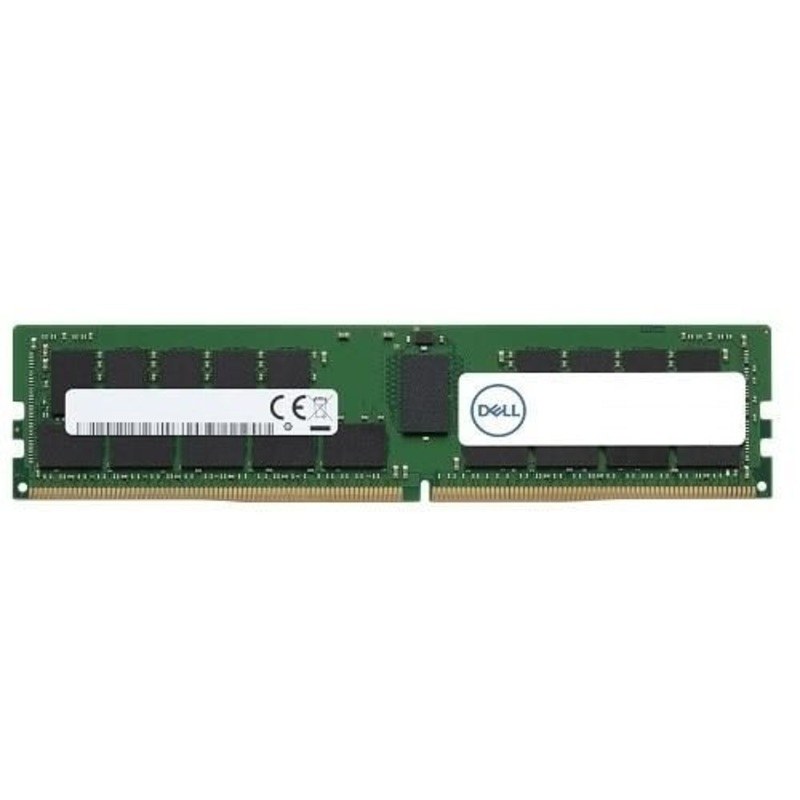
Dell 4M70C 32GB PC4-19200 Memory Ecc 2400mhz Registered DDR4 SDRAM 288-pin. New (System) Pull with 1 year replacement warranty - Samsung Version
| SKU/MPN | Warranty | Price | Condition | You save |
|---|---|---|---|---|
| 4M70C | 1 Year Warranty | $412.00 | New (System) Pull | You save: $144.20 (26%) |
| 4M70C | 1 Year Warranty | $344.00 | New (System) Pull | You save: $120.40 (26%) |
High-performance server memory engineered for enterprise systems — the Dell 4M70C 32GB DDR4 SDRAM is a 2400MHz (PC4-19200) RDIMM with ECC and Registered buffering. Ideal for data centers, workstations, and mission-critical servers that require stability, error correction and consistent throughput.
Compatible with many Dell PowerEdge and Precision platforms — ideal for direct upgrades.
Server memory represents a critical component in modern computing infrastructure, designed specifically for the demanding environments of data centers, enterprise servers, and high-availability systems. Unlike standard desktop memory, server memory incorporates advanced technologies to ensure data integrity, system stability, and continuous operation under heavy workloads.
The Dell 4M70C memory module undergoes extensive testing and validation processes to meet the strict quality standards required for enterprise deployment. Each module is subjected to thermal testing, compatibility verification, and endurance testing to ensure reliable performance across various server configurations and environmental conditions.
The Dell 4M70C represents a specific memory configuration optimized for Dell PowerEdge servers and compatible systems. Understanding its technical specifications is crucial for proper system integration and performance optimization.
With a substantial 32GB capacity per module, the 4M70C provides significant memory resources for virtualization, database applications, and memory-intensive workloads. This capacity strikes an optimal balance between density and compatibility across various server generations.
The 32GB capacity allows for efficient memory population in servers with limited DIMM slots, enabling higher total memory configurations without requiring excessive physical space. This is particularly valuable in dense computing environments where rack space is at a premium.
Operating at 2400MHz (PC4-19200), this memory module delivers high-speed data transfer capabilities essential for reducing latency in memory-sensitive applications. The 2400MHz frequency represents a sweet spot in the DDR4 spectrum, offering excellent performance while maintaining compatibility with a wide range of server processors.
The PC4-19200 designation indicates the module's peak transfer rate of 19,200 MB/s. This bandwidth is critical for applications requiring rapid access to large datasets, such as in-memory databases, scientific computing, and real-time analytics platforms.
The CAS-17 timing specification represents the number of clock cycles between a column address strobe and the availability of data. While higher than some consumer memory modules, this timing is optimized for server workloads where stability and reliability take precedence over ultra-low latency.
Server memory typically operates with slightly higher latency than gaming or workstation memory to ensure greater stability under continuous operation. The CAS-17 timing provides an optimal balance for enterprise applications where consistent performance is more valuable than peak speed.
Error Correcting Code (ECC) and Registered memory technologies represent two critical features that distinguish server-grade memory from consumer products. These technologies work in concert to prevent data corruption and maintain system stability.
ECC memory incorporates additional bits and specialized circuitry to detect and correct single-bit memory errors in real-time. This capability is essential for preventing silent data corruption that could lead to application crashes, calculation errors, or database corruption in enterprise environments.
When data is written to ECC memory, the module generates and stores error correction codes alongside the actual data. During read operations, these codes are used to verify data integrity and automatically correct any single-bit errors that may have occurred due to electrical interference, cosmic radiation, or other environmental factors.
While ECC primarily corrects single-bit errors, it also detects multi-bit errors, allowing the system to initiate protective measures before corrupted data can affect system operation. This dual capability makes ECC memory indispensable for critical computing tasks.
Registered memory, also known as buffered memory, incorporates register chips between the memory modules and the memory controller. These registers buffer the command and address signals, reducing electrical load on the memory controller and enabling support for higher memory capacities.
By reducing the electrical load on the memory controller, registered memory allows servers to support more memory modules per channel, enabling higher total memory configurations. This architecture also improves signal integrity, which contributes to overall system stability, especially in multi-processor systems with large memory complements.
Unlike unbuffered memory used in desktop systems, registered memory introduces a slight additional latency (typically one clock cycle) due to the buffering process. However, this trade-off is justified in server environments by the significant improvements in memory capacity and system stability.
The dual rank designation of the Dell 4M70C memory module refers to its internal organization and how it interfaces with the memory controller. Understanding rank architecture is essential for optimizing memory performance in server configurations.
Dual rank modules typically offer better performance than single rank modules in most server workloads due to the ability to overlap memory access operations. While single rank modules might have slightly lower latency in some scenarios, dual rank configurations generally provide higher overall throughput for multi-threaded applications.
When populating servers with dual rank memory, it's important to follow specific guidelines to optimize performance. Most server manufacturers provide detailed documentation about optimal rank distribution across memory channels to maximize memory bandwidth and minimize access contention.
Modern server processors typically feature multiple memory channels, each capable of supporting multiple ranks. Proper distribution of dual rank modules across these channels ensures balanced memory bandwidth and prevents any single channel from becoming a performance bottleneck.
The "x4" designation in the Dell 4M70C specification refers to the organization of individual DRAM chips on the memory module. This configuration has important implications for memory reliability, capacity, and compatibility with advanced memory technologies.
DRAM chips are classified based on their data width, with x4, x8, and x16 being common configurations. x4 chips have a 4-bit data interface, meaning eight chips are required to form a 32-bit wide memory bus (with ECC), or nine chips when including the additional bit for error correction.
X4 DRAM organization offers several advantages for server memory, including better signal integrity, reduced power consumption per bit, and enhanced compatibility with memory technologies like Chipkill. These benefits make x4 configurations preferred for mission-critical server applications.
The x4 DRAM organization enables advanced error correction technologies like Chipkill, which can survive complete failure of an individual DRAM chip. This robust error correction capability provides an additional layer of data protection beyond standard ECC functionality.
Chipkill technology works by distributing data and ECC bits across multiple DRAM chips in such a way that the failure of any single chip affects only a portion of each data word. The remaining data and ECC bits from functioning chips can then reconstruct the complete data word, maintaining system operation even with a failed DRAM component.
The Dell 4M70C memory module delivers performance characteristics optimized for specific server workloads and application environments. Understanding these performance attributes helps in proper capacity planning and system configuration.
Different server applications place varying demands on memory subsystems. The 4M70C's combination of capacity, speed, and advanced features makes it suitable for a wide range of enterprise workloads with particular strengths in specific scenarios.
In virtualized environments, memory capacity and reliability are paramount. The 32GB capacity of the 4M70C allows for efficient consolidation of virtual machines, while ECC protection ensures guest OS stability. The 2400MHz speed provides responsive performance across multiple concurrent virtual machines.
Database systems benefit from the 4M70C's balanced performance profile, where the combination of capacity and speed supports efficient data caching and query processing. ECC functionality is particularly valuable for database integrity, preventing corruption that could affect business operations.
When deployed in multi-module configurations, the 4M70C demonstrates scalable performance characteristics. Understanding how performance scales with additional modules helps in planning memory upgrades and capacity expansion.
With proper population across multiple memory channels, the 4M70C modules can leverage channel interleaving to increase effective memory bandwidth. This configuration spreads memory accesses across multiple channels simultaneously, reducing latency and improving throughput for memory-intensive applications.


 Contact Us
 Information
 Catalog
 Solid State Drives (SSD)
 Network Switches
 Hard Disk Drives
 HBA & Controllers
 PC & Servers
 PC & Server Memory
 CPU & Processors
 Network Routers
 Power Supplies
 Tape Drives & Libraries
 Network Devices
 Computer & Network Cables