(7% discount is applied at checkout)
Cart is empty
Your go-to destination for cutting-edge server products
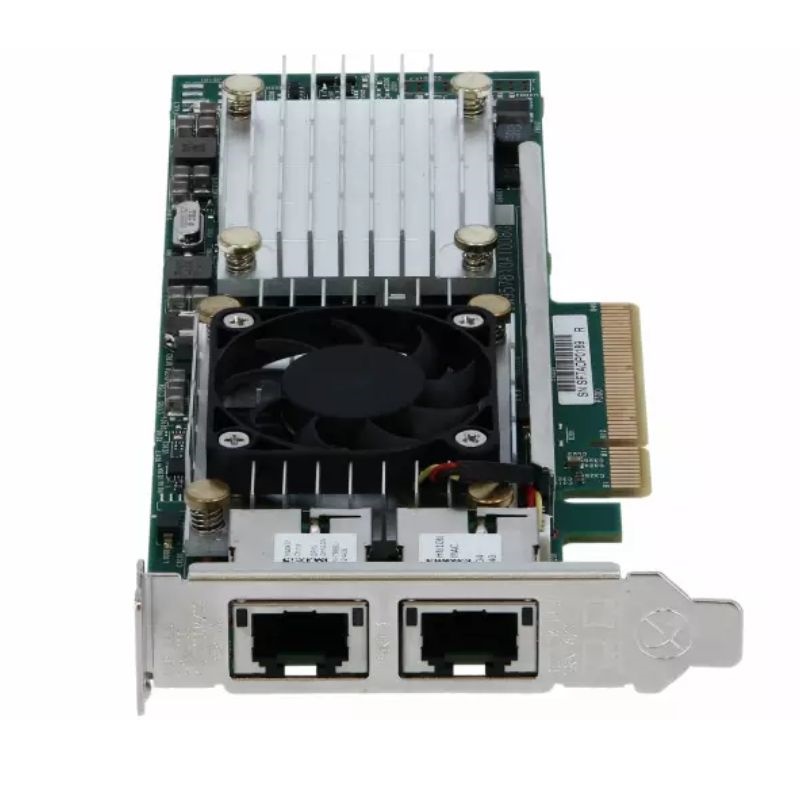


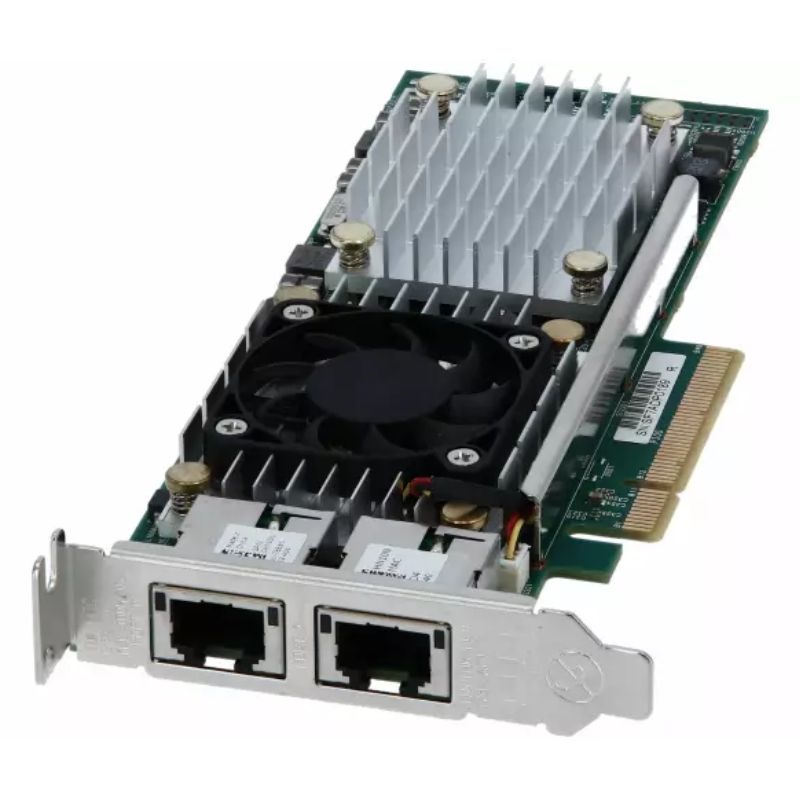
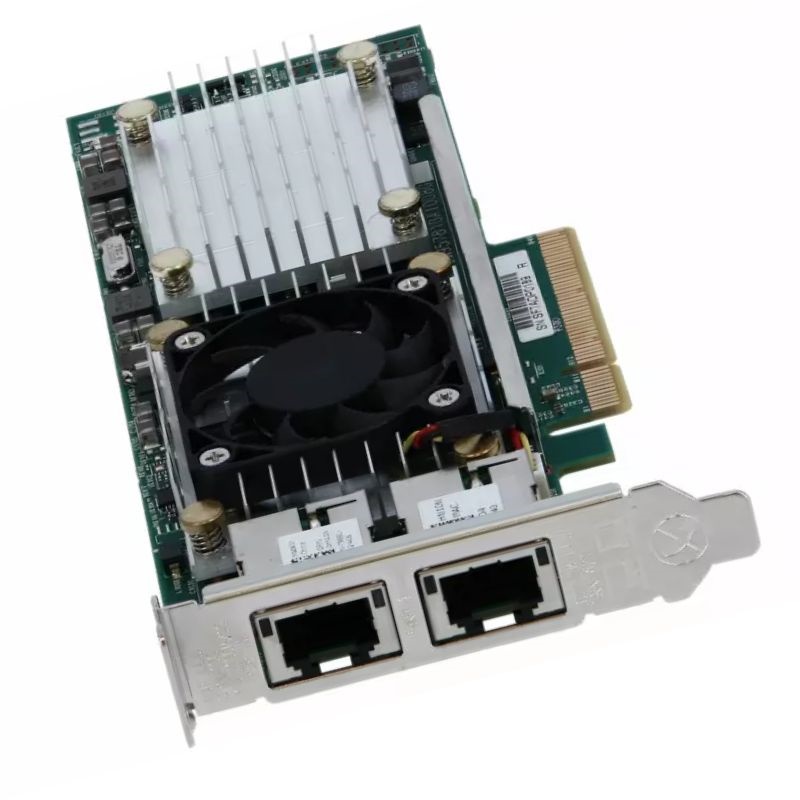
Dell 540-BBGU Broadcom 57810 2 Ports 10GBase-T PCI Express x8 Full Height Network Interface Card. Excellent Refurbished with 1 year replacement warranty
The 540-BBGU Dell Broadcom 57810 is a state-of-the-art network interface card (NIC) that is designed to enhance the connectivity and performance of enterprise IT systems. As a high-performance solution, this NIC provides dual-port 10GBase-T connectivity, making it an ideal choice for modern data centers and network infrastructure that require reliable, high-speed networking capabilities.
The Dell 540-BBGU Broadcom 57810 dual-port 10GBase-T PCI Express x8 full height network interface card is engineered for enterprise-grade computing environments where high throughput, deterministic latency, and stable multi-gigabit connectivity are critical. Built around the Broadcom 57810 controller architecture, this network adapter is designed to deliver consistent 10 Gigabit Ethernet performance across copper-based infrastructure, making it suitable for data centers, virtualization clusters, and high-density server deployments. The design prioritizes scalability and interoperability with modern server platforms, ensuring seamless integration into Dell PowerEdge ecosystems and other compatible enterprise servers.
At its core, this network interface card focuses on balancing raw bandwidth capacity with thermal efficiency and power optimization. Unlike lower-tier adapters that may struggle under sustained network loads, this dual-port 10GBase-T solution is structured to handle continuous data flow, making it particularly suitable for workloads such as distributed computing, cloud hosting environments, and enterprise storage replication systems.
The Broadcom 57810 controller integrated into the Dell 540-BBGU NIC provides advanced hardware offload functionality that reduces CPU utilization by delegating network processing tasks directly to the adapter. This includes checksum offloading, segmentation offload, and interrupt moderation, which collectively enhance system efficiency. By reducing CPU overhead, server resources can be redirected toward application processing rather than network packet handling.
The architecture of the Broadcom 57810 is optimized for low-latency packet transmission and reception. This is particularly important in environments such as high-frequency trading systems, real-time analytics platforms, and virtual machine clusters where microsecond-level delays can impact system performance. The NIC’s internal queue management system ensures efficient packet scheduling and reduces bottlenecks even under heavy traffic conditions.
One of the defining characteristics of the Dell 540-BBGU network adapter is its use of 10GBase-T copper-based RJ-45 connectivity. This allows organizations to leverage existing twisted-pair cabling infrastructure while upgrading to 10 Gigabit Ethernet speeds. This compatibility significantly reduces deployment costs compared to fiber-based alternatives, especially in environments where Category 6A or Category 7 cabling is already installed.
The 10GBase-T interface supports auto-negotiation with lower Ethernet speeds, including 1GbE and 100MbE, providing flexibility in mixed network environments. This ensures that the adapter can be deployed in phased infrastructure upgrades without requiring immediate full-scale cabling replacement, making it an ideal transitional solution for enterprises modernizing legacy systems.
The Dell 540-BBGU NIC utilizes a PCI Express x8 interface, typically operating on PCIe 3.0 architecture, which provides sufficient bandwidth to fully saturate dual 10GbE ports without bottlenecks. The x8 lane configuration ensures that data transfer between the network adapter and the host system occurs at high speed, enabling sustained throughput under heavy network workloads.
In multi-slot server configurations, the PCIe x8 design allows for optimal distribution of expansion cards without compromising performance. This is particularly important in rack-mounted servers where multiple network adapters, storage controllers, and GPU accelerators may be installed simultaneously. The full-height bracket design ensures mechanical stability and compatibility with standard enterprise chassis.
The full height form factor of the Dell 540-BBGU network interface card provides structural rigidity, ensuring secure mounting within enterprise server chassis. This design reduces vibration-induced instability, which is critical in high-density data center environments where servers operate continuously under heavy load conditions.
Full height adapters generally benefit from improved airflow dynamics compared to low-profile counterparts. The Dell 540-BBGU NIC is designed to integrate with server cooling systems efficiently, allowing heat generated by the Broadcom controller and PHY components to dissipate effectively, ensuring sustained performance without thermal throttling.
With two independent 10GBase-T ports, the Dell 540-BBGU NIC enables aggregate bandwidth optimization for load balancing, link aggregation, and failover configurations. This dual-port architecture is essential for enterprise environments that require redundancy and high availability, ensuring uninterrupted network connectivity even in the event of a single-port failure.
The adapter supports Link Aggregation Control Protocol configurations, allowing multiple physical ports to be combined into a single logical channel. This enhances throughput while improving redundancy and fault tolerance, which is essential for mission-critical applications and enterprise storage networks.
The NIC employs a multi-queue architecture that distributes network traffic across multiple CPU cores. This parallel processing capability improves efficiency in multi-threaded server environments, ensuring that network workloads are evenly distributed and preventing CPU bottlenecks.
Single Root I/O Virtualization support enables the NIC to present multiple virtual functions to guest operating systems, allowing direct hardware access for virtual machines. This improves network performance in virtualized environments by bypassing traditional software-based networking layers.
In cloud computing deployments, the adapter provides consistent and scalable performance for distributed workloads. Its ability to handle simultaneous multi-tenant traffic makes it suitable for private cloud infrastructure, hosting environments, and hybrid cloud architectures.
The dual-port 10GbE configuration of the Dell 540-BBGU NIC supports high-speed access to network-attached storage and storage area network systems. This is essential for environments where large datasets are continuously read and written, such as database clusters and analytics platforms.
The adapter is well-suited for iSCSI-based storage networks, providing stable and high-throughput connectivity between compute nodes and storage arrays. It also supports network-attached storage operations with consistent latency performance, ensuring reliable file access in enterprise environments.
In backup and replication scenarios, the NIC facilitates rapid data transfer between primary and secondary storage systems. This improves disaster recovery readiness by reducing replication windows and enabling near real-time data synchronization.
The Dell 540-BBGU NIC is designed for continuous operation in mission-critical environments where downtime is not acceptable. Its dual-port architecture inherently provides redundancy, ensuring that network connectivity remains available even during hardware or link failures.
Automatic failover capabilities allow traffic to be rerouted instantly between ports in the event of a link disruption. This ensures uninterrupted service availability for enterprise applications, reducing the risk of service degradation.
The Broadcom controller integrates advanced error detection mechanisms that identify and mitigate packet corruption, ensuring data integrity across high-speed network transmissions.
In large-scale data center environments, the Dell 540-BBGU network adapter plays a crucial role in enabling high-density server connectivity. Its dual 10GbE ports allow servers to handle heavy north-south and east-west traffic efficiently, supporting distributed applications and microservices architectures.
In HPC environments, where computational nodes require fast interconnectivity, the adapter ensures consistent data exchange rates. This is essential for scientific computing, simulation workloads, and AI model training clusters.
For enterprise application hosting, the NIC ensures stable and high-speed connectivity between application servers and backend systems. This improves application responsiveness and ensures consistent user experience across distributed environments.
The adapter supports advanced traffic prioritization mechanisms that allow administrators to define quality-of-service rules for different types of network traffic. This ensures that critical application traffic receives priority over less time-sensitive data flows.
Dynamic bandwidth allocation ensures optimal utilization of available network resources. This prevents congestion during peak workloads and maintains consistent performance across all connected services.
Applications that require ultra-low latency performance, such as VoIP systems and real-time analytics platforms, benefit significantly from the NIC’s optimized packet handling architecture.


 Contact Us
 Information
 Catalog
 Solid State Drives (SSD)
 Network Switches
 Hard Disk Drives
 HBA & Controllers
 PC & Servers
 PC & Server Memory
 CPU & Processors
 Network Routers
 Power Supplies
 Tape Drives & Libraries
 Network Devices
 Computer & Network Cables