(7% discount is applied at checkout)
Cart is empty
Your go-to destination for cutting-edge server products
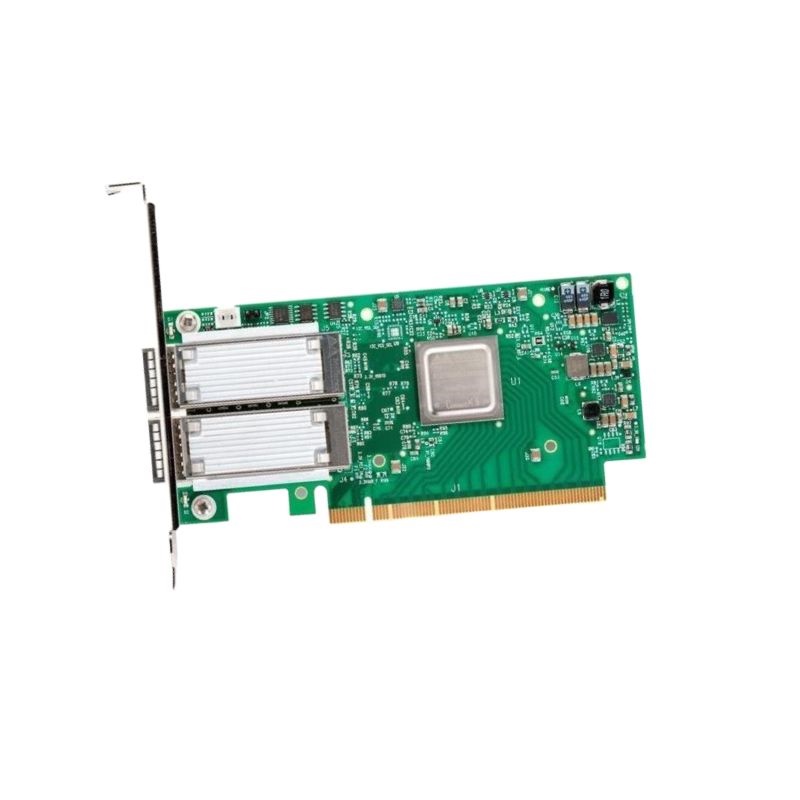


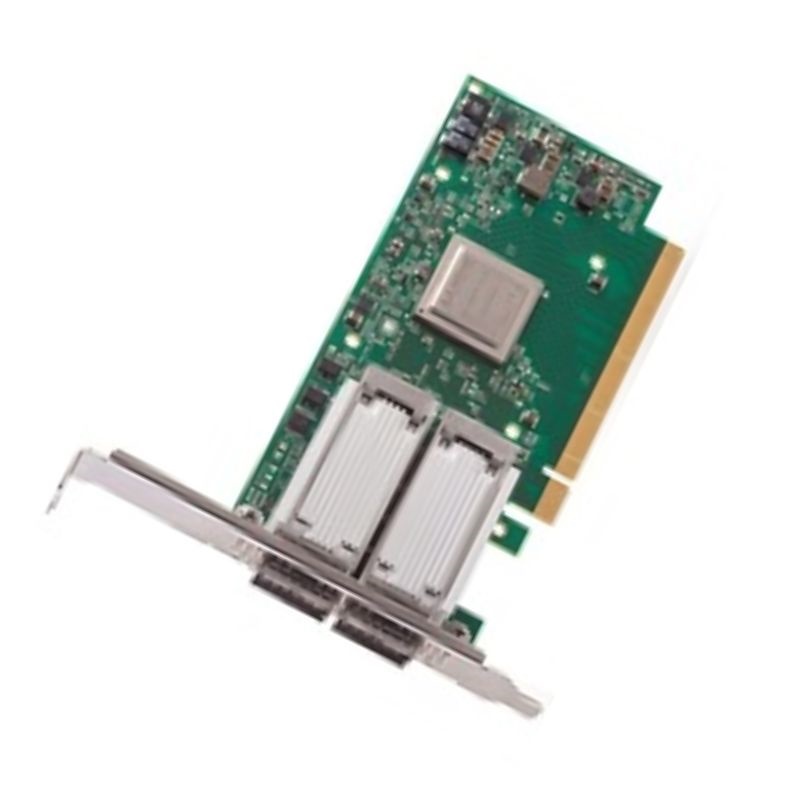
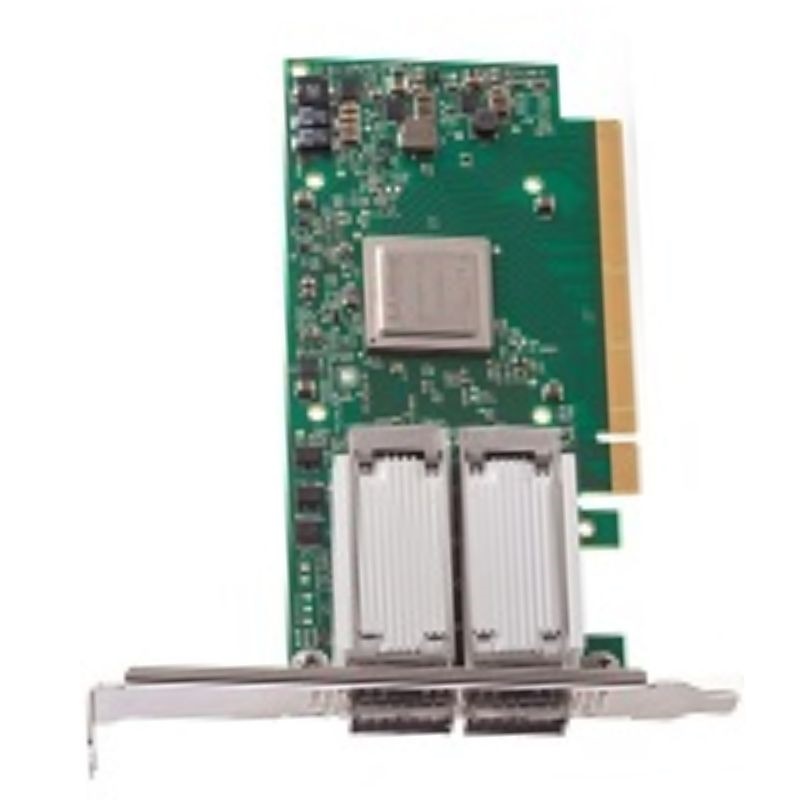
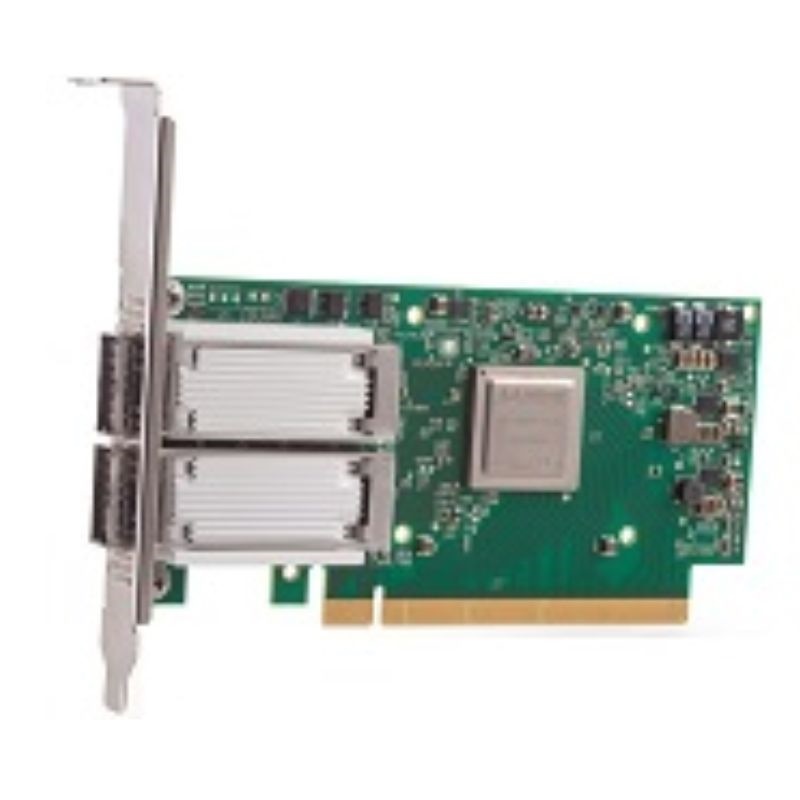
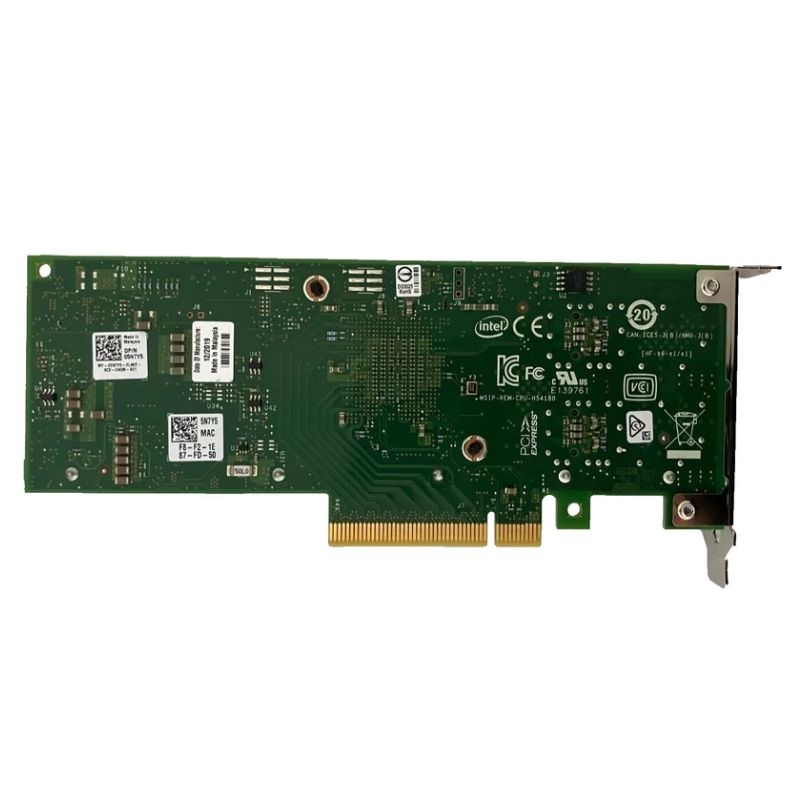
Dell 540-BBNZ ConnectX-4 VPI EDR IB 100Gb/s and 100GbE 2 Ports QSFP28 PCIe 3.0 x16 Network Adapter Card. Excellent Refurbished with 1 year replacement warranty - Mellanox Version
The 540-BBNZ Dell ConnectX-4 VPI EDR IB 100Gb/s and 100GbE Network Adapter Card revolutionizes high-speed networking. Engineered to cater to demanding data-intensive applications, this dual-port QSFP28 PCIe3.0 x16 adapter is an excellent choice for businesses seeking unparalleled performance, flexibility, and scalability in their networking solutions. Built for next-generation infrastructure, it ensures rapid data transfer and exceptional reliability.
The Dell 540-BBNZ ConnectX-4 VPI EDR InfiniBand and 100 Gigabit Ethernet dual-port QSFP28 PCIe 3.0 x16 network adapter represents a high-density, ultra-low latency networking solution designed for modern enterprise data centers, cloud infrastructures, high-performance computing (HPC) clusters, and AI-driven workloads. This category of network adapter is engineered to deliver extremely high throughput, minimal packet loss, and deterministic latency performance across large-scale distributed systems where bandwidth demand is continuously increasing.
Built on Mellanox ConnectX-4 technology integrated within Dell server ecosystems, this adapter supports both InfiniBand EDR (Enhanced Data Rate) and Ethernet 100GbE protocols, enabling flexible deployment across mixed networking environments. It is designed to maximize efficiency in compute-heavy workloads such as machine learning training, virtualization, storage acceleration, and real-time analytics processing.
The adapter utilizes two QSFP28 ports, each capable of supporting up to 100Gb/s data rates per port. QSFP28 (Quad Small Form-Factor Pluggable 28) is a widely adopted transceiver standard for high-bandwidth interconnects in modern data centers. These ports allow seamless integration with fiber optic cables, passive copper DAC cables, and active optical cables depending on deployment requirements.
With dual-port architecture, this network adapter supports redundant networking paths, load balancing configurations, and high availability clustering. Enterprises can deploy it in spine-leaf architectures, mesh networks, or HPC interconnect fabrics where performance consistency and failover capability are essential.
The PCIe 3.0 x16 interface provides a direct high-bandwidth connection between the network adapter and the host CPU, ensuring that the full 100Gb/s per port throughput can be utilized without bottlenecks. PCIe Gen3 architecture delivers a theoretical bandwidth of approximately 128Gb/s, which is sufficient to handle dual 100GbE or InfiniBand EDR workloads with advanced offloading features.
The adapter leverages RDMA (Remote Direct Memory Access) capabilities, allowing data to be transferred directly between application memory spaces without CPU intervention. This reduces latency significantly and frees up CPU resources for application-level processing, improving overall system efficiency in compute-intensive environments.
One of the most powerful features of the Dell 540-BBNZ adapter is its support for both InfiniBand EDR and Ethernet 100GbE. This dual-protocol capability allows organizations to deploy a single hardware solution across multiple networking environments. InfiniBand is widely used in HPC clusters due to its ultra-low latency and high bandwidth efficiency, while Ethernet remains the dominant protocol in enterprise and cloud data centers.
The VPI (Virtual Protocol Interconnect) architecture allows dynamic switching between InfiniBand and Ethernet modes depending on software configuration. This enables data centers to standardize hardware while maintaining protocol flexibility, reducing operational costs and simplifying infrastructure management.
In AI training environments, the Dell 540-BBNZ network adapter plays a critical role in reducing inter-node communication latency. Distributed machine learning frameworks such as TensorFlow, PyTorch, and Horovod benefit from RDMA-enabled communication, which minimizes synchronization delays across GPU clusters.
HPC workloads such as weather modeling, genomic sequencing, computational fluid dynamics, and financial modeling require extremely fast data exchange between compute nodes. The 100Gb/s bandwidth capability ensures that large datasets can be shared efficiently across compute fabrics without performance degradation.
This network adapter is fully compatible with major virtualization platforms including VMware ESXi, Microsoft Hyper-V, and KVM-based Linux environments. Its hardware acceleration features improve virtual machine density by reducing CPU overhead associated with network processing tasks.
In Kubernetes and container orchestration environments, the adapter enhances pod-to-pod communication performance. Its low-latency characteristics make it suitable for microservices architectures where rapid inter-service communication is critical.
Dual QSFP28 ports enable redundant network paths that improve fault tolerance in mission-critical systems. In the event of a link failure, traffic can be rerouted automatically without service interruption, ensuring continuous availability for enterprise applications.
Advanced error detection and correction mechanisms ensure that data integrity is maintained even under high-throughput conditions. This is essential for environments where packet loss or corruption could lead to significant operational disruptions.
Designed for data center environments, the adapter incorporates power-efficient components and thermal management technologies that ensure stable operation under sustained high loads. Optimized airflow compatibility ensures integration into Dell server chassis without overheating risks.
The Dell 540-BBNZ adapter is optimized for spine-leaf architectures, where high-bandwidth east-west traffic dominates. Its 100GbE capability ensures that aggregation layers can handle large-scale data transfers without congestion.
In clustered environments, multiple compute nodes rely on synchronized communication. This adapter ensures that scaling from tens to thousands of nodes does not degrade network performance, making it suitable for hyperscale deployments.
Cloud providers benefit from the adapter’s ability to handle multi-tenant traffic isolation, high bandwidth allocation, and virtualization-aware networking features. This ensures consistent performance across diverse workloads.
The adapter supports hardware-based traffic segmentation, enabling secure isolation of different network flows. This is particularly important in multi-tenant environments where data separation is critical for compliance and security.
Security features include firmware validation and secure boot mechanisms that prevent unauthorized modifications. This ensures that only trusted firmware executes on the network adapter hardware.
Support for encrypted network protocols ensures secure data transmission across public and private network infrastructures. This is essential for industries handling sensitive data such as finance, healthcare, and government sectors.
By utilizing kernel bypass mechanisms, the adapter reduces the number of CPU cycles required for packet processing. This results in significantly improved throughput and reduced latency in high-performance applications.
The adapter dynamically adjusts flow control mechanisms to prevent network congestion and packet loss. This ensures stable performance even under unpredictable traffic spikes.
Designed for ultra-low latency environments, the ConnectX-4 architecture enables microsecond-level communication between nodes, making it ideal for trading systems, real-time analytics, and HPC workloads.
The adapter significantly enhances storage performance in NVMe over Fabrics (NVMe-oF) deployments, enabling faster access to distributed storage systems and reducing I/O bottlenecks.
In big data environments such as Hadoop and Spark clusters, the adapter accelerates data movement between nodes, improving processing efficiency and reducing job completion times.
High-frequency trading systems rely on ultra-low latency communication, and this adapter provides the deterministic performance required for time-sensitive financial transactions.
Telecom operators use high-bandwidth network adapters like this to support 5G core networks, virtualization of network functions, and real-time subscriber data processing.


 Contact Us
 Information
 Catalog
 Solid State Drives (SSD)
 Network Switches
 Hard Disk Drives
 HBA & Controllers
 PC & Servers
 PC & Server Memory
 CPU & Processors
 Network Routers
 Power Supplies
 Tape Drives & Libraries
 Network Devices
 Computer & Network Cables