(7% discount is applied at checkout)
Cart is empty
Your go-to destination for cutting-edge server products
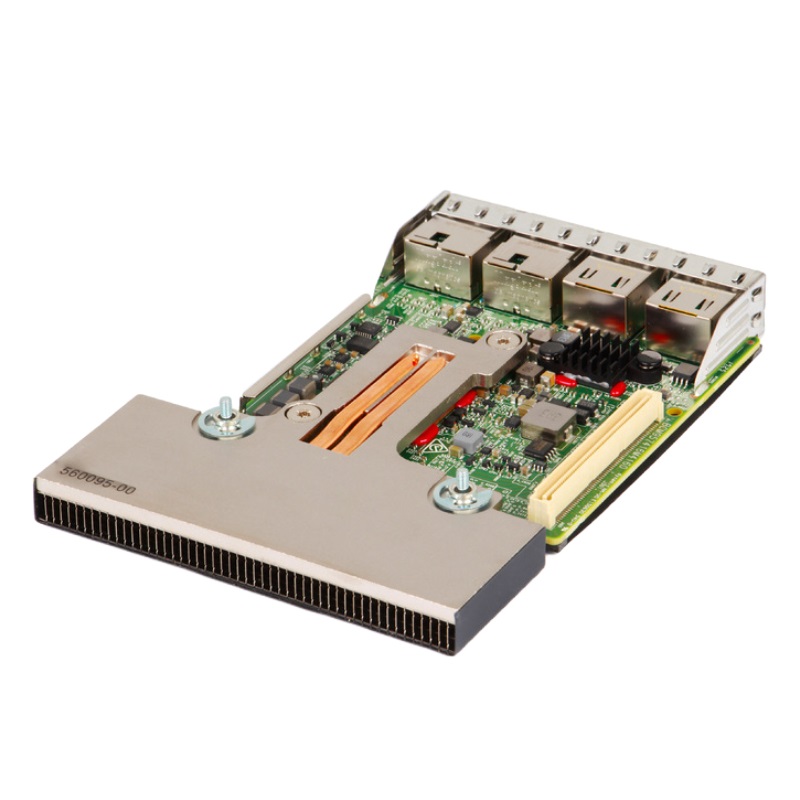


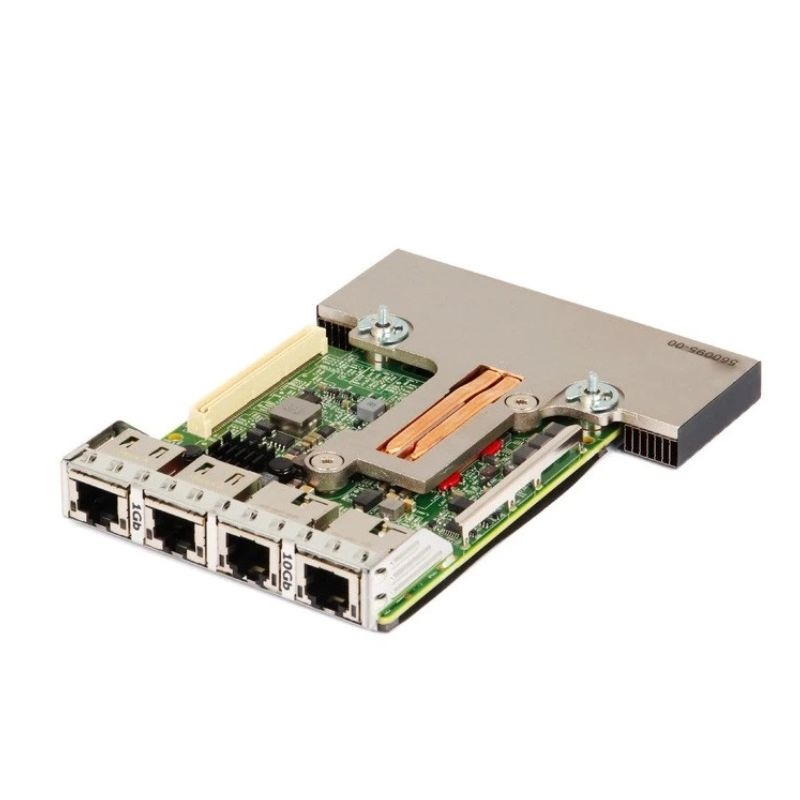
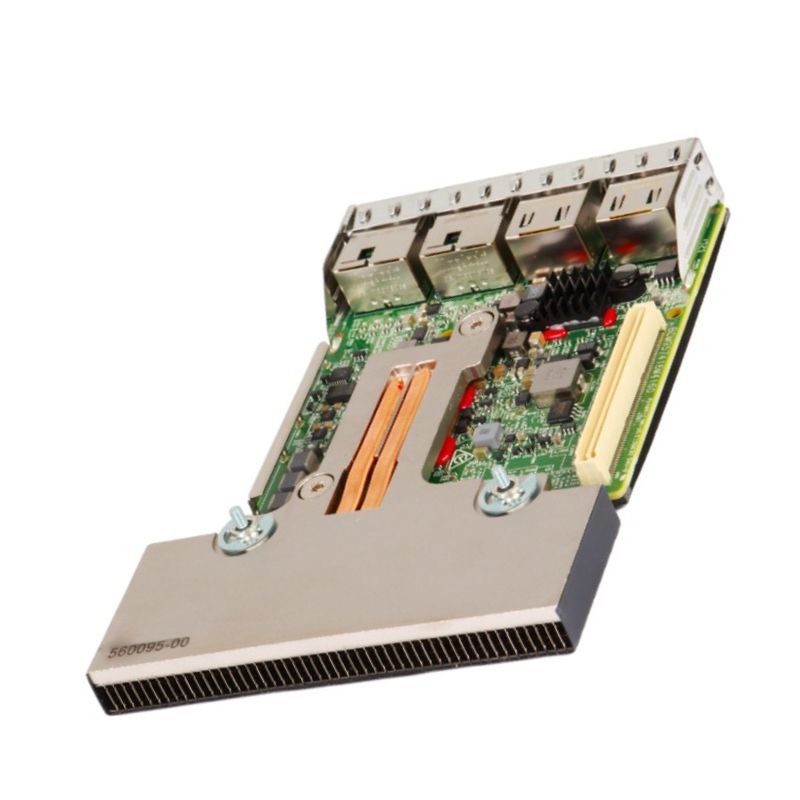
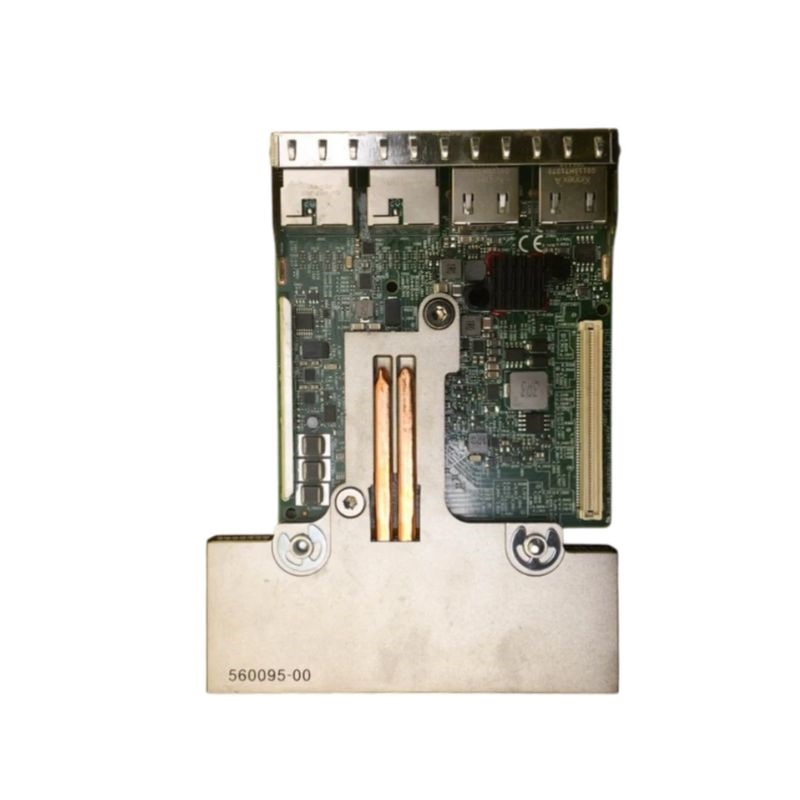
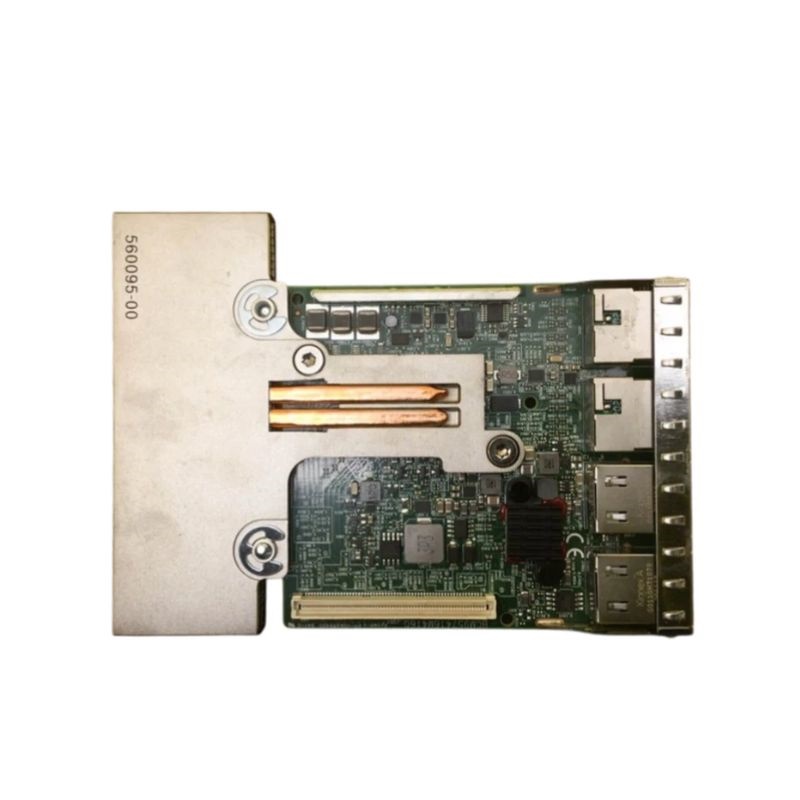
Dell 540-BBUK Broadcom 57416 Rndc 2x10GBE + 5720 2x1GBE Ethernet Network Adapter. Excellent Refurbished with 1 year replacement warranty
The 540-BBUK Dell Broadcom 57416 Rndc 2x10GBE + 5720 2x1GBE Ethernet Network Daughter Card represents a cutting-edge solution for high-performance networking, designed to meet the demands of data centers, enterprise networks. Combining advanced technology and reliable performance, this card supports a robust network infrastructure with dual 10GbE and dual 1GbE ports for unparalleled connectivity and data transfer capabilities.
The Dell 540-BBUK 57416 2-Port 1GbE + 2-Port 10GbE PCI Express Network Adapter category represents a high-performance server networking solution designed for enterprise data centers, virtualization clusters, cloud computing infrastructures, and mission-critical workload environments. This adapter class integrates mixed-speed Ethernet connectivity within a single PCIe-based expansion card, enabling organizations to optimize network traffic distribution across legacy and modern high-speed infrastructures simultaneously. The combination of dual 1GbE and dual 10GbE ports provides flexible deployment options that support workload segmentation, redundancy design, and scalable bandwidth allocation strategies in complex server architectures.
The architectural design of the Dell 540-BBUK 57416 adapter category is built around hybrid Ethernet integration, where multiple physical interfaces operate under a unified hardware controller framework. This design allows simultaneous support for 1 Gigabit Ethernet and 10 Gigabit Ethernet communication channels without requiring separate network interface cards. The integration improves server slot efficiency while reducing overall hardware footprint in dense rack configurations. The adapter is engineered for environments that require parallel handling of management traffic, application traffic, storage traffic, and virtualization workloads across separate network paths.
At the core of this network adapter category lies an integrated controller architecture optimized for parallel packet processing and reduced CPU overhead. The controller manages traffic distribution across all four ports while maintaining consistent throughput performance. By offloading packet segmentation, checksum calculations, and interrupt moderation from the host CPU, the adapter enhances system-level efficiency. This architecture is particularly valuable in multi-tenant cloud environments where predictable latency and deterministic packet delivery are essential.
Hardware-level optimization ensures that network packets are processed with minimal software intervention. The adapter performs frame validation, error correction signaling, and buffer management internally, allowing host systems to focus computational resources on application execution rather than network processing overhead. This design is especially relevant for virtualization hosts and high-density compute nodes where CPU cycles must be preserved for virtual machine workloads.
The Dell 540-BBUK 57416 category is defined by its unique combination of dual 1GbE ports and dual 10GbE ports, providing a versatile connectivity framework that supports heterogeneous network environments. This configuration allows IT administrators to segment traffic based on speed requirements, application criticality, or security zoning. The presence of multiple port speeds on a single adapter reduces the need for multiple network cards, streamlining infrastructure complexity.
The 1GbE interfaces are commonly used for management networks, out-of-band communication, backup processes, and legacy system integration. These ports ensure compatibility with existing Ethernet infrastructures while maintaining reliable throughput for non-latency-sensitive workloads. In enterprise environments, the 1GbE layer often serves as a stable backbone for administrative traffic, firmware updates, and monitoring systems.
Management segmentation using 1GbE ports enables separation of control-plane and data-plane traffic. This separation improves network security and reduces congestion on high-speed 10GbE links. By isolating administrative communication channels, system administrators can ensure uninterrupted monitoring and orchestration even during peak data transfer periods.
The 10GbE interfaces provide high-throughput connectivity designed for demanding workloads such as virtualization clusters, distributed storage systems, database replication, and high-performance computing tasks. These ports enable rapid data transfer rates essential for modern enterprise applications where latency sensitivity and bandwidth demand are critical factors.
The 10GbE layer significantly enhances performance for data-intensive workloads including analytics processing, large-scale database transactions, and real-time application services. By providing dedicated high-speed channels, the adapter minimizes bottlenecks and ensures consistent data flow across server nodes.
The Dell 540-BBUK 57416 adapter category utilizes PCI Express architecture to interface directly with server motherboards, enabling high-bandwidth communication between network hardware and system memory. PCIe lanes provide dedicated data pathways that reduce congestion and increase throughput consistency across all network interfaces.
The PCIe interface is optimized for high-speed packet transfer, ensuring that both 1GbE and 10GbE traffic streams are handled efficiently without contention. The adapter leverages multiple PCIe lanes to distribute workload processing, reducing latency and improving overall packet delivery performance.
Low-latency pathways are essential for time-sensitive applications such as financial trading systems, real-time analytics, and distributed cloud services. The PCIe architecture ensures that data packets are transmitted with minimal delay between the network interface and system memory buffers.
The Dell 540-BBUK 57416 network adapter category is widely utilized in modern data center environments where scalability, redundancy, and performance optimization are essential. Its hybrid port structure enables seamless integration into diverse network topologies, including leaf-spine architectures and converged infrastructure systems.
In cloud computing environments, the adapter supports multi-tenant virtualization platforms where network isolation and bandwidth allocation are critical. The combination of 1GbE and 10GbE ports allows cloud operators to separate management networks from tenant workloads while maintaining high-speed data transfer capabilities for virtual machine communication.
Elastic resource allocation in cloud environments benefits from the adapter’s ability to dynamically distribute network traffic. Virtual machines can be assigned dedicated 10GbE channels for high-performance tasks while utilizing 1GbE connections for background processes and system management functions.
Virtualization platforms such as hyper-converged infrastructure systems rely heavily on high-speed network adapters to ensure seamless virtual machine migration, storage replication, and cluster synchronization. The Dell 540-BBUK 57416 category enhances these operations through multi-port bandwidth distribution and hardware acceleration features.
Storage networks benefit significantly from the high-speed capabilities of the 10GbE ports, which enable rapid access to distributed storage systems, SAN environments, and network-attached storage clusters. The adapter supports efficient data replication and backup operations across geographically distributed data centers.
High availability storage systems require redundant and high-speed network paths to maintain continuous data access. The adapter’s multi-port architecture ensures that storage traffic remains uninterrupted even in the event of a network link failure.
Performance optimization is a central characteristic of the Dell 540-BBUK 57416 category. The adapter is engineered to reduce CPU overhead, improve packet throughput, and enhance network efficiency across mixed-speed environments. These optimizations are essential in environments where predictable performance and low latency are required.
Hardware offloading reduces the burden on system processors by handling network-related computations directly on the adapter. This includes checksum offloading, segmentation offloading, and interrupt moderation, which collectively enhance system responsiveness.
TCP/IP stack offloading allows the adapter to handle portions of protocol processing, reducing CPU utilization and improving application performance. This is particularly beneficial in environments with high network packet volumes and concurrent connections.
Virtualization acceleration technologies such as SR-IOV enable direct assignment of network resources to virtual machines. This reduces virtualization overhead and improves network performance consistency across multiple virtual instances.
Single Root I/O Virtualization (SR-IOV) allows the physical network adapter to present multiple virtual interfaces, enabling efficient resource sharing among virtual machines while maintaining performance isolation.
Multi-tenant isolation ensures that virtual machines operating in shared environments do not interfere with each other’s network performance. This isolation is critical for cloud service providers and enterprise virtualization deployments.
Operational deployment strategies for the Dell 540-BBUK 57416 category focus on balancing performance, redundancy, and scalability. The adapter is typically deployed in environments where mixed-speed networking is required and where infrastructure efficiency is a priority. Its hybrid architecture allows organizations to extend legacy network systems while transitioning to high-speed Ethernet frameworks.
Scalability is achieved through the adapter’s ability to support both incremental upgrades and large-scale network expansions. Organizations can gradually transition workloads from 1GbE to 10GbE without replacing entire infrastructure stacks, enabling cost-effective modernization strategies.
Future-ready design principles ensure that the adapter remains relevant as network demands increase. The inclusion of 10GbE connectivity prepares infrastructure for evolving bandwidth requirements in cloud computing, artificial intelligence workloads, and big data processing systems.
Mixed workload environments require adaptable networking solutions capable of handling diverse traffic patterns. The Dell 540-BBUK 57416 category provides this adaptability through its dual-speed architecture, ensuring consistent performance across varying application demands. Whether handling transactional database traffic, virtualization workloads, or administrative communication, the adapter maintains balanced throughput distribution.
Latency-sensitive applications such as financial systems, real-time analytics platforms, and communication services benefit from the adapter’s optimized packet routing mechanisms. Reduced jitter and consistent throughput contribute to stable application performance under heavy network load conditions.
Throughput stability is maintained through intelligent buffering and traffic prioritization techniques implemented within the adapter’s hardware logic. These mechanisms ensure predictable network behavior even during peak traffic periods.


 Contact Us
 Information
 Catalog
 Solid State Drives (SSD)
 Network Switches
 Hard Disk Drives
 HBA & Controllers
 PC & Servers
 PC & Server Memory
 CPU & Processors
 Network Routers
 Power Supplies
 Tape Drives & Libraries
 Network Devices
 Computer & Network Cables