(7% discount is applied at checkout)
Cart is empty
Your go-to destination for cutting-edge server products
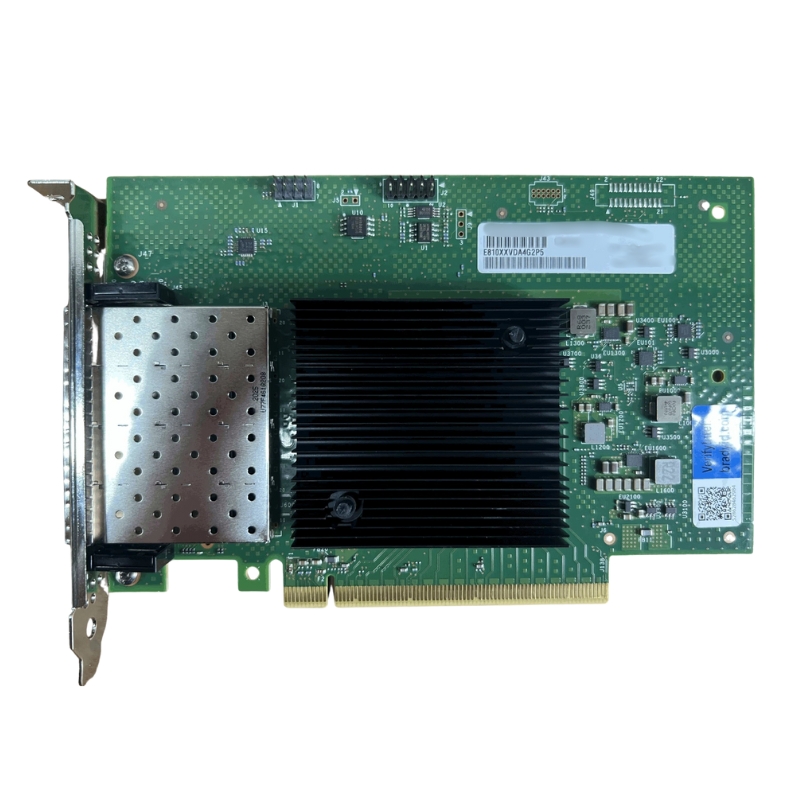


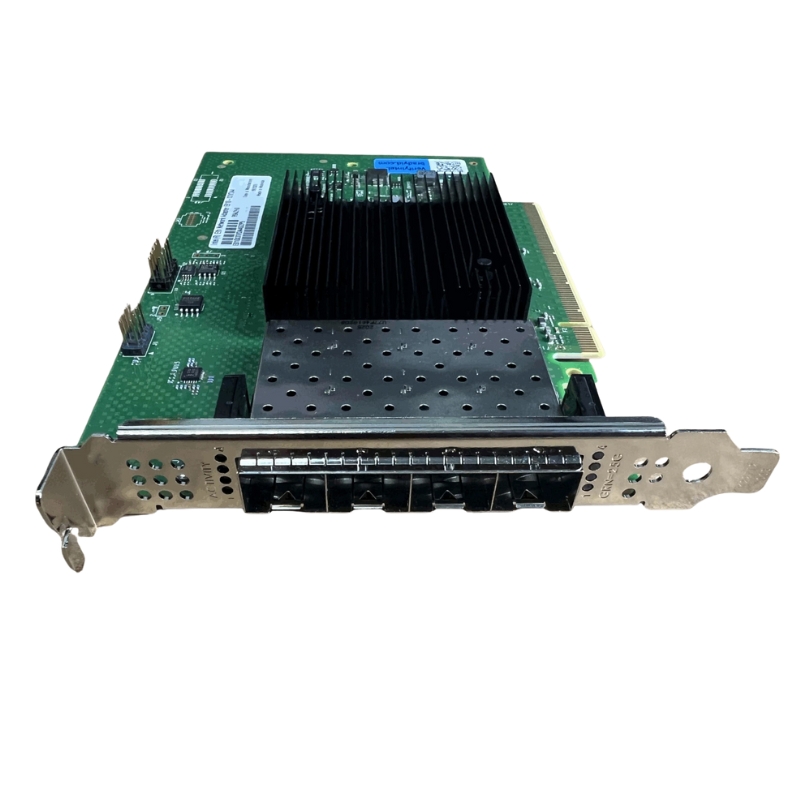
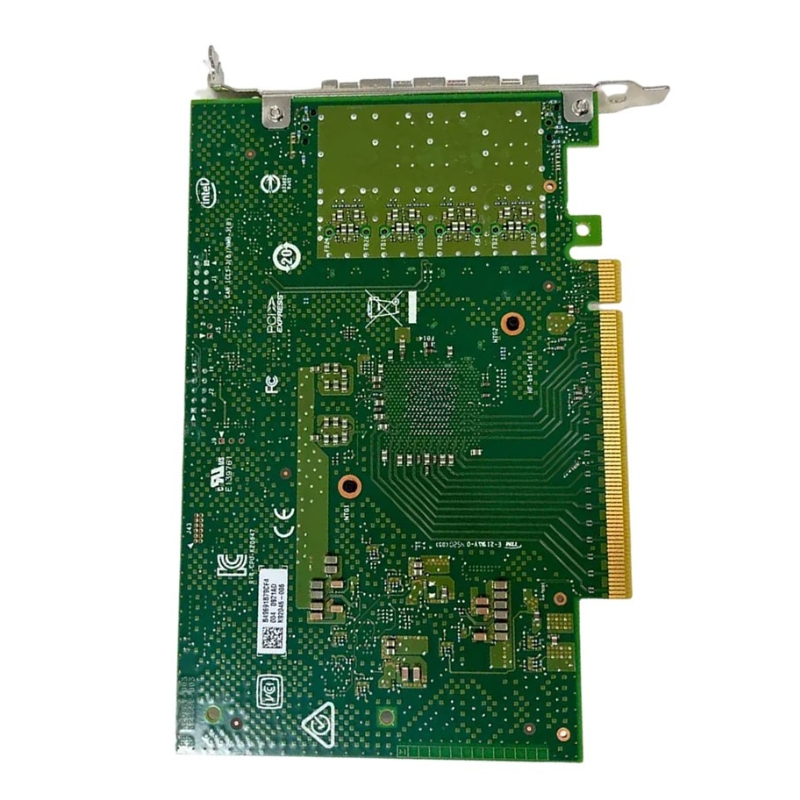
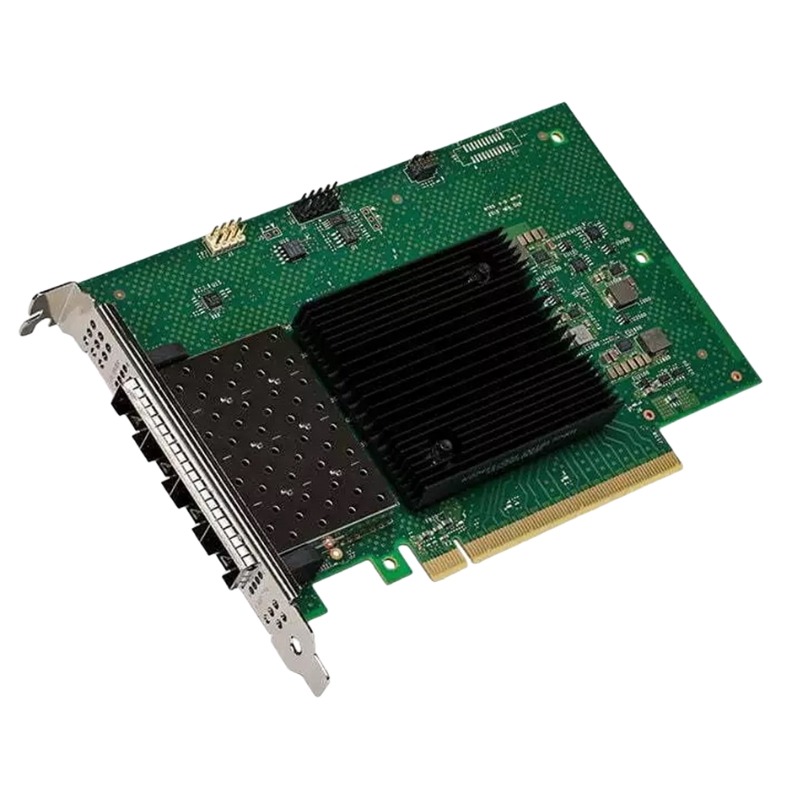
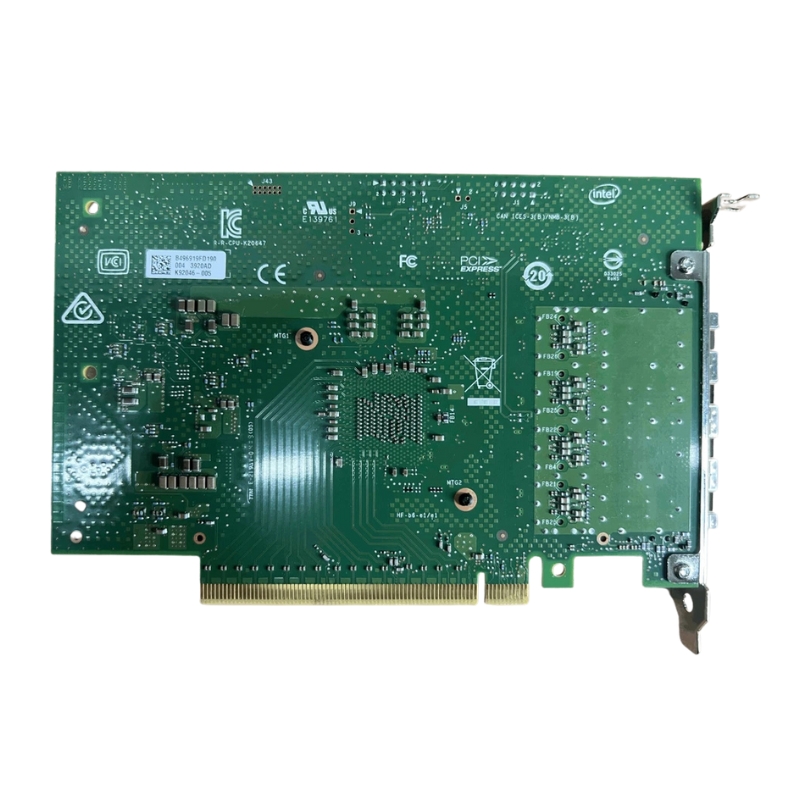
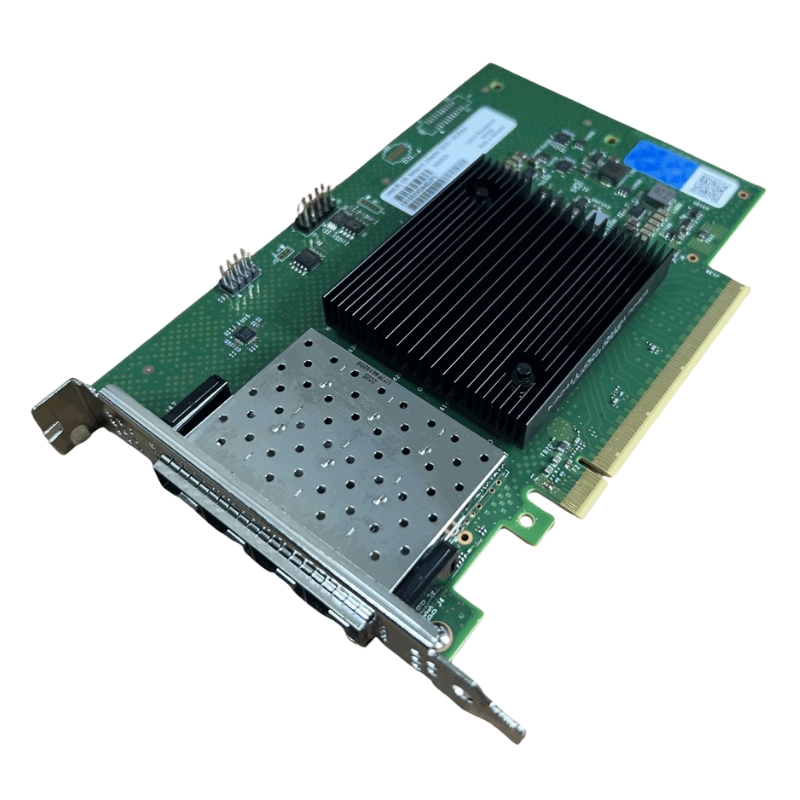
Dell 540-BDDR Intel E810 10/25 GbE SFP28 PCI-Express 4 Ports Network Adapter. Excellent Refurbished with 1-Year Replacement Warranty
| SKU/MPN | Warranty | Price | Condition | You save |
|---|---|---|---|---|
| 540-BDDR | 1 Year Warranty | $313.00 | Excellent Refurbished | You save: $109.55 (26%) |
| 540-BDDR | 1 Year Warranty | $699.00 | New Sealed in Box (NIB) | You save: $244.65 (26%) |
The Dell 540-BDDR Intel E810 Quad-Port 10/25GbE SFP28 PCIe Adapter is a high-performance enterprise-grade networking solution engineered for ultra-fast connectivity. With PCI Express 4.0 support and four SFP28 ports, this adapter ensures reliable throughput, scalability, and efficiency for modern data centers, virtualization, and cloud infrastructures.
The Dell 540-BDDR Intel E810 10/25 GbE SFP28 PCI-Express 4 Ports Network Adapter represents a next-generation networking solution designed for modern enterprise data centers requiring ultra-low latency, high throughput, and scalable bandwidth allocation. Built on Intel’s advanced Ethernet 800 Series controller architecture, this adapter is optimized for workloads that demand consistent performance across virtualization, cloud computing, storage networking, and high-performance computing environments. Its quad-port configuration enables dense connectivity options, allowing servers to handle multiple high-bandwidth traffic streams simultaneously without congestion or performance degradation.
This adapter is engineered to deliver seamless integration within Dell enterprise infrastructure while maintaining compatibility with industry-standard PCI Express Gen4 interfaces. The combination of Intel E810 silicon and Dell system optimization ensures that organizations benefit from enhanced packet processing efficiency, improved workload balancing, and robust support for modern network virtualization technologies.
At the core of the Dell 540-BDDR network adapter is PCI Express 4.0 technology, which doubles the bandwidth capabilities compared to the previous generation PCIe 3.0 interface. This increased data path capacity ensures that the four SFP28 ports operate without bottlenecks even under sustained heavy traffic conditions. PCIe Gen4 also reduces latency between the network interface card and the host CPU, making it ideal for latency-sensitive applications such as financial trading platforms, real-time analytics, and distributed storage systems.
The enhanced bus speed contributes to efficient packet movement and reduces CPU overhead, enabling servers to allocate more resources toward application-level processing instead of network handling tasks. This architecture is especially beneficial in virtualized environments where multiple virtual machines depend on shared physical network infrastructure.
The Intel E810 controller embedded within the Dell 540-BDDR adapter is designed to support dynamic and scalable network environments. It introduces enhanced packet classification capabilities, improved load balancing algorithms, and hardware-based offloading features that significantly reduce CPU utilization. The controller is optimized for both 10 Gigabit and 25 Gigabit Ethernet speeds, allowing flexible deployment depending on infrastructure requirements.
One of the most important aspects of the E810 architecture is its ability to support intelligent traffic segmentation. This ensures that mission-critical applications receive prioritized bandwidth allocation while maintaining fairness across other workloads. The controller also integrates advanced error handling and congestion management mechanisms to maintain consistent throughput under variable network conditions.
The adapter supports a wide range of hardware offloading functions including TCP segmentation offload, checksum offload, and receive-side scaling. These features significantly reduce the processing burden on host CPUs, allowing servers to maintain higher efficiency in multi-tenant environments. The offloading architecture is particularly beneficial for cloud service providers and enterprises running large-scale distributed applications.
The Dell 540-BDDR adapter is equipped with four SFP28 ports, each capable of operating at either 10GbE or 25GbE speeds depending on transceiver configuration and network infrastructure. This flexibility allows organizations to deploy the adapter in mixed-speed environments without requiring hardware replacement. The SFP28 interface supports a wide range of optical and direct attach copper modules, enabling cost-effective scalability across different deployment scenarios.
The quad-port configuration reduces the need for multiple single-port network adapters, thereby conserving PCIe slots and improving server density. This design is particularly valuable in blade servers and rack-mounted systems where space optimization is critical. By consolidating multiple network interfaces into a single adapter, organizations can simplify cabling infrastructure and reduce operational complexity.
The Dell 540-BDDR Intel E810 adapter provides full support for Single Root I/O Virtualization (SR-IOV), enabling the creation of multiple virtual functions from a single physical network interface. This capability allows virtual machines to access dedicated network resources directly, bypassing hypervisor overhead and improving overall network performance in virtualized environments.
SR-IOV enhances isolation between tenants while ensuring predictable bandwidth allocation for each virtual machine. This makes the adapter highly suitable for cloud service providers, enterprise virtualization platforms, and hybrid cloud deployments where workload isolation and performance consistency are critical requirements.
The adapter integrates seamlessly with software-defined networking solutions and virtual switches, enabling dynamic network configuration and policy-based traffic management. It supports offload capabilities that enhance the performance of virtual switch frameworks, reducing CPU utilization and improving packet processing efficiency across virtual environments.
High-performance computing environments require extremely low latency and high throughput networking to ensure efficient parallel processing across distributed compute nodes. The Dell 540-BDDR adapter is engineered to minimize packet transmission delays while maintaining consistent throughput under heavy computational loads.
Its architecture is optimized for scientific simulations, machine learning training clusters, and large-scale data analytics systems where rapid data exchange between nodes is essential for performance scaling. The combination of PCIe Gen4 bandwidth and Intel E810 processing ensures that the adapter can handle massive data streams with minimal jitter.
The adapter is also well-suited for modern storage networking protocols such as NVMe over Fabrics, which requires extremely high throughput and low latency communication between storage devices and compute nodes. By leveraging 25GbE connectivity, the adapter enables efficient remote storage access while maintaining performance levels comparable to direct-attached storage systems.
Security is a critical component of enterprise networking, and the Dell 540-BDDR adapter incorporates multiple hardware-level security features designed to protect data integrity and ensure secure transmission. These include encryption acceleration support, secure boot integration, and firmware authentication mechanisms that prevent unauthorized modifications.
The adapter also supports secure tunneling technologies that enable encrypted communication between network endpoints without imposing significant performance overhead on the host system. This is particularly important in regulated industries such as finance, healthcare, and government IT environments.
The multi-port architecture enables strict traffic segmentation, ensuring that different types of network traffic can be isolated at the hardware level. This reduces the risk of cross-traffic interference and improves compliance with security policies that require separation of sensitive workloads.
Despite its high-performance capabilities, the Dell 540-BDDR Intel E810 adapter is designed with energy efficiency in mind. It incorporates intelligent power management features that dynamically adjust power consumption based on workload demand. This helps reduce operational costs in large-scale data center deployments where energy efficiency is a key concern.
The adapter features an optimized thermal design that ensures efficient heat dissipation even under sustained high-throughput conditions. Its layout and component selection are engineered to maintain stable operating temperatures, reducing the risk of thermal throttling and extending the lifespan of the hardware.
In cloud environments, the Dell 540-BDDR adapter provides the scalability and flexibility required to support rapidly changing workloads. Its ability to handle multiple high-speed connections makes it ideal for multi-tenant architectures where performance isolation and resource allocation are essential.
The adapter is widely used in storage-intensive environments where high-speed access to distributed storage systems is necessary. It enables efficient communication between storage arrays and compute nodes, ensuring minimal latency and maximum throughput for data-heavy applications.
Telecommunications providers and edge computing deployments benefit from the adapter’s ability to handle high-density traffic flows with low latency. Its quad-port design allows edge servers to aggregate multiple network connections, improving redundancy and load balancing capabilities.
The Dell 540-BDDR adapter is fully validated for use within Dell PowerEdge server platforms, ensuring seamless compatibility and optimized performance. This integration simplifies deployment and reduces configuration complexity for IT administrators managing large-scale infrastructures.
The adapter supports a wide range of enterprise operating systems, including Linux distributions, Windows Server environments, and virtualization hypervisors. Comprehensive driver support ensures stability, performance optimization, and long-term maintainability across diverse IT ecosystems.
As enterprise network demands continue to grow, the Dell 540-BDDR Intel E810 adapter provides a future-ready solution capable of scaling with increasing bandwidth requirements. Its support for both 10GbE and 25GbE ensures compatibility with current infrastructures while providing a clear upgrade path for future expansion.
Organizations can deploy this adapter as part of a modular networking strategy, gradually increasing network capacity without replacing existing infrastructure. This approach reduces capital expenditure while maintaining high-performance networking capabilities across the data center.
The adapter intelligently distributes network traffic across its four ports to ensure optimal performance under heavy workloads. This load balancing capability enhances throughput stability and prevents congestion during peak usage periods.
By leveraging hardware acceleration and advanced packet processing techniques, the adapter significantly reduces latency across all connected interfaces. This is essential for applications that require real-time data processing and instantaneous network responsiveness.


 Contact Us
 Information
 Catalog
 Solid State Drives (SSD)
 Network Switches
 Hard Disk Drives
 HBA & Controllers
 PC & Servers
 PC & Server Memory
 CPU & Processors
 Network Routers
 Power Supplies
 Tape Drives & Libraries
 Network Devices
 Computer & Network Cables