(7% discount is applied at checkout)
Cart is empty
Your go-to destination for cutting-edge server products
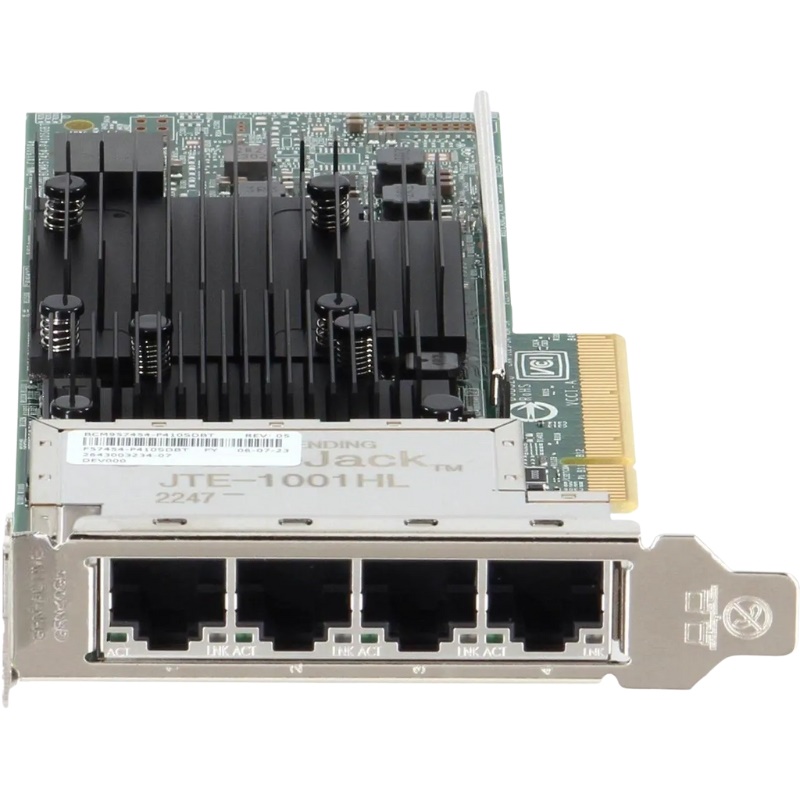


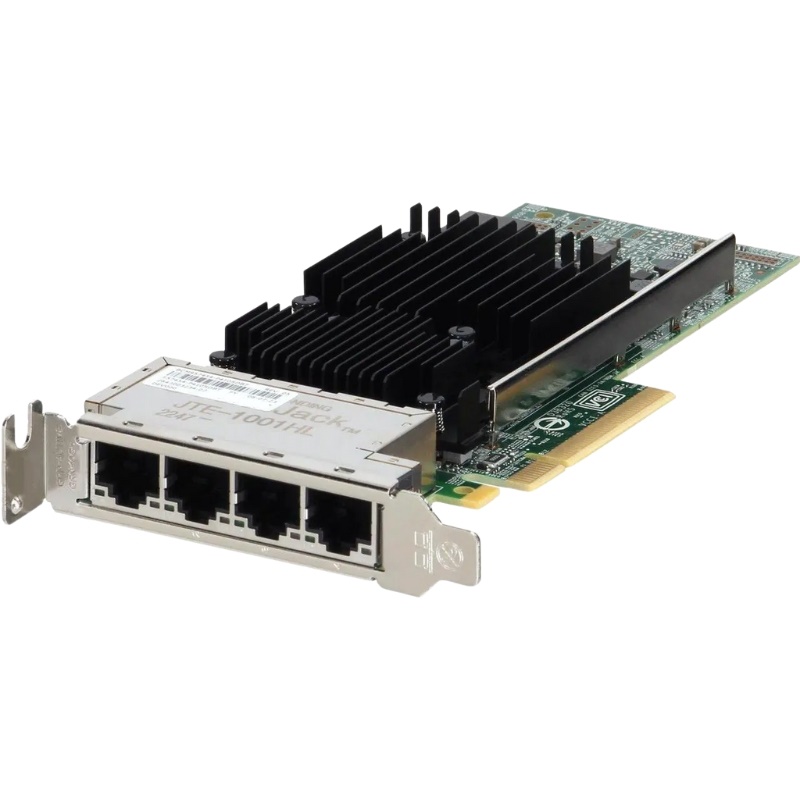
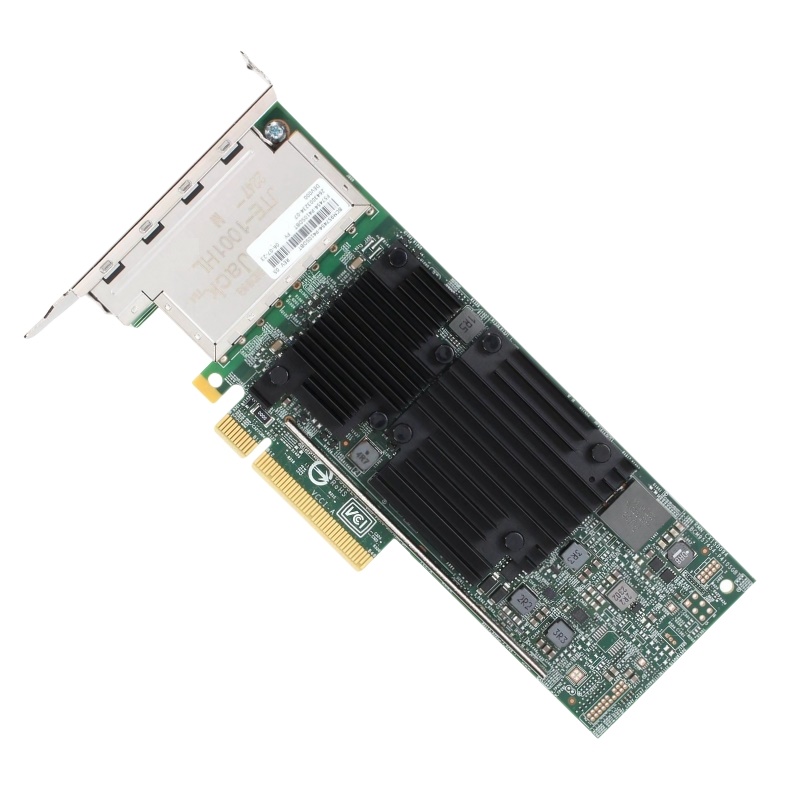
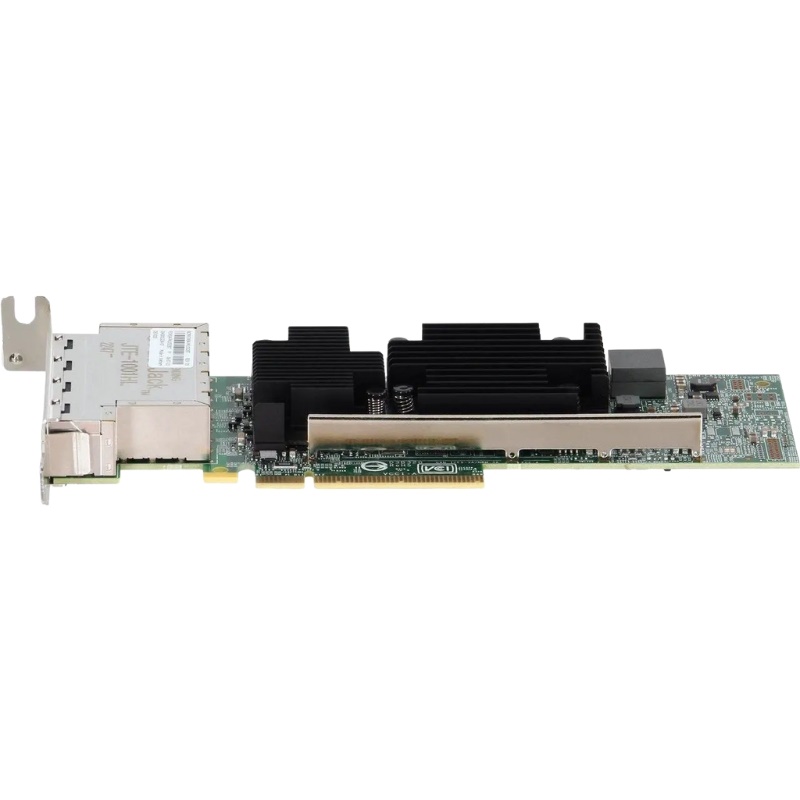
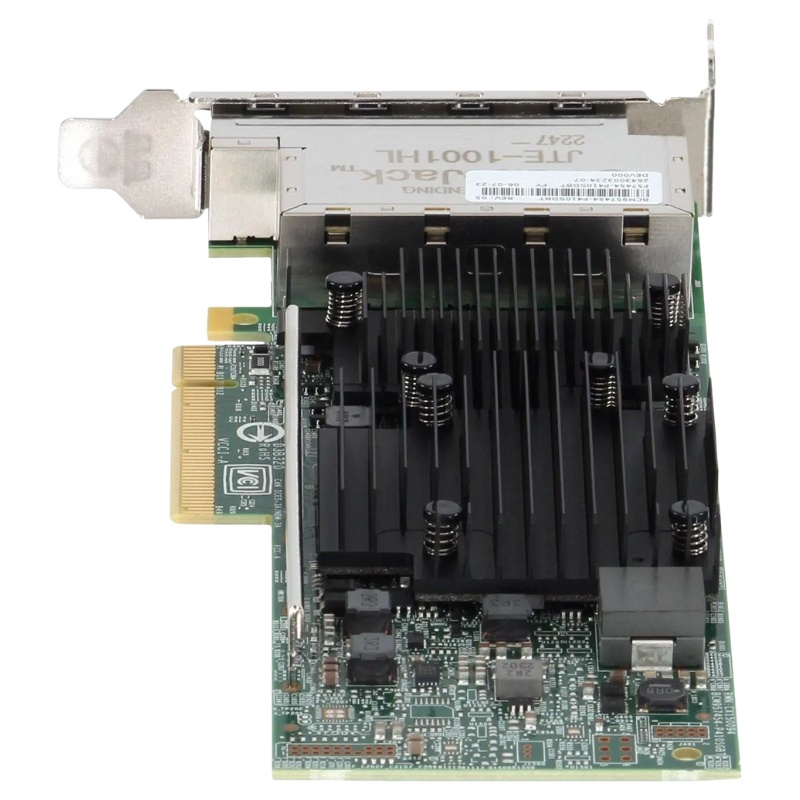
Dell 540-BDLJ Broadcom 57454 4 Ports 10GBase-T RJ-45 PCI-Express Ethernet Network Interface Card. Excellent Refurbished with 1 Year Replacement Warranty
In the landscape of high-performance networking, the transition to 10 Gigabit Ethernet is a pivotal step for businesses dealing with data-intensive workloads. The Dell 540-BDLJ Broadcom 57454 4 Ports 10GBase-T RJ-45 PCI-Express Ethernet Network Interface Card represents a cornerstone in this evolution. Engineered to deliver exceptional throughput and reliability, this quad-port NIC is designed for servers and high-end workstations requiring robust, multi-channel network connectivity without the infrastructure overhaul needed for fiber optics.
In the realm of enterprise and high-performance computing, network bandwidth is a critical resource. The Dell 540-BDLJ Broadcom 57454 4-Port 10GBase-T RJ-45 PCI-Express Ethernet Network Interface Card (NIC) represents a powerful solution for servers and workstations demanding high-throughput, low-latency connectivity. This quad-port adapter is engineered to deliver robust 10 Gigabit Ethernet performance over standard copper cabling, providing a versatile and cost-effective path to network modernization without requiring an overhaul of existing cabling infrastructure.
The Dell 540-BDLJ is built around the proven and reliable Broadcom BCM57454 network controller. This chipset is designed for efficiency and performance, integrating key functions onto a single chip to reduce latency and power consumption.
This network card utilizes a PCI-Express 3.0 x8 host interface, ensuring ample bandwidth for four simultaneous 10GbE data streams. The card is configured in a low-profile (LP) bracket design, making it compatible with a wide array of chassis from standard rackmount servers to compact form-factor systems. A full-height bracket is often included for flexibility. The defining feature is its four RJ-45 ports, each capable of auto-negotiating speeds from 10 Gigabit per second down to 100 Megabit per second, supporting Cat 6a/Cat 7 cabling for 10GBase-T operation at distances up to 100 meters.
This network interface card utilizes a PCI-Express 3.0 x8 lane interface. This bus configuration is critical, as it provides the necessary bidirectional bandwidth (approximately 7.88 GB/s total) to fully support four 10GbE ports operating simultaneously at line rate. The x8 connector ensures no internal bus bottleneck, allowing the card to achieve aggregate throughput nearing 40 Gbps in ideal conditions, making it suitable for the most bandwidth-saturated environments.
The use of standard RJ-45 interfaces ensures seamless integration into existing network environments. Administrators can leverage ubiquitous Category 6a or Category 7 Ethernet cabling, avoiding the expense and complexity of direct-attach copper (DAC) or optical fiber cabling for short to medium-range connections. This makes the card ideal for top-of-rack (ToR) switching connectivity, storage area network (SAN) access, and high-speed inter-server links within a data center row.
The integrated Broadcom BCM57454 controller features a highly optimized network stack offload engine. It handles TCP/UDP/IP checksum offloading, large send offload (LSO), and receive side scaling (RSS) efficiently across multiple CPU cores. This significantly reduces the processing overhead on the host server's CPU, freeing up valuable cycles for application workloads. The controller also supports advanced interrupt moderation, which helps lower system latency and improve overall throughput under heavy load.
With four independent 10GbE ports, the Dell 540-BDLJ offers aggregate theoretical bandwidth of 40 Gbps full-duplex. Real-world performance is consistently high, with the card capable of sustaining line-rate traffic on all ports simultaneously when paired with a sufficiently powerful host system.
For latency-sensitive applications such as financial trading platforms, high-performance computing (HPC) clusters, or real-time databases, the card's architecture is designed to minimize delay. The single-chip design and efficient driver model contribute to consistently low latency and jitter, providing predictable network performance crucial for clustered environments.
Beyond raw speed, the Dell 540-BDLJ incorporates a suite of enterprise-grade features that enhance network manageability, security, and virtualization efficiency.
A key feature for virtualized server environments is Single Root I/O Virtualization (SR-IOV). This technology allows the physical NIC to be partitioned into multiple virtual functions (VFs) that can be assigned directly to virtual machines (VMs). This bypasses the hypervisor's virtual switch for data processing, delivering near-native network performance to VMs and drastically reducing CPU utilization associated with network I/O. Combined with Virtual Machine Device Queues (VMDq) for efficient packet sorting and delivery within the hypervisor, this card is ideal for dense virtualization hosts.
The Broadcom controller supports a high number of SR-IOV virtual functions, allowing many VMs to have direct, hardware-accelerated network access. This is particularly beneficial for cloud infrastructure, private clouds, and any deployment where maximizing VM performance and host efficiency is paramount.
To maintain security without sacrificing performance, the card includes hardware offloads for major encryption standards. It supports IEEE 802.1AE Media Access Control Security (MACsec) for hop-to-hop link-layer encryption, ensuring data confidentiality and integrity between the server and the adjacent switch. Furthermore, it provides offload for IPsec and TLS/SSL, securing traffic at higher network layers while removing the significant computational burden from the host CPU.
Compliant with the IEEE 802.3az standard, Energy Efficient Ethernet allows the card to reduce power consumption during periods of low data activity. This is a critical feature for large-scale data centers focused on reducing their power usage effectiveness (PUE) and overall operational costs. The card dynamically manages power states of its PHYs, contributing to lower energy bills and a smaller carbon footprint.
The versatility of the Dell 540-BDLJ makes it suitable for a broad spectrum of professional and enterprise applications.
In rack-mounted servers, this quad-port card consolidates network connectivity. Instead of installing multiple single or dual-port NICs, a single PCIe slot can provide four 10GbE connections. This is perfect for connecting a host to separate networks for management, production data, vMotion/Live Migration, and storage traffic (like iSCSI or NFS), all from one adapter.
For servers accessing Network-Attached Storage (NAS) or iSCSI-based Storage Area Networks (SAN), 10GbE is often the minimum recommended speed to avoid network bottlenecks. The multiple ports allow for multipath I/O (MPIO) configurations, increasing throughput and providing redundancy for critical storage connections.
Using IEEE 802.3ad Link Aggregation Control Protocol (LACP), the four ports can be combined into a single logical interface with up to 40 Gbps of aggregate bandwidth. This provides both increased throughput and high availability; if one physical link fails, traffic is automatically redistributed across the remaining links without dropping the logical connection.
At the network edge or in NFV deployments, platforms often require high packet-processing performance. The combination of SR-IOV, multiple queues, and hardware offloads makes this NIC an excellent choice for hosting virtual network functions (VNFs) like routers, firewalls, and SD-WAN gateways, where performance and efficiency are critical.
The card utilizes a PCI-Express 3.0 x8 host interface, providing ample bandwidth to sustain full line-rate traffic across all four 10-gigabit ports simultaneously. This ensures zero bottleneck between the NIC and the server's motherboard. The interface is backward compatible with PCIe 2.0 slots, offering deployment flexibility across various server generations.
Fully compliant with IEEE 802.3an, 802.3az, and 802.1Q standards, this NIC guarantees interoperability in diverse network environments. It supports Jumbo Frames up to 9KB, enabling larger data payloads per packet and improving overall throughput for large data transfers common in storage and backup operations.


 Contact Us
 Information
 Catalog
 Solid State Drives (SSD)
 Network Switches
 Hard Disk Drives
 HBA & Controllers
 PC & Servers
 PC & Server Memory
 CPU & Processors
 Network Routers
 Power Supplies
 Tape Drives & Libraries
 Network Devices
 Computer & Network Cables