(7% discount is applied at checkout)
Cart is empty
Your go-to destination for cutting-edge server products
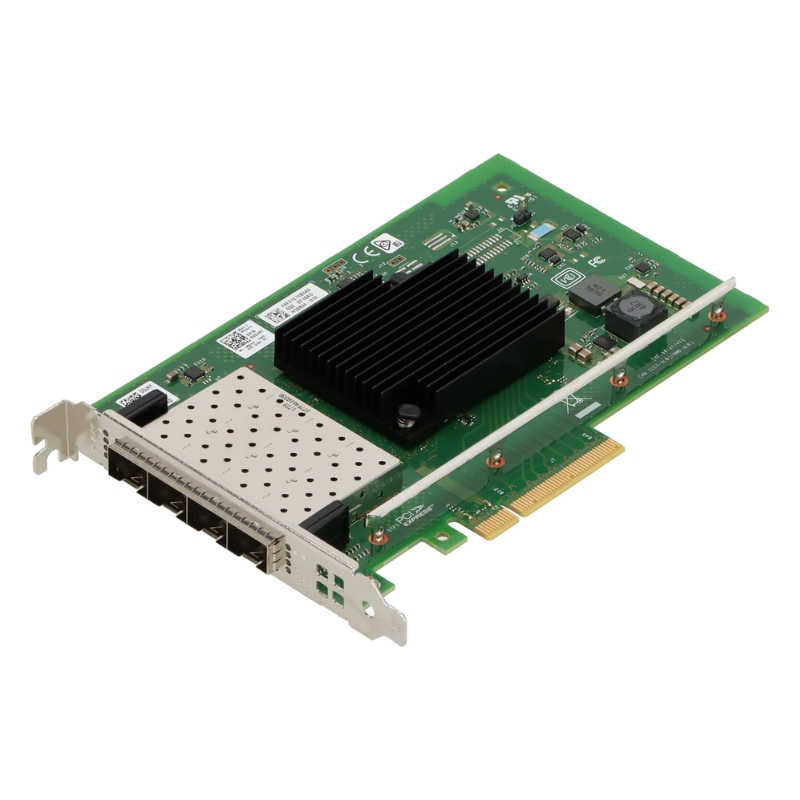


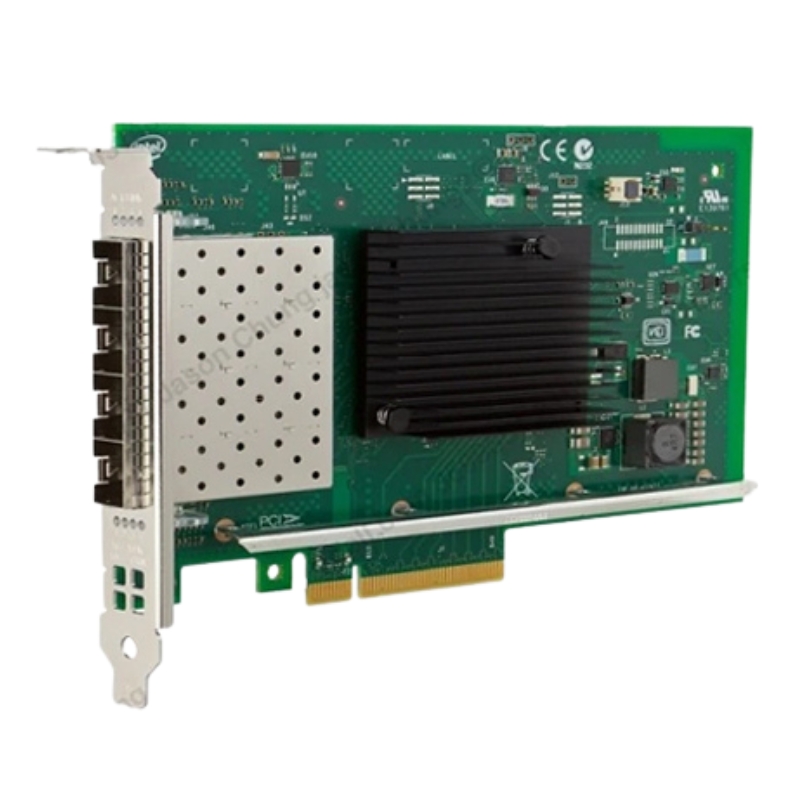
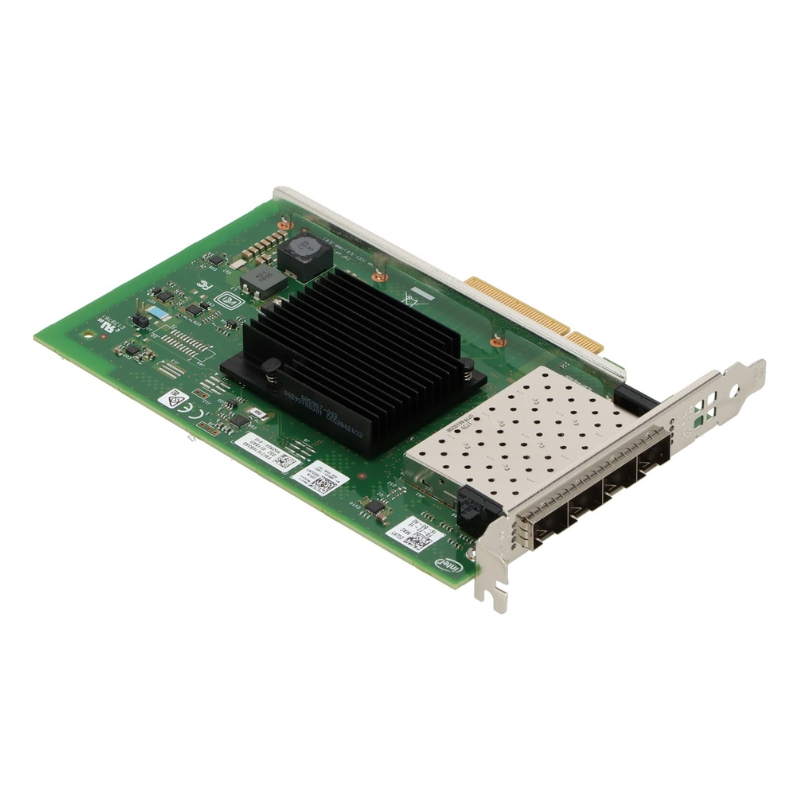
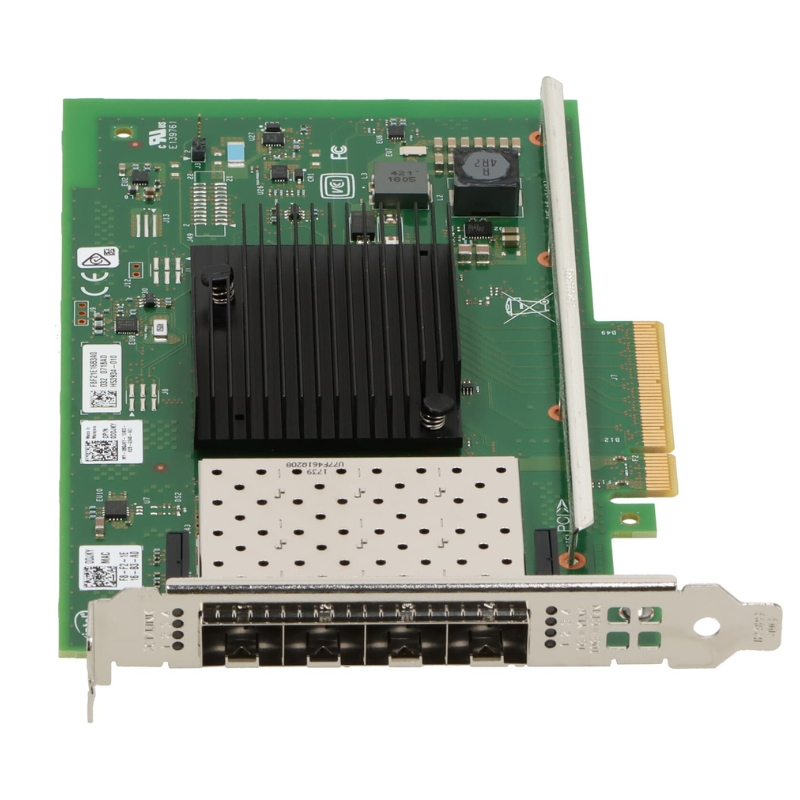
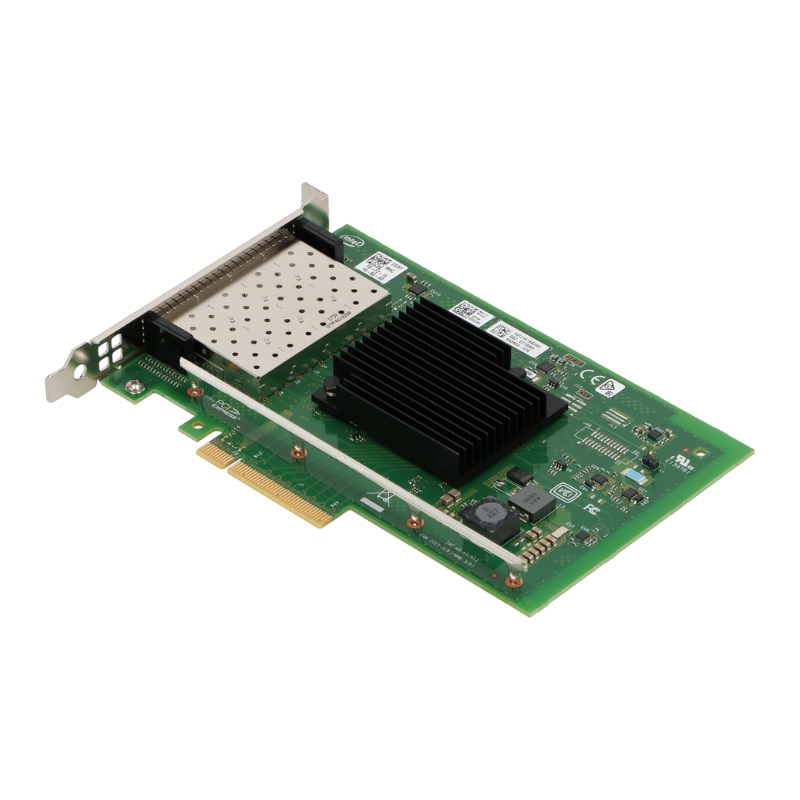
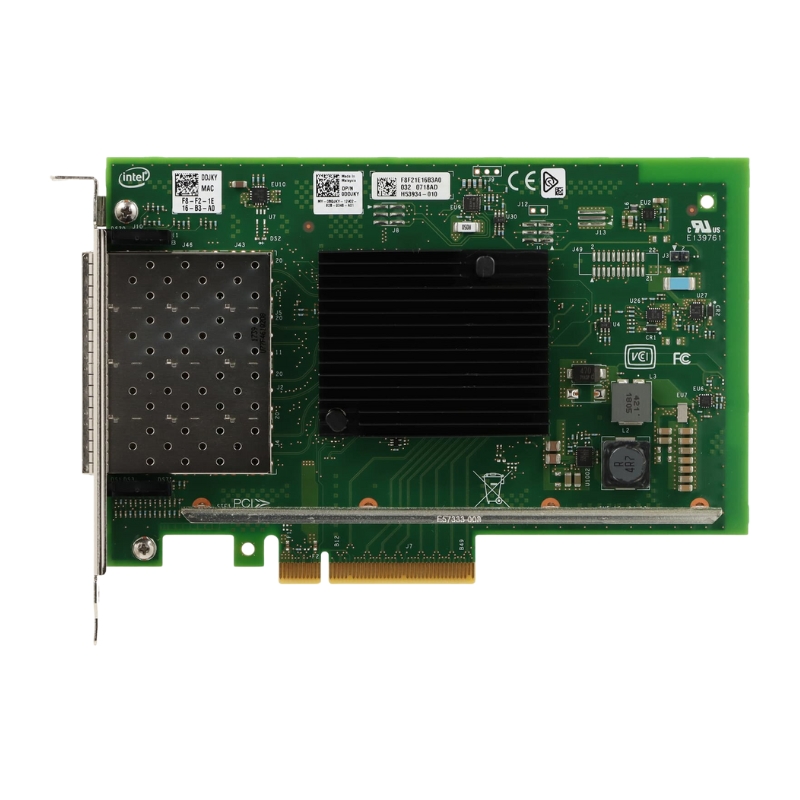
Dell 540-BDQY vIntel X710 10 Gigabit Ethernet SFP+ PCI-E Network Adapters with 4 Ports. Excellent Refurbished with 1 year replacement warranty
The Dell 540-BDQY Intel X710 10 Gigabit Ethernet Network Adapter is a high-performance enterprise networking solution designed to deliver ultra-fast, reliable, and scalable connectivity for modern data centers and PowerEdge server environments. Equipped with four SFP+ 10GbE ports, this PCI Express plug-in card enhances bandwidth efficiency, reduces network latency, and supports demanding virtualization, cloud computing, and high-throughput workloads.
The Dell 540-BDQY vIntel X710 10 Gigabit Ethernet SFP+ PCI-E Network Adapter with four ports represents a high-density, enterprise-grade connectivity solution engineered for demanding server environments. Built on the advanced networking architecture developed by this adapter integrates the X710 controller family into a compact PCI Express form factor optimized for scalability, virtualization, and high-throughput workloads. Within the Dell ecosystem of server components, this adapter is designed to deliver consistent bandwidth performance across multiple network interfaces while maintaining low latency and efficient CPU utilization.
The design philosophy behind this category of network adapters focuses on balancing performance density and operational efficiency. By integrating four independent 10 Gigabit SFP+ ports on a single PCIe adapter, the Dell 540-BDQY reduces the need for multiple discrete NIC installations, thereby conserving valuable PCIe slots within rack-mounted servers. This consolidation is particularly important in high-density Dell PowerEdge environments where expansion capability is limited but networking demands continue to scale rapidly. The adapter’s architecture supports advanced packet processing capabilities directly within the hardware, reducing dependency on host CPU cycles and improving overall system throughput consistency under heavy load conditions.
At the core of the adapter is the Intel X710 controller, a sophisticated network processing unit designed for enterprise and cloud workloads. This controller features hardware acceleration for packet filtering, traffic segmentation, and virtualization offloading. It supports multiple queue pairs and enables efficient distribution of network traffic across CPU cores, improving parallel processing efficiency in multi-threaded server environments. The X710 architecture also incorporates advanced error correction mechanisms, ensuring data integrity across high-speed transmissions commonly used in storage replication, virtualization migration, and real-time analytics workloads.
The SFP+ interface standard used in the Dell 540-BDQY adapter provides significant flexibility in network deployment. It allows administrators to choose between fiber optic transceivers and compatible DAC cables depending on distance requirements and infrastructure design. This adaptability ensures that the same hardware can be deployed across short-range intra-rack connections as well as longer inter-rack or inter-building links. The modularity of SFP+ also reduces infrastructure costs while increasing long-term scalability for evolving network architectures.
The four-port configuration of this network adapter is particularly valuable in environments where redundancy, segmentation, and traffic isolation are required. Each port operates independently, allowing administrators to configure separate network paths for storage traffic, application traffic, management interfaces, and virtual machine communication. This separation improves performance predictability and enhances security by isolating traffic domains at the hardware interface level. In large-scale data centers, this reduces network congestion and allows for more granular control over bandwidth allocation.
The Dell 540-BDQY network adapter is optimized for sustained high-throughput environments where consistent 10GbE performance is essential. It is designed to handle large volumes of packet data with minimal jitter and latency variation. This is particularly important for workloads such as distributed databases, virtualization clusters, and high-frequency trading systems where microseconds of delay can impact performance outcomes. The architecture ensures that packet processing is offloaded from the host CPU, allowing compute resources to be dedicated to application workloads rather than network management tasks.
Modern enterprise infrastructures rely heavily on virtualization platforms, and this adapter is engineered with virtualization acceleration capabilities that support multi-tenant environments. It includes support for Single Root I/O Virtualization (SR-IOV), enabling a single physical adapter to be partitioned into multiple virtual functions. Each virtual machine can therefore be assigned a dedicated network interface with near-native performance characteristics. This reduces overhead associated with software-based network switching and improves isolation between virtual workloads.
In virtualized environments, network bottlenecks often occur due to inefficient traffic distribution. The Intel X710 controller mitigates this issue by distributing traffic across multiple hardware queues. Each queue can be mapped to specific virtual machines or application processes, ensuring balanced utilization of network resources. This improves throughput consistency and reduces packet loss during peak usage periods.
Latency-sensitive applications benefit significantly from the hardware acceleration features embedded within the adapter. The X710 controller includes optimized packet parsing engines that reduce processing overhead and accelerate routing decisions. This enables near-real-time data transmission capabilities across enterprise networks. The reduction in software interrupts and context switching further enhances performance stability under high-load conditions.
The Dell 540-BDQY adapter is designed to integrate seamlessly into PCI Express slots commonly found in Dell PowerEdge servers. It leverages multiple PCIe lanes to ensure sufficient bandwidth for simultaneous multi-port operation. This ensures that all four 10GbE interfaces can operate at full capacity without contention at the bus level. Efficient lane utilization is critical for maintaining stable throughput in environments where multiple high-bandwidth applications run concurrently.
This adapter is optimized for compatibility with Dell enterprise server architectures, ensuring smooth integration with system BIOS, firmware, and management tools. It is commonly deployed in environments where system-level monitoring and remote management are required. The adapter supports advanced telemetry features that allow administrators to monitor network performance metrics in real time, contributing to proactive infrastructure management.
Firmware optimizations play a critical role in maximizing network adapter efficiency. The Dell implementation of the Intel X710 architecture includes firmware tuning that improves packet scheduling, reduces buffer congestion, and enhances error recovery mechanisms. These enhancements ensure consistent performance even under variable network loads.
The scalability offered by the Dell 540-BDQY network adapter makes it suitable for rapidly expanding data center environments. As organizations grow their infrastructure, additional bandwidth requirements can be met without significant hardware redesign. The adapter supports scalable network topologies that allow incremental expansion of server clusters while maintaining consistent performance levels across the network fabric.
In high-density rack deployments, space and power efficiency are critical considerations. By combining four high-speed network interfaces into a single PCIe device, this adapter reduces physical hardware requirements and simplifies cable management. This contributes to improved airflow efficiency and reduced thermal complexity within server racks.
The adapter supports advanced redundancy configurations that ensure continuous network availability even in the event of port failure. Link aggregation allows multiple ports to be combined into a single logical interface, increasing bandwidth while providing failover protection. This ensures uninterrupted connectivity for mission-critical applications.
Data integrity is a fundamental requirement in enterprise networking environments. The Intel X710 controller includes built-in error detection and correction mechanisms that ensure reliable packet transmission. These features reduce the risk of data corruption during high-speed transfers and improve overall network stability.
The Dell 540-BDQY adapter is widely used in cloud computing environments where scalability and performance consistency are essential. It supports both private and hybrid cloud architectures, enabling seamless integration between on-premises infrastructure and external cloud services. This flexibility allows enterprises to optimize resource allocation and improve workload distribution efficiency.
In high-performance computing environments, network latency and throughput are critical factors. The adapter’s ability to handle large-scale parallel data transfers makes it suitable for scientific computing, simulation workloads, and machine learning pipelines. Its hardware acceleration features ensure that data movement does not become a bottleneck in computational workflows.
Distributed storage systems rely heavily on fast and reliable network communication between nodes. The Dell 540-BDQY adapter enhances storage performance by enabling high-speed replication and synchronization across nodes. This improves data availability and reduces recovery time in the event of system failure.
Energy efficiency is a critical consideration in large-scale data center deployments. The Intel X710-based architecture incorporates power management features that dynamically adjust energy consumption based on network load. This ensures that power usage remains efficient without compromising performance during peak workloads.
The adapter is engineered with thermal efficiency in mind, ensuring stable operation even under sustained high-throughput conditions. Its design supports efficient heat dissipation within server chassis airflow systems, reducing the risk of thermal throttling and maintaining consistent network performance.
Security is integrated into the hardware design of the Intel X710 controller. Features such as packet filtering, traffic segmentation, and hardware-assisted encryption support contribute to securing network traffic at the adapter level. These capabilities reduce exposure to potential network-based threats.
In environments where multiple tenants share infrastructure, isolation is critical. The adapter ensures that virtual network interfaces remain segregated, preventing unauthorized access between workloads and maintaining secure data flow.
Compared to traditional single-port or dual-port network adapters, the Dell 540-BDQY provides significantly higher port density and throughput per PCIe slot. This improves server efficiency and reduces hardware overhead.
Within Dell enterprise environments, this adapter offers seamless integration with system management tools and firmware ecosystems. This ensures reduced configuration complexity and improved operational consistency across large deployments.


 Contact Us
 Information
 Catalog
 Solid State Drives (SSD)
 Network Switches
 Hard Disk Drives
 HBA & Controllers
 PC & Servers
 PC & Server Memory
 CPU & Processors
 Network Routers
 Power Supplies
 Tape Drives & Libraries
 Network Devices
 Computer & Network Cables