(7% discount is applied at checkout)
Cart is empty
Your go-to destination for cutting-edge server products


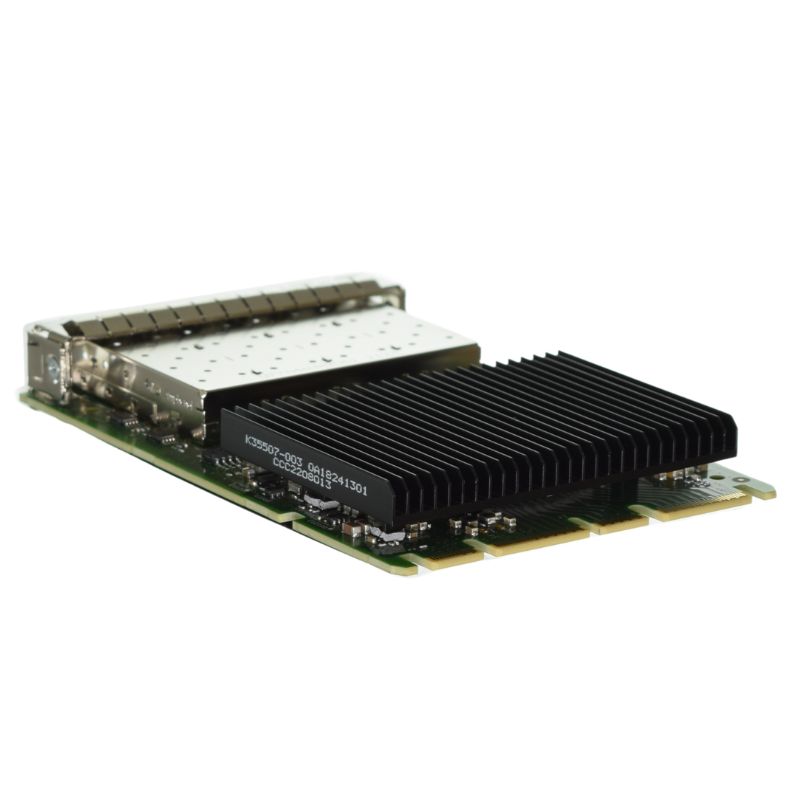
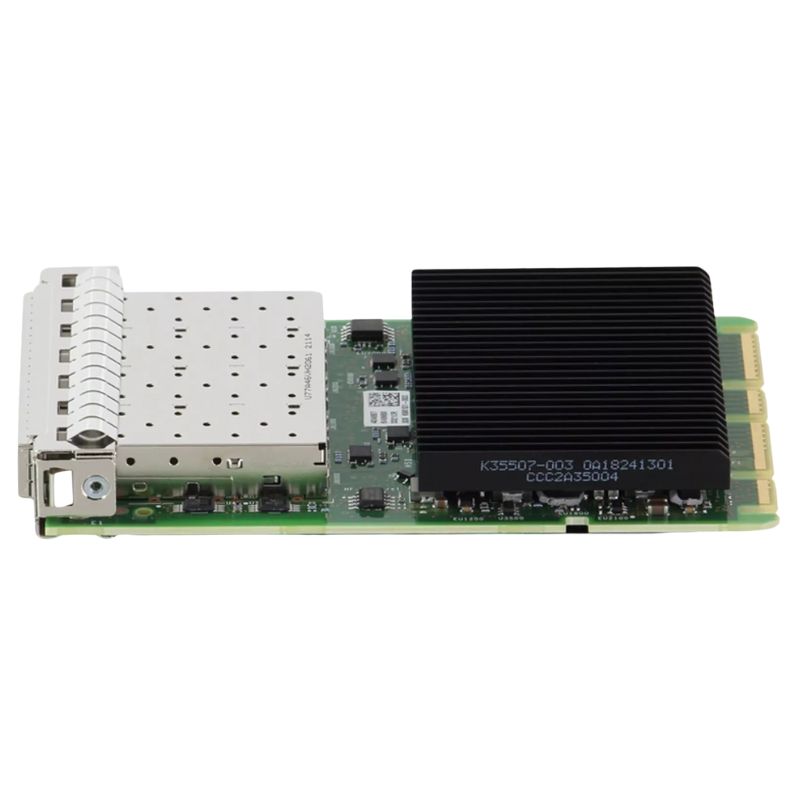
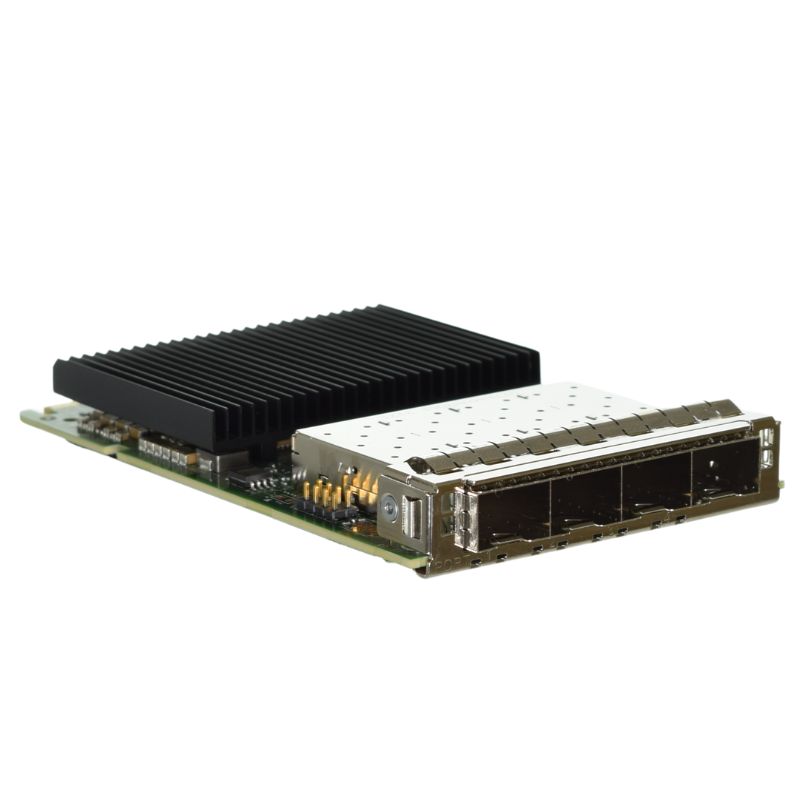
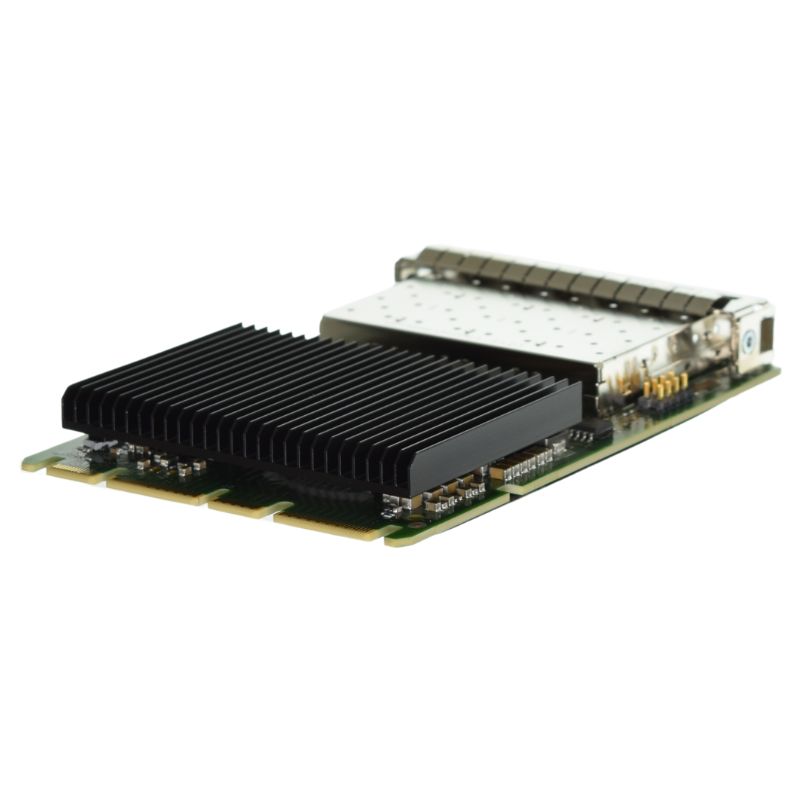
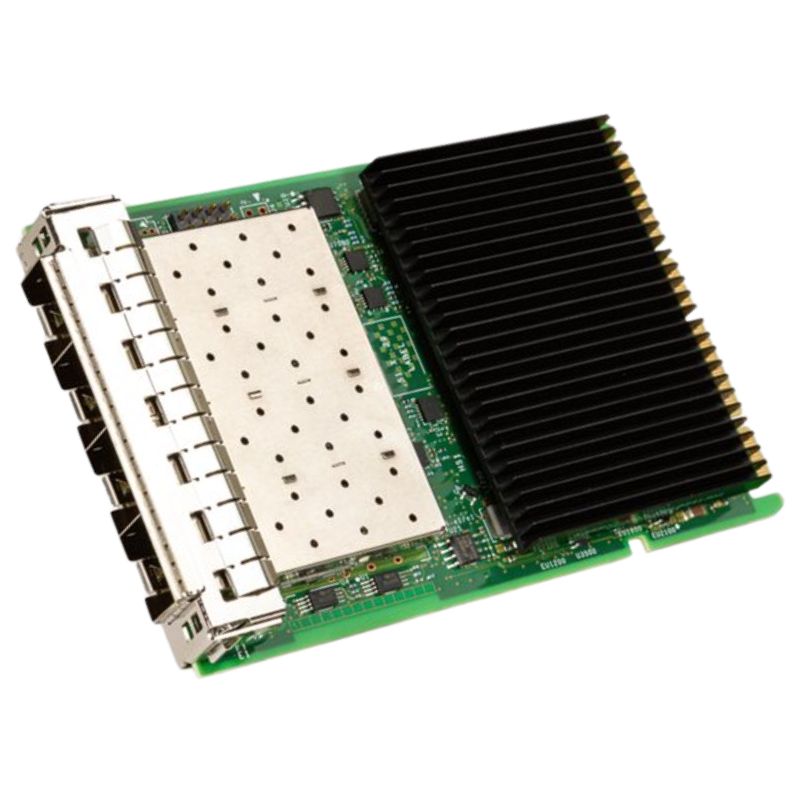
Dell 540-BDSF Intel E810-XXVDA4 Quad Ports 10/25GbE SFP28 Adapter. New Sealed in Box (NIB)
The Dell 540-BDSF Intel E810-XXVDA4 is a high-performance quad-port Ethernet network adapter engineered for modern enterprise data centers. Designed to deliver ultra-fast 10GbE and 25GbE connectivity, this advanced PCIe 4.0 x16 adapter enhances network throughput, reduces latency, and ensures scalable performance for cloud computing, virtualization, storage networking, and high-density server environments.
The Dell 540-BDSF Intel E810-XXVDA4 Quad Ports 10/25GbE SFP28 Adapter represents a next-generation enterprise networking solution engineered for demanding workloads in cloud-scale infrastructure, virtualization clusters, and high-throughput data processing environments. Built on Intel’s advanced Ethernet 800 Series architecture, this adapter is designed to deliver scalable bandwidth, ultra-low latency communication, and efficient packet processing for mission-critical server deployments. Its quad-port SFP28 configuration provides flexible connectivity options that support both 10 Gigabit Ethernet and 25 Gigabit Ethernet speeds, enabling seamless integration into evolving network topologies without requiring complete infrastructure replacement.
This adapter is widely adopted in enterprise data centers where network congestion, latency sensitivity, and workload density are critical concerns. It provides a balance of performance and adaptability, ensuring compatibility with both legacy 10GbE infrastructure and modern 25GbE high-speed networks. The architecture is optimized for virtualization environments, high-performance computing clusters, software-defined networking deployments, and large-scale storage replication systems.
At the core of the Dell 540-BDSF adapter lies the Intel Ethernet Controller E810-XXVDA4, a high-performance networking chip designed for multi-lane data processing and intelligent workload distribution. This controller integrates advanced packet classification, hardware offloading, and dynamic traffic steering mechanisms that significantly reduce CPU utilization in server environments. By shifting networking workloads from the host processor to dedicated silicon, the adapter enhances overall system efficiency and enables higher application performance under heavy network traffic conditions.
The E810 architecture incorporates enhanced buffering capabilities and improved queue management systems that support high-density virtual machine environments. Each port is capable of handling independent traffic streams with precision scheduling, ensuring consistent latency performance even during peak load conditions. This makes it particularly suitable for environments such as financial trading platforms, real-time analytics systems, and cloud-native application clusters.
The adapter’s packet processing pipeline is designed for deterministic performance. It utilizes hardware-based acceleration to handle checksum calculations, segmentation offloading, and flow control mechanisms. These optimizations reduce processing overhead and improve end-to-end network responsiveness. The result is significantly lower jitter and more stable throughput, which is essential for latency-sensitive applications such as distributed databases and real-time communication platforms.
By leveraging intelligent load balancing across its quad-port architecture, the adapter ensures that traffic is distributed efficiently across available lanes. This minimizes bottlenecks and allows data centers to maintain consistent performance even under unpredictable traffic spikes. The integration of advanced telemetry capabilities also enables administrators to monitor network health in real time, improving proactive maintenance and troubleshooting efficiency.
The Dell 540-BDSF adapter provides four independent SFP28 ports, each capable of operating at 10GbE or 25GbE speeds depending on the transceiver and network configuration. This flexibility allows organizations to deploy mixed-speed environments without compromising performance or compatibility. It is particularly beneficial for phased network upgrades, where infrastructure transitions from 10GbE to 25GbE over time.
Each port supports high-speed optical or direct-attach copper connections, enabling versatile deployment across short-range and long-range networking scenarios. The modular nature of SFP28 connectivity ensures that enterprises can tailor their networking setup based on distance requirements, power efficiency goals, and budget constraints.
In virtualized server environments, network adapters must handle multiple virtual network interfaces simultaneously. The quad-port configuration of the Dell 540-BDSF adapter enables high-density traffic management, ensuring that virtual machines receive dedicated bandwidth without contention. This is essential in hyper-converged infrastructure systems where compute, storage, and networking resources converge on shared hardware platforms.
The adapter’s architecture supports advanced virtualization features that improve isolation and performance consistency across virtual workloads. This ensures that mission-critical applications running in virtual environments experience the same level of network performance as bare-metal deployments.
Enterprise data centers require network components that can operate continuously under heavy workloads without performance degradation. The Dell 540-BDSF Intel E810-XXVDA4 adapter is engineered for 24/7 operational reliability, featuring robust thermal management, power-efficient circuitry, and enterprise-grade components designed for long-term durability.
Its thermal design ensures stable operation even under sustained high-throughput conditions, preventing overheating and maintaining consistent performance levels. This reliability is crucial in mission-critical environments where downtime can result in significant operational and financial losses.
The quad-port configuration also enhances redundancy strategies within enterprise networks. In case of link failure or maintenance operations, traffic can be seamlessly rerouted through alternative ports without service interruption. This built-in redundancy supports high-availability architectures commonly deployed in financial institutions, healthcare systems, and large-scale cloud providers.
Fault tolerance is further enhanced through intelligent driver support and firmware-level optimization, ensuring that the adapter can recover quickly from transient network disruptions while maintaining data integrity and session continuity.
The Dell 540-BDSF adapter is specifically designed for compatibility with Dell PowerEdge server ecosystems, ensuring seamless installation and configuration within existing infrastructure. It integrates with a wide range of server models and supports standardized PCIe interfaces, making deployment straightforward in both new and legacy systems.
This compatibility extends to enterprise management tools that allow centralized monitoring, firmware updates, and performance tuning. IT administrators can manage network behavior across multiple servers using unified control interfaces, reducing operational complexity and improving efficiency.
The adapter is compatible with major enterprise operating systems including Linux distributions, Windows Server environments, and virtualization platforms such as VMware ESXi and Microsoft Hyper-V. This ensures that organizations can deploy the adapter in heterogeneous environments without requiring specialized configurations or proprietary software dependencies.
Driver optimization for each platform ensures consistent performance and feature availability across different deployment scenarios. This cross-platform compatibility makes the adapter suitable for hybrid cloud environments and multi-tenant infrastructure designs.
One of the most significant advantages of the Dell 540-BDSF Intel E810-XXVDA4 adapter is its ability to offload intensive networking tasks from the host CPU. Features such as TCP segmentation offload, receive-side scaling, and data checksum validation are handled directly by the network controller. This reduces CPU overhead and allows more processing power to be allocated to application workloads.
The offloading architecture is particularly beneficial in environments with high packet rates, such as virtual desktop infrastructure deployments and large-scale web hosting platforms. By reducing the computational burden on host systems, the adapter improves overall infrastructure efficiency and reduces operational costs.
Security is a critical consideration in enterprise networking, and this adapter includes hardware-based features that support traffic segmentation and isolation. These capabilities help protect sensitive workloads by ensuring that network traffic between virtual machines or application domains remains isolated and secure.
In addition, the adapter supports encryption acceleration and secure packet processing, helping organizations maintain compliance with data protection standards while minimizing performance overhead. This makes it suitable for regulated industries such as finance, healthcare, and government IT environments.
Modern cloud computing environments require network infrastructure that can scale dynamically based on workload demand. The Dell 540-BDSF adapter is designed to support elastic scaling, allowing data centers to adjust bandwidth allocation without physical hardware changes. This flexibility is essential for cloud service providers and enterprise private cloud deployments.
Its high-speed quad-port architecture ensures that growing workloads can be distributed efficiently across multiple network channels, preventing congestion and maintaining consistent performance levels even during peak usage periods.
Software-defined networking (SDN) environments benefit significantly from the advanced programmability features of this adapter. It supports dynamic configuration changes, allowing network policies to be updated in real time without interrupting service. This aligns with modern DevOps practices and infrastructure-as-code methodologies.
The adapter’s ability to integrate with SDN controllers enhances network automation, improves resource allocation efficiency, and enables more granular traffic management across distributed systems.
Energy efficiency is a critical factor in large-scale data center operations. The Dell 540-BDSF adapter incorporates power-aware processing technologies that dynamically adjust performance states based on network load. This helps reduce power consumption during low-traffic periods while maintaining full performance availability when demand increases.
These power optimization features contribute to lower operational costs and improved sustainability in enterprise IT environments, aligning with modern green computing initiatives.
In densely packed server racks, maintaining thermal stability is essential to prevent hardware degradation. The adapter’s design includes efficient heat dissipation pathways that ensure consistent performance even in high-temperature environments. This makes it suitable for deployment in compact blade server systems and high-density virtualization clusters.
Thermal efficiency also contributes to system longevity, reducing maintenance requirements and improving return on investment for enterprise infrastructure deployments.


 Contact Us
 Information
 Catalog
 Solid State Drives (SSD)
 Network Switches
 Hard Disk Drives
 HBA & Controllers
 PC & Servers
 PC & Server Memory
 CPU & Processors
 Network Routers
 Power Supplies
 Tape Drives & Libraries
 Network Devices
 Computer & Network Cables