(7% discount is applied at checkout)
Cart is empty
Your go-to destination for cutting-edge server products


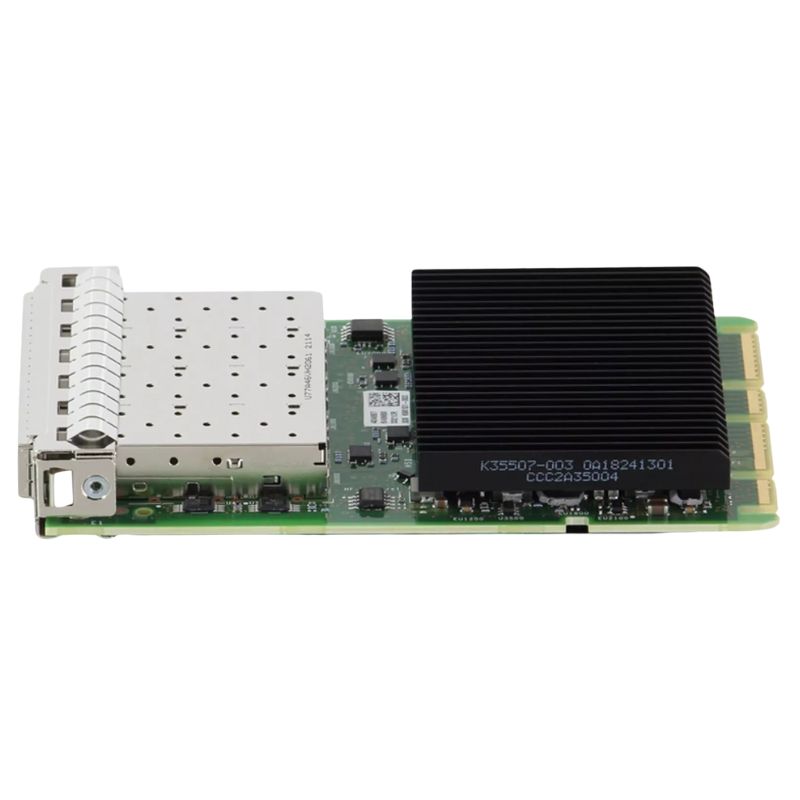
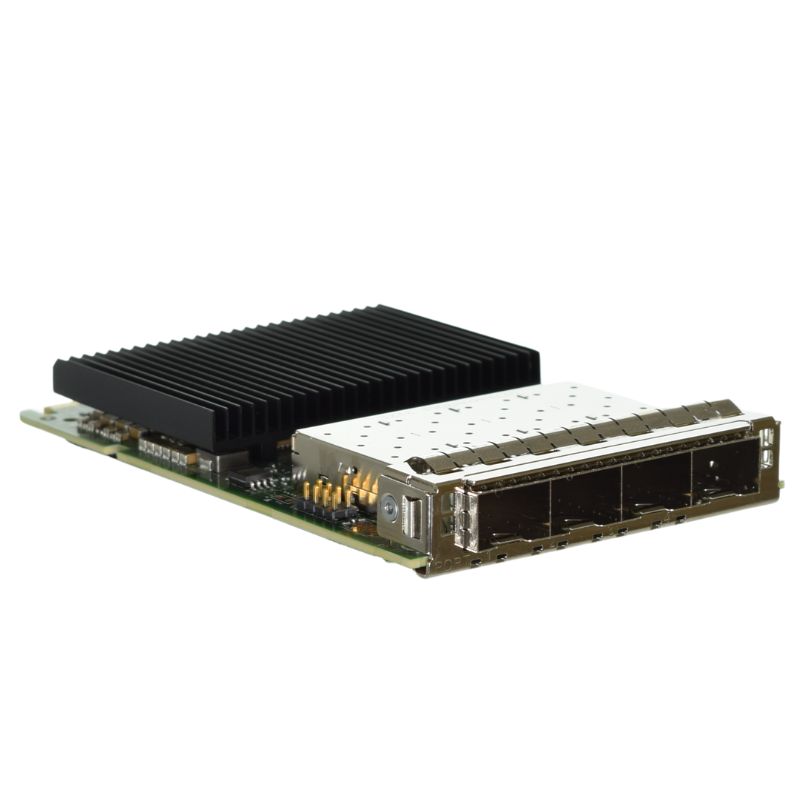
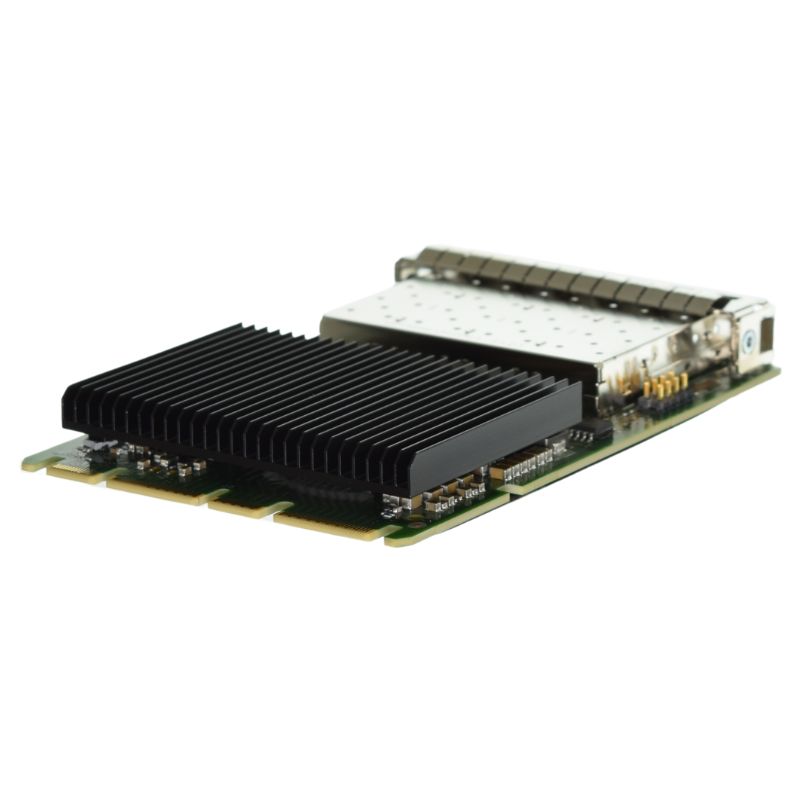
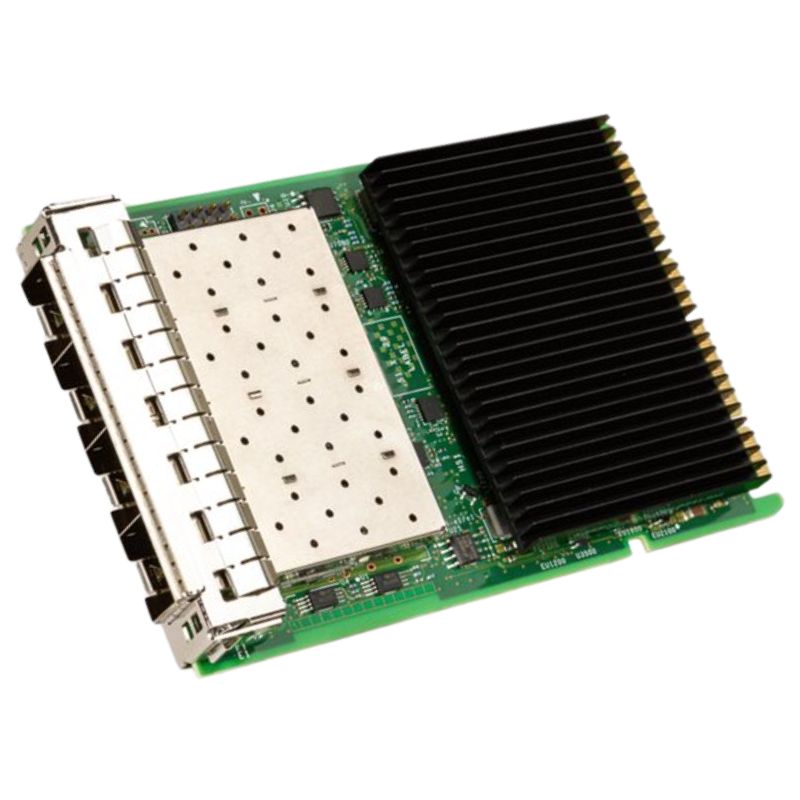
Dell 540-BDTC Intel E810-XXVDA4 10/25 Gigabit Ethernet SFP28 4 Ports Network Adapter. New Sealed in Box (NIB) with 1 Year Replacement Warranty
The Dell 540-BDTC Intel E810-XXVDA4 is a high-performance enterprise network adapter designed to deliver ultra-fast 10GbE and 25GbE connectivity for modern data centers. Built on Intel’s advanced Ethernet controller architecture, this 4-port SFP28 network interface card (NIC) provides exceptional throughput, low latency, and scalable bandwidth for virtualization, cloud computing, storage networking, and high-density server environments.
The Dell 540-BDTC Intel E810-XXVDA4 10/25 Gigabit Ethernet SFP28 4 Ports Network Adapter represents a high-performance, data center-class networking solution engineered for modern enterprise infrastructures that demand ultra-low latency, high throughput, and advanced virtualization capabilities. Built on the Intel Ethernet E810 controller architecture, this quad-port SFP28 network interface card is designed to support scalable cloud environments, hyperscale workloads, storage-intensive applications, and next-generation virtualized data center operations. The adapter delivers flexible 10GbE and 25GbE connectivity options, enabling organizations to optimize network bandwidth allocation according to workload requirements while maintaining efficiency and stability across server environments.
At the core of the Dell 540-BDTC adapter is the Intel Ethernet E810-XXVDA4 controller, a cutting-edge silicon platform optimized for high-density networking and cloud-scale deployments. This controller architecture introduces advanced packet processing capabilities, improved queue management, and enhanced throughput optimization for virtualized environments. It is engineered to handle demanding workloads such as artificial intelligence processing, machine learning pipelines, distributed databases, and high-frequency trading systems where deterministic latency and packet integrity are essential.
The E810 architecture incorporates sophisticated hardware acceleration mechanisms that offload intensive networking tasks from the CPU. This results in reduced processor utilization and improved system efficiency. The adapter supports intelligent packet steering, dynamic load balancing across queues, and optimized interrupt handling, ensuring that network traffic flows smoothly even under heavy load conditions.
Hardware-based offloading features include TCP segmentation offload, checksum offload, and stateless offload functions that reduce CPU overhead significantly. These enhancements are critical for enterprise workloads that require consistent performance across multiple virtual machines and containerized applications.
The adapter’s architecture is optimized to deliver consistent high throughput performance across all four SFP28 ports. This ensures that enterprises can maintain stable data transmission rates even during peak utilization scenarios, making it suitable for large-scale virtualization clusters and distributed computing environments.
One of the defining features of the Dell 540-BDTC network adapter is its support for both 10 Gigabit Ethernet and 25 Gigabit Ethernet speeds over SFP28 optical transceivers. This dual-speed capability enables seamless integration into existing 10GbE infrastructures while providing a clear upgrade path toward higher bandwidth requirements without requiring complete hardware replacement.
The SFP28 interface design allows administrators to deploy various optical modules or direct attach copper cables depending on infrastructure requirements. This flexibility supports dynamic scaling of network bandwidth in response to changing workload demands in enterprise and cloud environments.
With four independent ports, the adapter enables dense network configurations within a single PCIe slot. This high port density is particularly beneficial for blade servers and rack-mounted PowerEdge systems where expansion slot availability is limited but bandwidth requirements are substantial.
The multi-port configuration facilitates efficient data center interconnect strategies, allowing for redundancy, load balancing, and traffic segmentation across separate physical interfaces. This enhances both reliability and performance in mission-critical deployments.
The Dell 540-BDTC adapter utilizes a PCI Express interface designed for maximum data transfer efficiency between the network controller and the host system. The PCIe architecture ensures low-latency communication and high-bandwidth support, making it suitable for next-generation server platforms that rely heavily on fast data movement between compute and storage layers.
The PCIe interface provides a direct pathway for network traffic to be processed by the system CPU and memory subsystems. This reduces bottlenecks and ensures that high-speed network traffic is handled efficiently without compromising application performance.
This network adapter is designed for seamless integration with Dell PowerEdge server platforms, ensuring compatibility with enterprise-grade hardware configurations. It supports firmware-level optimization and driver-level tuning to maximize performance across supported operating systems and virtualization environments.
The PCIe-based data path architecture minimizes latency by enabling direct memory access (DMA) transfers, ensuring that network packets are delivered to system memory with minimal delay. This is essential for latency-sensitive applications such as real-time analytics and financial trading systems.
The Dell 540-BDTC Intel E810-XXVDA4 adapter is engineered to excel in virtualized and cloud-native environments. It supports advanced virtualization technologies that enhance network isolation, performance scaling, and resource allocation across multiple virtual machines and containers.
Single Root I/O Virtualization (SR-IOV) enables the adapter to create multiple virtual functions from a single physical interface. This allows virtual machines to directly access network resources, improving performance and reducing hypervisor overhead.
In cloud environments, multi-tenancy is essential. The adapter provides secure isolation between virtual workloads, ensuring that traffic from one tenant does not interfere with another while maintaining consistent performance across all workloads.
Modern containerized environments benefit significantly from the adapter’s ability to handle microservices-based architectures. It ensures efficient packet routing and low latency communication between container instances distributed across nodes.
This network adapter is specifically designed for enterprise data centers requiring high availability, redundancy, and performance scalability. It supports advanced networking protocols and optimizations that enhance reliability and throughput in complex infrastructures.
Redundancy is a key requirement in enterprise networking. The multi-port configuration allows for failover protection, ensuring continuous network availability even in the event of a port or cable failure.
The adapter contributes to high availability architectures by supporting redundant network paths and failover mechanisms that ensure uninterrupted service delivery in mission-critical systems.
Performance optimization is a core feature of the Dell 540-BDTC network adapter. It is engineered to minimize latency while maximizing throughput, making it ideal for applications that require real-time responsiveness and large-scale data processing.
The adapter leverages optimized packet processing pipelines that reduce jitter and improve deterministic performance. This is particularly important for financial systems, telecommunications infrastructure, and real-time analytics platforms.
Deterministic performance ensures that network latency remains predictable under varying workloads. This consistency is essential for applications that require strict service level agreements.
The adapter maintains stable data transmission even under peak network utilization, ensuring that enterprise applications continue to perform reliably without degradation in service quality.
Security is a fundamental component of modern network infrastructure, and the Dell 540-BDTC adapter incorporates multiple layers of protection to ensure data integrity and secure communication across enterprise environments.
The adapter supports secure boot mechanisms, encrypted firmware validation, and trusted execution environments that protect against unauthorized modifications and malicious firmware attacks.
Traffic isolation capabilities ensure that sensitive workloads are protected from unauthorized access and cross-traffic interference, enhancing overall system security in multi-tenant environments.
Virtualized workloads benefit from secure communication channels that protect data in motion, ensuring compliance with enterprise security standards and regulatory requirements.
Designed for modern data centers, the adapter incorporates energy-efficient technologies that reduce power consumption while maintaining high performance. Intelligent power management dynamically adjusts resource usage based on workload demands.
The adapter optimizes energy usage by scaling performance features according to network traffic intensity. This reduces unnecessary power consumption during low-utilization periods.
Advanced thermal control ensures that the adapter operates within optimal temperature ranges, preventing overheating and maintaining long-term hardware reliability.
Energy efficiency contributes to lower operational costs and improved sustainability in large-scale data center environments, making this adapter suitable for green computing initiatives.
The Dell 540-BDTC Intel E810-XXVDA4 adapter is suitable for a wide range of enterprise applications, including cloud computing infrastructures, virtualization clusters, storage networks, and high-performance computing environments. Its flexibility and scalability make it an ideal choice for organizations transitioning toward hybrid cloud architectures.
Cloud service providers benefit from the adapter’s ability to handle high-density virtual workloads and dynamic traffic scaling, ensuring consistent performance across distributed environments.
HPC workloads that require rapid data exchange between nodes benefit significantly from the adapter’s low-latency architecture and high throughput capabilities.
The adapter supports efficient integration with storage area networks, enabling fast data transfer between compute and storage systems for optimized database and analytics performance.


 Contact Us
 Information
 Catalog
 Solid State Drives (SSD)
 Network Switches
 Hard Disk Drives
 HBA & Controllers
 PC & Servers
 PC & Server Memory
 CPU & Processors
 Network Routers
 Power Supplies
 Tape Drives & Libraries
 Network Devices
 Computer & Network Cables