(7% discount is applied at checkout)
Cart is empty
Your go-to destination for cutting-edge server products
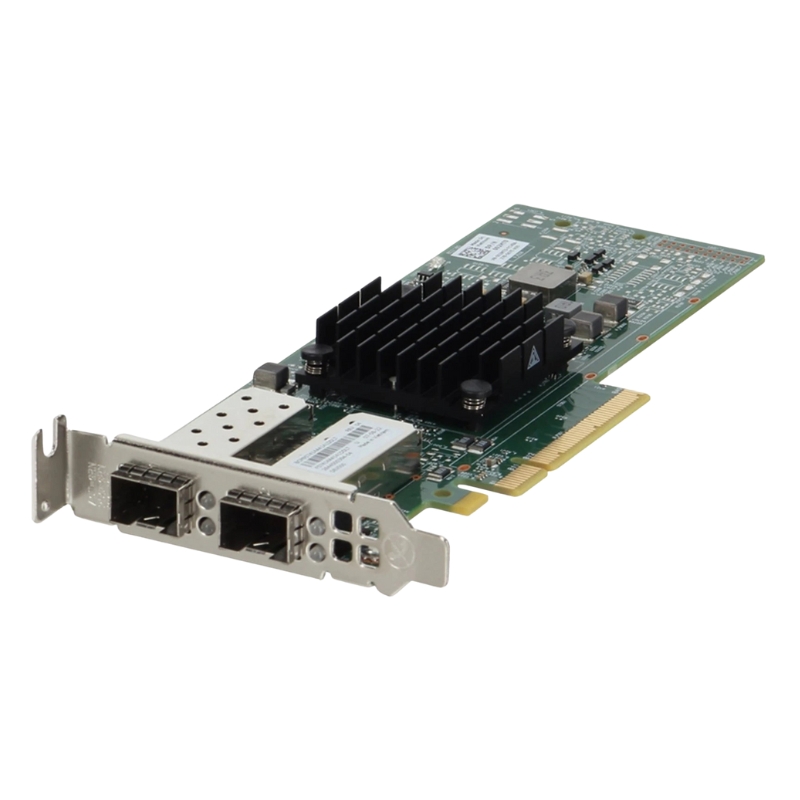


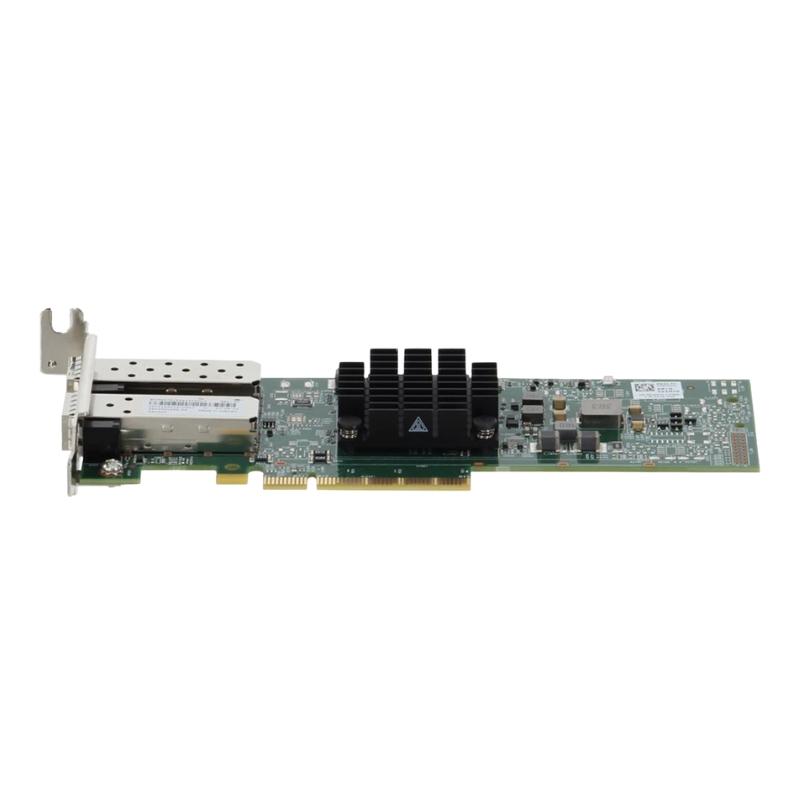
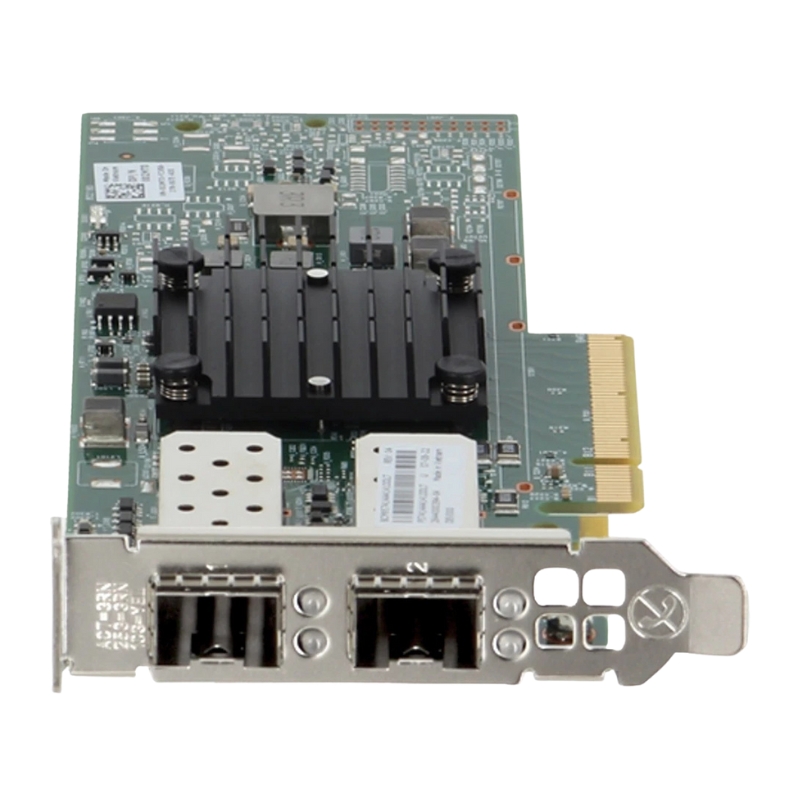
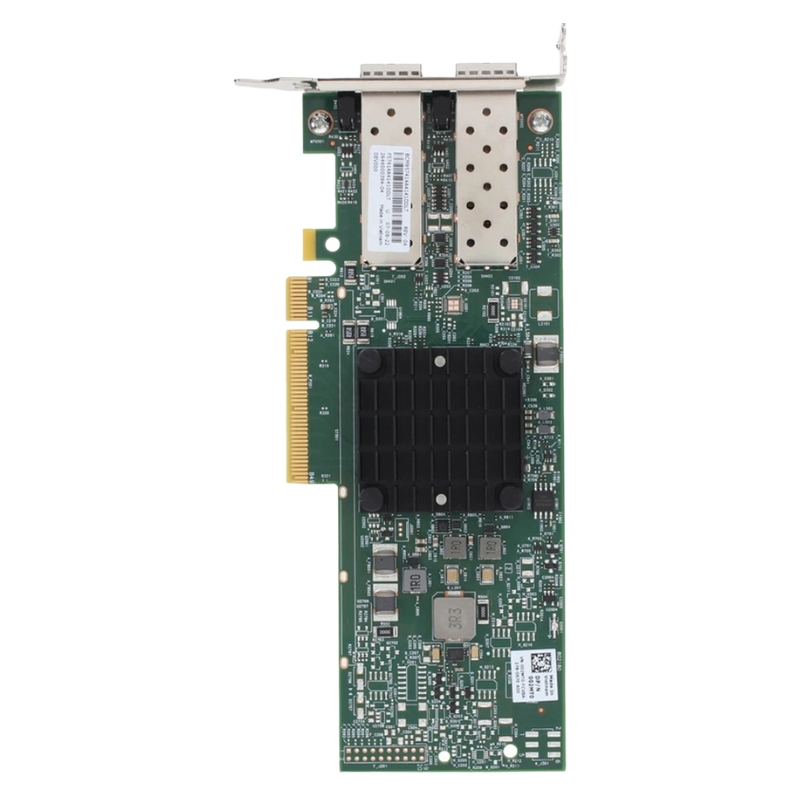
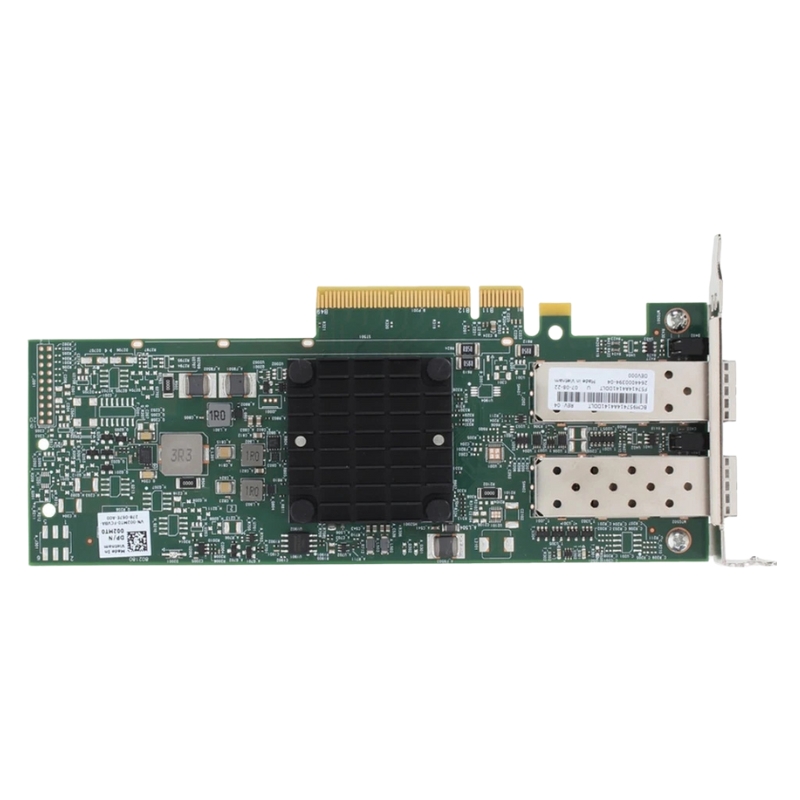
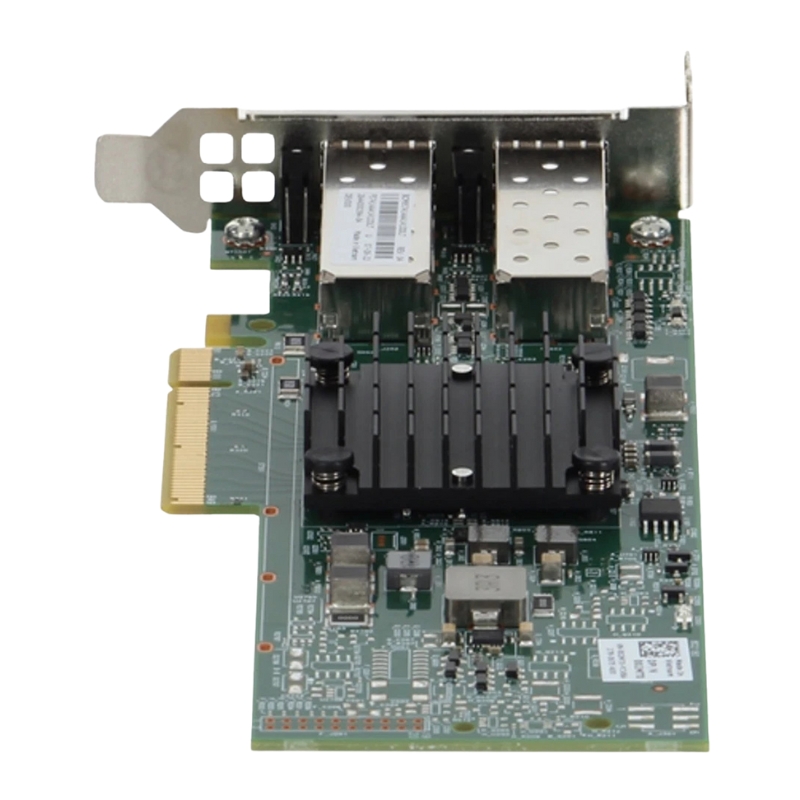
Dell 540-BFGS Intel 2 Ports E810-2CQDA2 PCI-E 4.0 x16 QSFP28 x 2 Network Adapter. Excellent Refurbished with 1 year Replacement Warranty
The Dell 540-BFGS Intel E810-2CQDA2 is a high-performance dual-port network adapter designed for next-generation data center environments. Built to deliver ultra-low latency and extreme bandwidth capacity, this PCI Express 4.0 x16 plug-in card supports advanced Ethernet speeds up to 100GbE, making it an ideal solution for cloud infrastructure, virtualization, high-performance computing (HPC), and enterprise storage networks.
The Dell 540-BFGS Intel E810-2CQDA2 PCI-E 4.0 x16 QSFP28 Network Adapter represents a high-performance enterprise-class network interface solution engineered for modern data-intensive infrastructures. Built on Intel’s advanced Ethernet 800 Series architecture, this dual-port QSFP28 adapter is designed to deliver ultra-low latency, high throughput, and scalable bandwidth capabilities required in hyperscale data centers, cloud computing environments, artificial intelligence workloads, and high-performance computing clusters. With PCI Express 4.0 x16 interface support, it enables maximum data transfer efficiency between server and network fabric, significantly reducing bottlenecks in mission-critical workloads.
This category of network adapters is essential for organizations that demand consistent and predictable network performance under heavy traffic conditions. As enterprise workloads continue to evolve toward distributed architectures, virtualization-heavy deployments, and real-time analytics processing, adapters such as the Dell 540-BFGS play a foundational role in ensuring seamless connectivity, high packet processing efficiency, and enhanced workload consolidation.
At the core of the Dell 540-BFGS adapter lies the Intel E810 controller, a next-generation silicon design optimized for cloud-scale networking. This controller introduces hardware acceleration for packet processing, reducing CPU overhead and improving system efficiency. The architecture is specifically engineered to handle high-density traffic patterns commonly found in virtualization clusters and software-defined networking environments.
The Intel E810 platform integrates advanced scheduling engines and packet classification capabilities that allow network traffic to be processed with minimal latency. This ensures that both small packet workloads and large data streams are handled efficiently, maintaining consistent throughput even under peak demand conditions.
The adapter’s architecture supports extremely high aggregate bandwidth levels through dual QSFP28 ports, each capable of 100GbE connectivity depending on the transceiver configuration. This enables the adapter to function as a critical aggregation point for high-speed data pipelines, ensuring uninterrupted flow of data across distributed systems.
Bandwidth optimization features built into the controller include adaptive flow control, congestion management, and dynamic queue allocation, all of which contribute to stable performance in environments with fluctuating traffic patterns.
The PCIe 4.0 x16 interface is a key differentiator for this category of network adapters. It doubles the per-lane throughput compared to PCIe 3.0, allowing significantly higher data transfer rates between the network adapter and the host system. This ensures that the full capacity of dual QSFP28 ports can be utilized without internal bus constraints.
In high-performance server environments, PCIe bandwidth often becomes a limiting factor for network throughput. The Dell 540-BFGS eliminates this bottleneck by leveraging the expanded bandwidth capabilities of PCIe 4.0, ensuring optimal performance in data-heavy workloads such as virtualization clusters, storage replication, and distributed computing frameworks.
By utilizing PCIe 4.0 x16 lanes, the adapter minimizes data traversal delays between the CPU, memory, and network interface. This reduction in latency is particularly beneficial for applications requiring real-time responsiveness, such as financial trading systems, AI inference pipelines, and large-scale database synchronization.
The QSFP28 interface enables flexible connectivity options, supporting both optical fiber transceivers and direct attach copper (DAC) cables. This flexibility allows system architects to design network topologies that meet specific latency, distance, and bandwidth requirements.
Each port can operate independently, enabling redundant network paths or aggregated high-bandwidth configurations. This dual-port design enhances fault tolerance and improves overall network reliability in enterprise deployments.
In modern data centers, network scalability is a critical requirement. The QSFP28-based architecture of the Dell 540-BFGS supports seamless integration into spine-leaf network topologies, enabling efficient east-west traffic flow between servers and storage systems.
This design is particularly effective in cloud environments where workload distribution and microservices communication require consistent low-latency interconnectivity.
The Dell 540-BFGS adapter is optimized for hyperscale environments where thousands of virtual machines or containers operate simultaneously. Its hardware offload capabilities reduce CPU utilization, allowing compute resources to be allocated more efficiently to application workloads.
This is especially important in cloud-native architectures, where infrastructure efficiency directly impacts operational costs and service scalability.
In multi-tenant cloud infrastructures, network isolation and performance consistency are critical. The adapter supports advanced virtualization features that enable secure and efficient traffic separation between tenants while maintaining high throughput.
Single Root I/O Virtualization (SR-IOV) support allows the Dell 540-BFGS adapter to present multiple virtual functions directly to virtual machines. This reduces hypervisor overhead and enables near-native network performance for virtualized workloads.
By bypassing traditional software-based network stacks, SR-IOV improves latency-sensitive applications and ensures predictable performance across virtual environments.
The adapter allows dynamic allocation of virtual functions, enabling administrators to assign dedicated network resources to specific workloads. This improves isolation, security, and performance consistency in shared infrastructure environments.
Remote Direct Memory Access over Converged Ethernet (RoCE) is a key feature supported by this category of adapter. It enables direct memory-to-memory data transfer between systems without involving CPU intervention, significantly reducing latency and improving throughput.
This capability is particularly beneficial in distributed storage systems, high-frequency trading platforms, and AI training clusters where microsecond-level latency improvements can have substantial performance impacts.
By minimizing CPU involvement in network operations, RDMA-enabled communication ensures that compute resources are dedicated primarily to application processing rather than data movement.
Designed for seamless integration with Dell PowerEdge server platforms, the adapter ensures full compatibility with enterprise hardware configurations. This simplifies deployment and reduces compatibility risks in large-scale infrastructures.
Beyond Dell ecosystems, the adapter is compatible with a wide range of x86 server architectures, making it suitable for heterogeneous data center environments.
The adapter is engineered for continuous operation in demanding environments. Its components are designed to withstand high workloads and sustained throughput without degradation in performance.
Efficient thermal design ensures stable operation under heavy loads. Heat dissipation mechanisms are optimized to maintain consistent performance in densely packed server racks.
In artificial intelligence environments, high-speed interconnects are essential for distributed training workloads. The Dell 540-BFGS adapter enables rapid data exchange between compute nodes, reducing synchronization delays.
High-performance computing clusters benefit from the adapter’s low-latency and high-bandwidth capabilities, enabling faster simulation processing and data analysis.
The Dell 540-BFGS is designed with scalability in mind, enabling organizations to expand network capacity without replacing core infrastructure components. Its architecture supports evolving data center requirements.
With PCIe 4.0 and Intel E810 technology, the adapter is positioned to support future workloads that demand even higher bandwidth and lower latency.


 Contact Us
 Information
 Catalog
 Solid State Drives (SSD)
 Network Switches
 Hard Disk Drives
 HBA & Controllers
 PC & Servers
 PC & Server Memory
 CPU & Processors
 Network Routers
 Power Supplies
 Tape Drives & Libraries
 Network Devices
 Computer & Network Cables