(7% discount is applied at checkout)
Cart is empty
Your go-to destination for cutting-edge server products
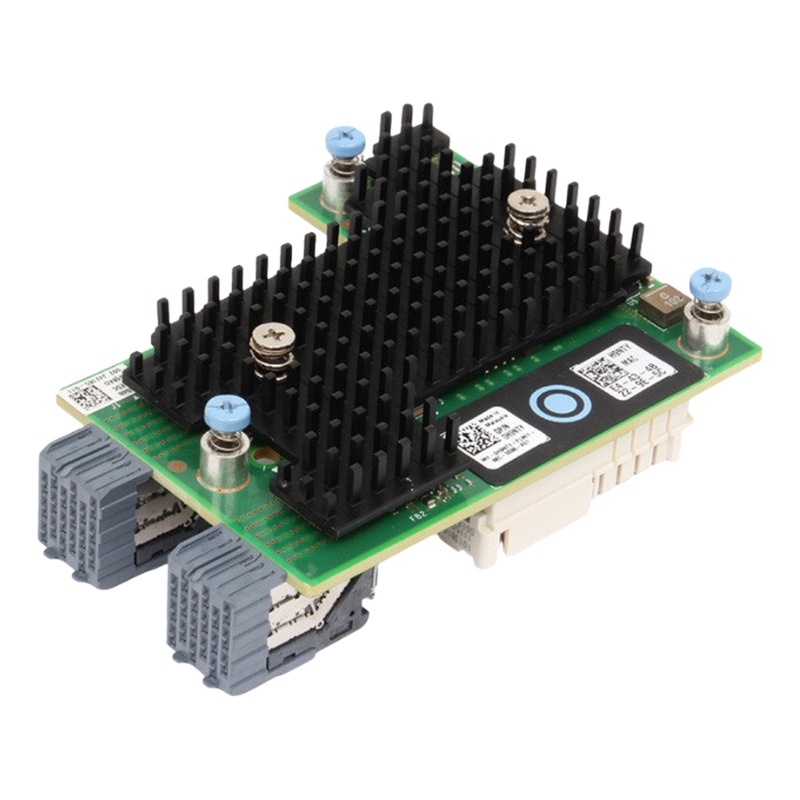


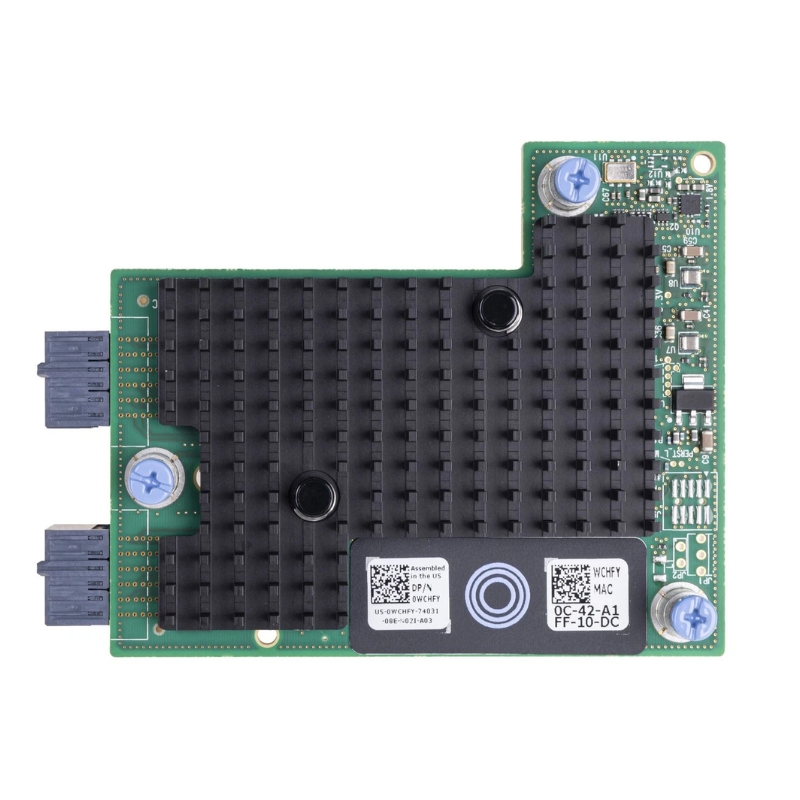
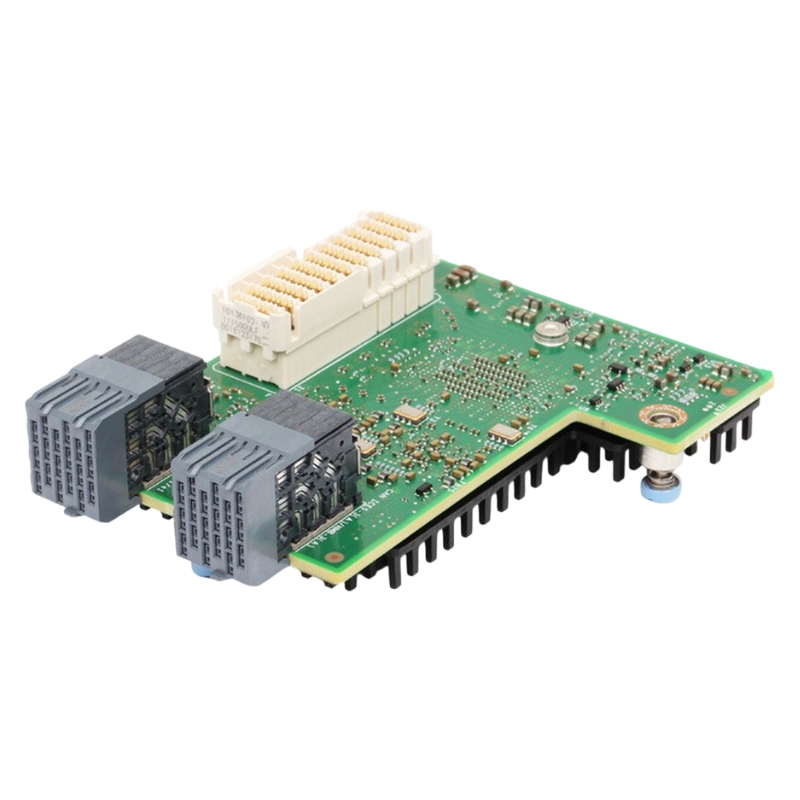
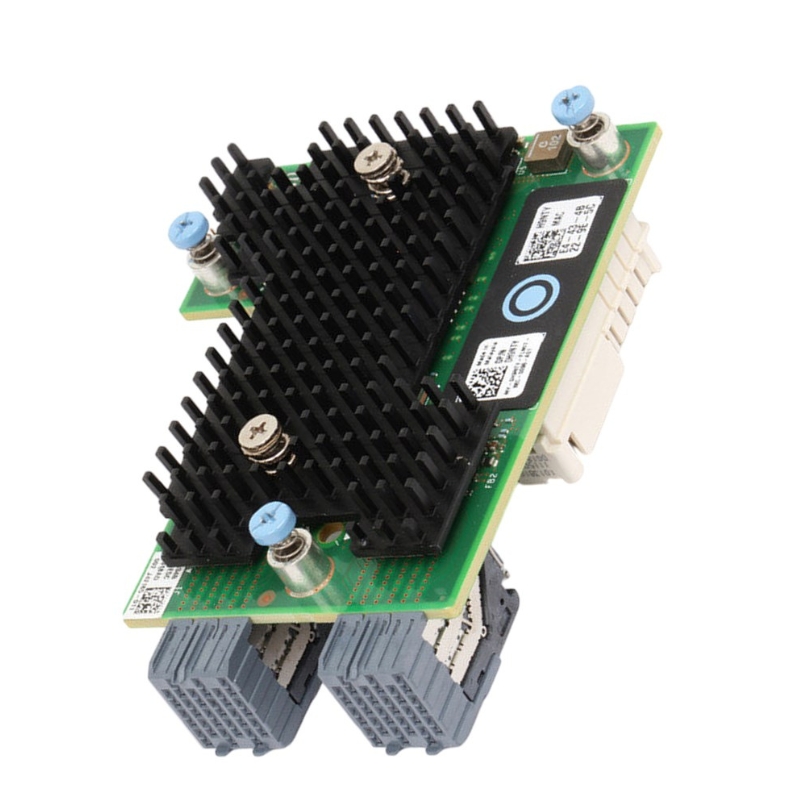
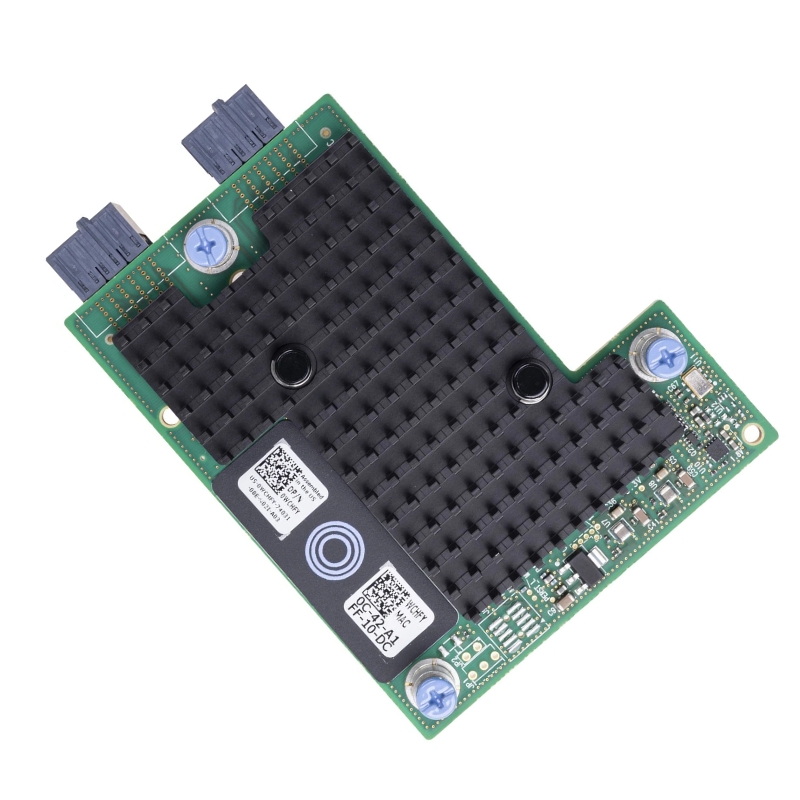
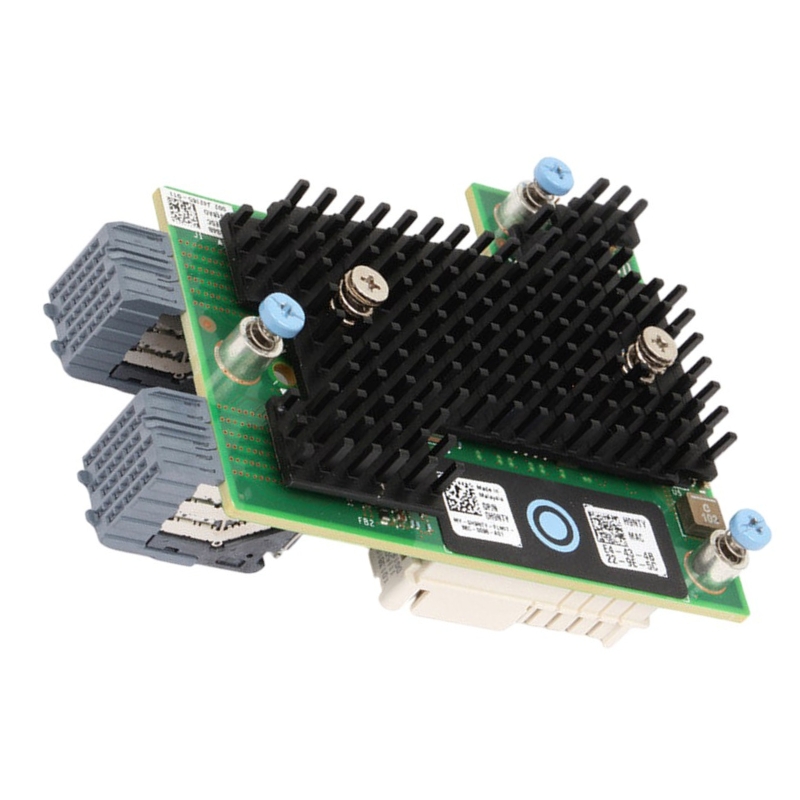
Dell 543-BBDH Intel XXV710 10/25 Gigabit Ethernet 2 Ports Mezzanine Card. Excellent Refurbished with 1 year replacement warranty
The Dell 543-BBDH Intel XXV710 Mezzanine Card is engineered to deliver scalable, high-throughput networking for modern data center environments. Designed as a compact yet powerful dual-port adapter, it supports both 10GbE and 25GbE connectivity, ensuring flexible deployment across evolving enterprise workloads.
The Dell 543-BBDH Intel XXV710 10/25 Gigabit Ethernet 2 Ports Mezzanine Card represents a specialized category of enterprise-class network interface solutions designed to support modern data center environments, virtualization platforms, software-defined infrastructure, cloud computing deployments, and mission-critical business applications. As organizations continue to increase network throughput requirements while maintaining operational efficiency, 10GbE and 25GbE networking technologies have become essential components within server infrastructures.
Dual-port mezzanine adapters provide organizations with the flexibility to establish high-speed connections between servers, storage platforms, hyperconverged infrastructure nodes, and network fabrics. The Intel XXV710 controller family is widely recognized across enterprise environments for delivering advanced networking capabilities, low latency communication, hardware acceleration features, and robust compatibility with leading operating systems and virtualization platforms.
Within enterprise server deployments, network adapters play a vital role in ensuring seamless communication between physical and virtual resources. The Dell 543-BBDH category serves organizations seeking scalable bandwidth, efficient traffic management, and support for evolving workloads including artificial intelligence, analytics, virtualization, database processing, and cloud-native applications.
Mezzanine cards occupy a unique position in server networking architecture. Unlike conventional PCIe expansion cards, mezzanine adapters are engineered to integrate directly into compatible server motherboards and blade server platforms. This design enables optimized airflow, reduced cable complexity, and improved server density.
The 10/25 Gigabit Ethernet mezzanine card category has emerged as a preferred networking solution for organizations transitioning from legacy 1GbE and 10GbE infrastructures toward more scalable and efficient 25GbE environments. The ability to support both 10GbE and 25GbE connections offers investment protection while simplifying migration strategies.
Modern enterprise servers require networking solutions capable of handling increasingly demanding workloads. Mezzanine cards address these requirements by delivering dedicated network resources while minimizing space consumption within server chassis. Their compact architecture makes them particularly suitable for blade servers, modular systems, and dense rack environments.
Organizations deploying large-scale virtualization clusters often rely on mezzanine networking adapters to ensure predictable network performance across multiple virtual machines. The integrated design allows data centers to maximize compute density without sacrificing connectivity.
For many years, 10 Gigabit Ethernet served as the standard for enterprise server networking. As application demands increased, organizations required higher throughput without dramatically increasing infrastructure complexity. The emergence of 25GbE technology provided a practical pathway toward higher bandwidth while leveraging many existing Ethernet management practices.
Dual-port 25GbE adapters can significantly increase aggregate throughput compared to traditional 10GbE solutions. This enhanced bandwidth supports modern workloads including distributed databases, machine learning environments, high-performance computing clusters, and storage-intensive applications.
The Intel XXV710 controller family is designed specifically for enterprise and cloud networking environments. These controllers deliver intelligent packet processing, traffic optimization, virtualization acceleration, and advanced networking capabilities that help improve server efficiency.
Enterprise organizations often select Intel Ethernet technologies due to their proven reliability, broad ecosystem support, and extensive compatibility across server manufacturers and operating systems. The XXV710 architecture incorporates numerous enhancements that enable organizations to achieve improved performance and scalability.
Packet processing efficiency directly affects application responsiveness and network performance. Intel XXV710 controllers provide hardware-based acceleration mechanisms that reduce CPU utilization during networking operations. By offloading specific networking tasks from the processor, servers can allocate more resources toward business-critical workloads.
This capability becomes especially valuable in virtualized environments where hundreds of virtual machines may generate substantial network traffic simultaneously.
Many enterprise applications depend upon low-latency connectivity. Database clusters, financial systems, storage networks, and analytics platforms often require rapid data transmission between nodes. The XXV710 family is engineered to minimize communication delays while maintaining consistent throughput.
Reduced latency contributes to improved application responsiveness, faster transaction processing, and enhanced user experiences across enterprise environments.
One of the primary advantages of Intel XXV710 networking solutions is their scalability. Organizations can deploy these adapters within individual servers, clustered environments, or large-scale data centers while maintaining consistent networking capabilities and management practices.
The ability to support growing workloads without extensive infrastructure redesign helps reduce long-term operational complexity and capital expenditures.
Dual-port Ethernet adapters provide critical redundancy for enterprise environments. By utilizing multiple network connections, organizations can establish failover configurations that maintain connectivity even if a link experiences disruption.
High availability remains a fundamental requirement for modern data centers. Network redundancy helps minimize downtime, supports business continuity objectives, and improves overall infrastructure resilience.
Organizations frequently leverage both network ports simultaneously to distribute traffic across multiple connections. Load balancing can improve bandwidth utilization, optimize application performance, and reduce network bottlenecks.
When implemented correctly, load balancing enables organizations to maximize networking investments while supporting growing application demands.
Different traffic types can be assigned to separate network paths to improve efficiency. Storage traffic, management traffic, virtualization traffic, and application traffic may each benefit from dedicated network resources.
Separating traffic classes enhances visibility, simplifies troubleshooting, and contributes to predictable performance outcomes.
Network administrators often utilize advanced traffic management techniques to optimize throughput and latency. Dual-port architectures provide flexibility in implementing these strategies while maintaining operational simplicity.
25 Gigabit Ethernet technology provides substantial performance improvements compared to earlier networking standards. Organizations can achieve increased throughput while maintaining familiar Ethernet frameworks and management methodologies.
As digital transformation initiatives continue expanding, bandwidth requirements frequently increase across applications, storage systems, and cloud platforms. The adoption of 25GbE networking helps organizations accommodate these demands.
Modern enterprises increasingly rely upon applications that generate significant network traffic. Examples include data analytics platforms, artificial intelligence environments, virtualization clusters, and large-scale database systems.
The Dell 543-BBDH category supports these workloads by enabling faster communication between servers, storage systems, and network infrastructure.
Big data environments often involve movement of massive datasets between compute resources. High-speed Ethernet adapters help reduce data transfer times and improve processing efficiency.
AI training and inference workloads frequently require rapid communication between servers, GPUs, and storage systems. Enhanced networking throughput contributes directly to improved resource utilization and reduced bottlenecks.
Scientific research, engineering simulations, and advanced analytics applications depend on efficient data exchange. High-bandwidth networking solutions help ensure computational resources remain productive and synchronized.
Virtualization remains a cornerstone of modern IT infrastructure. Organizations use hypervisors to consolidate workloads, improve resource utilization, and simplify management processes.
The Intel XXV710 platform includes technologies designed to accelerate virtual networking operations. These capabilities reduce virtualization overhead and improve performance for virtual machines.
As organizations increase virtual machine density, networking demands rise accordingly. High-speed adapters help ensure adequate bandwidth is available to support multiple workloads running simultaneously on a single physical server.
Advanced hardware acceleration features enable more efficient processing of virtual network traffic. This improves scalability while reducing processor consumption.
Private cloud, hybrid cloud, and multi-cloud deployments require reliable network connectivity. High-performance Ethernet adapters facilitate communication between cloud resources while supporting automation and orchestration initiatives.
Organizations adopting software-defined infrastructure benefit from networking solutions capable of supporting dynamic workload movement and resource allocation.
Storage systems represent critical components within enterprise environments. Modern applications often depend on rapid access to centralized or distributed storage resources.
The Dell 543-BBDH category supports high-speed storage communication through advanced Ethernet connectivity. This capability contributes to faster data access, reduced latency, and improved application responsiveness.
NAS deployments require efficient network communication to deliver optimal performance. High-bandwidth adapters help eliminate potential bottlenecks while supporting growing storage demands.
Software-defined storage architectures rely heavily on network performance. Efficient Ethernet connectivity helps maintain synchronization between storage nodes and supports reliable data movement.
Organizations frequently transfer large volumes of data during backup and disaster recovery processes. Faster networking infrastructure helps reduce backup windows and improve recovery readiness.


 Contact Us
 Information
 Catalog
 Solid State Drives (SSD)
 Network Switches
 Hard Disk Drives
 HBA & Controllers
 PC & Servers
 PC & Server Memory
 CPU & Processors
 Network Routers
 Power Supplies
 Tape Drives & Libraries
 Network Devices
 Computer & Network Cables