(7% discount is applied at checkout)
Cart is empty
Your go-to destination for cutting-edge server products
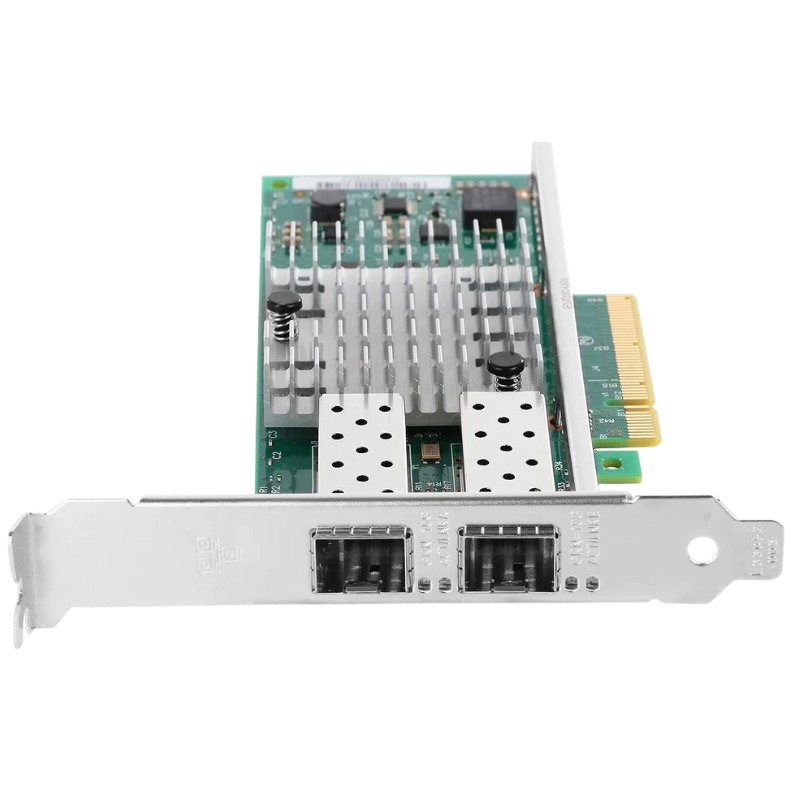


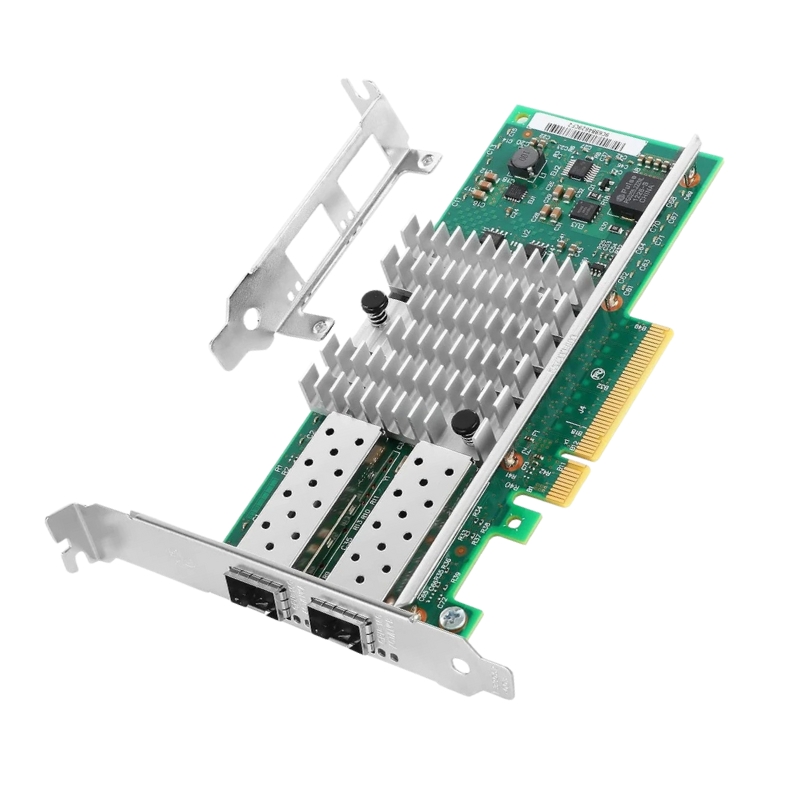
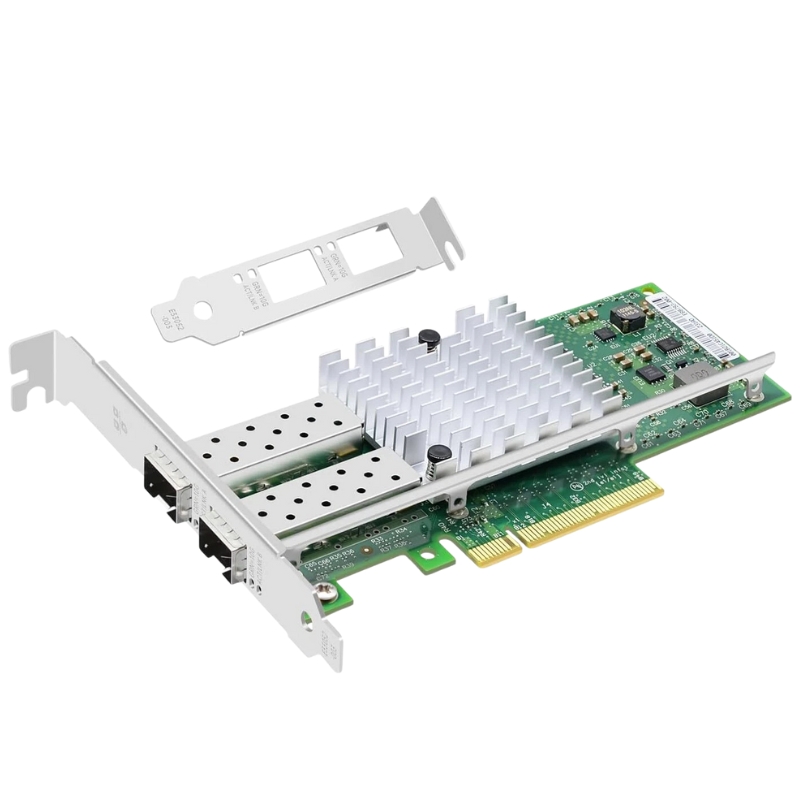
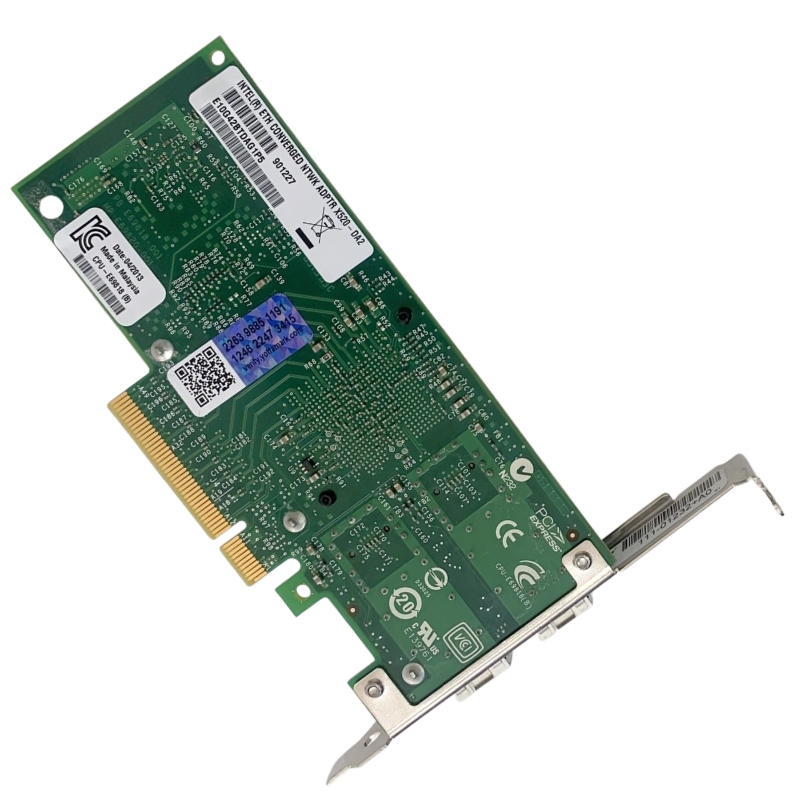
Dell 555-BCYY 2-Port 10Gb/s SFP+ PCIE GE 10GBase-X Network Adapter. Excellent Refurbished with 1 year replacement warranty
The Dell 555-BCYY 2-Port 10Gb/s SFP+ PCI Express Network Adapter is a powerful networking solution designed to deliver ultra-fast data transmission, enhanced scalability, and reliable connectivity for enterprise-grade environments. Built on the X520 series architecture, this adapter ensures stable high-speed networking performance for demanding workloads.
The
The adapter utilizes a PCI Express (PCIe) interface, which provides a direct and high-speed communication pathway between the server’s motherboard and the network controller. This architecture significantly reduces bottlenecks compared to legacy bus systems. The PCIe design ensures scalable bandwidth allocation, allowing the network adapter to handle large volumes of simultaneous data streams efficiently.
In enterprise environments, PCIe-based NICs like this model are preferred due to their ability to maintain consistent throughput under sustained load conditions. The multi-lane PCIe architecture also contributes to reduced latency, making it suitable for real-time applications such as financial trading systems, virtualization workloads, and distributed computing clusters.
This network adapter features two SFP+ ports, enabling dual-channel 10Gbps connectivity. Each port operates independently, allowing load balancing, link aggregation (LACP), or failover configurations depending on network design requirements. This dual-port architecture is essential for redundancy and high availability in enterprise networking.
SFP+ technology allows users to choose between optical fiber transceivers or direct attach copper (DAC) cables, offering flexibility in deployment across short-range and long-range network infrastructures. The modular nature of SFP+ ensures that organizations can scale their network architecture without replacing the entire adapter hardware.
The adapter supports 10GBase-X Ethernet standards, ensuring compatibility with a wide range of networking equipment and infrastructure components. This standard enables high-speed serial data transmission over fiber or copper connections using SFP+ modules. It is widely adopted in data centers due to its balance of performance, energy efficiency, and scalability.
By supporting industry-standard protocols, the adapter integrates seamlessly into heterogeneous network environments, including mixed-vendor infrastructures and hybrid cloud deployments.
The dual-port configuration provides a combined potential bandwidth of up to 20Gbps, making it ideal for workloads requiring simultaneous high-throughput communication. This includes virtualization clusters, database replication, and distributed file systems. Each port can be configured independently, allowing administrators to optimize traffic distribution.
One of the core advantages of this adapter is its optimized packet processing pipeline. It is designed to minimize latency through hardware-level offloading techniques, reducing CPU overhead and ensuring faster data transmission across network interfaces. This is particularly important for latency-sensitive applications such as real-time analytics and cloud-based microservices.
The adapter supports virtualization technologies such as SR-IOV (Single Root Input/Output Virtualization) and VMDq (Virtual Machine Device Queues), which significantly improve network performance in virtualized environments. These technologies enable efficient traffic separation between virtual machines while reducing CPU utilization.
SR-IOV allows a single physical NIC to appear as multiple virtual interfaces, each assigned directly to a virtual machine. This reduces hypervisor overhead and improves network performance consistency across workloads.
VMDq improves packet classification and distribution across virtual machine queues, ensuring that network traffic is processed efficiently and without congestion.
The adapter is designed to sustain full line-rate throughput on both ports simultaneously. This ensures that enterprise workloads such as data replication, backup operations, and high-frequency transaction processing can operate without bandwidth limitations.
Its internal processing engine is optimized for handling large volumes of packets per second (PPS). This is critical in modern data centers where small-packet workloads dominate due to microservices architecture and containerized applications.
Administrators can configure multiple traffic segmentation strategies, including VLAN tagging, link aggregation, and failover policies. These features improve both performance and network resilience.
The adapter is designed primarily for Dell PowerEdge server environments, ensuring seamless integration with BIOS-level configuration and firmware management tools. It is validated for compatibility with multiple generations of Dell server hardware.
Support extends across major enterprise operating systems, including Linux distributions, Windows Server editions, and VMware ESXi hypervisors. This broad compatibility ensures that the adapter can be deployed in heterogeneous IT infrastructures without additional customization.
In Linux environments, drivers provide advanced tuning capabilities such as interrupt moderation, ring buffer adjustment, and offloading control. This allows system administrators to optimize performance based on workload requirements.
In VMware environments, the adapter is often used in high-density virtual machine clusters where predictable network performance is critical.
The adapter is widely used in modern data centers where high-speed east-west traffic between servers is common. Its dual-port 10GbE capability ensures efficient handling of inter-server communication and distributed computing workloads.
In virtualized environments, the adapter provides essential network throughput for virtual machine clusters. It supports scalable cloud infrastructures where workloads dynamically shift between hosts.
The adapter is suitable for storage-intensive environments such as SAN and NAS systems, where fast data transfer is required for backup, replication, and real-time storage access. Protocols like iSCSI benefit significantly from the low latency and high bandwidth provided.
In HPC clusters, the adapter ensures rapid communication between compute nodes, reducing processing delays and improving overall system efficiency in scientific simulations and large-scale data analysis.
DAC cables provide cost-effective short-range connectivity between servers and switches. They are widely used in rack-level networking where devices are located in close proximity.
SFP+ fiber modules enable long-distance connectivity across data center rows or between network racks. This flexibility makes the adapter suitable for both compact and distributed network architectures.
Multi-mode fiber transceivers are commonly used for medium-range distances within data centers, offering a balance between performance and cost efficiency.
Single-mode fiber modules extend connectivity over longer distances, making them suitable for campus or inter-building networking environments.
The adapter supports TCP segmentation offload (TSO), large receive offload (LRO), and checksum offloading. These features reduce CPU utilization and improve network efficiency by delegating processing tasks to the hardware.
Interrupt moderation reduces CPU interruptions caused by network traffic, improving system stability during high-load conditions. This is particularly beneficial in environments with sustained high packet rates.


 Contact Us
 Information
 Catalog
 Solid State Drives (SSD)
 Network Switches
 Hard Disk Drives
 HBA & Controllers
 PC & Servers
 PC & Server Memory
 CPU & Processors
 Network Routers
 Power Supplies
 Tape Drives & Libraries
 Network Devices
 Computer & Network Cables