(7% discount is applied at checkout)
Cart is empty
Your go-to destination for cutting-edge server products


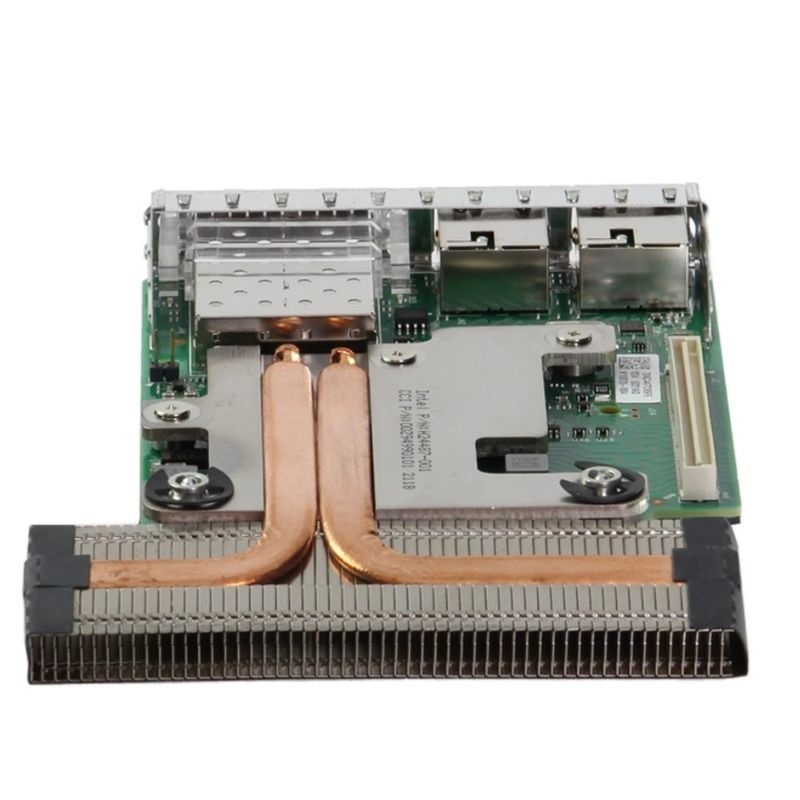
Dell 540-BBUL Broadcom 57412 10Gbe SFP+ 2 Ports Network Adapters. Excellent Refurbished with 1 year replacement warranty
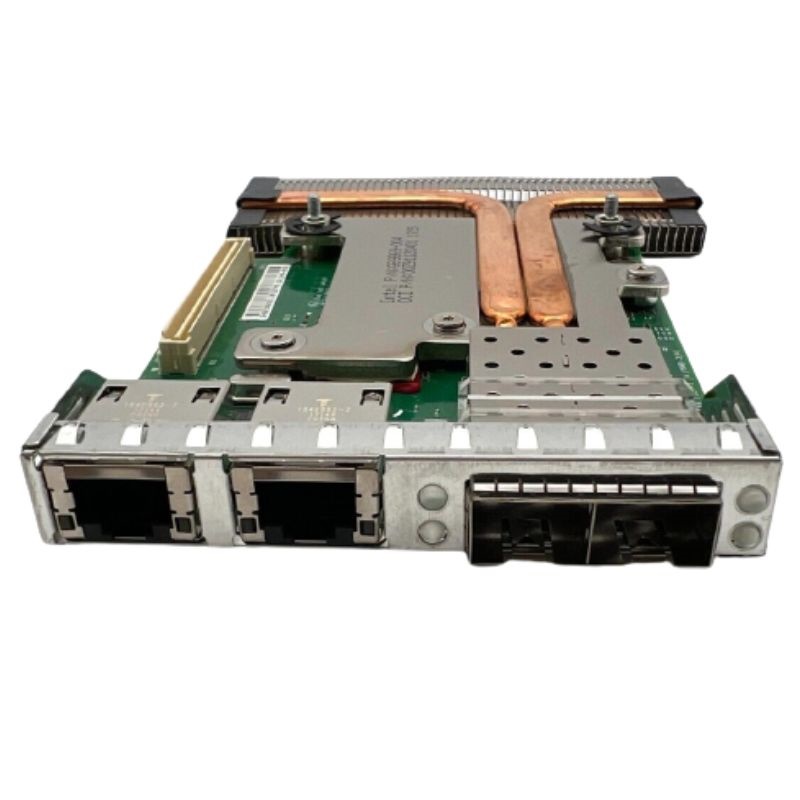
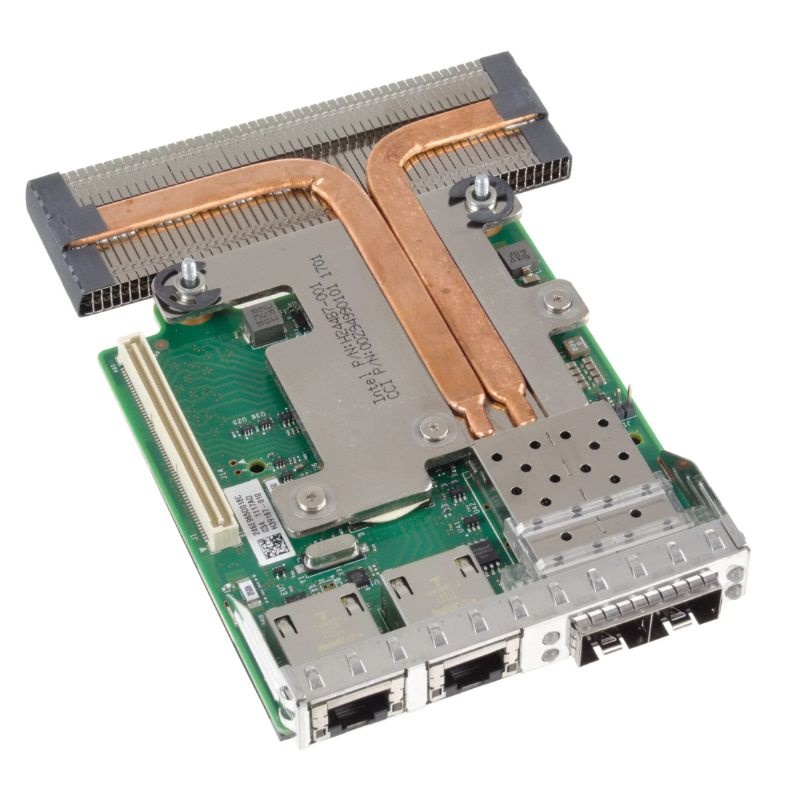
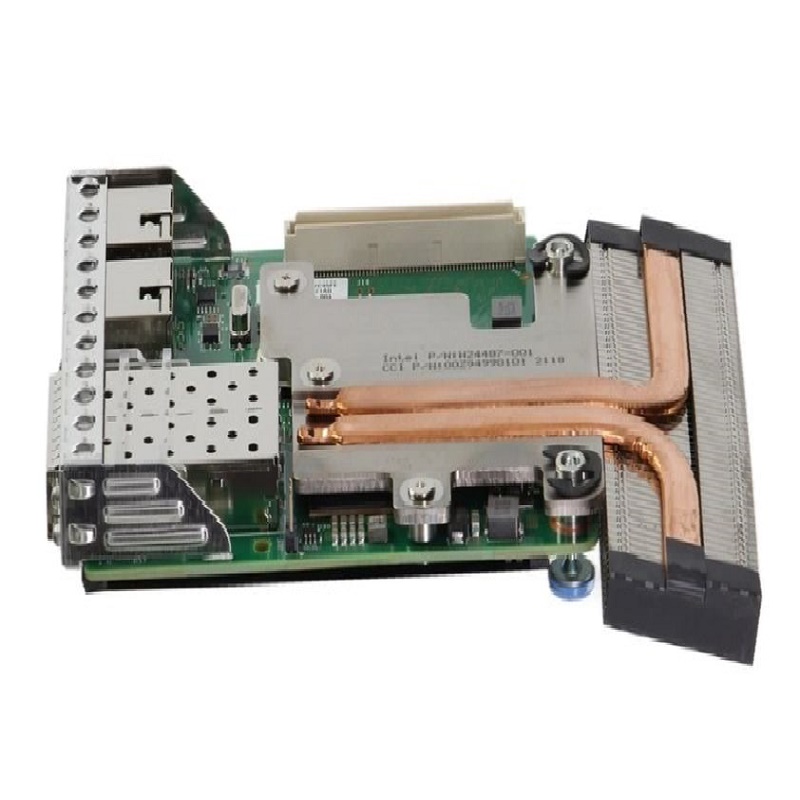
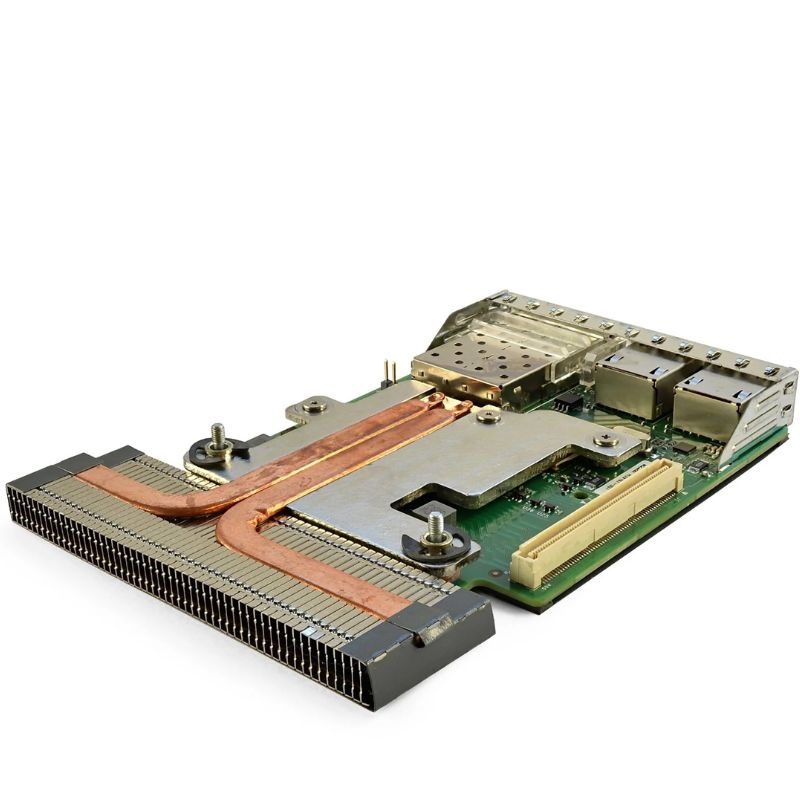
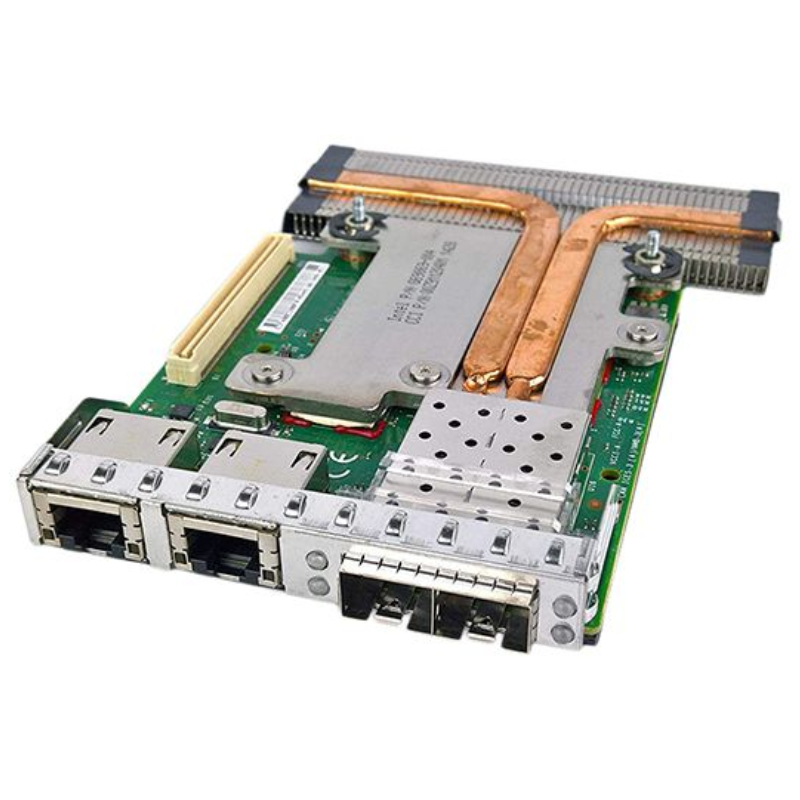
The Dell 540-BBUL is a versatile network adapter offering exceptional connectivity options for high-performance applications. This device integrates dual 10Gb SFP+ ports and dual 1Gb Base-T ports, ensuring your network infrastructure is prepared for intensive data transfer demands.
The Dell 540-BBUL 57412 dual-port hybrid network adapter is engineered for enterprise-grade server environments requiring flexible, high-throughput, and low-latency network connectivity. Built on a PCI-Express interface and designed in a half-height form factor, this adapter integrates both 1000Base-T Ethernet ports and 10Gb SFP+ ports within a single unified expansion solution. It is optimized for data centers, virtualization clusters, cloud infrastructure, and high-performance computing systems where mixed-speed networking is essential for workload segmentation and scalable bandwidth allocation.
This network adapter category belongs to Dell’s advanced converged connectivity hardware lineup, combining copper-based Gigabit Ethernet and fiber-based 10GbE connectivity. It is widely deployed in environments where legacy network infrastructure coexists with modern high-speed fiber networks, enabling seamless integration without requiring multiple NIC installations.
The Dell 540-BBUL 57412 is built on a PCI-Express (PCIe) architecture, ensuring high-speed communication between the adapter and the host server motherboard. The PCIe interface provides scalable bandwidth, reducing bottlenecks when handling simultaneous multi-port traffic. This architecture supports efficient packet processing, enabling consistent performance under heavy network loads such as database replication, virtualization migration, and distributed computing workloads.
The PCIe design ensures compatibility with enterprise server platforms, allowing integration into modern rack-mounted systems and blade servers. The adapter’s lane configuration is optimized to balance throughput efficiency and power consumption while maintaining stability under continuous operational demand.
The half-height design of the Dell 540-BBUL 57412 allows it to be installed in compact server chassis and space-constrained rack environments. This form factor is especially important for dense data center deployments where maximizing compute density per rack unit is a priority. Despite its compact size, the adapter maintains full performance capability across all ports, ensuring no compromise in throughput or reliability.
The adapter includes two 1000Base-T RJ-45 copper Ethernet ports designed for Gigabit-speed networking over standard twisted-pair cabling. These ports provide backward compatibility with existing enterprise LAN infrastructure, enabling organizations to maintain legacy network segments while upgrading other portions of their environment to higher speeds.
The Gigabit Ethernet ports are optimized for stable throughput and low packet loss in traditional network workloads such as file sharing, authentication services, and internal communication between application servers. These ports are particularly useful in hybrid network environments where cost-effective copper cabling is still widely deployed.
The copper-based 1000Base-T interface supports long-distance connectivity up to 100 meters using Category 5e or higher cabling. This makes it ideal for intra-rack and inter-rack communication where fiber infrastructure is not required. The ports include auto-negotiation capabilities, ensuring seamless compatibility with different network switches and routers.
The inclusion of two SFP+ ports enables high-speed 10GbE fiber connectivity, significantly increasing network bandwidth for demanding workloads. These ports support both optical transceivers and direct attach copper (DAC) cables, offering flexible deployment options depending on infrastructure requirements.
SFP+ connectivity is essential for modern data centers that require high throughput for virtualization, storage area networks, and distributed computing systems. These ports allow the adapter to function as a high-performance uplink interface, connecting servers to top-of-rack or spine-leaf network architectures.
Although primarily designed for Ethernet, the SFP+ interface supports a variety of transceiver modules that can be adapted for different optical wavelengths and transmission distances. This allows organizations to scale their network topology from short-range intra-rack connections to long-range inter-building connectivity.
The Dell 540-BBUL 57412 network adapter is optimized for simultaneous multi-port data handling. Each port operates independently, allowing segmented traffic flow between Gigabit copper and 10Gb fiber channels. This ensures load balancing and improved network efficiency in environments where different applications require distinct bandwidth allocations.
The adapter’s internal processing architecture is designed to minimize latency while maximizing packet throughput. It supports advanced offloading capabilities, reducing CPU overhead on the host server and improving overall system performance.
Low-latency performance is critical for enterprise workloads such as financial transactions, real-time analytics, and virtualization cluster synchronization. The Dell 540-BBUL 57412 minimizes packet processing delays through optimized firmware and hardware-level acceleration features.
This ensures consistent performance even under high network utilization, making it suitable for mission-critical applications where microsecond-level latency differences can impact system efficiency.
In cloud computing environments, the Dell 540-BBUL 57412 supports scalable network architectures that require both redundancy and high bandwidth. The combination of Gigabit and 10GbE ports allows cloud nodes to communicate efficiently across different tiers of the infrastructure.
This makes it suitable for hybrid cloud deployments where legacy systems must interoperate with modern high-speed networking fabrics.
The adapter supports intelligent traffic segmentation across its four ports. Network administrators can configure different workloads to utilize specific interfaces based on bandwidth requirements or security policies. This enhances overall network efficiency and reduces congestion in high-traffic environments.
The dual-port configuration enables redundancy mechanisms that ensure network continuity in case of link failure. If one interface becomes unavailable, traffic can be rerouted through an alternate port, maintaining system uptime and service availability.
High availability configurations are critical in enterprise data centers. The Dell 540-BBUL 57412 supports redundancy strategies that help maintain uninterrupted connectivity for mission-critical applications, ensuring minimal downtime and operational continuity.
This network adapter is widely deployed in enterprise data centers where mixed-speed networking is required. It enables servers to connect simultaneously to legacy Gigabit Ethernet switches and modern 10GbE switching fabrics.
Such flexibility is essential for gradual infrastructure upgrades, allowing organizations to modernize network performance without complete hardware replacement.
The SFP+ ports are frequently utilized for storage area network (SAN) connectivity, enabling fast data transfer between servers and storage arrays. This improves backup performance, replication speed, and distributed storage efficiency.
The adapter incorporates power optimization technologies that reduce energy consumption during low traffic periods. This is particularly beneficial in large-scale deployments where hundreds or thousands of network adapters operate simultaneously.
Efficient thermal management ensures that the adapter maintains stable operating temperatures under sustained load. The design supports airflow optimization within server chassis, preventing overheating and ensuring long-term reliability.
The combination of copper and fiber interfaces makes the Dell 540-BBUL 57412 a future-ready networking solution. It allows organizations to transition gradually from Gigabit Ethernet infrastructure to 10GbE environments without disruption.
This hybrid approach supports long-term scalability, making it suitable for evolving enterprise IT strategies where network modernization occurs in phases rather than complete overhauls.
As organizations expand their computing and storage requirements, this adapter provides scalable connectivity options that align with increasing bandwidth demands. Its flexible port configuration ensures it remains relevant across multiple stages of infrastructure growth.


 Contact Us
 Information
 Catalog
 Solid State Drives (SSD)
 Network Switches
 Hard Disk Drives
 HBA & Controllers
 PC & Servers
 PC & Server Memory
 CPU & Processors
 Network Routers
 Power Supplies
 Tape Drives & Libraries
 Network Devices
 Computer & Network Cables