(7% discount is applied at checkout)
Cart is empty
Your go-to destination for cutting-edge server products
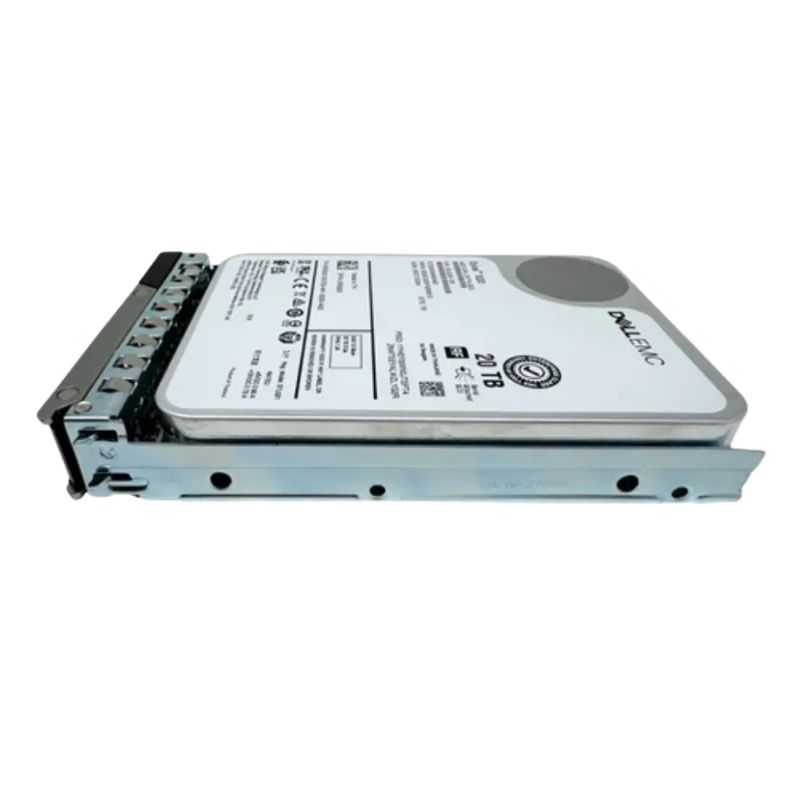


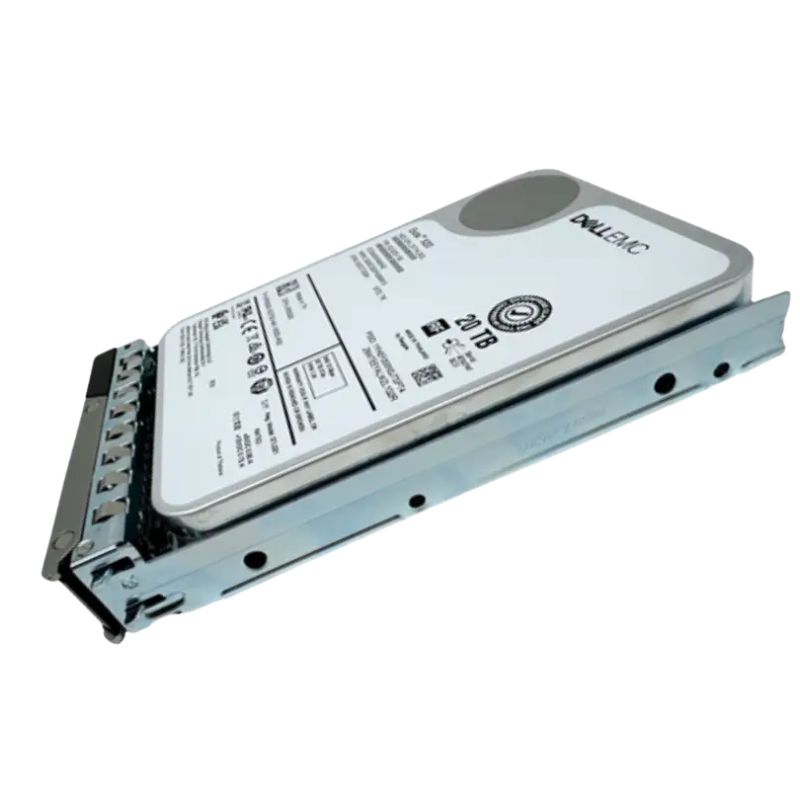
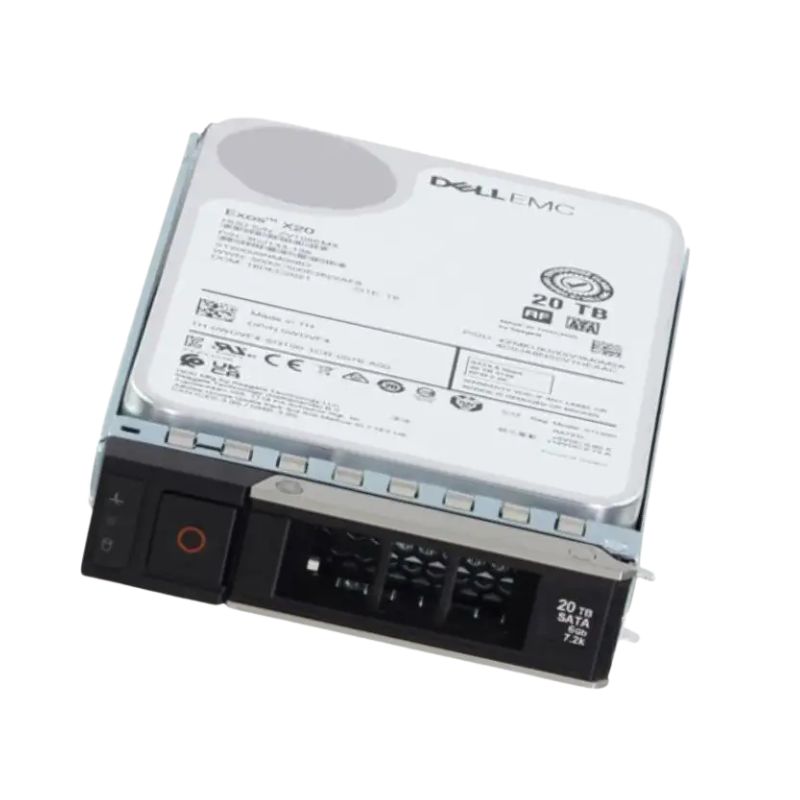
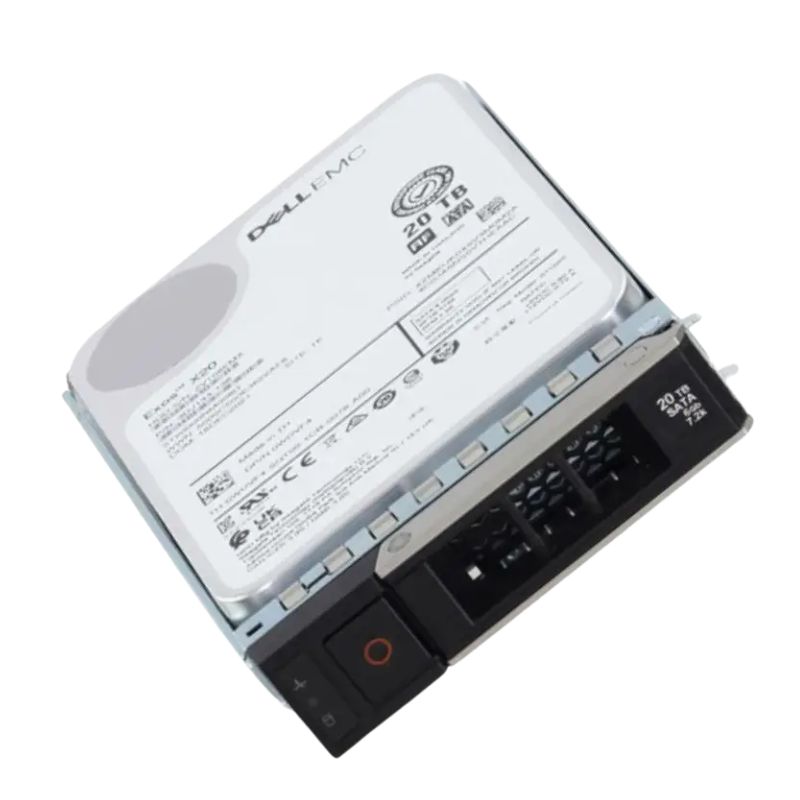
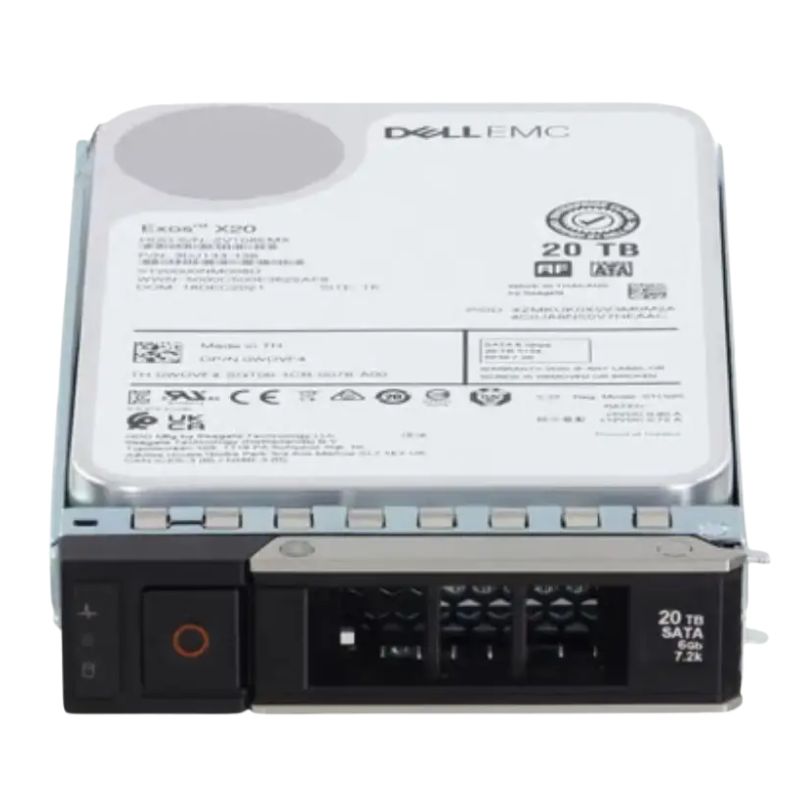
Dell 57P0N 20TB 7.2K RPM SATA LSE 6GBPS 512e 3.5 Inch Internal Poweredge Server HDD. New Sealed in Box (NIB) with 1-Year Replacement Warranty
The Dell 57P0N 20TB internal hard disk drive is engineered to deliver dependable, high-capacity storage for Dell PowerEdge server environments. Designed with enterprise-grade components, this 3.5 inch HDD combines large-scale data capacity with consistent rotational performance, making it suitable for data centers, virtualization platforms, backup infrastructures, and business-critical workloads that demand reliability and efficiency.
Enterprise internal hard disk drives designed for PowerEdge server environments represent a critical storage category focused on capacity, reliability, and long-term operational stability. The Dell 57P0N 20TB 7.2K RPM SATA LSE 6GBPS 512e 3.5 Inch Internal PowerEdge Server HDD belongs to this category, addressing the growing demand for high-capacity rotational storage within modern data centers, private clouds, and enterprise IT infrastructures. This category emphasizes sustained performance, predictable latency, and compatibility with Dell PowerEdge server architectures, ensuring seamless integration into existing server deployments without sacrificing manageability or uptime.
Unlike consumer-grade storage, enterprise SATA hard drives are engineered for continuous operation in multi-drive server chassis. The focus is on consistent throughput, firmware optimization for RAID controllers, and mechanical durability capable of handling vibration, heat, and sustained workloads. This category supports a wide range of enterprise use cases, from large-scale file repositories and backup targets to cold and warm data tiers that benefit from cost-effective capacity at scale.
The 20TB capacity class represents a significant milestone in the evolution of enterprise hard disk drives. Drives in this category are designed to maximize storage density within standard 3.5 inch form factors, allowing organizations to scale storage pools efficiently without expanding physical rack footprints. High-capacity SATA HDDs are particularly valuable in environments where data growth is rapid, such as media archives, surveillance storage, research data retention, and compliance-driven record keeping.
By leveraging SATA interfaces, this category maintains broad compatibility across generations of PowerEdge servers while offering a favorable cost-per-terabyte ratio. The 6GBPS SATA interface provides sufficient bandwidth for sequential workloads and aggregated throughput in RAID configurations, making these drives suitable for large arrays where capacity and reliability outweigh the need for ultra-low latency.
Internal server hard drives in this category are validated specifically for Dell PowerEdge platforms. Firmware, power management profiles, and error recovery behaviors are tuned to work in harmony with Dell RAID controllers and system management tools. This optimization ensures predictable behavior during rebuilds, firmware updates, and power cycles, which is essential in enterprise environments where downtime carries significant operational and financial costs.
Compatibility testing across PowerEdge generations helps ensure that these drives integrate smoothly into both legacy systems and newer server models. This allows organizations to standardize on a single high-capacity SATA drive category across multiple server deployments, simplifying procurement, inventory management, and lifecycle planning.
The Dell 57P0N 20TB 7.2K RPM rotational speed defines a balance between performance, energy efficiency, and thermal output. Drives in this category are engineered to deliver steady sequential read and write speeds suitable for large file transfers, backups, and data streaming workloads. While not designed to compete with solid state storage in terms of latency, 7200 RPM enterprise HDDs provide reliable throughput that scales well in multi-drive configurations.
For applications such as file servers, network-attached storage backends, and object storage nodes, the performance profile of 7.2K RPM drives aligns well with access patterns dominated by sequential or moderately random I/O. This category supports predictable performance under sustained load, which is critical for maintaining service-level agreements in shared storage environments.
Enterprise-class 7200 RPM drives are built for 24x7 operation, with components selected to withstand continuous spinning and frequent read/write cycles. The focus is on maintaining consistent throughput over long periods rather than short bursts of peak performance. This makes the category well suited for workloads that involve large data sets accessed regularly over extended timeframes.
Thermal management plays a key role in sustaining performance. Drives in this category are designed to operate within the airflow and cooling profiles of PowerEdge server chassis, minimizing thermal throttling and reducing the risk of premature component wear.
Advanced Format 512e technology is a defining characteristic of modern high-capacity enterprise HDDs. By using larger physical sectors while maintaining 512-byte logical sector emulation, this category improves error correction efficiency and storage density without sacrificing compatibility with existing operating systems and applications.
The use of 512e sectors allows drives to support higher capacities while maintaining data integrity through enhanced error correction codes. This is particularly important in large-capacity drives, where the probability of encountering read errors increases with the amount of stored data. Advanced Format technology helps mitigate these risks, making it a core feature of enterprise storage categories focused on reliability.
One of the advantages of 512e drives is their ability to integrate seamlessly into environments that still rely on software and tools expecting 512-byte sectors. This ensures that organizations can deploy high-capacity drives without requiring extensive reconfiguration or software updates. At the same time, modern operating systems and RAID controllers can take advantage of the underlying physical sector improvements to enhance data integrity.
This compatibility is especially valuable in mixed environments where servers of different generations coexist. The category supports gradual infrastructure upgrades while maintaining consistent storage behavior across systems.
The Dell 57P0N 20TB SATA 6GBPS interface remains a cornerstone of enterprise storage categories that prioritize capacity and cost efficiency. While newer interfaces such as SAS and NVMe offer higher bandwidth and lower latency, SATA continues to play a vital role in tiered storage architectures where large volumes of data must be stored economically.
In PowerEdge servers, SATA drives are commonly used in bulk storage tiers, backup arrays, and data lakes. The 6GBPS interface provides ample bandwidth for these use cases, particularly when multiple drives are combined in RAID configurations that aggregate throughput and improve redundancy.
Enterprise SATA drives are designed to work seamlessly with hardware RAID controllers commonly deployed in PowerEdge servers. Features such as controlled error recovery and consistent command response times help prevent drives from dropping out of arrays during heavy load or error conditions. This behavior is critical for maintaining array stability and minimizing rebuild times.
The category supports a wide range of RAID levels, allowing administrators to tailor storage configurations to specific requirements for redundancy, performance, and usable capacity. Whether deployed in mirrored configurations for data protection or large parity-based arrays for capacity efficiency, SATA enterprise drives provide predictable behavior under RAID management.
The 3.5 inch large form factor remains the standard for high-capacity enterprise hard disk drives. This category leverages the physical space of the 3.5 inch design to accommodate multiple platters and advanced recording technologies, enabling capacities such as 20TB within a single drive.
In PowerEdge servers designed for large form factor drives, this category allows organizations to maximize storage density per chassis. This reduces the need for additional servers or external storage enclosures, leading to lower capital and operational expenses.
Large form factor enterprise drives are engineered with reinforced mechanical structures to withstand vibration in multi-drive server environments. When dozens of drives operate simultaneously within a single chassis, vibration can impact performance and reliability if not properly managed. Drives in this category incorporate vibration sensors and compensation mechanisms to maintain accurate head positioning and consistent data access.
This mechanical stability contributes to the overall longevity of the storage solution, reducing the likelihood of performance degradation or failure over time.
Reliability is a defining attribute of enterprise internal hard disk drive categories. Drives designed for PowerEdge servers are subjected to rigorous validation and quality control processes to ensure consistent performance and low failure rates in demanding environments. This category emphasizes mean time between failures, workload ratings, and firmware stability as key differentiators from consumer storage solutions.
Data integrity mechanisms, including advanced error correction and robust servo control, help protect data over the life of the drive. These features are particularly important for large-capacity drives, where data loss risks can have significant consequences for business operations.
Enterprise HDDs in this category are rated for continuous workloads typical of server environments. This includes sustained read and write operations, frequent access by multiple users or applications, and integration into automated backup and replication processes. The design prioritizes consistent behavior under load rather than sporadic peak performance.
This workload orientation makes the category suitable for mission-critical storage roles where predictability and reliability are more important than raw speed.
The category encompassing high-capacity SATA enterprise hard drives supports a wide array of use cases across industries. In enterprise IT environments, these drives are commonly deployed as primary storage for file servers, shared repositories, and collaboration platforms. Their large capacity enables organizations to consolidate data onto fewer drives, simplifying management and reducing hardware complexity.
In backup and disaster recovery scenarios, this category provides cost-effective storage for large volumes of backup data. The balance of capacity, reliability, and SATA compatibility makes these drives well suited for disk-based backup systems and long-term retention archives.
Power consumption and thermal output are critical considerations in data center environments. High-capacity enterprise HDD categories are designed to optimize power efficiency without compromising performance or reliability. Advanced power management features help reduce energy usage during idle periods while maintaining rapid response when access is required.
Thermal design aligns with PowerEdge server cooling architectures, ensuring that drives operate within optimal temperature ranges. This contributes to overall system stability and reduces the strain on data center cooling infrastructure.
By offering large storage capacities within a single drive, this category helps reduce the number of drives required to meet storage needs. Fewer drives translate into lower power consumption, reduced cooling requirements, and simplified maintenance. This balance of capacity and operational efficiency makes high-capacity SATA enterprise HDDs an attractive choice for organizations seeking to optimize total cost of ownership.
Enterprise storage categories associated with PowerEdge servers benefit from comprehensive lifecycle management and support frameworks. Drives are typically backed by enterprise warranties and support options, providing peace of mind for organizations deploying them in critical environments. Firmware updates, compatibility advisories, and proactive support contribute to long-term reliability.
This focus on lifecycle management ensures that storage investments remain viable and supported throughout their operational lifespan, aligning with enterprise planning and budgeting cycles.


 Contact Us
 Information
 Catalog
 Solid State Drives (SSD)
 Network Switches
 Hard Disk Drives
 HBA & Controllers
 PC & Servers
 PC & Server Memory
 CPU & Processors
 Network Routers
 Power Supplies
 Tape Drives & Libraries
 Network Devices
 Computer & Network Cables