(7% discount is applied at checkout)
Cart is empty
Your go-to destination for cutting-edge server products


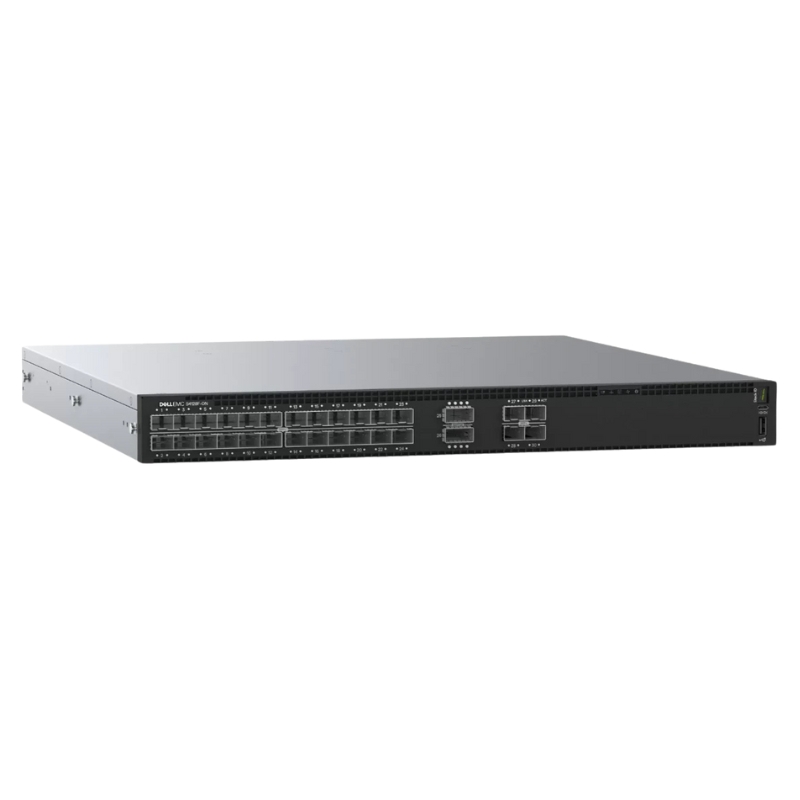
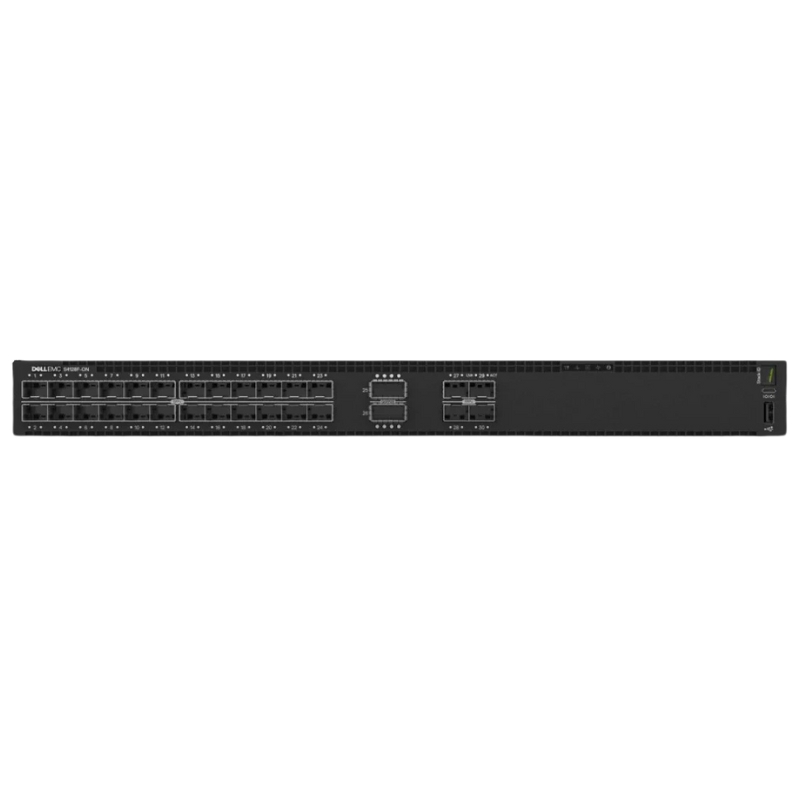
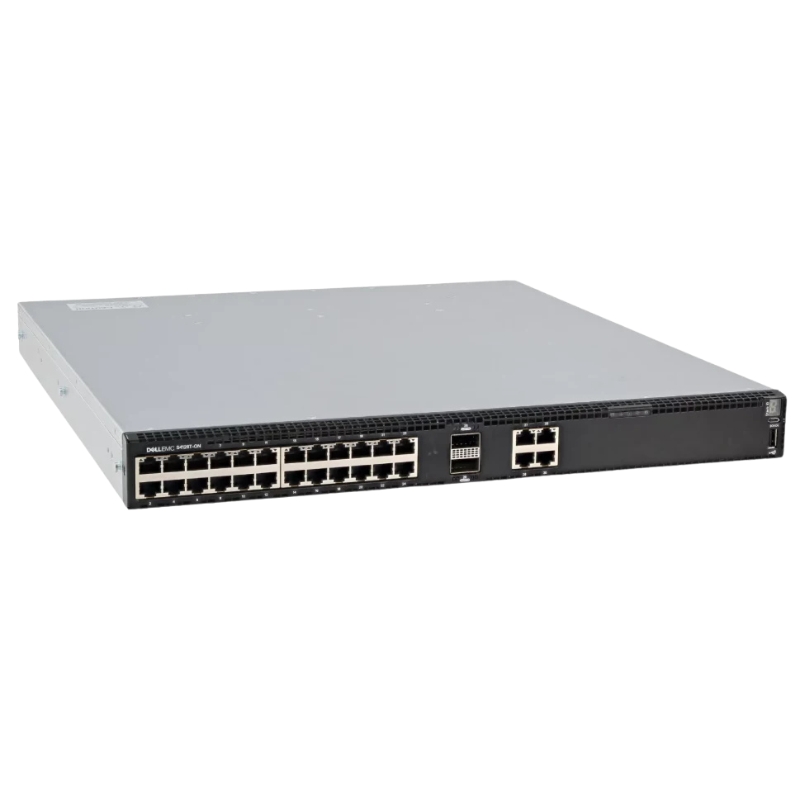
Dell 59T7R S4128F-ON S-Series 10GBPS 28 Port Ethernet Switch. Excellent Refurbished with 1 year Replacement Warranty
The Dell 59T7R S4128F-ON S-Series 10GBPS 28 Port Ethernet Switch belongs to a high-performance data center and enterprise aggregation switching category designed to deliver consistent throughput, low latency, and architectural flexibility. This category focuses on compact yet powerful switches that support dense 10GbE connectivity while maintaining scalability for modern workloads. The S4128F-ON platform aligns with environments that require deterministic performance, predictable forwarding behavior, and seamless integration into spine-and-leaf or collapsed core network designs.
Within this category, the emphasis is placed on non-blocking switching fabrics that allow all ports to operate at line rate simultaneously. The Dell S-Series design philosophy ensures that traffic flows efficiently even under sustained load, making this switch category well-suited for virtualization clusters, hyper-converged infrastructure, and private cloud deployments. By supporting 10GBPS Ethernet speeds across a compact form factor, this switch class addresses the growing east-west traffic patterns typical of modern applications.
A defining characteristic of the Dell S4128F-ON category is its adherence to open networking principles. The ON designation signifies support for open network installation environments, allowing organizations to deploy the network operating system that best aligns with their operational model. This flexibility enables IT teams to standardize on a single hardware platform while maintaining freedom of choice in software, reducing vendor lock-in and improving long-term network agility.
Enterprises leveraging Dell OS10, third-party network operating systems, or customized solutions can benefit from a consistent hardware abstraction layer. This category is engineered to simplify lifecycle management, streamline updates, and support automation-driven workflows. The open architecture supports programmable interfaces, making the switch a natural fit for infrastructure-as-code strategies and DevOps-oriented network management.
The S4128F-ON switch category integrates seamlessly into software-defined networking environments. Support for modern control-plane protocols and programmability frameworks allows centralized policy enforcement and dynamic traffic engineering. This capability is critical for organizations transitioning from traditional static network configurations to more adaptive, policy-driven architectures.
By enabling tighter integration with orchestration platforms, this switch category supports rapid service provisioning and consistent configuration across large-scale deployments. The result is a network fabric that can evolve alongside application demands without disruptive hardware changes.
This category centers on delivering dense 10GbE connectivity within a compact footprint. The Dell 59T7R S4128F-ON provides multiple high-speed Ethernet interfaces designed to connect servers, storage systems, and network appliances efficiently. The focus on 10GBPS throughput addresses the bandwidth requirements of data-intensive applications such as big data analytics, real-time processing, and high-performance computing.
The switch category emphasizes balanced port density and uplink flexibility, enabling organizations to aggregate multiple access-layer connections while maintaining high-speed paths to core or spine layers. This architectural balance supports scalable network growth and ensures consistent performance as workloads expand.
Virtualized data centers place unique demands on network infrastructure, including rapid VM mobility, high east-west traffic, and low-latency communication. The S4128F-ON category is optimized to handle these demands by providing predictable forwarding performance and support for overlay technologies commonly used in cloud architectures.
As organizations adopt private and hybrid cloud models, this switch category provides the foundational connectivity required to support orchestration platforms and multi-tenant environments. The consistent 10GbE performance ensures that network bandwidth does not become a bottleneck as compute and storage resources scale.
The Dell S4128F-ON S-Series category supports advanced Layer 2 and Layer 3 networking features that enable flexible deployment across different network tiers. This versatility allows the switch to function as a top-of-rack solution, aggregation switch, or even as part of a compact core design in smaller environments.
Layer 2 capabilities focus on efficient frame forwarding, VLAN segmentation, and reliable loop prevention mechanisms. These features ensure stable operation in complex network topologies. Layer 3 functionality extends routing intelligence closer to the server edge, reducing latency and improving traffic distribution across subnets.
The routing features within this category are designed to scale alongside enterprise growth. Support for dynamic routing protocols allows the network to adapt to topology changes and link failures automatically. This resilience is essential for maintaining application availability in mission-critical environments.
Advanced traffic management capabilities ensure that latency-sensitive applications receive priority handling. By maintaining consistent throughput and predictable behavior, this switch category supports service-level objectives across diverse workloads.
The compact form factor of the S4128F-ON category enables high port density without consuming excessive rack space. This design consideration is especially valuable in environments where rack efficiency and power utilization are critical factors.
By delivering high-performance switching within a streamlined chassis, this category supports dense deployments while maintaining accessibility for cabling and maintenance tasks.
Security is a foundational element of the Dell S-Series switching category. The S4128F-ON is designed to support robust network segmentation and access control strategies. By enabling granular control over traffic flows, organizations can isolate workloads, protect sensitive data, and enforce compliance requirements.
This category supports secure management interfaces and integration with centralized authentication systems. These capabilities help reduce the attack surface and ensure that network access is limited to authorized personnel and devices.


 Contact Us
 Information
 Catalog
 Solid State Drives (SSD)
 Network Switches
 Hard Disk Drives
 HBA & Controllers
 PC & Servers
 PC & Server Memory
 CPU & Processors
 Network Routers
 Power Supplies
 Tape Drives & Libraries
 Network Devices
 Computer & Network Cables